Yirgacheffe Aricha/Aricha idido Green Bean Grade Classification and Brewing Flavor Introduction
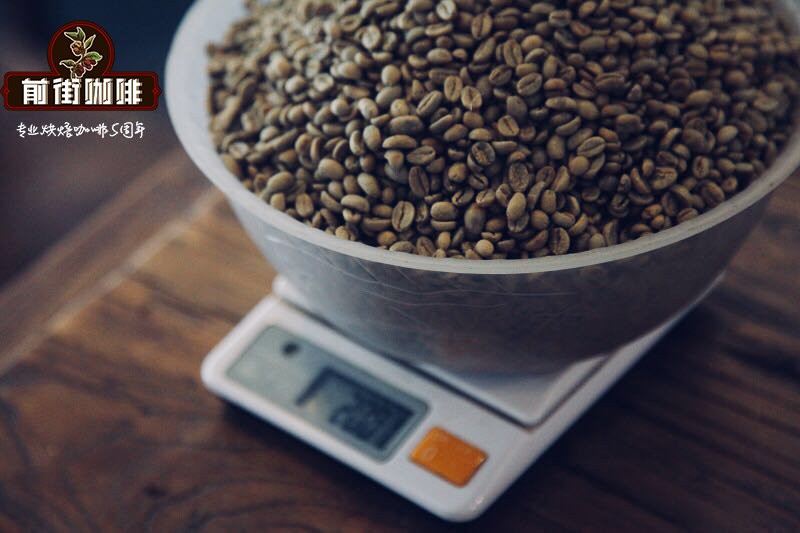
Today FrontStreet Coffee is sharing a truly heavyweight bean: a natural-processed coffee from Yirgacheffe that took Champion in the Natural Process category at the 2019 Taste of Harvest (TOH) competition—Aricha. Ethiopia's ECX has graded it G1, its highest classification, and on the international review site Coffee Review this lot earned a remarkable score of 95, proof of its outstanding quality. From the appearance, uniformity, and freshness of the green beans to the dry fragrance and the flavors in the cup, everything is exceptional. The coffee takes its name from the Kebel Aricha washing station where it is produced. How does a bean reach this level? Let FrontStreet Coffee walk you through the story from the very beginning.
Region Introduction
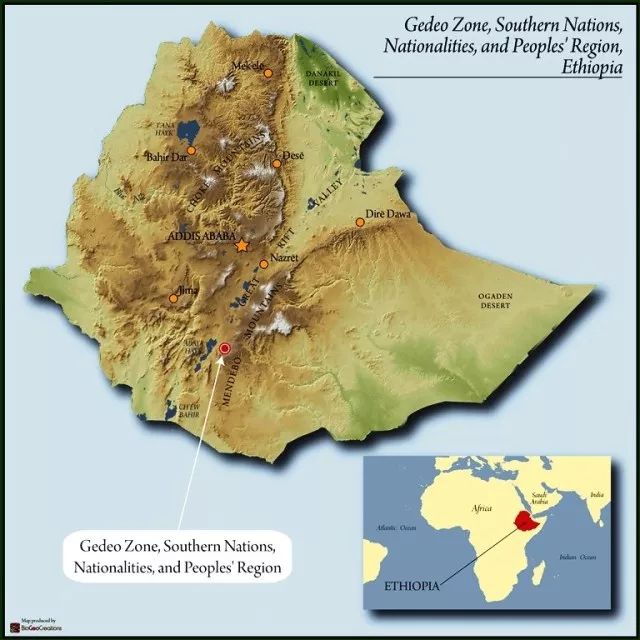
Yirgacheffe is a small town in Ethiopia sitting at 1,700-2,100 meters above sea level, which makes it one of the highest coffee-growing regions on earth and a byword for Ethiopian specialty coffee. Lake Turkana, Lake Abaya, and Lake Chamo pump abundant moisture into the area. In the rift valleys—Misty Valley being the classic example—fog lingers year-round, the seasons feel like perpetual spring, gentle breezes keep conditions cool and humid, and thousands of coffee trees flourish, nurturing Yirgacheffe's singular terroir where floral and fruity notes weave together in endlessly shifting combinations. Misty Valley itself: after washed processing was introduced to the Yirgacheffe region in the late twentieth century, it dramatically cut the defect rate and made the region's beans a favorite of coffee lovers worldwide. Yet the local coffee merchant Abdullash Bagersh missed the character of traditional naturals, so he re-engineered the natural process to improve flavor while lowering defects, launching three now-legendary Yirgacheffe naturals: Idido Misty Valley, Beloya, and Aricha. Aricha was originally known as Idido, a well-known processing station near Yirgacheffe town.
The Grading System
Since the Ethiopia Commodity Exchange (ECX) began operating in 2009, the better-known sub-regions within the broader Yirgacheffe area—including Yirgacheffe, Wenago, Kochere, and Gelena Abaya—are sorted into lots that show "classic Yirgacheffe flavor" and lots that do not, an A/B classification: flavor present means A, absent means B. The ECX applies a further layer: each year's freshly harvested coffee must first pass primary grading, and only lots rated G1 to G3 are then assessed for quality under SCA cupping standards and assigned to the Q1 or Q2 grades.
Q1, the top grade: beans rated G1 or G2 in primary grading that score above 80 points and then exceed 85 points in the specialty evaluation. Q2, the second grade: beans rated G1 or G2 in primary grading that score between 80 and 84.75 points in the specialty evaluation.
The ECX classification covers Yirgacheffe, Wenago, Kochere, and Gelena Abaya. In raw-bean grading, Q1 is the highest and Q2 second, while the commonly seen grades run G1 through G4. Whether washed or natural, choosing G1 should give you fewer defects and a tastier cup.
The Adorsi Washing Station
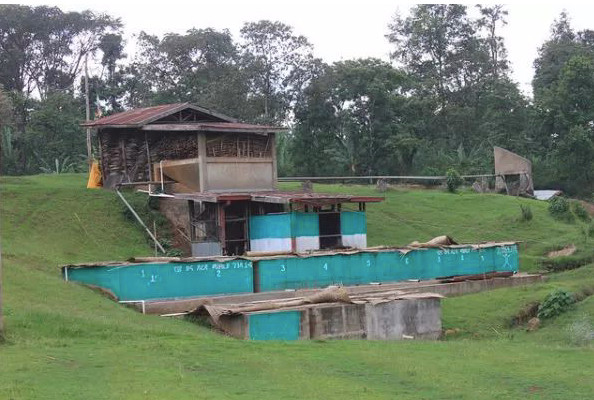
The natural process category at this year's Ethiopian harvest season cupping competition was won by the Adorsi washing station. Adorsi belongs to Testi Coffee, an exporting company run by the Yonis family and founded in 2009 by Faysel A. Yonis. As for the competition numbers: this champion lot scored 91 points, while last year's Mudan lot scored 88 points in the same competition—Adorsi came in 3 points higher this year.
T.O.H
Taste of Harvest (TOH) is a green coffee competition run by the African Fine Coffees Association (AFCA) among African producing countries, much like the Cup of Excellence in Central and South America. It currently has seven member countries: Ethiopia, Kenya, Uganda, Tanzania, Malawi, Zambia, and the Republic of Congo. The competition consists of regional rounds followed by an all-Africa final, with any lot cupping below 80 points eliminated in the preliminaries. TOH selects the finest green beans from each region, and domestic and international judges cup and score them under SCAA standards. This winning lot took the championship with the year's highest score of 88.58 points!
Variety Introduction
This bean's variety is listed as Local Heirloom. Anyone who drinks Ethiopian coffee regularly has come across the word "Heirloom." Most Ethiopian varieties carry this catch-all name because the country simply has too many—Ethiopia is effectively a natural gene bank for Arabica. On one hand, there are so many varieties that identifying and classifying them is genuinely difficult; on the other, the Ethiopian government, out of a desire to protect its genetic heritage, declines to release detailed information about them, so they are grouped together as "Heirloom." Nearly 2,000 varieties have been recorded in Ethiopia, of which 1,927 are native and 128 are introduced. Judged by appearance alone, Ethiopian coffee varieties form a veritable grand garden: long, short, slender, plump—everything is there.
Processing Method
This bean is natural (dry) processed.
1. Harvest the mature coffee cherries
2. Initial removal of foreign matter and defective beans
3. Floatation sorting: the cherries are poured into water tanks; mature, dense cherries sink while immature or damaged ones float.
4. Natural drying: the sunken, fully mature cherries are scooped out and spread on raised drying beds, reducing moisture from 70% to roughly 10-12%. They must be raked several times a day for even drying and covered at night to keep out moisture.
5. Hulling: after about two to four weeks of drying, the outer layer of the seeds is dry and hard, at which point a hulling machine removes it and the process is complete.
FrontStreet Coffee Roasting Analysis
Roasting machine: Yangjia 800N (300g batch size)
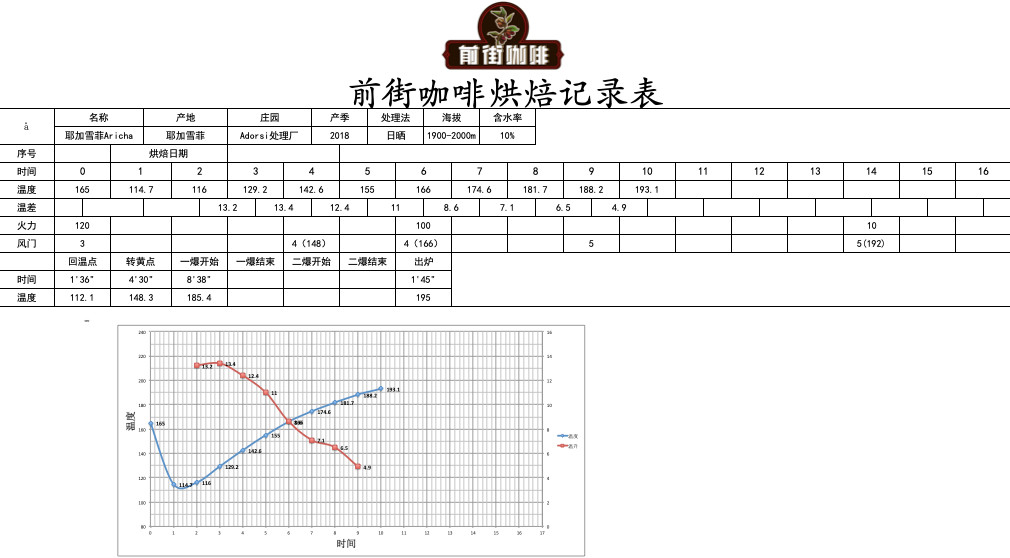
Charge the beans at 165°C with heat at 120 and the air damper at 3; the turning point arrives at 1'36". When the probe reads 148°C, open the damper to 4 and leave the heat unchanged. At 166°C the bean surface yellows, the grassy aroma fades completely, and the beans enter the drying phase—heat unchanged, damper at 5. At 7'37" the bean surface shows pronounced wrinkles and dark spots, and the toast aroma clearly shifts into coffee aroma: the prelude to first crack. Listen carefully for the crack from here. First crack begins at 8'38"; keep the damper unchanged, develop for 1'45" after the crack, and drop the beans at 195°C.
FrontStreet Coffee Aricha Color Values
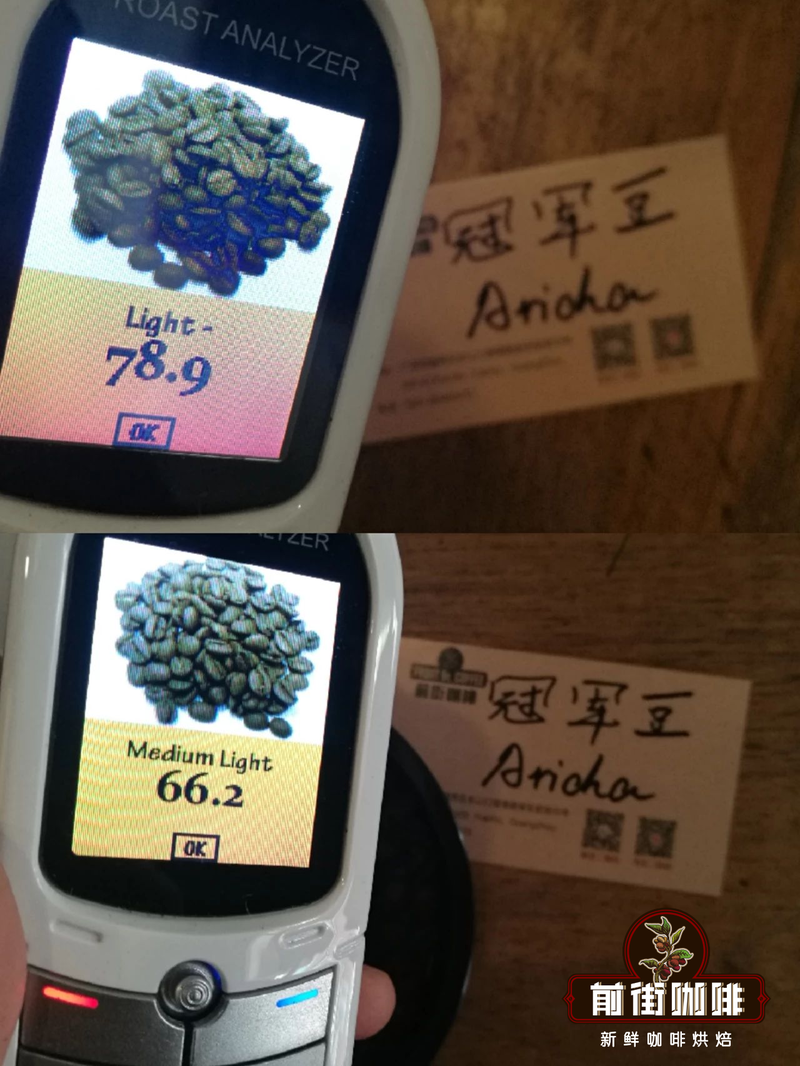
Agtron bean value 66.2 (lower image), Agtron ground value 78.9 (upper image), roast delta of 12.7.
FrontStreet Coffee Cupping Flavors:
Grape juice, jackfruit, fermented wine aroma, citrus, lemon
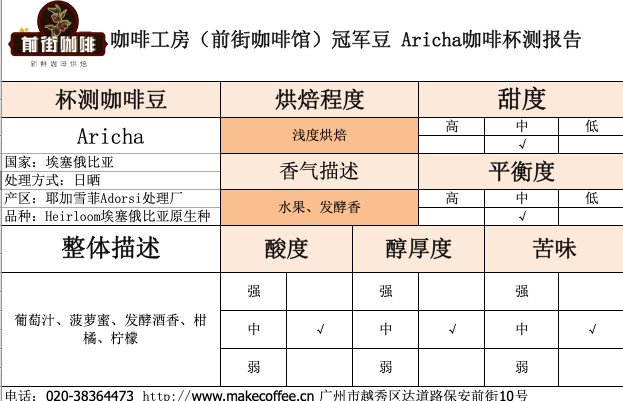
Yirgacheffe Aricha Natural
Region: Adorsi Washing Station, Yirgacheffe
Altitude: 1,900-2,000m
Processing Method: Natural
Grade: G1
Variety: Heirloom
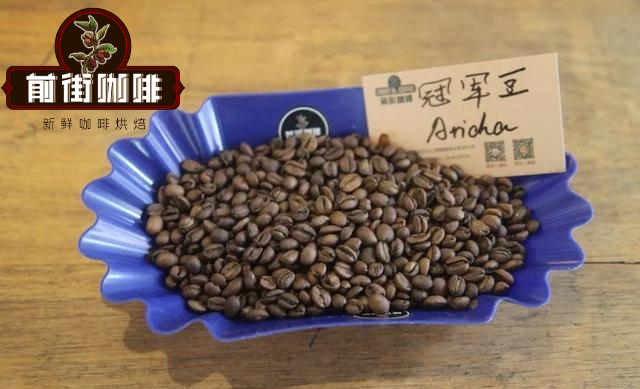
FrontStreet Coffee Pour-Over Recommendations
Dripper: V60
Water Temperature: 90-92°C
Coffee-to-Water Ratio: 1:15
Grind Size: Medium-fine, close to granulated sugar (grind setting BG-5R, 60% pass rate on a standard 20-mesh sieve)
Brewing Method: Multi-stage pouring. Start with 30g of water for a 30-second bloom, then pour in small circles up to 125g to finish the first stage. Once the water drops and the coffee bed is about to be exposed, pour again up to 227g and stop. When the bed is about to break the surface once more, lift out the dripper. (Timing starts at the bloom.) Total extraction time: 2 minutes.
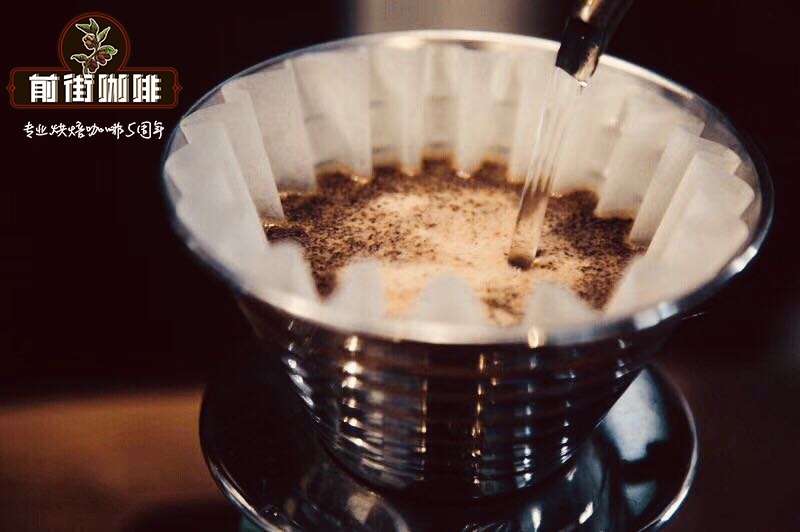
Brewed through the V60, this coffee opens with ripe fruit aromatics. The first sip brings an obvious fermented note and green grape; as the cup cools, lemon acidity and a creamy smoothness emerge, finishing with the sensation of mature grape juice.
FrontStreet Coffee Recommendation
Love this style of fruit-forward Ethiopian natural? FrontStreet Coffee's own Natural Red Cherry Yirgacheffe follows the same philosophy: only fully ripe, defect-free cherries are picked, screened at the mill, and sun-dried whole on raised beds, with the beans raked every 2-3 hours during the first days to prevent uneven heating and over-fermentation, then dried for three to five weeks before the dried pulp is stripped away. Because the fruit dries on the bean, the cup keeps classic Yirgacheffe florals while gaining tropical fruit aromatics—citrus-like acidity, berry juiciness, honeyed sweetness, and a creamy smoothness.
New to Ethiopian coffee? Start with FrontStreet Coffee's Washed Yirgacheffe instead: white jasmine, bright citrus and lemon acidity, and a clean tea-like finish at an entry-friendly price—the bean we most often recommend as a first step into Ethiopian specialty coffee.
Important Notice :
FrontStreet Coffee is a long-established specialty coffee roaster in Guangzhou China, selling freshly roasted beans from its own farm in Yunnan as well as dozens of carefully selected single-origin beans from around the world for both pour-over and espresso. The products deliver consistently excellent quality and great value, with shipping within 24 hours. Guangzhou's FrontStreet Coffee shop is recommended by many coffee lovers, and the beans are now available online at the Tmall 。
FrontStreet Coffee has moved to a new address:
FrontStreet Coffee Address: 315,Donghua East Road,GuangZhou
Tel:020 38364473
 Scan and follow the En Gafei WeChat official account. Please indicate that the reprint comes from "En Gafei".