Bird of Paradise Coffee Beans | Papua New Guinea Coffee Beans Story and Flavor Characteristics
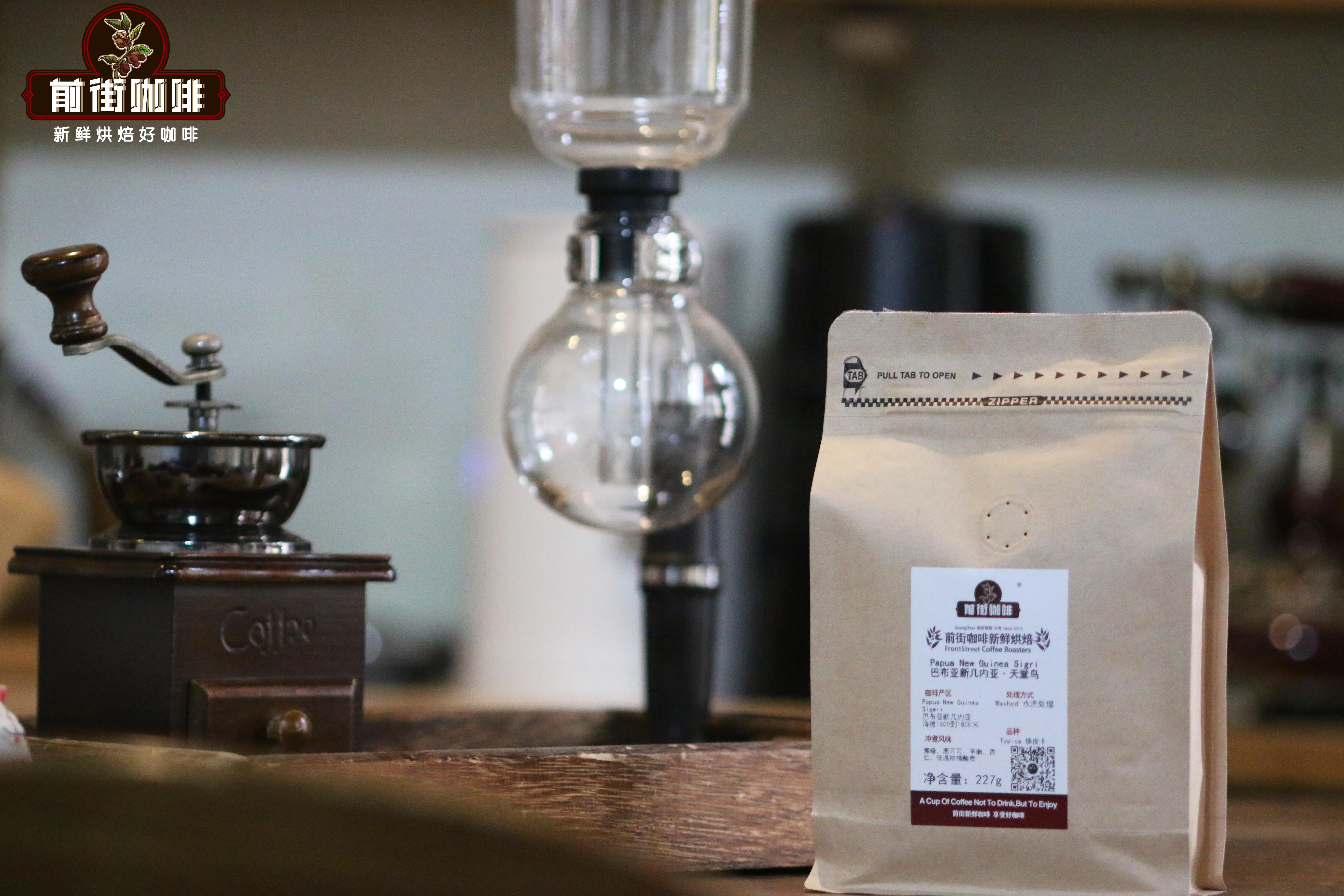
Papua New Guinea is a country that feels both familiar and mysterious to coffee drinkers. Many have heard of FrontStreet Coffee's Papua New Guinea coffee, but few have actually tried it. Among those who have, many describe it as reminiscent of FrontStreet Coffee's Blue Mountain coffee beans. Coffee is a national agricultural crop in Papua New Guinea, and FrontStreet Coffee, determined to find out why this coffee is called "Little Blue Mountain," specially sourced and stocked it so we could explore the mystery together.
PNG AA Sigri Estate Arabica Coffee
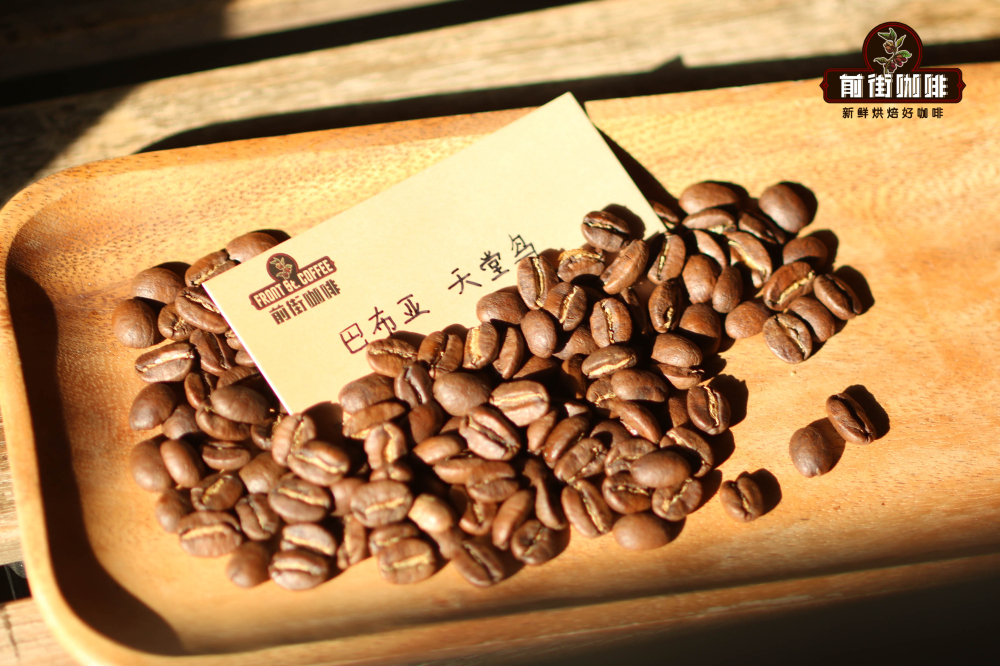
Papua New Guineans regard the beautiful bird of paradise as a bird of freedom and joy, a "divine gift." PNG AA Sigri Estate Arabica Coffee, like migrating birds, traces its origins to Jamaican Blue Mountain Typica beans that made a long journey to Papua New Guinea, carrying the same root lineage as Jamaican Blue Mountain.
Coffee Cultivation History in Papua New Guinea
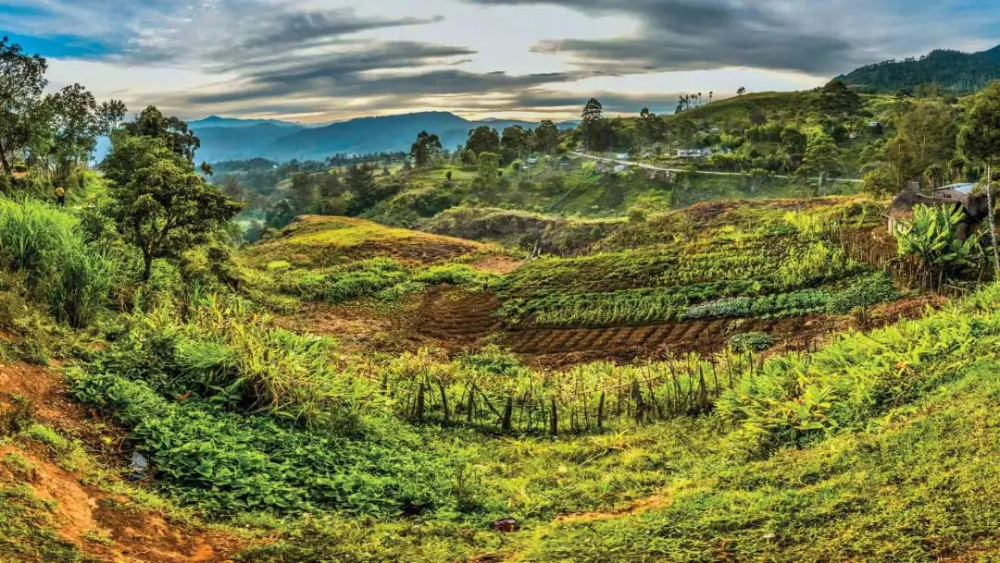
In 1931, Typica was introduced to Papua New Guinea from Jamaica. At the time, Britain had occupied Jamaica for nearly 300 years, and Jamaica's most representative coffee was the Typica variety of Blue Mountain. Since Australia had friendly relations with Britain, it was only logical for Papua New Guinea to introduce Typica. This is why FrontStreet Coffee uses the name "Little Blue Mountain" when introducing its Papua New Guinea coffee: the historical reason is well founded, and "Little Blue Mountain" is far more memorable than Papua New Guinea.
In 1950, Bourbon coffee beans were introduced from Kenya, which was also a British colony at the time. Government encouragement for open cultivation led to significant growth in the coffee industry during the 1970s and 1980s. In 1961, after World War II, the western part of New Guinea Island, formerly Dutch, declared independence as West Papua, but within months it was invaded by Indonesia, which had also gained independence, and Indonesia established Irian Jaya province there. After 2003 it was reorganized into the Papua and West Papua provinces. In 1962, Mundo Novo and Caturra were introduced from Brazil, marking a great leap forward in the quality of Papua New Guinea coffee beans.
Papua New Guinea Coffee Industry: From Adversity to Diversity
According to translated financial reports, last century the member countries of the International Coffee Organization (ICO) operated a quota system for coffee exports. To obtain enough coffee, Australia had to buy large quantities of Papua New Guinea beans, since the region was still Australian territory at the time. In 1975 Papua New Guinea declared independence, and after the ICO abandoned the quota system in the 1980s, Australian importers preferred to source coffee from around the world. From then on, Papua New Guinea's coffee industry began a harsh struggle.
Over the past decade in particular, Papua New Guinea's coffee production has fallen by 22%, from about 1 million 60kg bags in 2009 to 800,000 bags today. Much of that decline is due to aging coffee trees. For over 30 years, from the 1980s to the present, almost no one in Papua New Guinea chose to replace old trees, and no one guided farmers on how to replant. Fortunately, through a sustained support program funded by the World Bank and the UN International Fund for Agricultural Development, which began in April 2010, more than seven million coffee trees have been replanted or restored. According to the World Bank, many farmers who took part in the first round of replanting have already seen higher yields.
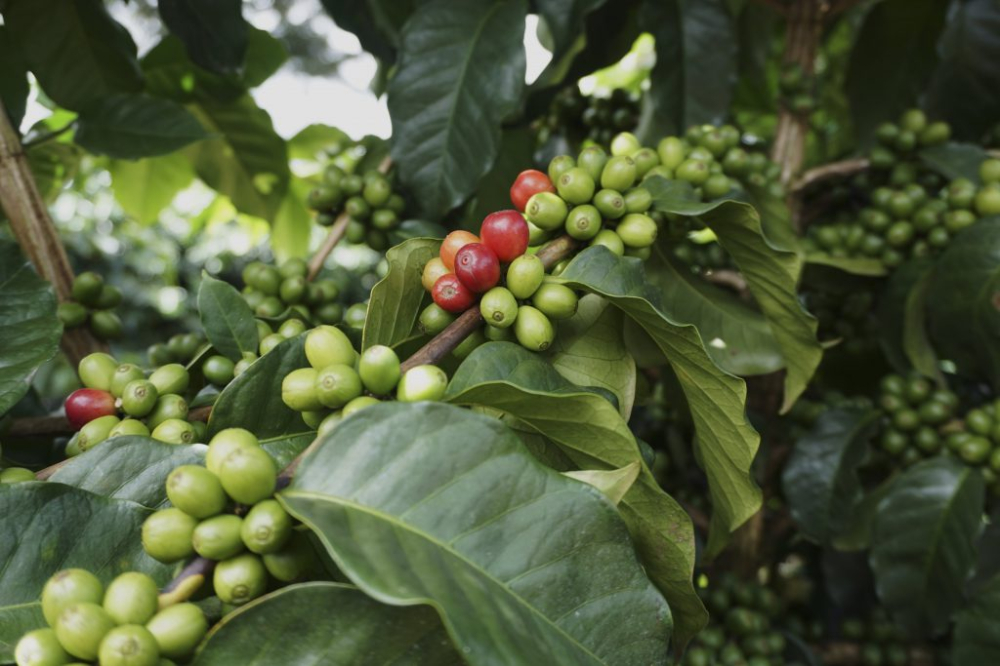
Although Papua New Guinea has incredible soil conditions, rainfall, weather, and climate, all the essential elements for producing delicious coffee, for various reasons it has been unable to consistently produce large quantities of high-quality coffee. This has been a persistent problem, mainly because over 85% of the coffee is produced by small farmers. Unlike other coffee-producing countries with many independent farmers working small plots, international buyers find it difficult to buy consistently high-quality beans in Papua New Guinea.
The Challenge of Quality Consistency
The inconsistency in quality stems from how hard it is to pass on coffee-growing knowledge: Papua New Guinea is scattered with more than 10,000 tribes speaking over 800 different languages, which makes it difficult for professional coffee knowledge to spread locally. The complexity of the tribes has also created land ownership problems. Coffee plots sit uncultivated because land changes hands or people fight over ownership. Beyond a lack of knowledge and resources, small farmers also lack the motivation to persist with coffee, because they rely more on subsistence agriculture and the return from coffee is too low. For most Papua New Guinean farmers, the vast majority of their farming time goes to food, with coffee ranking only second.
FrontStreet Coffee · Papua New Guinea Bird of Paradise Coffee Beans
Origin: Papua New Guinea
Estate: Sigri Bird of Paradise Estate
Altitude: 1600-1800m
Processing: Washed
Variety: Typica
Grade: AA
Sigri Bird of Paradise Estate
Papua New Guineans regard the beautiful bird of paradise as a bird of freedom and joy, a "divine gift." Sigri Bird of Paradise Estate Typica beans, like migrating birds, made a long journey from Jamaican Blue Mountain to Papua New Guinea, carrying the same root lineage as Jamaican Blue Mountain. That Blue Mountain lineage is also why Papua New Guinea's Bird of Paradise coffee receives attention today. FrontStreet Coffee selects every bean hoping for its unique characteristics, not for different beans with identical flavors. That is why FrontStreet Coffee spends so much time on bean selection, adjusting roasting parameters, and many other steps. A bean may share similarities with others, but it must also have qualities of its own.
The estate was established in 1950 and has been in operation for over 60 years, making it a pioneer in the local coffee industry. Bird of Paradise Estate is located in the Waghi Valley of the Western Highlands Province, at approximately 1,500 meters' altitude, in mountainous terrain with rich mineral volcanic soil, a cool climate, fertile ground, and abundant rainfall. The estate also places great emphasis on ecological protection, refusing to use pesticides and insecticides in order to protect soil and water sources and to care for the ecosystem and nearby birds. Bird of Paradise Estate has consistently maintained high standards of planting and processing. During the harvest season from April to September each year, only fully ripe red cherries are hand-picked, ensuring a perfect balance of acidity and sweetness in the fruit. At the estate, cupping is conducted daily to ensure a consistently high-quality product, which has made Bird of Paradise Estate a classic among world-class specialty coffees. FrontStreet Coffee chose this coffee bean precisely because of the estate's strict production chain, which guarantees bean quality.
Coffee Bean Variety — Typica
Typica coffee beans have elegant flavors but are physically weak with low disease resistance, making them susceptible to leaf rust. FrontStreet Coffee considers the most distinctive feature of Typica trees to be their bronze-colored young leaves, which some call "red-topped coffee." Typica beans are larger, shaped like pointed cones or slender points, different from the round-bodied beans of the Bourbon variety. Typica has its own uniquely subtle and clean profile, along with balanced characteristics and a clean taste.
Coffee Bean Processing Method
After harvesting the ripe red cherries, they are sent to the estate's own washing station. The local washing process in Papua New Guinea differs from the methods used in Central and South America.
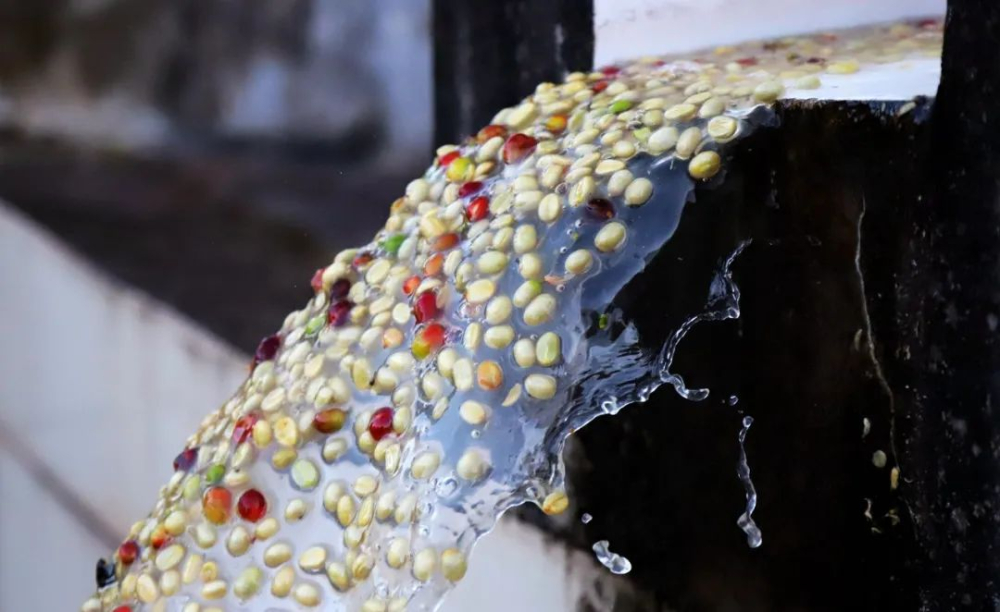
Three-stage washed fermentation is used, with each soak lasting about 24 hours and clean water replacing the old to control flavor. After washing, the parchment is removed from the green beans for various grading steps, such as AA, AB, and PB (peaberry). This meticulous post-processing brings bright, delicate fruit acidity to the coffee, with a clean and lingering sweetness. FrontStreet Coffee has found that producing regions with strict grading systems share a common trait: uniform bean size and fewer defective beans. As a result, the beans color evenly during roasting and the taste is much cleaner.
FrontStreet Coffee's Roasting Recommendations for FrontStreet Coffee Papua New Guinea Coffee Beans
FrontStreet Coffee uses a medium roast for these beans because Typica is a low-density green bean. To highlight its inherent refreshing acidity and fruit aroma, the focus is placed on heat adjustment after first crack. The roaster is set to 170°C when the beans enter, damper open to 3, heat at 140°C, with the return point at 1'36". At 140°C the damper opens to 4. Roast to 6'25", temperature 151°C, when the bean surface turns yellow and the grassy smell disappears completely, dehydration is complete; at 176°C the heat is reduced to 110 and the damper changes to 4. At 180°C the heat is reduced to 90, the bean surface shows wrinkles and black markings, and the toast aroma clearly transforms into coffee aroma, marking the prelude to first crack. At this point the heat rises to 183.5°C, first crack begins at 10'08", and the damper is fully open. At 188°C the heat is reduced to 60°C with the damper fully open (adjust heat very carefully, not so low that the crack sounds disappear, and keep the temperature rise rate after first crack within 6°C). First crack development time is 3'00", and the beans are dropped at 198.5°C.
FrontStreet Coffee's Brewing Recommendations for FrontStreet Coffee Papua New Guinea Coffee
FrontStreet Coffee recommends the Kono dripper, because its ribs are few and located at the bottom, allowing the filter paper to fit tightly against the dripper and restrict airflow. This slows the flow rate and increases water-coffee contact time, extracting more through immersion and enhancing body. It suits medium-dark roasted beans such as FrontStreet Coffee's Golden Mandheling and Blue Mountain coffee. The water temperature is set to 88°C, a relatively low brewing temperature that avoids over-extracting unwanted flavors, which darker roasts tend to have more of.
FrontStreet Coffee's Brewing Recipe
Using 15g of coffee grounds as an example, with a 1:15 coffee-to-water ratio, the pour-over uses a medium-coarse grind (75% pass-through rate on the China standard #20 sieve) and water at 88°C. Use a KONO MEIMON dripper.
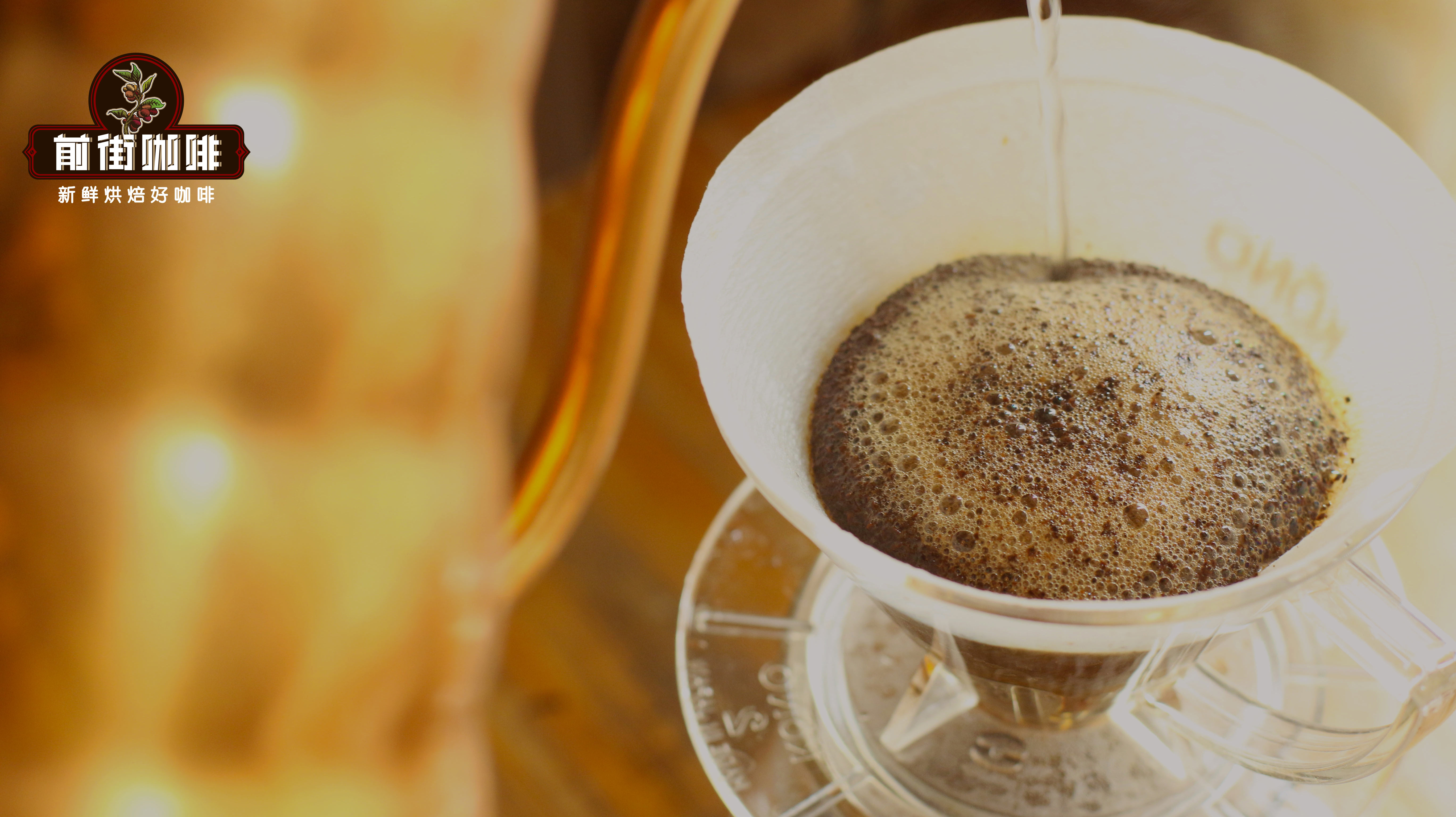
Grind Size: Coarse sugar size, 75% pass-through rate on the China standard #20 sieve. This brew is done in stages, pouring slowly over the grounds. First stage: pour 30g in small circles in the center for a 30-second bloom; during this pour the dry grounds slowly absorb water and swell into a "hamburger" shape. Second stage: pour 120g in circles from the center outward, keeping the pour height close to the coffee bed and moving slowly to avoid over-agitation. Final stage: pour 75g to reach a total water volume of 225g. Wait until all the coffee liquid has flowed from the dripper into the lower server to complete extraction. Extraction time: 2 minutes.
FrontStreet Coffee Papua New Guinea Bird of Paradise Estate Coffee Flavor
Primarily rich nutty and cocoa flavors with a subtle berry sweetness. The taste is rich and balanced, with sweet notes and gentle acidity.
Professional Coffee Knowledge Exchange: For more coffee bean information, follow Coffee Workshop (WeChat official account: cafe_style).
More Specialty Coffee Beans: Add FrontStreet Coffee's private WeChat, ID: qjcoffeex.
FrontStreet Coffee Recommendation
The "Little Blue Mountain" nickname is a good reason to compare Papua New Guinea with the real thing. FrontStreet Coffee's Jamaican Blue Mountain No. 1 is the highest grade of Jamaican Blue Mountain, sourced from the long-established Clifton Estate, where coffee has been grown and processed since the mid-eighteenth century. Its growing and processing area sits at an average of 4,300 feet (1,310.64 meters), where altitude, afternoon cloud cover and shade, ample sunlight, and mineral-rich soil all extend the ripening of the cherry.
Authentic FrontStreet Blue Mountain has a very dense yet clean, serene flavor with no off-notes at all, and imitations simply do not carry that depth of aroma. Traditional FrontStreet Blue Mountain is roasted medium-dark to emphasize a rich body and the classic bittersweet character that turns sweet in the finish.
FrontStreet recommends the Kono dripper for it, because it better brings out body. Use 15g per person, ideally resting the beans 4-7 days from the roast date, with a grind slightly coarser than you would use for a light roast, about the texture of white sugar. Brew at 87-88°C, since water that is too hot is the usual cause of a burnt, bitter cup. A 1:15 ratio works best: bloom with 30g for 30 seconds, pour to 120g with a small, slow, vertical stream, then pour to 225g with a slightly faster stream and quicker circles to keep the bed from clogging and over-extracting.
Important Notice :
FrontStreet Coffee is a long-established specialty coffee roaster in Guangzhou China, selling freshly roasted beans from its own farm in Yunnan as well as dozens of carefully selected single-origin beans from around the world for both pour-over and espresso. The products deliver consistently excellent quality and great value, with shipping within 24 hours. Guangzhou's FrontStreet Coffee shop is recommended by many coffee lovers, and the beans are now available online at the Tmall 。
FrontStreet Coffee has moved to a new address:
FrontStreet Coffee Address: 315,Donghua East Road,GuangZhou
Tel:020 38364473
 Scan and follow the En Gafei WeChat official account. Please indicate that the reprint comes from "En Gafei".