Characteristics and Story of Indonesian Aged Mandheling Wet-Hulled Process Coffee Beans
Welcome to our premium coffee knowledge series. Here we look at the stories and techniques behind the beans we roast.
Most of the time, we emphasize the importance of fresh coffee, highlighting the differences between new-crop coffee beans and old-crop beans and making everyone realize that they should drink fresh coffee. There is one exception, however: aged Mandheling. What makes it so special that it attracts coffee enthusiasts with its reputation as "expired" coffee?

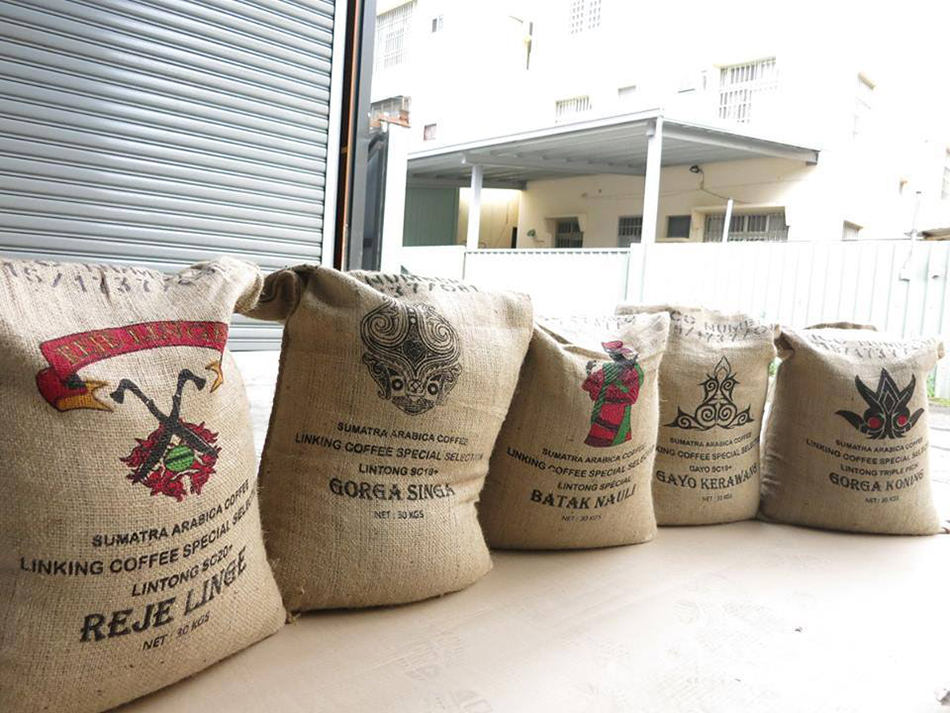
Aged coffee actually has a long history in Indonesia. Because early shipping was not so developed, transporting coffee from Indonesia to other countries took a considerable amount of time. Over time, the originally moisture-rich fresh coffee beans gradually dried, and with exposure to sea breezes they developed a rather special flavor. As modern shipping has significantly reduced transportation time, coffee with such special flavors has become a type of specially processed coffee bean. Processing aged beans is a technical skill that requires strict monitoring during the aging process. The warehouse's humidity and temperature have standard requirements, and the raw coffee beans must be turned periodically to prevent differences in humidity between upper and lower layers, or mold growth that would render them unusable. The aging process is not about losing flavor but about creating another kind of flavor, and a pleasant one at that.
What is Aged Mandheling?
It can be said that this was the result of an "accident." This story dates back to the Dutch colonial period in Indonesia. Sumatra was one of the world's major coffee-producing regions at the time, and the coffee produced had to supply the huge demand of European consumer countries. Indonesia continuously exported coffee beans to Europe. To ensure a continuous supply, coffee beans were appropriately stored. Because of external factors such as long transportation distances and exposure to sea breezes, however, the coffee beans developed a unique special flavor by the time they reached Europe, making European coffee connoisseurs eagerly seek them out.

People therefore discovered that by aging processed coffee beans for several years, the coffee's acidity gradually disappears, leaving a solid aftertaste and sweet after-notes. The flavor becomes as captivating as Pu-erh tea. We cannot, however, use "accidental" methods to produce aged beans, as this would undoubtedly add uncertain risks to coffee bean quality. We must clarify one point: "aged beans" are not simply coffee beans placed in a warehouse to wait for several years, because beans stored for too long will spoil or even become moldy and worm-eaten. Those are not "aged beans" but spoiled beans. The production model for aged Mandheling therefore gradually became standardized and mature.
Mandheling Aging Process
First, freshly picked coffee cherries must undergo conventional processing. For example, FrontStreet Coffee's aged Mandheling coffee beans are processed using the wet-hulled method. In this process, good beans, plump, large in screen size, and free of defects, must be carefully selected for aging. After selecting the coffee beans, they are stored in warehouses for aging.

The aging process must be conducted in the country of origin, stored in warehouses with temperature and humidity control or good ventilation. During aging, the beans must be frequently turned and checked for two purposes: first, to ensure even air contact and consistent dryness; second, to check for moldy or worm-damaged beans to prevent widespread infection.

Today's aged Mandheling typically has an aging period of 2-3 years. During this time, the coffee beans' acidity gradually diminishes and converts to sugars, and the color becomes deeper, mostly yellowish-brown or dark brown, making them quite recognizable.
What is Golden Mandheling?
In addition to aged Mandheling, many of you have also heard of "Golden Mandheling" coffee. So what does it mean? Mandheling coffee's fame originated from Pwani Coffee Company (PWN) successfully launching Mandheling in the Japanese market. Unlike many local green bean suppliers in Indonesia, PWN is the exclusive supplier of high-grade Golden Mandheling coffee, contracting the best Mandheling coffee producing regions in Indonesia. The Mandheling beans it produces are all premium quality. FrontStreet Coffee's Golden Mandheling coffee is genuinely from PWN.

The wet-hulled method saves a great deal of time and labor cost in green bean processing. The rapid process, however, also brings a higher defect rate, so only strict manual selection can remove defects that machines cannot screen out. PWN subjects purchased Mandheling green beans to one machine selection plus three manual selections, with quality far exceeding Indonesia's local highest G1 grade. To meet PWN Golden Mandheling production standards, the following requirements must be satisfied:
- Green bean screen size: 18-19 screen or above after first manual selection
- Fewer than 3 defective beans in a 300-gram green bean sample
- Green coffee bean grade: G1 level
- Dark green color, uniform size, neat shape

Here, FrontStreet Coffee would like to add that whether it is aged Mandheling or Golden Mandheling, both are processed using the local customary wet-hulled method after green bean harvesting.

This processing method originated because the local climate often has many rainy days and continuous typhoons, making it impossible to achieve the good weather required for sun-drying. The local economy is also not strong, so producers cannot afford the more expensive fully washed method. For these reasons, the uniquely local wet-hulled method was developed. The wet-hulled method is a rapid green bean processing method that removes the coffee cherry's skin and pulp, followed by brief fermentation and drying, then removal of the mucilage and parchment layer, continuing with the final drying stage until the moisture content reaches 12%. Mandheling coffee beans processed with the wet-hulled method clearly show varying degrees of compression cracks. FrontStreet Coffee believes this phenomenon is not a defect but one of Mandheling's original characteristics.

Before launching a coffee bean, FrontStreet Coffee always conducts cupping to taste and evaluate it. Cupping is an evaluation of coffee bean quality and flavor. Unified standards allow a more objective identification of the strengths and weaknesses of the flavors the beans present, as well as their characteristics. Through cupping, FrontStreet Coffee found that the Lintong Mandheling daily coffee presents rich nutty notes, with a hint of melon aroma in the aftertaste. As the temperature drops, herbal plant flavors emerge, with a mellow mouthfeel and a saturated aroma. PWN Golden Mandheling not only has aromas of dark chocolate, nuts, and caramel but also herbal spice and pine flavors, with a dark chocolate aftertaste, plenty of lingering finish, high cleanliness, and light fruit acidity as the temperature drops.
To return to the main point, since high-quality Golden Mandheling is hard to come by, how can we extract its essence? Below, we will use FrontStreet Coffee's Golden Mandheling as a demonstration to show everyone how to extract a cup of mellow and robust Golden Mandheling black coffee at home.
FrontStreet Coffee's Golden Mandheling Brewing Guide
- Dripper: Kono dripper
- Water temperature: 86°C
- Dose: 15 grams
- Ratio: 1:15
- Grind size: Medium-fine grind (EK43s grinder setting 11)
*Reason for choosing a Kono dripper: The Kono dripper has few ribs, located at the bottom, and the filter paper fits tightly against the dripper, which restricts airflow and increases contact time between water and coffee grounds, allowing the grounds to be fully extracted and enhancing the mellow mouthfeel. This dripper is therefore not only suitable for brewing FrontStreet Coffee's Golden Mandheling but can also be used for brewing medium-dark roasted coffee beans like FrontStreet Coffee's Brazil Queen Estate and FrontStreet Coffee's Jamaica Blue Mountain No. 1.

Brewing Method: Segmented Extraction
Use 30 grams of water for blooming for 30 seconds. Using a small water flow, pour in a circle to 125 grams, then pause. When the water level drops and is about to expose the coffee bed, continue pouring to 225 grams and stop. When the water level drops and is about to expose the coffee bed again, remove the dripper. Timing starts from the bloom. Extraction time: 2'00".
FrontStreet Coffee's Golden Mandheling Flavor Description:
Multi-layered, mellow and clean, highly balanced, with strong nutty and chocolate flavors, rich spice and caramel aromas, fruity notes, and a persistent aftertaste.
FrontStreet Coffee Recommendation
If the aged Mandheling story appeals to you, the most direct way to taste what Sumatra can do is the FrontStreet Lintong Mandheling. Indonesia's rainy season overlaps with the coffee harvest, so the local wet-hulled method was developed to dry the beans quickly: the parchment is removed while the beans are still half-wet, exposing the green coffee to the air and giving it the characteristic herbal and spice notes. FrontStreet's Lintong Mandheling comes from the Lake Toba area, and to present the classic style it is roasted medium-dark, low in acidity and full-bodied, with rich caramel, dark chocolate, and toast aromas and a long, sweet finish.
For the top of the range, the FrontStreet PWN Golden Mandheling is the obvious choice. PWN buys only premium Mandheling lots, and its Golden Mandheling is screened once by machine and three times by hand to produce complete, uniform, large, translucent beans. A medium-dark roast leaves it with plenty of roasted aroma, and the brewed black coffee is clean and full-bodied, ideal for anyone who dislikes acidity. To get the best from it by hand, use 87-88°C water, 15 grams of coffee, a 1:15 ratio, and a coarse-sugar grind, then pour in three stages of 30ml, 100ml, and 95ml to bring out the full body, the caramel sweetness, and the chocolate and nutty notes.
Important Notice :
FrontStreet Coffee is a long-established specialty coffee roaster in Guangzhou China, selling freshly roasted beans from its own farm in Yunnan as well as dozens of carefully selected single-origin beans from around the world for both pour-over and espresso. The products deliver consistently excellent quality and great value, with shipping within 24 hours. Guangzhou's FrontStreet Coffee shop is recommended by many coffee lovers, and the beans are now available online at the Tmall 。
FrontStreet Coffee has moved to a new address:
FrontStreet Coffee Address: 315,Donghua East Road,GuangZhou
Tel:020 38364473
 Scan and follow the En Gafei WeChat official account. Please indicate that the reprint comes from "En Gafei".