The Origin of Ethiopia's Gesha Village Estate: Did Gesha Coffee Truly Originate from Gesha Village?
The Origin of Ethiopia's Gesha Village Coffee Estate: Did Gesha Geisha Really Originate from Gesha Village?
The Origin and Development of Gesha Village Estate

The owner of Gesha Village is Adam Overton, an American who was not originally a coffee shop owner but a documentary filmmaker.
His wife, Rachel Samuel, is Ethiopian and works as a photographer. In 2007 the couple was commissioned to shoot a documentary about coffee in Ethiopia. As filming went on and they came into deeper contact with the land and people of Ethiopia, the dream of establishing their own estate began to take root.
In 2009 they met Willem Boot.
Who is he? Willem Boot is Dutch, and his family runs a coffee shop. He later emigrated to America and worked at the coffee roaster company Probat. In 2004 he served as a judge at the Best of Panama, the first time the Geisha variety appeared in competition. After one sip he was astonished by how heavenly it tasted, good enough to make you fly. So in 2006 he bought La Mula estate, then a little-known small farm, and planted 6,000 Geisha trees.
In the 2014 BOP competition, La Mula estate entered for the first time and took first place and eleventh place in the natural Geisha category. Famous estates such as Esmeralda, Kotowa, and Elida were defeated by this mere 8-year-old farm.
What Willem Boot most wanted to do was return to Ethiopia and find the original land where Geisha was born.
Yes, the Geisha variety was also found in Ethiopia, the birthplace of coffee.
In 1931, the Geisha coffee variety was found in a forest called Geisha Mountain in Ethiopia.
It was later brought back to Costa Rica for cultivation by Don Pachi, and then distributed to other estates.
At first it was a very low-yielding variety, but it had strong mold resistance and tall trees, so many estates planted it along their edges as a windbreak.
It was only in 2004 that Esmeralda estate isolated it, entered it in competition, and it became famous overnight.
After meeting Willem Boot, Adam and his wife deepened their idea of establishing a Geisha estate in Ethiopia.
So they flew to Ethiopia's capital, Addis Ababa. At first they hoped to build the estate relatively close to the capital.
But weighing the microclimate, soil, and other natural conditions they had observed in Panama, they finally settled on the Bench-Maji region, in southwestern Ethiopia near South Sudan. Many places in this area are called Geisha villages, and it is the most likely area in which to find original Geisha.
They decided to establish their estate here and named it "Gesha Village Coffee Estate."
In 2011, Willem Boot came to the estate's groundbreaking ceremony and served as its consultant.
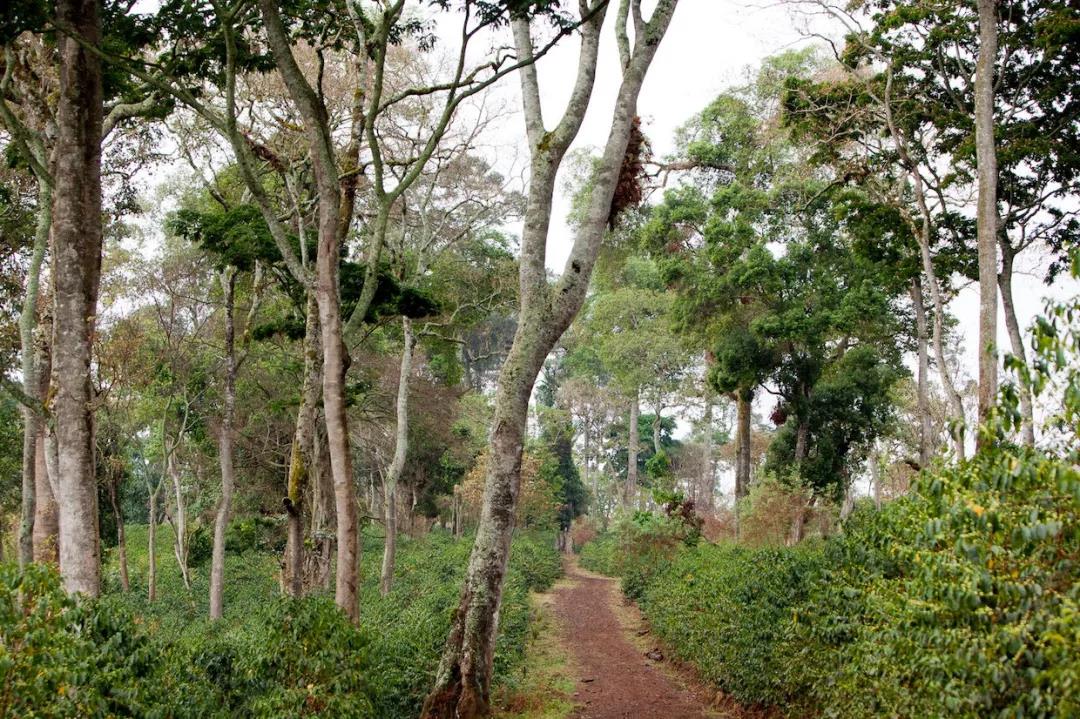
Something magical happened: not far from the estate, in a primary forest locally called Gori Geisha, they discovered native coffee varieties very similar to those at La Mula estate.
The entire forest was filled with the fragrance of coffee flowers. They came to believe deeply that this was the place where Geisha was originally found, and that this variety was the original native species. Subsequent variety identification confirmed the idea.
So the estate planted two types of Geisha: one is Gori Geisha from this forest, and the other is the Geisha 1931 variety that was originally discovered.
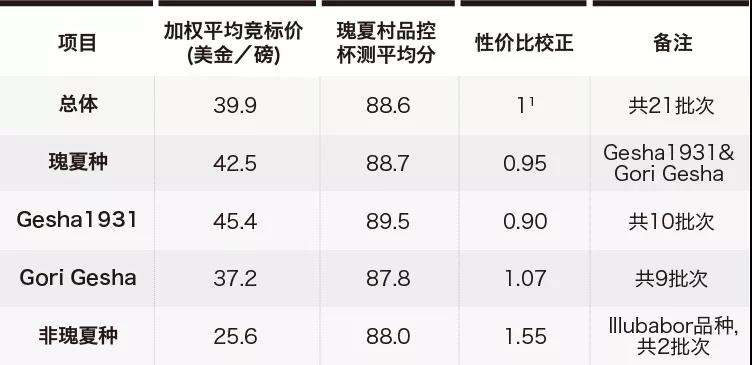
2017 Gesha Village Coffee Estate Independent Auction Data Overview
Gesha Village Coffee Estate's first global public auction opened at 9 AM on May 31, 2017 (BST time), with nearly 3 hours of intense bidding. Buyers from a number of countries and regions, including Hong Kong, Japan, and Greece, took part and successfully won 21 auction lots.
Gesha Village owners Adam Overton and Rachel Samuel took part in an expedition to collect seedlings from the forest; they now cultivate several Gesha versions from that expedition in pursuit of the highest quality goals. Rachel says: "Gesha is renowned in the industry for its high quality, but Ethiopia has not become an important part of its story, even though Gesha originally comes from here. We are excited to help develop the specialty coffee market in the Gesha region so this amazing coffee can finally be offered in its birthplace."
Only a few estates in the world can hold their own auctions, the most famous being Panama's Esmeralda, Guatemala's Injerto, Brazil's Daterra, Nicaragua's Mierisch, and Ethiopia's Gesha Village Estate.
Gesha Village Coffee Estate is completely different from most Ethiopian farms. It is not a small farm but a large 500-hectare farm with its own washing station and laboratory, located in the southwest near the Sudan border. Most striking is that the entire farm grows only Geisha varieties, not the typical Ethiopian native varieties whose exact breed cannot be determined. Gesha Village divides the farm into 8 blocks with 3 main Geisha varieties. All Geisha seeds are collected from nearby forests, not from Panama.
FrontStreet Coffee's Analysis of Gesha Village Gesha Green Beans
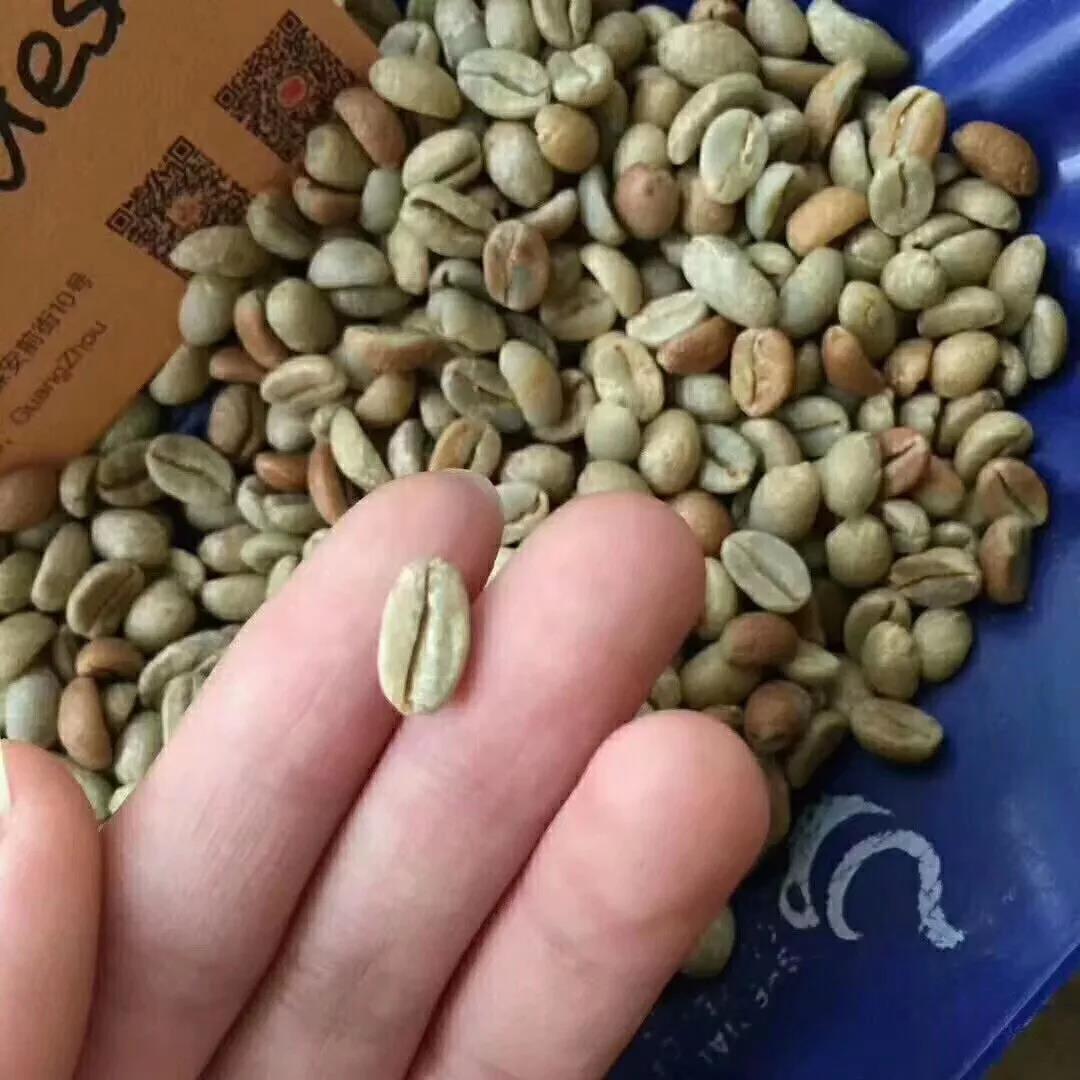
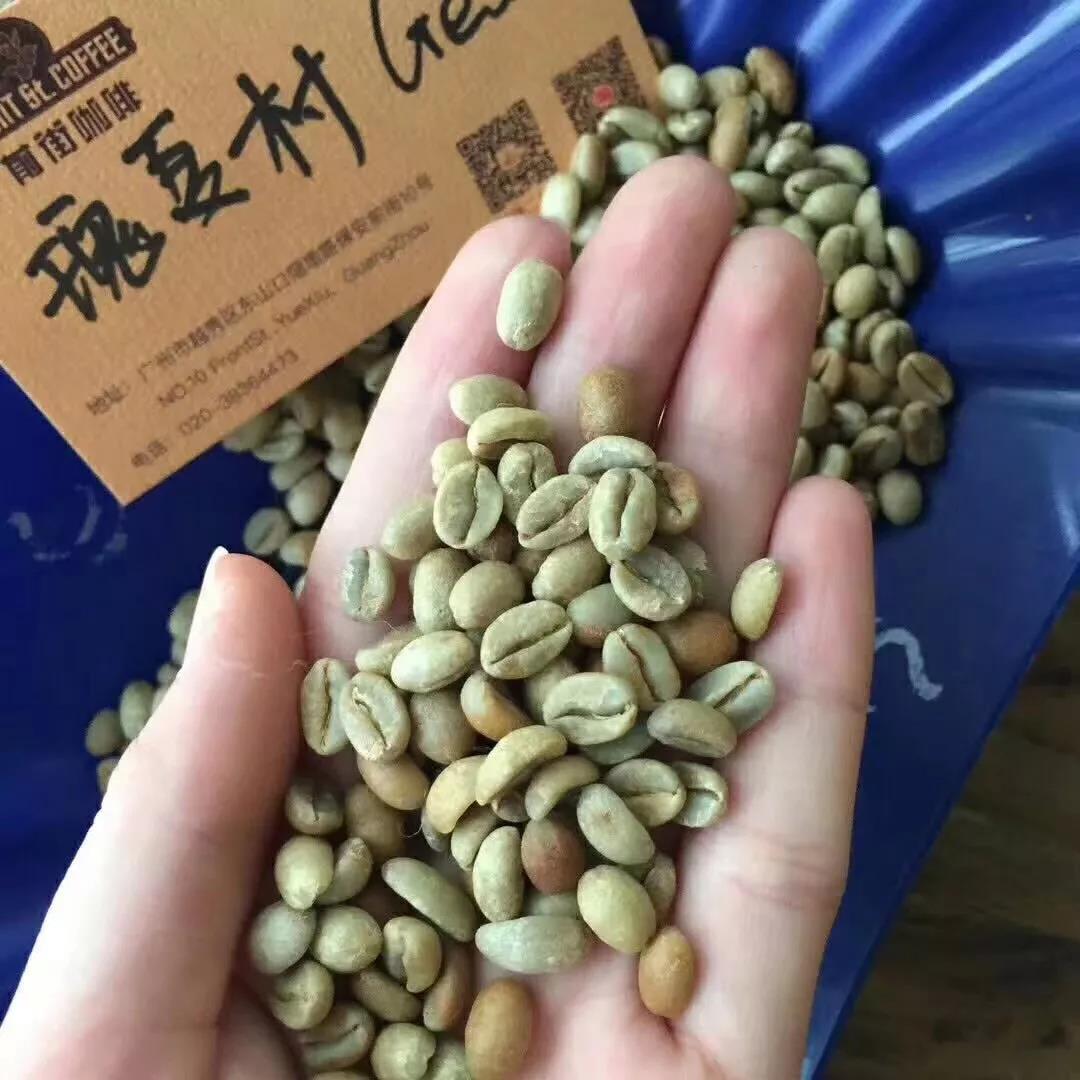
The green beans are smaller than Panama's. Washed Gesha green beans have a very beautiful blue-green color, while natural Gesha green beans are green with a slight yellow cast and a jade-like warmth. They smell of fresh grass, peaches, and berries, with the unique milky sweet aroma of oolong tea that most coffee beans do not possess. Aroma and flavor often require associative thinking, but the faint tea aroma is something anyone can clearly feel.
FrontStreet Coffee's Cupping Report:
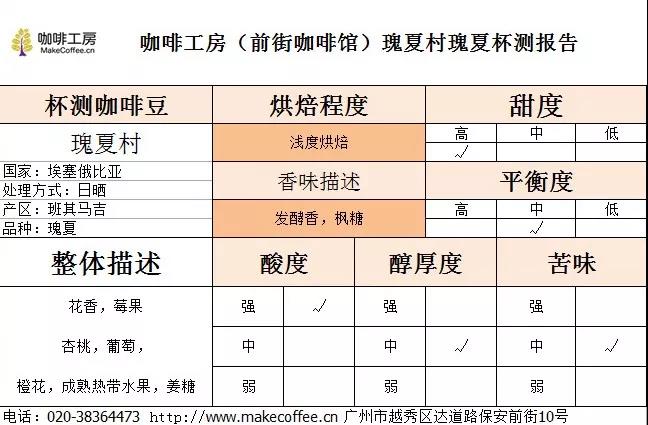
The dry aroma is wine-like with apricot; the wet aroma has the sweetness of orange juice, jasmine fragrance, sweet peach, wine aroma, and pineapple, bright and rich. Slurping reveals citrus and tropical fruit aroma, ripe fruit fragrance, berry notes, citrus, and a light fermented wine aroma. The acidity is clear and bright, the texture smooth, with grape, maple, wild ginger, and delicate fruit acidity. The mouthfeel is clean and balanced, with a long, lively fruity sweet aftertaste.
FrontStreet Coffee's Recommended Brewing Parameters for Gesha Village Gesha:

Recommended brewing methods: siphon and pour-over.
Grind size: 3.5 (Japan Fuji R440).
Water temperature: 89°C.
V60 dripper, 15 g coffee, water temperature 91-92°C, grind 3.5, water-to-coffee ratio close to 1:15.
35 g water for bloom, bloom time 30s.
Pouring stages: pour water to 100 ml, stop, then slowly pour to 225 ml.
That is: 30-100-95.
Other Drip Extraction Recommendations:
French press: 3.5-4 grind size, water temperature 92°C.
AeroPress: 2.5 grind size, water temperature 88°C.
Pour-over: 3.5 grind size, water temperature 89°C.
A 3.5 grind with 90°C water.
FrontStreet Coffee Recommendation
Gesha Village is unusual for Ethiopia: a single large estate, all Gesha, every seed traced to the nearby Gori Gesha forest rather than to Panama. FrontStreet Coffee carries two lots that capture how the estate separates its output. FrontStreet Gesha Village Gold Label is the Gesha 1931 variety, about 10% of total production and the estate's top tier outside of auction, a frequent choice for competition baristas. It is given a refined natural process, and cupping it shows complexity across the dry aroma, the sip, and the long finish. FrontStreet Gesha Village Red Label is the Gori Gesha variety, roughly 15% of production, scoring 88 points or above on the SCA 100-point scale, offered as a single-terroir series with fully traceable lot information including farm block, variety, and processing date.
For an entry into the variety without going to the estate tier, FrontStreet Genlana Gesha comes from a processing station established in 2014 in the Genlana area on the border of Ethiopia's Kochere and Genlana Abaya zones, where the coffee area runs to as many as 700 hectares, much of it uncultivated, with fertile soil and abundant shade trees. Picked as fully ripe cherry and dried on raised beds for 14 to 20 days depending on the weather, this natural Gesha is roasted medium-light and shows bright citrus acidity, an elegant ginger-lily floral note, ripe fruit sweetness, and the fine, silky finish that marks the variety.
Gesha is a hard bean that can sink and clog the dripper, so FrontStreet suggests grinding to a medium-fine size, roughly fine caster sugar, and brewing at 91°C. The standard recipe is 15 g in a small Hario V60 at a 1:16 ratio, poured in three stages: 30 g for a 30-second bloom, a slow circling pour to 125 g, a pause until the bed drains halfway, then a final slow pour to 225 g, with total extraction finishing in about 2:10 to 2:20.
Important Notice :
FrontStreet Coffee is a long-established specialty coffee roaster in Guangzhou China, selling freshly roasted beans from its own farm in Yunnan as well as dozens of carefully selected single-origin beans from around the world for both pour-over and espresso. The products deliver consistently excellent quality and great value, with shipping within 24 hours. Guangzhou's FrontStreet Coffee shop is recommended by many coffee lovers, and the beans are now available online at the Tmall 。
FrontStreet Coffee has moved to a new address:
FrontStreet Coffee Address: 315,Donghua East Road,GuangZhou
Tel:020 38364473
 Scan and follow the En Gafei WeChat official account. Please indicate that the reprint comes from "En Gafei".