Are Ethiopian Gesha Village and Panama Gesha Coffee Beans the Same? Pour-Over Brewing Recommendations
The Geisha variety was first discovered in 1931 in the Geisha forest in Ethiopia and later sent to the Coffee Research Institute in Kenya. In 1936, it was introduced to Uganda and Tanzania; in 1953, Costa Rica introduced it. FrontStreet Coffee has acquired several Geisha coffee beans, including Costa Rica Small Candle Estate, Panama Esmeralda Estate Geisha, and Ethiopia Geisha Village Geisha coffee.
The Rise of Geisha Coffee
In this article, FrontStreet Coffee mainly shares Geisha coffee beans from Panama's Esmeralda Estate and Ethiopia. For a long time, not many people paid attention to Geisha. Until one day, Don Pachi initially brought it from the small town of GESHA in southwestern Ethiopia to Costa Rica, then Geisha traveled along the southern route into Panama. Panama's Esmeralda Estate separated it from other varieties and won the national coffee competition championship, officially bringing Geisha into everyone's spotlight.

Regional Differences: Panama vs Ethiopia Geisha
So what's the difference between Panama Geisha and Ethiopia Geisha Village Geisha? FrontStreet Coffee believes that many factors affect a coffee's flavor, the most important being climate, altitude, and coffee bean processing methods. Panama is located in North America, while Ethiopia's Geisha Village is located in Africa. The climates in these places are very different, which means the Geisha coffee flavors from these two regions are destined not to be exactly the same.
Cupping Analysis: Ethiopia Geisha Village
FrontStreet Coffee has cupped both Panama Esmeralda Estate and Ethiopia Geisha Village coffee beans. When cupping Geisha Village Geisha, FrontStreet Coffee chose a cost-effective green label Geisha coffee from their selection. Its dry aroma carries very distinct berry notes. After pouring hot water, as the coffee grounds gradually moisten, the aroma becomes more of ripe fruits. When FrontStreet Coffee began tasting this green label, besides the rich berry sweetness, it also carries cherry and honey flavors with a finish that has the unique fermented aroma characteristic of natural processing. When the coffee cools, FrontStreet Coffee tastes more berry and caramel flavors, with noticeable sweetness and a long-lasting aftertaste.

Cupping Analysis: Panama Esmeralda Estate
To distinguish the flavor differences between these two Geisha coffees, FrontStreet Coffee also selected a Panama green label for cupping. First, 11.3 grams of this green label coffee beans were ground and poured with 94°C hot water. Within these four minutes, one can smell the wet aroma of the coffee grounds. After four minutes, the crust can be broken, skimmed, and tasting can begin. Through cupping, FrontStreet Coffee found that the Esmeralda Estate's green label has excellent clarity with no off-flavors, very smooth mouthfeel, with more prominent floral and tea-like notes.
The Geisha Village Geisha tends toward candied fruit flavors and has higher sweetness. The flavor differences between these two green labels partly stem from growing altitude. Geisha Village Geisha varieties are generally grown above 1900 meters, while Panama Geisha coffee altitudes reach only around 1800 meters maximum. Therefore, altitude is also one of the reasons for the different flavors between these two coffees.

Panama's Unique Growing Conditions
According to FrontStreet Coffee's understanding, Panama Geisha coffee is grown in the western part of the country, near Costa Rica and close to the Pacific coast. The average annual temperature ranges from 16°C to 25°C, with average rainfall of about 3500 millimeters. Geisha coffee is particularly picky about its growing environment, requiring high altitude, cloud shade, fertile soil, and sufficient accumulated temperature. Microclimates are the most important resource that makes Panama's unique coffee one-of-a-kind. Panama's east-to-west orientation allows cold air currents to flow through the central mountain range and converge above 6500 feet, creating multiple microclimates in the Boquete and Volcán regions, making them the source of Panama's unique Geisha coffee flavors.

Ethiopia Geisha Village: The Original Homeland
Gori Geisha Forest is where the Geisha variety was first discovered. They collected seeds from native Geisha trees, and after careful selection, sent the seeds to professional institutions for genetic testing, confirming this as the original collection site of the Panama Geisha variety. Subsequently, by studying coffee tree morphology, bean appearance and size, and cupping results, they selected the Geisha variety closest to today's Panama Geisha and began seedling cultivation. Geisha Village not only grows Geisha but also native varieties called Illubabor.
Geisha Village covers a total area of 471 hectares. Since 2011, it has gradually expanded its growing area. As of 2017, the planting area reaches about 320 hectares, making it one of the world's largest Geisha estates. To better manage and refine coffee flavors, the estate owner divided Geisha Village into 8 major zones, further numbering each batch within these zones.
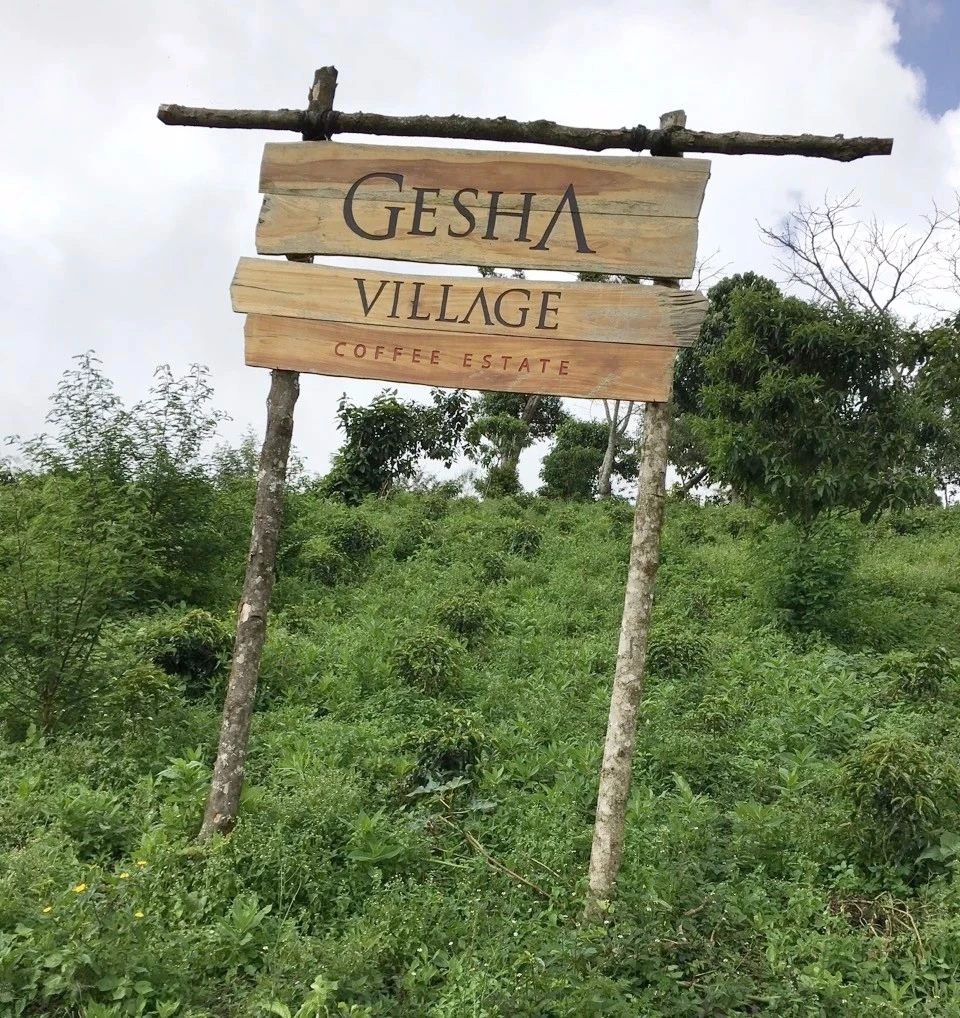
It's worth mentioning that some Geisha estates in certain producing regions may not have very prominent differences between batches due to their smaller scale. But for a large estate like Geisha Village, differences between plots are equivalent to differences between small estates and large estates. Therefore, the estate owner has implemented very detailed plot numbering to facilitate later management and flavor traceability.
The western side of the estate has relatively higher terrain, so the OMA, SURMA, and SHEWA-JIBABU plots have slightly higher altitudes. The southern side has a higher proportion of shade, while the northern side receives longer sunlight exposure. Among the eight plots, estate managers select the most suitable varieties for each plot based on microclimate differences such as altitude, soil conditions, and shade conditions, ensuring each major plot can form distinct characteristics.

Green Bean Characteristics
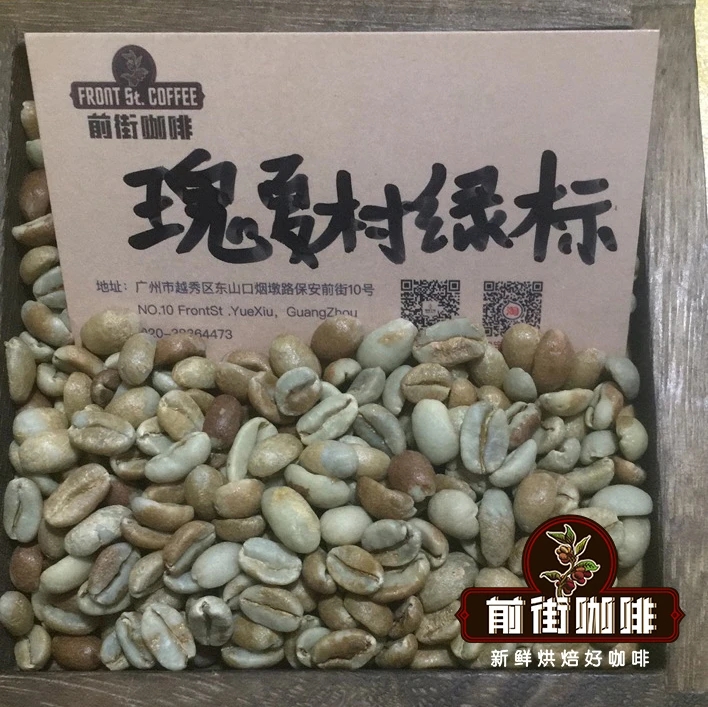
FrontStreet Coffee found that Geisha Village's green beans are smaller than Panama's. Washed Geisha coffee green beans have a beautiful blue-green color, while natural processed Geisha coffee green beans have a beautiful green with slight yellow undertones, with a jade-like warm texture. They smell like fresh grass, peaches, berries, and have the unique milk tea sweetness that most coffee beans don't possess - it seems aroma and flavor require associative thinking, but the faint tea notes are clearly perceptible to us.
FrontStreet Coffee's Pour-Over Brewing Method
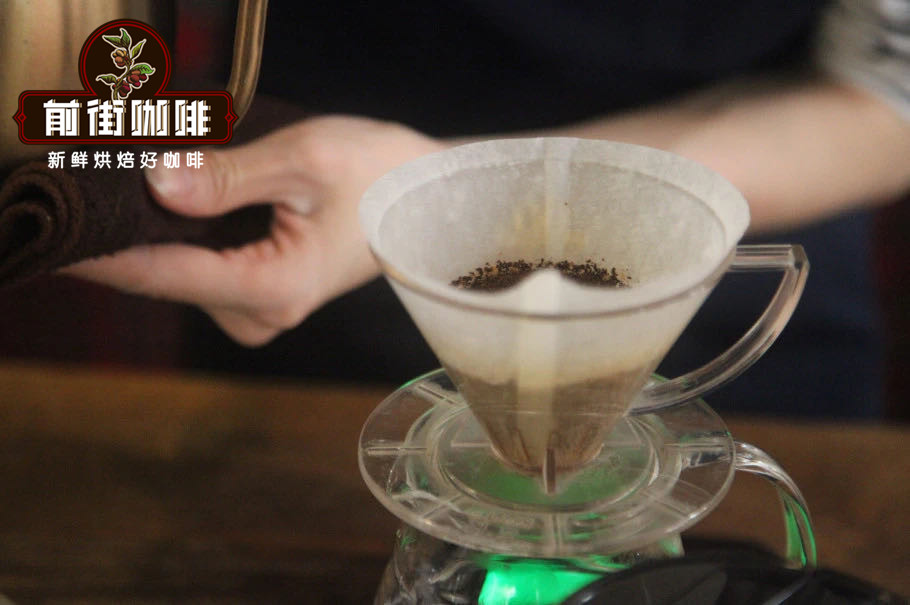
To improve Geisha coffee extraction rate while avoiding over-extraction and highlighting the sweet and sour flavor layers, FrontStreet Coffee's baristas use a V60 dripper. The V60 dripper's body has flow ribs connecting the top and bottom and a large central hole that accelerates water flow, while the spiral-shaped air vent design extends the water flow path, increasing contact time between coffee grounds and hot water. Each water stream converges along the grooves toward the dripper's center point, concentrating pressure on the coffee grounds and resulting in richer layered extracted coffee.
Dripper: V60
Water Temperature: 91-92°C
Coffee Amount: 15g
Coffee-to-Water Ratio: 1:15
Grind Size: Fine sugar size (80% passes through #20 sieve)

Three-Stage Extraction: First stage: Use 30g of water for a 30-second bloom, pouring in even circles to form a dome. Second stage: Pour 95g of hot water. When the coffee bed drops to halfway, begin the third stage by pouring 100g until all coffee has finished dripping. Note to start pouring from the center point, using a small, gentle stream in circles throughout to avoid uneven extraction. Finally, after the coffee has finished dripping, gently shake to mix, and you can start tasting Geisha's flavors from high temperature.
FrontStreet Coffee suggests that when using a gooseneck kettle for pouring, do not stop the water flow, to avoid losing the coffee's flavor! At this point, you can enjoy a delicious cup of Geisha coffee!
FrontStreet Coffee Recommendation
Geisha translates from the English "Geisha," and it is one of the most popular varieties within Arabica. Its singular floral fragrance and superb sweet-sour balance have won over countless coffee lovers, while low yields, weak disease resistance, and demanding cultivation and management keep its price high. To find a Geisha that is both delicious and affordable, it helps to know the main types. FrontStreet Coffee's Esmeralda Red Label Geisha, formally "Esmeralda Special," grows between 1600 and 1800 meters; every lot must cup above 90 points, carries its own independent number, and comes from a single small plot, so buyers can choose according to subtle flavor preferences. The Green Label, originally "Private Collection," does not emphasize plot detail the way the Red Label does - it is a blend of lots from several plots that showcases the estate's signature high-altitude Geisha character, which makes the Green Label a remarkably good value.
Newcomers who want a first taste of the famed "Geisha flavor" are usually pointed toward FrontStreet Coffee's Boquete Geisha, an entry-level Panama Geisha that delivers the classic orange-blossom honey charm, oolong-like tea body, and finely layered fruit sweet-sour at an approachable price. Among the higher-tier options, FrontStreet Coffee's Geisha Village Gold Label is the Gesha 1931 variety and accounts for 10% of the village's total production, roasted with a refined natural process for complex, lingering cups; the Geisha Village Red Label belongs to the Gori Gesha variety, makes up 15% of production, scores 88 points or higher on the SCA 100-point scale, and is fully traceable by lot.
On the brewing side, Geisha's light-to-medium floral-fruit roast is dense and tends to clog the dripper, so FrontStreet Coffee suggests a grind of fine sugar consistency (about 78% passing a Chinese-standard No. 20 sieve) and a water temperature of around 91°C. A 15g dose with a small Hario V60 and a 1:16 ratio works well: bloom to 30g for 30 seconds, then pour in small circles to 125g, wait for the bed to drop halfway, then continue to 225g, finishing in roughly 2 minutes 10 seconds to 2 minutes 20 seconds.
Important Notice :
FrontStreet Coffee is a long-established specialty coffee roaster in Guangzhou China, selling freshly roasted beans from its own farm in Yunnan as well as dozens of carefully selected single-origin beans from around the world for both pour-over and espresso. The products deliver consistently excellent quality and great value, with shipping within 24 hours. Guangzhou's FrontStreet Coffee shop is recommended by many coffee lovers, and the beans are now available online at the Tmall 。
FrontStreet Coffee has moved to a new address:
FrontStreet Coffee Address: 315,Donghua East Road,GuangZhou
Tel:020 38364473
 Scan and follow the En Gafei WeChat official account. Please indicate that the reprint comes from "En Gafei".