The Importance of Even Blooming in Pour-Over Coffee: Experimental Summary on Blooming Techniques
The Art of Blooming in Pour-Over Coffee
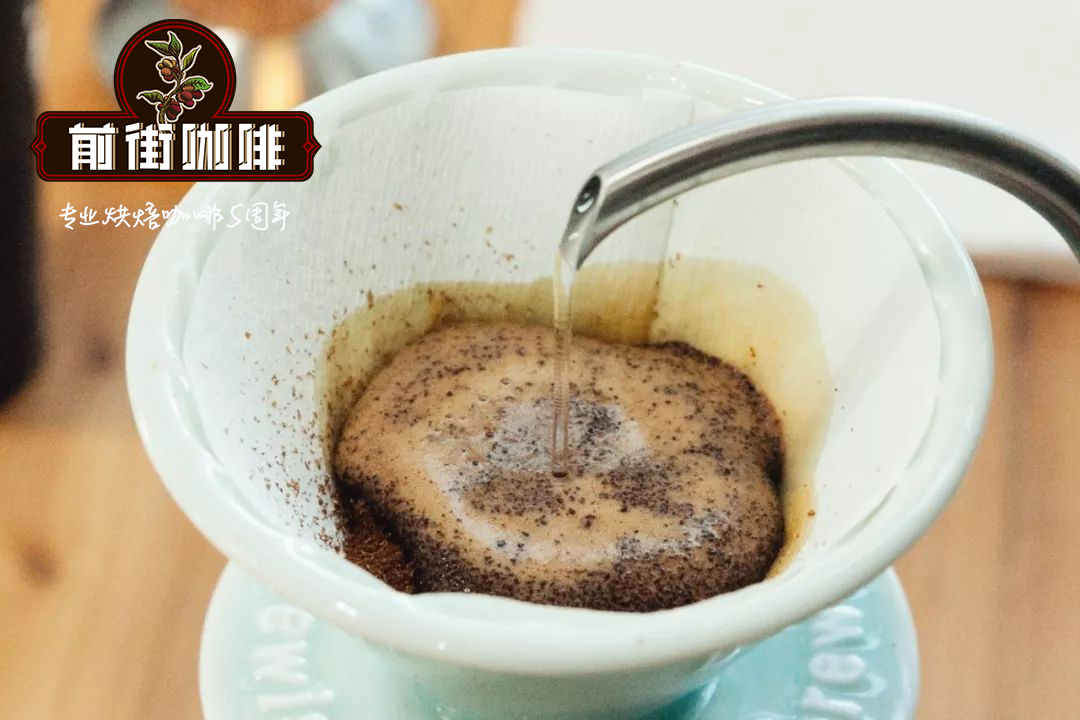
The first step in pour-over brewing is blooming.
Purpose of Blooming
The purpose of blooming: to release carbon dioxide, increase the extraction rate and reduce channeling.
There is usually more than one way to achieve this. You can simply pour water in a circular motion and let the carbon dioxide release naturally, or you can pour in a circular motion and then use external assistance. When we compare the two side by side, will there be a meaningful difference in taste?
For this comparison I used two different blooming methods and two different coffees.
The work was divided into two groups in total.
Except for the blooming method, all other brewing conditions were kept identical. We tried our best to avoid the impact caused by manual pouring.
Group One: FrontStreet Coffee Ethiopia Yirgacheffe Kochere Buna Nafaka
Processing method: washed
Variety: local heirloom varieties
Altitude: 1900-2100 meters
Using the same coffee, comparing different blooming methods:
Method 1: Simple circular pouring to naturally release carbon dioxide
| Dripper | Grind size | Dose | Water temperature | Bloom | Total 229g |
| V60 | 4K | 15g | 90°C | 44g 35s | 1:59 |
Flavor: ginger flower, yellow lemon, fruit pulp, Earl Grey tea
With the sweet-and-sour aroma of ripe yellow lemon as the main tone, the other flavors are quickly overwhelmed after a few more sips. The mouthfeel is very smooth, and it gradually becomes more singular as the temperature drops.
Method 2: Circular pouring with external assistance (tilting at angles and pushing up, down, left and right)
| Dripper | Grind size | Dose | Water temperature | Bloom | Total 229g |
| V60 | 4K | 15g | 90°C | 43g 35s | 2:08 |
Flavor: ginger flower, yellow lemon, orange peel, fruit pulp, Earl Grey tea
Compared with the previous cup, this one has more layers and better overall balance. As the temperature changes, the aftertaste sweetness lasts longer and the mouthfeel is slightly more viscous.
Group Two: Kenya Thika ASALI
Processing method: Kenya double-washed
Variety: SL28, SL34
Altitude: 1500-1700 meters
Method 1: Simple circular pouring to naturally release carbon dioxide
| Dripper | Grind size | Dose | Water temperature | Bloom | Total 228g |
| V60 | 4S | 15g | 90°C | 36g 30s | 1:43 |
Acidity dominates, with complex flavors intertwined together.
Method 2: Circular pouring with external assistance (tilting at angles and pushing up, down, left and right)
| Dripper | Grind size | Dose | Water temperature | Bloom | Total 229g |
| V60 | 4S | 15g | 90°C | 36g 30s | 1:53 |
Clearer, more balanced and sweeter.
Conclusion
Before brewing, I did not decide which method would give the better result. Looked at simply, though, a significant difference appears. In both groups, the total extraction time was noticeably longer when external assistance was used for blooming.
This makes me suspect that the two cups brewed without external assistance during blooming may have had some particles that were not fully saturated with water. Water follows the path of already-wetted areas, while unsaturated particles, being dry, resist and cause channeling. That lets water run quickly through channels, lowering the extraction concentration in some parts and increasing the unevenness of extraction, which leads to a shorter total extraction time and incomplete extraction, making the coffee taste less balanced, more singular and more acidic.
FrontStreet Coffee Recommendation
The experiment used FrontStreet Coffee's Ethiopia Yirgacheffe Kochere Buna Nafaka, a washed Yirgacheffe from 1900-2100 meters, and the same qualities make the wider Yirgacheffe range a good choice for practicing bloom technique. FrontStreet Coffee's washed Yirgacheffe staple is known for white jasmine, bright citrus and lemon acidity and a tea-like body, and its approachable price has made it the first specialty coffee for many drinkers. FrontStreet Coffee's Gutingding Cooperative coffee, from the Woka area at the southeastern end of Yirgacheffe, follows the most traditional washed process and adds a clear, elegant white floral note.
For comparison, FrontStreet Coffee's natural Red Cherry shows what a different processing method does to the same kind of acidity: dried whole on raised beds for three to five weeks, it keeps the Yirgacheffe character while adding tropical fruit, a berry-juice body and honey sweetness. Whichever you choose, a finer, more even grind and a careful bloom make the differences in these floral and citrus notes far easier to read in the cup.
Important Notice :
FrontStreet Coffee is a long-established specialty coffee roaster in Guangzhou China, selling freshly roasted beans from its own farm in Yunnan as well as dozens of carefully selected single-origin beans from around the world for both pour-over and espresso. The products deliver consistently excellent quality and great value, with shipping within 24 hours. Guangzhou's FrontStreet Coffee shop is recommended by many coffee lovers, and the beans are now available online at the Tmall 。
FrontStreet Coffee has moved to a new address:
FrontStreet Coffee Address: 315,Donghua East Road,GuangZhou
Tel:020 38364473
 Scan and follow the En Gafei WeChat official account. Please indicate that the reprint comes from "En Gafei".