What is Sidamo Coffee? Is Sidamo Flower Queen Black Coffee? Introduction to Flower Queen Coffee Bean Region and Varieties

What is Sidamo Coffee?
Strictly speaking, Sidamo is not a coffee but a premium coffee-producing region in Ethiopia. Ethiopian coffees are usually named after their region, which is why they are called Sidamo coffee. The most famous example is Sidamo Hua Kui. Like Yirgacheffe, Sidamo has long been world-renowned, and on the international stage it frequently tops the award lists of coffee competitions. In recent years it has been notably featured in prestigious green bean events such as COE and TOH.
Understanding the Sidamo Region
Sidamo lies on the fertile highlands south of Lake Awasa in the East African Rift Valley. With abundant rainfall, a suitable climate, and elevations from 1,500 to 2,200 meters, it is a perfect location for coffee. High altitude combined with moderate shade lets the cherries ripen slowly in cool temperatures, accumulating more nutrients that become flavor compounds. Like Yirgacheffe, Sidamo is one of Ethiopia's most renowned specialty coffee regions. Its most distinctive characteristic is bright citrus acidity and a smooth black tea mouthfeel, with a fuller body and more prominent tropical fruit notes than Yirgacheffe.

As in other Ethiopian regions, Sidamo coffee is grown mostly by smallholder farmers with limited output. Villages and communities are dotted with cooperatives and processing stations that handle local green coffee. During harvest, nearby farmers deliver their cherries to the nearest processing station or cooperative for unified processing, and the coffee is then sold under that station's name. As specialty coffee has developed, many producers now buy directly from farmers, strengthening management and traceability of micro-lots and yielding more carefully processed lots of higher quality.
Historically, Sidamo was the name of an old Ethiopian province before the 1995 administrative reorganization. The Sidama people have lived in southern Ethiopia since the 9th century and have their own culture, religion, and language. In the late 19th century, following the invasion by Emperor Menelik II, the Sidama were defeated and incorporated into the Ethiopian Empire. The name "Sidamo" was a new designation imposed on the Sidama by the imperial rulers, and it carried somewhat derogatory connotations.

After 1995 Ethiopia adopted a federal system, and out of respect for the many ethnic cultures within its borders the local government reorganized administrative regions along ethnic and linguistic lines. Sidama was incorporated into the newly formed Southern Nations, Nationalities, and Peoples' Region, and the area was officially renamed to its original historical name, Sidama.
Even before that reorganization, however, Sidamo coffee had already won worldwide fame for its unique aroma, so people are more accustomed to saying "Sidamo" than "Sidama." When the Ethiopian government registered trademarks to protect coffee from the region, it chose the old name, Sidamo®, as the registered trademark for Sidama coffee. To this day, consumers and roasters alike still call coffee from here "Sidamo."
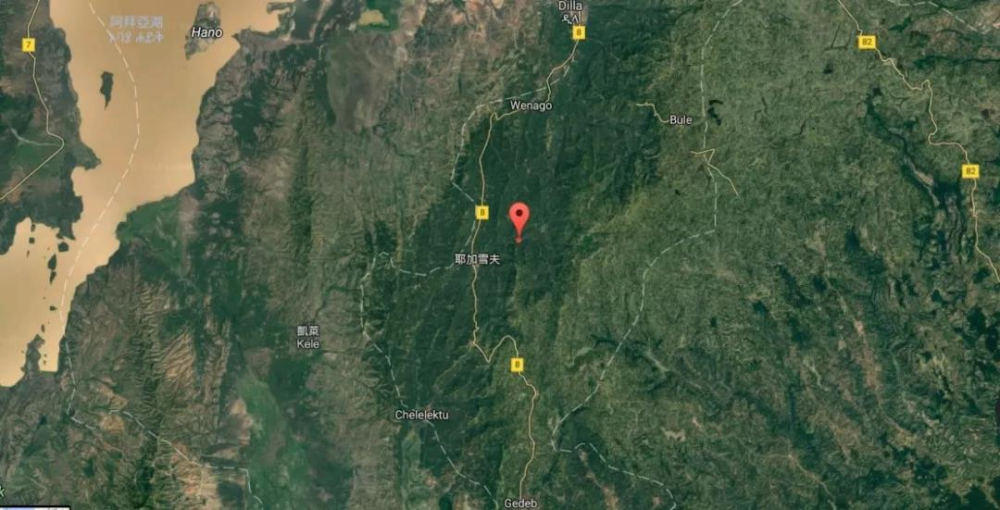
From 2010 to 2012, Sidamo coffee consistently scored 92-94 on Coffee Review, the authoritative American coffee evaluation site, demonstrating the exceptional quality of green beans from this region. Sidamo's flavors are incredibly diverse, shaped by various soil types, microclimates, and countless native coffee varieties. The region features towering mountains, highlands, plateaus, valleys, and plains, creating varied topography. Its geology is fertile, well-drained volcanic soil with depths reaching nearly two meters, and the surface soil appears dark brown or brown. The region's greatest advantage is that organic matter cycling keeps the soil fertile, with fallen leaves and plant residues serving as fertilizer.
Because Ethiopia varies so much in terrain and elevation, and because of its many variants and unclassified native species, regional differences are substantial. The cupping profile of coffee from each region, micro-region, or even farm varies considerably. This leads buyers to base their decisions on region, altitude, and cupping score rather than using varieties to distinguish Ethiopian coffees. For this reason, FrontStreet Coffee sources more than ten different Ethiopian single-origin beans, primarily from the Yirgacheffe and Sidamo regions.

Guji Region - Hambella - Hua Kui Coffee
When people talk about representative Sidamo coffees, they inevitably mention Natural Hambella, or Hua Kui. Hua Kui is a natural-processed coffee from Ethiopia's Hambella region, with the full name "Ethiopia Guji Hambella Buku Abel." Broadly, it is a champion bean from Ethiopia's Guji region; more precisely, it is a natural-processed lot from the smaller Hambella Buku Abel processing station.
Hambella sits at the junction of the Sidamo and Guji regions and is administered under Guji. Across mountainous terrain it borders Yirgacheffe's Kochere, separated by a 3,200-meter highland roughly 30 kilometers wide. To the southeast, north, and south it borders Guji's Shakiso, Uraga, and Kercha sub-regions, making it Ethiopia's highest-altitude coffee-producing sub-region.
Hua Kui appeared in 2017, when DW company entered it in that year's TOH (Ethiopia National Taste of Harvest competition) and it won the championship, launching its fame. In English it is called Hambella, after the region. The same year, the lot was selected by a Beijing trading company. Because of its championship status it was named "Hua Kui" for the domestic market, meaning "the leader of a hundred flowers, outshining all others." As its popularity kept rising, this traditional natural-processed bean from the Buku Abel station broke through; combined with an affordable price and pleasant flavors, it quickly became widely recognized as a high-quality Ethiopian coffee.

During each annual harvest season (December-January), the Buku station organizes farmers to pick fully ripe cherries with sugar content above 30 degrees. The selected cherries are placed on African drying beds for sun drying. Because of the large day-night temperature difference, farmers shade the beds at midday to avoid excessive heat and over-fermentation. At night, plastic sheeting is used to cover the cherries against sudden rain. Continuous turning throughout the day keeps the cherries from piling too thickly, allowing even drying while preventing sun damage and unpleasant fermentation flavors. After roughly 18 days of natural processing, when the green beans' moisture content falls to about 13%, machines are used to remove the outer hulls.
What Does Hua Kui X.0 Mean?
There are currently about 20 processing stations of various scales in the Hambella region. In 2017, Ethiopia's DW green bean company submitted its beans to the TOH (Taste of Harvest) competition organized by the African Fine Coffee Association. A natural-processed lot from the Buku Abel station won the Ethiopia championship with its rich strawberry and cream aroma.
That year the lot was imported to China by the Beijing green bean trader Hongshun. The same year, Li Jianfei used the bean to take second place at the 2017 World Brewers Cup China competition. This Ethiopian bean stood out among many Geisha entries and so earned the name "Hua Kui." Geisha in Japanese means geisha, while Hua Kui means the leader among geishas, indicating the bean's outstanding quality.
DW company later established additional processing stations in Hambella's core Dimtu area: Buku Abel, Buku Saysay, Haro Soresa, and Tirtiro Goye, with annual coffee production of about 1,100 tons. In terms of growing area and processing station, only coffee from the Buku Abel station's area covers the original small producing zone that yielded the natural Hua Kui bean. In other words, only coffee produced by Buku Abel and processed naturally can be called Hua Kui.
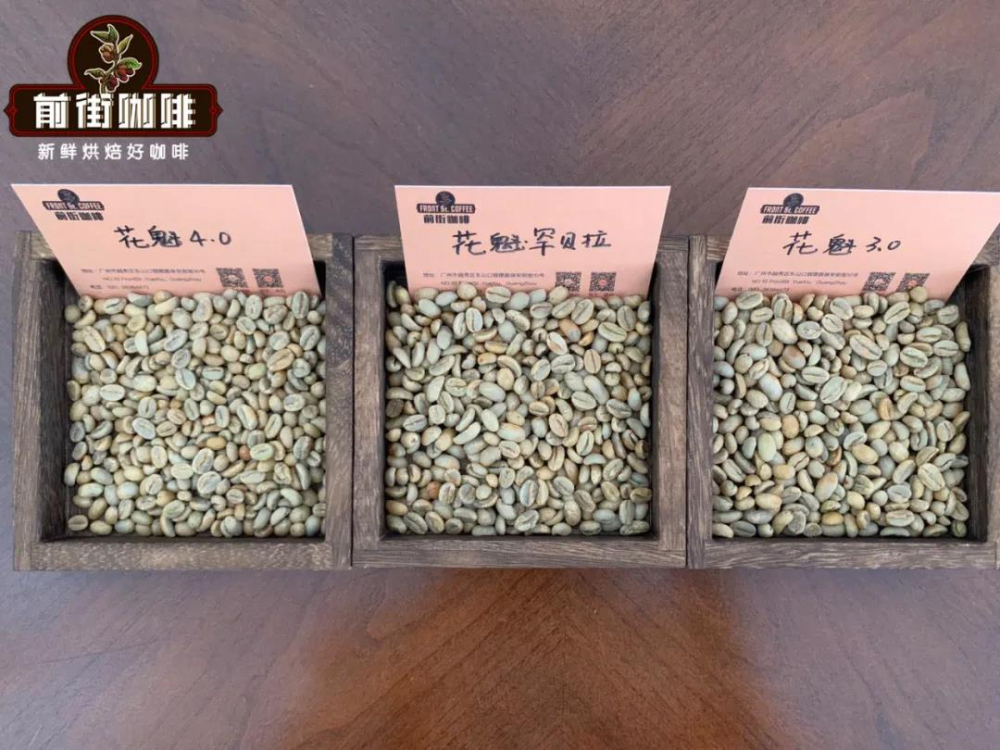
Hua Kui is grown at altitudes above 2,000 meters, with coffee trees shaded by tropical plants such as sugarcane and bananas. Coffee is an agricultural crop tied directly to climate and environment, so every year's flavors differ somewhat. The Hua Kui X.0 naming is based on the year: Hua Kui 2.0 launched in 2018, Hua Kui 3.0 and 3.1 in 2019, Hua Kui 4.0 in 2020, Hua Kui 5.0 in 2021, and Hua Kui 6.0 in 2022. By 2024 it had naturally become Hua Kui 8.0.

Hua Kui Coffee Varieties
As the birthplace of coffee, Ethiopia holds an enormous number of coffee varieties, both known and unknown, like a treasure trove. Many remain undiscovered, and for the protection of genetic information the Ethiopian government refers to them collectively as local native varieties. Hua Kui's variety is therefore also a local native variety.
In Ethiopia the garden cultivation system is the survival-based model for the vast majority of smallholder coffee farmers. Heirloom native varieties come from the "unknown varieties" in their backyards. Coffee trees may have been left by previous landowners, shared among neighbors, or grown from seeds brought in from another region. Various coffee plants are intercropped with other crops on the land and harvested only when ripe.
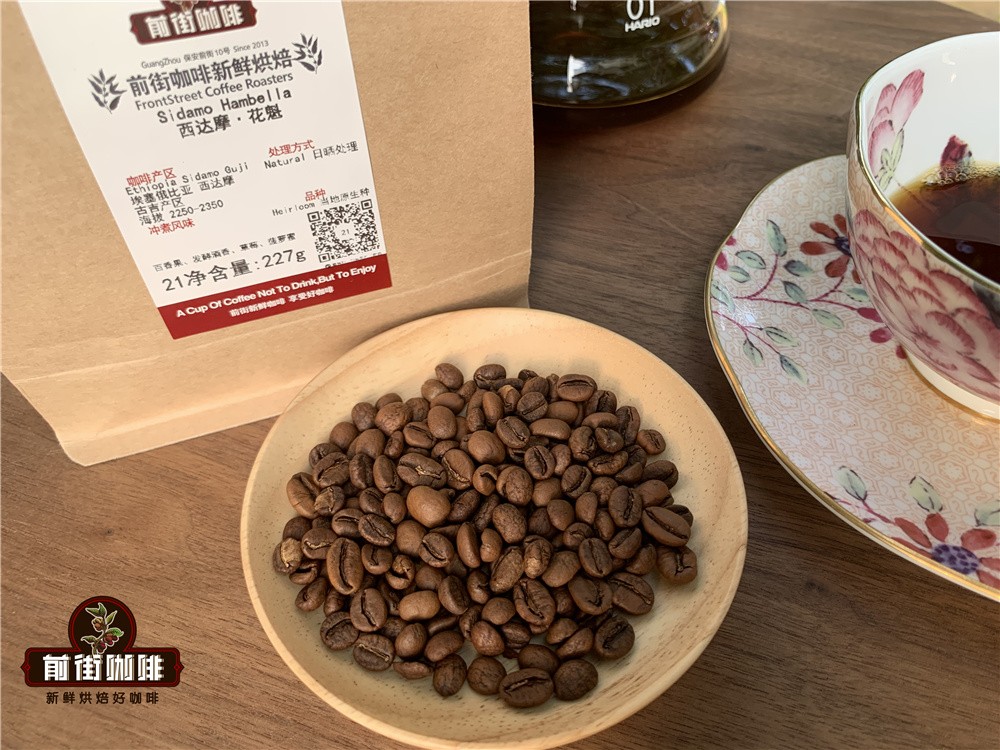
Heirloom therefore does not refer to a specific variety but represents a blend of green beans from the producing area. The coffee combines the harvests of many small farmers from the same period into a single lot that may contain dozens or even hundreds of undifferentiated varieties. Because the varieties differ and each mixing method differs, these beans vary in particle size and shape, some large, some small, some long, some round, best understood as a blended batch.
Sidamo Coffee Bean Processing Methods
Yirgacheffe coffee is processed as washed, though its traditional method is actually natural. Today natural-processed beans account for over 70% of Ethiopian production, and beans from the Sidamo region are predominantly natural processed.
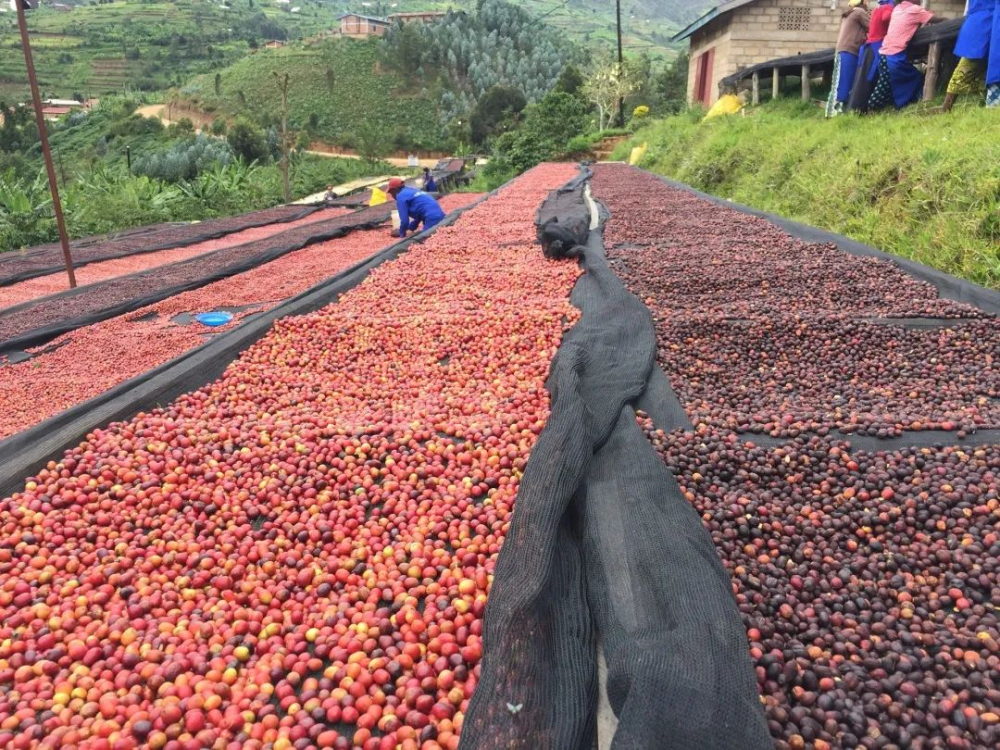
Natural processing is one of the oldest and most classic methods. Compared with other methods, the steps are simpler. The coffee cherries are sun-dried for several weeks until moisture content drops to about 11%, at which point machines remove the skin and pulp together. The beans are then stored in warehouses awaiting export.
Sidamo green beans appear slightly grayish, with a mix of large and small beans. They offer both gentle and bright acidity, an appropriate body, sweet and spicy flavors, and are one of the garden coffees of Ethiopia's southern highlands. Unlike typical African coffees, Sidamo has clear fruit acidity, a smooth mouthfeel, and delicate floral and herbal aromas.
FrontStreet Coffee's Brewing Parameters for Natural Hua Kui Coffee:
For light-roasted Yirgacheffe, FrontStreet Coffee chooses: V60 dripper, water temperature 90°C, water-to-coffee ratio 1:15, coffee dose 15g, grind size 80% pass-through on the China #20 standard sieve.

Use segmented extraction: bloom with twice the coffee dose in water, that is 30g of water for 30 seconds. Blooming lets the grounds release internal carbon dioxide so the later stages extract more steadily. With a small flow, pour in circles to 125g, then continue to 225g and stop. When the water finishes dripping from the dripper, remove it. Timing from the start of pouring, extraction takes 2'00". Then take the whole cup, swirl it evenly, and pour into cups for tasting.

Natural Hua Kui 5.0 Coffee Flavors: Very distinct floral and fruit aromas, with citrus, passion fruit, strawberry, oolong tea, and high sweetness.
FrontStreet Coffee's Brewing Suggestions:
Regardless of which coffee you brew, FrontStreet Coffee has always believed that bean freshness greatly affects flavor. Beans shipped by FrontStreet Coffee are all roasted within 5 days, under the roasting philosophy "Freshly Roasted Good Coffee," so every customer receives the freshest coffee. The resting period is about 4-7 days, so coffee is at peak flavor when it arrives.
For those who need ground coffee: pre-ground coffee needs no resting period, because the pressure from carbon dioxide buildup in the packaging during transport also helps round out the flavors, so you can brew a cup as soon as it arrives. Ground coffee should be brewed promptly, though, because grounds oxidize quickly in air and the flavors dissipate. FrontStreet Coffee therefore suggests buying whole beans and grinding fresh before brewing to better appreciate the coffee.
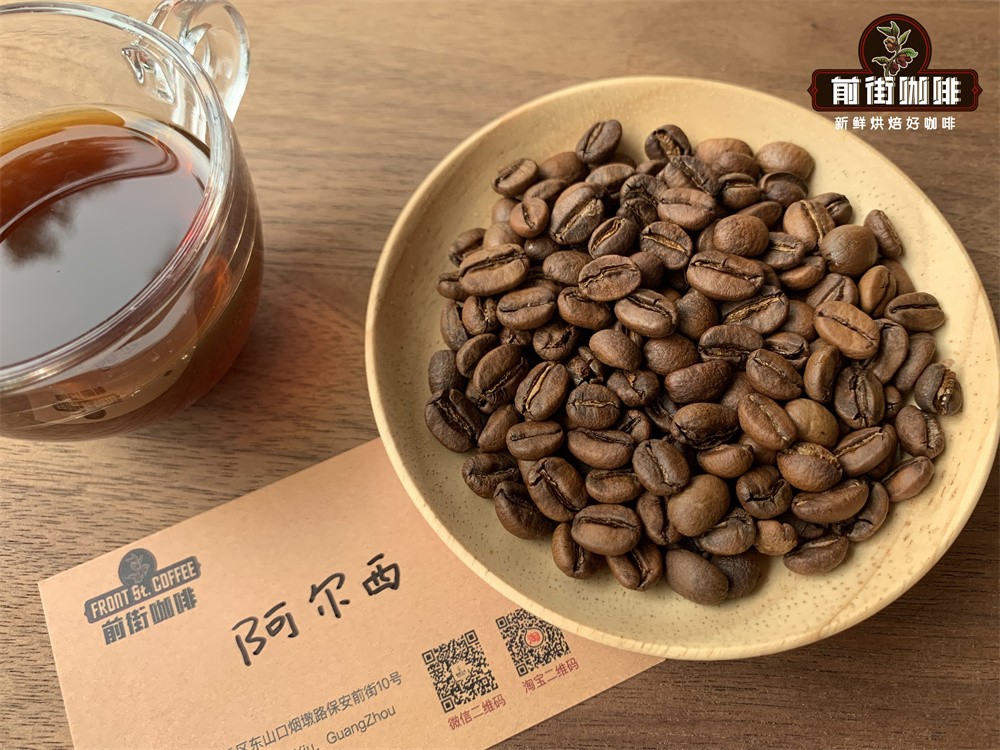
Coffee flavors vary across Ethiopian regions. FrontStreet Coffee carries, for example: Yirgacheffe Washed Kochere, Yirgacheffe Natural Red Cherry, Washed Yirgacheffe, Sidamo Natural Hua Kui, Sidamo Washed Kochere, Yirgacheffe Gesha Village Natural Red Label, Yirgacheffe Gesha Village Natural Gold Label, and Yirgacheffe Washed Gedeb. Each bean differs, but Ethiopian coffees are predominantly floral and fruit-forward. Coffee lovers have fallen for this light, refreshing, tea-like cup.
FrontStreet Coffee Recommendation
FrontStreet Washed Yirgacheffe is the classic starting point for this style. It is known for white jasmine, bright citrus and lemon acidity, and a tea-like body, at a wallet-friendly price that has made it the first specialty bean for many drinkers. Brew it as pour-over with a V60 at 90-91°C, 15g of coffee at a 1:15 ratio, ground to fine-sugar size (about 80% through a #20 sieve). Bloom with 30g of water for 30 seconds, pour to 95g (about 125g on the scale) over roughly a minute, then when the water level falls to two-thirds of the bed add the remaining 100g (about 225g) and finish pouring by about 1'35". The drip should complete at 2:00-2:10, then remove the dripper.
FrontStreet Yirgacheffe Natural Red Cherry shows the other side of the region. It is a full-red-cherry natural process: only fully ripe fruit is picked, sorted, and dried on raised beds, turned every two to three hours for the first few days to avoid uneven heat and over-fermentation. After three to five weeks it is hulled and stored. Because the fruit dries on the bean, it keeps the typical Yirgacheffe character while adding tropical fruit, with citrus acidity, berry juice, honey sweetness, and a creamy smoothness.
FrontStreet Dinding Cooperative is the washed micro-lot to seek out. Dinding village sits at the southeastern edge of Yirgacheffe, and its cooperative grew out of the larger Worka cooperative under the YCFCU before being recognized as a single origin in its own right. It follows the traditional washed method, with fresh, bright citrus and lemon acidity and jasmine fragrance, and none of the bitterness of lesser coffees.
Important Notice :
FrontStreet Coffee is a long-established specialty coffee roaster in Guangzhou China, selling freshly roasted beans from its own farm in Yunnan as well as dozens of carefully selected single-origin beans from around the world for both pour-over and espresso. The products deliver consistently excellent quality and great value, with shipping within 24 hours. Guangzhou's FrontStreet Coffee shop is recommended by many coffee lovers, and the beans are now available online at the Tmall 。
FrontStreet Coffee has moved to a new address:
FrontStreet Coffee Address: 315,Donghua East Road,GuangZhou
Tel:020 38364473
 Scan and follow the En Gafei WeChat official account. Please indicate that the reprint comes from "En Gafei".