Flavor Characteristics and Taste Profile of Yunnan Coffee Beans - FrontStreet Coffee's Regional Brand Story

Customers often ask about the "FrontStreet Coffee 2013" coffee bean on FrontStreet Coffee's bean list. Many are drawn to this particular bean because of the FrontStreet Coffee name attached to it - and there is a story behind that name.
Indeed, unlike a typical coffee shop, FrontStreet Coffee started by growing coffee before opening a cafe. At first, FrontStreet Coffee chose to grow coffee in a place called Dazhen in Guangdong province, selecting the Catimor variety that is now common in Yunnan coffee. For those not familiar with Catimor, FrontStreet Coffee will cover the variety in detail later. At that time, China's coffee industry was only just beginning, information about coffee was scarce, and FrontStreet Coffee's own knowledge was not yet solid. After more than half a year of practice, FrontStreet Coffee came to understand that coffee cultivation is closely tied to altitude and soil. Only by planting high-quality varieties at a suitable altitude can they grow into premium specialty coffee with excellent flavor.

So FrontStreet Coffee began looking across all of China. Anyone paying attention to the Chinese coffee market will notice that China has roughly three main regions for coffee cultivation: Yunnan, Fujian, and Hainan. Because of its relatively low average altitude, Hainan lacks one of the most important conditions for coffee growing, and FrontStreet Coffee found that most coffee grown there is Robusta. Robusta has very low requirements for its growing environment. Genetically, Robusta is easier to care for than Arabica and yields more, which lowers production costs.
Since Robusta beans contain twice as much caffeine as Arabica, they have more antioxidants and are less susceptible to disease. But everything has its trade-offs. Although Robusta offers advantages such as high yield and disease resistance, it is generally considered more bitter than Arabica with a rougher mouthfeel, so Robusta beans are often not recognized as specialty coffee.

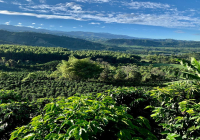
Looking across all of China, the most suitable place for coffee cultivation is Yunnan. At that time, most of the coffee grown in Yunnan was Arabica, so FrontStreet Coffee made a significant decision: abandon coffee cultivation in Guangdong and switch to Yunnan. FrontStreet Coffee did not simply buy a coffee estate but innovatively bought mountain tops suitable for coffee. Previous experience had shown that Catimor was not the variety they were after, so FrontStreet Coffee chose the more expensive Typica. Why is Typica more expensive than the Catimor that was, and still is, popular in Yunnan at that time?
The Differences Between Catimor and Typica Coffee Varieties
First, let's look at Typica. Like all Arabica coffee, the Typica group should have originated in southwestern Ethiopia. At some point in the 15th or 16th century it was brought to Yemen. By 1700, seeds from Yemen began to be cultivated in India.

In 1696 and 1699, coffee seeds were sent from the Malabar Coast of India to the island of Batavia (known today as Java in Indonesia). These few seeds produced what we now know as the distinctive Typica variety. Typica beans are one of the world's most important groups of coffee genetics, with excellent flavor, though their yield is relatively low compared with other varieties. Many famous coffees worldwide are Typica, such as Jamaica Blue Mountain and Hawaii Kona. In Yunnan, coffee farmers chose Catimor for higher returns.

Second, Typica is very susceptible to disease, while Catimor is a hybrid of the Caturra and Timor coffee varieties. Because it carries Robusta genetics, Catimor has greater disease resistance and higher yields. But that is also why Catimor inherited the strong flavor characteristics of Robusta, and its rougher coffee flavor is a key point of criticism among some coffee enthusiasts.
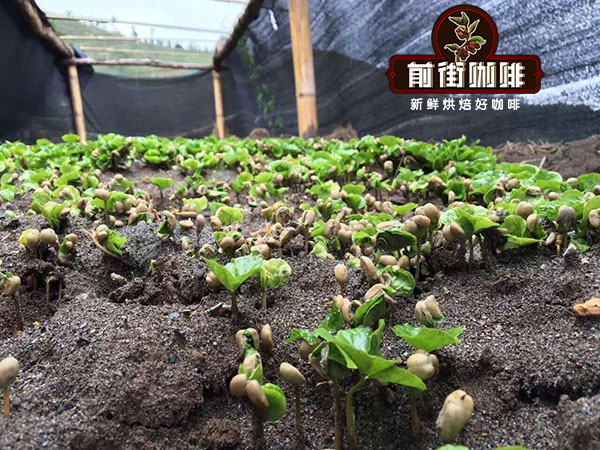
The altitude of coffee cultivation in Yunnan is generally not very high. Although the upper limit given by major estates can reach around 1800 meters, it is important to note that not all coffee trees grow at the highest points. Most trees are planted at altitudes that just meet the minimum qualifications for Arabica cultivation. Since the altitude is not high enough, FrontStreet Coffee chose to compensate with a better variety. To achieve the best result under limited conditions, FrontStreet Coffee chose Typica beans, which cost more per plant and yield less. At the same time, FrontStreet Coffee implemented stricter screening systems and recruited and trained many skilled workers. All of these efforts eventually culminated in the "FrontStreet Coffee 2013" bean.
From Seed to Cup: A Seven-Year Journey
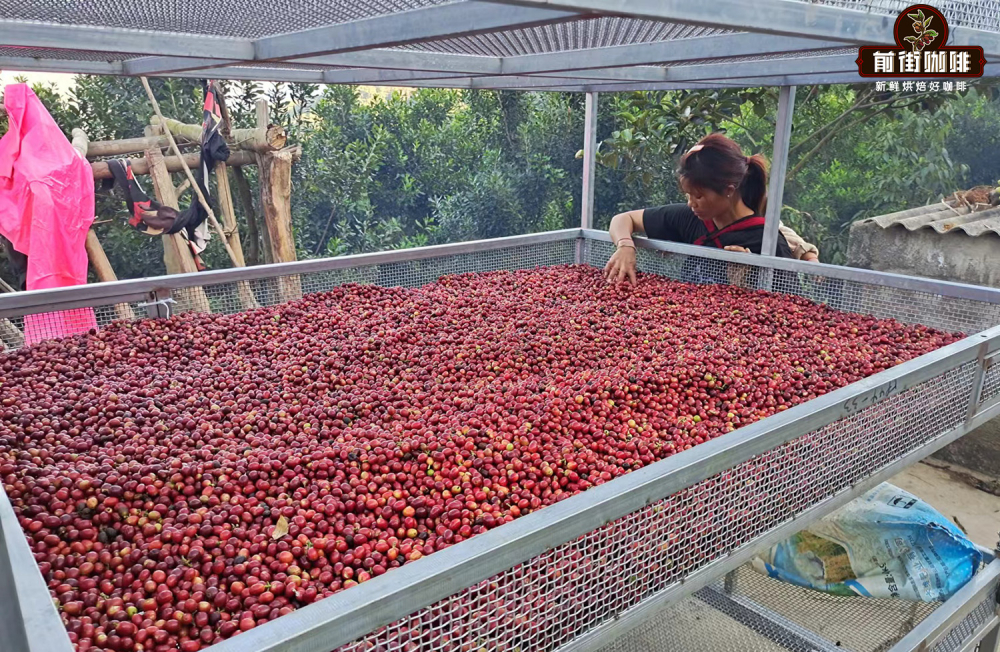
From seed to cup, "FrontStreet Coffee 2013" went through a seven-year journey. FrontStreet Coffee spent its early years in trial and error, and coffee takes three to four years from seedling to bearing fruit. Without experience, FrontStreet Coffee was not lucky enough to succeed on the first try. After multiple rounds of variety improvement and breeding, they were finally able to produce this batch of only about 200 kilograms of Typica beans. Heaven rewards the diligent - this coffee sold out quickly after launch thanks to its excellent flavor.
Next, FrontStreet Coffee will brew a "FrontStreet Coffee 2013" for everyone following the cafe's brewing standards.
FrontStreet Coffee 2013 - Coffee Details
Origin: Lincang, Yunnan
Estate: FrontStreet Coffee
Variety: Typica
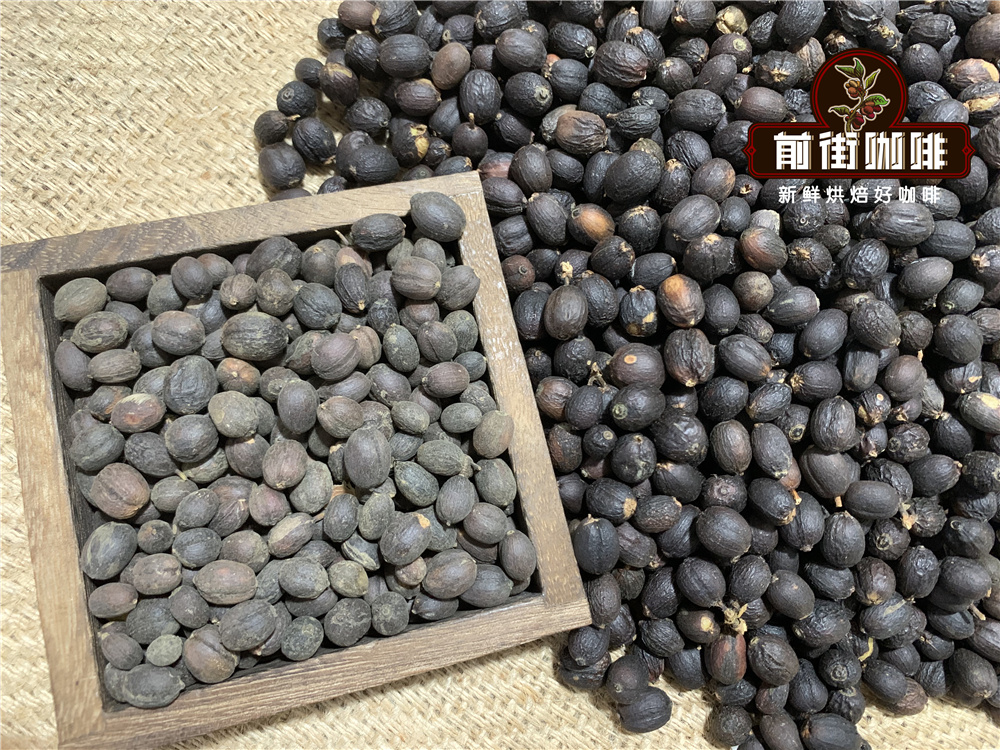
Processing Method: Natural
Altitude: 1300 meters
Brewing Parameters
Dripper: V60
Water Temperature: 91°C
Coffee Dose: 15 grams
Coffee-to-Water Ratio: 1:15
Grind Size: Fine sugar granules (80% pass-through rate on China standard #20 sieve)
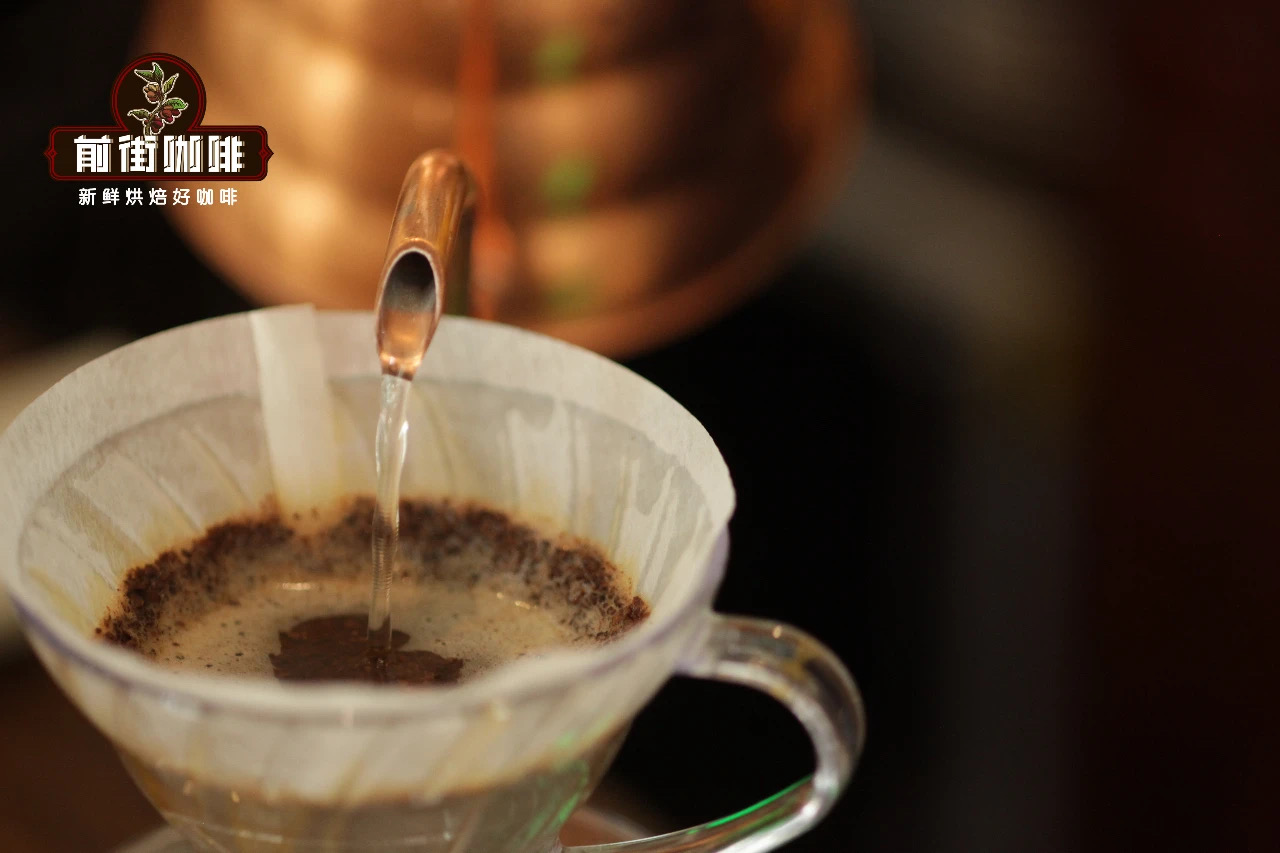
Extraction Method: FrontStreet Coffee uses a standard three-stage extraction. Bloom with twice the coffee's weight in water for about 30 seconds. Using a small stream, pour in concentric circles from the center outward until reaching 125 grams. After the water level drops, continue pouring until 225 grams, then stop. Remove the dripper once all the water has dripped through, controlling the extraction time to around 2 minutes.
Flavor Profile
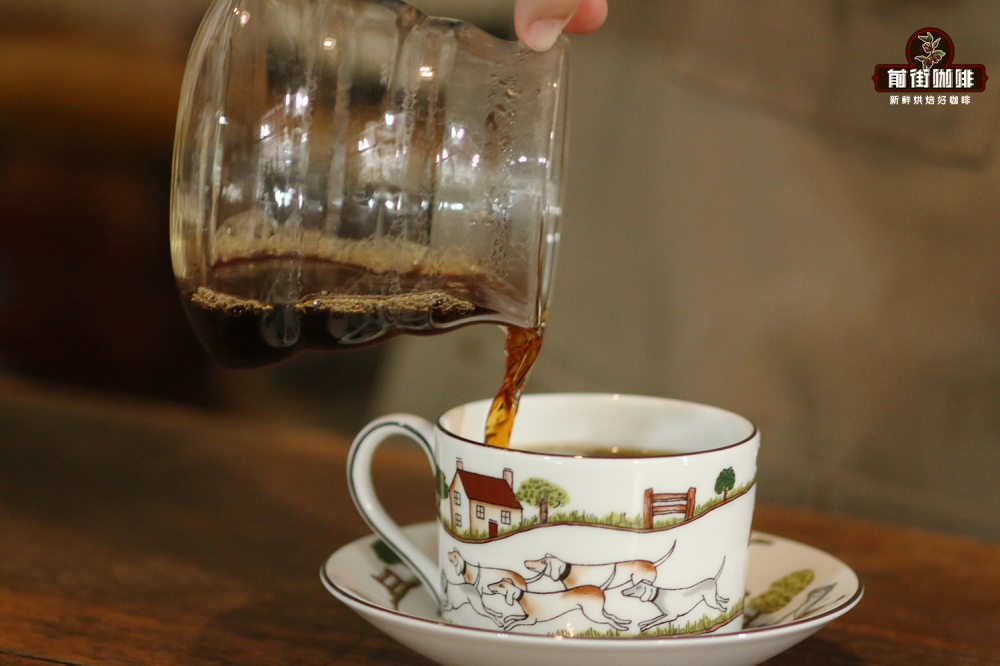
The most prominent characteristic of this coffee is its distinct black tea notes, with pronounced nutty undertones and rich layering. As the temperature changes, you can taste the flavor shift from berries to citrus. The aftertaste leans toward brown sugar sweetness.
Additional Offerings
Of course, the production of "FrontStreet Coffee 2013" is far from enough to meet demand, so FrontStreet Coffee also sourced a batch of Catimor from Baoshan - what is commonly called Yunnan small bean coffee. Yunnan coffee beans are of the Arabica species, known domestically as Yunnan small bean coffee. Yunnan's excellent geography and climate provide good conditions for coffee growth, and the province now has four major producing areas: Lincang, Baoshan, Dehong, and Puer.

On the origin of the term "Yunnan small bean coffee," FrontStreet Coffee would like to add a brief note. The earliest "small bean coffee" referred generally to Arabica beans from Yunnan. Many people now think it means Typica, but as China's coffee market grew and demand for higher yields rose, Yunnan farmers replaced the originally planted Typica with Catimor. The widespread cultivation of Catimor naturally transferred the name "small bean coffee" to it. So what are the flavor characteristics of Yunnan small bean coffee? FrontStreet Coffee believes that compared with Typica, Catimor's flavor is less delicate and elegant, with more tea-like notes and significantly reduced acidity.
Contact Information
The FrontStreet Coffee 2013 story, and the wider Yunnan range, are best experienced by tasting. FrontStreet Coffee is always happy to answer questions about coffee varieties and origins.
Several Yunnan lots are available for anyone who wants to explore the region further.
FrontStreet Coffee Recommendation
Yunnan and FrontStreet Coffee have a long shared history. The Yunnan Small Bean comes from the Baoshan region and is washed and roasted to a medium level, showing soft nutty and chocolate notes with a light plum acidity - a friendly-priced introduction to Yunnan's terroir. The province's coffee areas sit mostly in its southwest, including Baoshan, Dehong, Puer, and Lincang, and coffee there prefers a warm climate, with the most suitable growing temperatures between 16 and 21 degrees Celsius. Baoshan, in particular, has a long history: its coffee cultivation began in the mid-1950s, introduced by the overseas Chinese patriot Liang Jinshan, and the dry-hot river valley climate around Lujiangba gives the small bean its characteristic sweet aftertaste.
For a clearer Yunnan flavor, the 2013 Yunnan Natural Typica is grown at 1,300 meters, and Typica is one of the oldest and purest Arabica varieties. Sun-dried and medium roasted, it drinks heavier and more balanced, with citrus and berry tones, a hint of fermented wine, caramel sweetness, and a creamy finish. If you prefer Yunnan in an espresso, FrontStreet Coffee's Black Cocoa Blend pairs Yunnan small bean with Brazil Cerrado: Brazil provides mixed nut aroma and balance, while Yunnan brings chocolate and citrus, giving a balanced Americano and a latte with the smoothness of almond and cream.
Important Notice :
FrontStreet Coffee is a long-established specialty coffee roaster in Guangzhou China, selling freshly roasted beans from its own farm in Yunnan as well as dozens of carefully selected single-origin beans from around the world for both pour-over and espresso. The products deliver consistently excellent quality and great value, with shipping within 24 hours. Guangzhou's FrontStreet Coffee shop is recommended by many coffee lovers, and the beans are now available online at the Tmall 。
FrontStreet Coffee has moved to a new address:
FrontStreet Coffee Address: 315,Donghua East Road,GuangZhou
Tel:020 38364473
 Scan and follow the En Gafei WeChat official account. Please indicate that the reprint comes from "En Gafei".