Characteristics and Story of Colombian Coffee Beans How Should Colombian Coffee Be Roasted?
Coffee first reached Colombia in 1808. Today the country is the world's second-largest producer after Brazil, with an annual output of 13 million bags weighing 60 kilograms each, against Brazil's 22 million bags. Colombian coffee is one of the few single-origin coffees in the world sold under a country's name.
In terms of quality, Colombian beans have earned praise that other coffees rarely match. Colombia is the world's largest exporter of Arabica coffee, with very little Robusta under cultivation, and also the world's largest exporter of washed beans. Compared with other producing countries, Colombia puts more weight on product development and promotion. That, combined with its favorable geography and climate, makes its coffee high-quality, full of flavor and renowned worldwide.
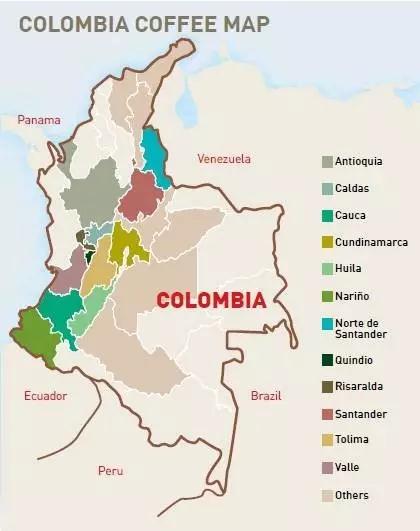
Major Coffee Producing Regions in Colombia
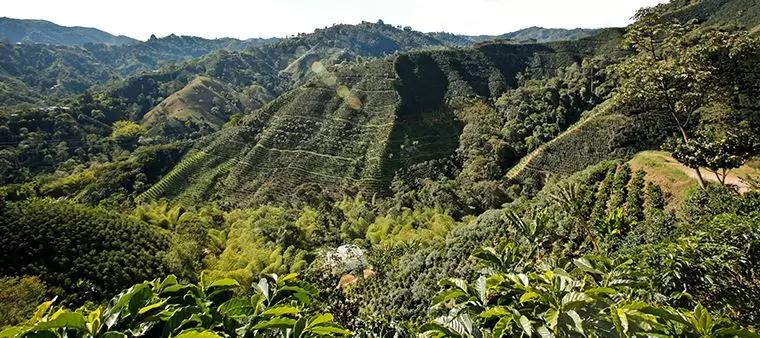
The country's coffee areas lie on the foothills of the Andes, where the climate is mild and the air humid. Colombia has three Cordilleras — sub-mountain systems — running north to south toward the Andes, and coffee is planted along the highlands of these ranges. The slopes create a wide range of microclimates, so harvests run year-round, with different types of coffee ripening at different times. Fortunately, and unlike Brazil, Colombia does not have to worry about frost damage. The country has approximately 2.7 billion coffee trees; 66% are planted using modern cultivation methods on plantations, while the rest are grown on traditionally managed small farms.
Colombia's main producing areas sit in the central and eastern ranges. Along the central range, the most important plantations are found around Medellin, Armenia and Manizales. Of the three, coffee from the Medellin area is the best in quality and the highest in price, with full-bodied beans, rich nutrition, intense aroma and moderate acidity.
These three regions are known collectively as MAM, an acronym of the three cities' initials, and most of Colombia's premium export coffee comes from them. Along the eastern range, the two best areas lie around Bogota and, further north, around Bucaramanga. Bogota coffee is lower in acidity than Medellin coffee, but the two are comparable in quality.
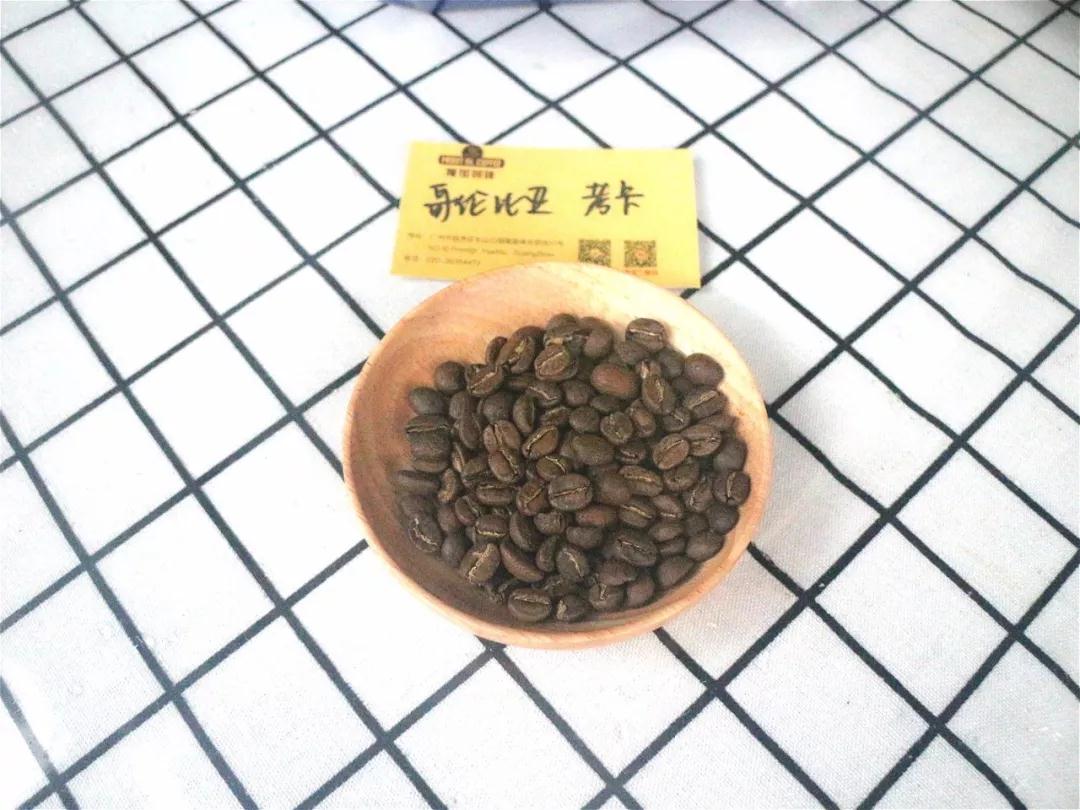
FrontStreet Coffee Colombia Cauca Cup of Excellence
Region: Cauca Province, Colombia
Micro-region: Suayre Micro-region
Soil: Volcanic clay
Altitude: 1758-2100 meters
Variety: Caturra
Processing: Washed process
These green beans are round and yellowish-green, with good uniformity and high moisture content. FrontStreet Coffee's roasting goal is a medium-dark roast, which on one hand expresses a balanced, mellow texture and on the other draws out layers of chocolate and nutty aroma.
FrontStreet Coffee's Recommended Brewing Method

KONO dripper; water temperature 86-88°C; grind setting EK43s setting 10 (medium pour-over grind); coffee-to-water ratio 1:13-1:14; extraction time 1 minute 50 seconds.
FrontStreet Coffee Recommendation
Colombia and Brazil together account for a huge share of the world's coffee, and if the balanced, nut-and-chocolate side of this Colombian profile appeals to you, FrontStreet Coffee's Brazilian lots explore the same easy-drinking territory from the other side of the continent. FrontStreet Brazil Cerrado Red Bourbon is a classic Brazilian single origin and one of the most approachable entry points to the region: a Cerrado bean of the red Bourbon variety, roasted medium, showing rich cream peanut, toasted bread, caramel and hazelnut aroma. The cup is round and smooth, low in acidity with a light bitter edge, and it handles pour-over, moka pot, espresso SOE, siphon and French press equally well.
For something a little more distinctive, FrontStreet Brazil Queen's Farm Yellow Bourbon comes from Mogiana, close to South Minas, where fertile red volcanic soil feeds the fruit and builds a fuller aroma. The farm is split between families that keep to traditional practice and those that have adopted modern, standardized management, and the local quality has improved markedly as a result. Queen's Farm grows the less common Yellow Bourbon, a natural mutation of Red Bourbon whose fruit character is cleaner; brewed as pour-over, in a moka pot or on a home espresso machine, it shows a sugar cane sweetness found in few other regions, alongside fruit and chocolate.
Important Notice :
FrontStreet Coffee is a long-established specialty coffee roaster in Guangzhou China, selling freshly roasted beans from its own farm in Yunnan as well as dozens of carefully selected single-origin beans from around the world for both pour-over and espresso. The products deliver consistently excellent quality and great value, with shipping within 24 hours. Guangzhou's FrontStreet Coffee shop is recommended by many coffee lovers, and the beans are now available online at the Tmall 。
FrontStreet Coffee has moved to a new address:
FrontStreet Coffee Address: 315,Donghua East Road,GuangZhou
Tel:020 38364473
 Scan and follow the En Gafei WeChat official account. Please indicate that the reprint comes from "En Gafei".