Kenya AA Top Assalia Coffee Pour-over Parameters Recommendations Which Kenyan Coffee Brands Are Worth Drinking
African Coffee: The Elite of Specialty Coffee
African coffee holds a towering position among specialty coffees. Its bright, lively fruit acidity, complex and layered fruit aromas, and elegant, fresh florals make it impossible not to fall in love. Among Africa's famous origins, Ethiopia and Kenya stand out most. Much has already been said about Ethiopia, so today the spotlight is on Kenya!
Around the World: The Beginning of a Love Story
As is well known, coffee originated in Ethiopia, Africa, and was discovered as early as the 9th century. Neighboring Kenya, however, only took up coffee around the early 20th century. By then, coffee had nearly completed a full circle of the globe before returning home to Africa, and Kenya became both a witness to and a driving force of the changes sweeping the coffee world.
The Historical Roots of Kenyan Coffee
In 1878, the British brought coffee back to Africa, establishing plantations in Kenya during the 19th century. Before that, coffee beverages from Ethiopia had been imported into Kenya via South Yemen. It was not until the early 20th century, however, that Bourbon coffee trees were formally introduced by the St. Austin Mission.
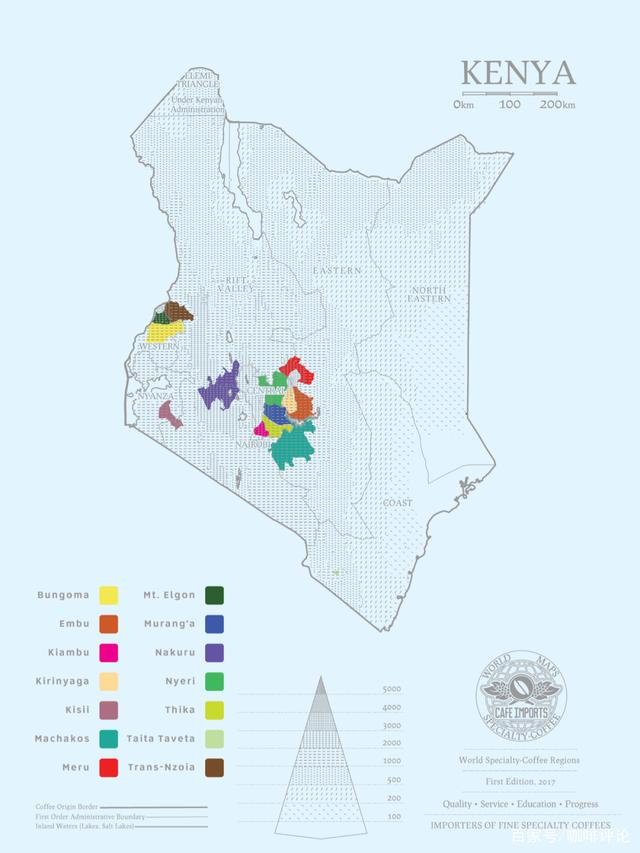
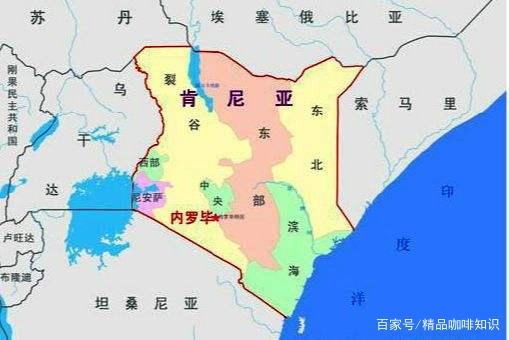
Situated in East Africa, Kenya is one of the world's principal coffee producers, with roughly six million people nationwide working in the coffee industry, mostly as smallholder farmers and cooperatives. Kenyan coffee grows mostly at altitudes of 1,400-2,000 meters, in regions including Ruiri, Thika, Kirinyaga, Mt. Kenya West, Nyeri, Kiambu, and Muranga, primarily on the foothills of Mount Kenya and the Aberdares.
Mount Kenya, the central peak, rises 5,199 meters above sea level. Thika ASALI TOP AA grows on the eastern slopes of the Kenya range in Manyata-Embu County at altitudes of 1,550-1,750 meters. The region's red soil nurtures Kenya's finest coffee; agriculture matters enormously here, and coffee is the main crop. Cooperatives of small farmers are more common than large estates. TOP AA seasonal coffee typically offers higher quality, featuring the Bourbon-derived varieties SL-28 and SL-34.
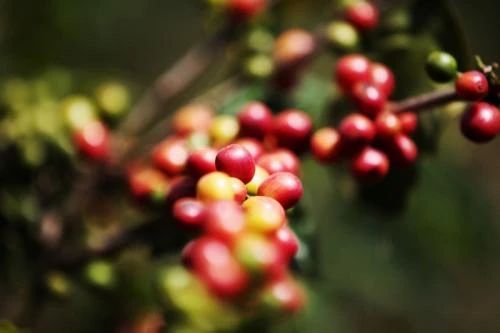
Kenyan Coffee Varieties
Two varieties in Kenya draw particular attention from specialty professionals: SL-28 and SL-34. They are two of 40 experimental varieties produced by a research program led by Guy Gibson at Scott Laboratories. The Bourbon varieties SL-28 and SL-34 have been consistent champions in expert cuppings and at the Nairobi auctions.
In addition, the marked day-night temperature swings and Kenya's red phosphorus-rich soils make sweet-and-sour the defining profile of Kenyan coffee. The beans show wonderful sweetness, balance, and complex, varied flavors, with prominent citrus and plum character. Kenya is also the birthplace of the 72-hour fermented washed process, which repeats fermentation and washing in cycles. Processing starts on harvest day: the highest quality cherries are selected for pulping and fermentation. Fermentation lasts 24 hours, after which the cherries are washed in clean river water.
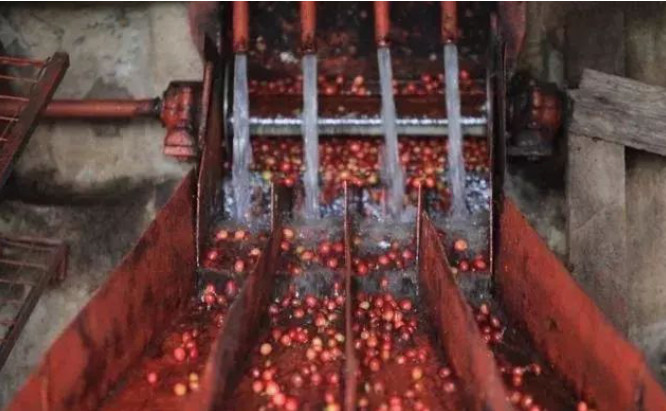
The coffee then undergoes another 24-hour fermentation and wash. This cycle is repeated 3 times for a total of 72 hours, hence the name Kenyan 72-hour fermented washed process, abbreviated as K72.
Kenyan Coffee Grades
Kenya grades coffee by bean size and cupping results. By size, shape, and hardness, the grades from highest to lowest are AA or AA+, AB, PB, C, E, TT, and T. For AA and AB green beans, a secondary grading based on cupping results is added (not officially recognized by the Kenyan government; it was established by exporters), ranked from highest to lowest as TOP, PLUS (+), and FAQ.
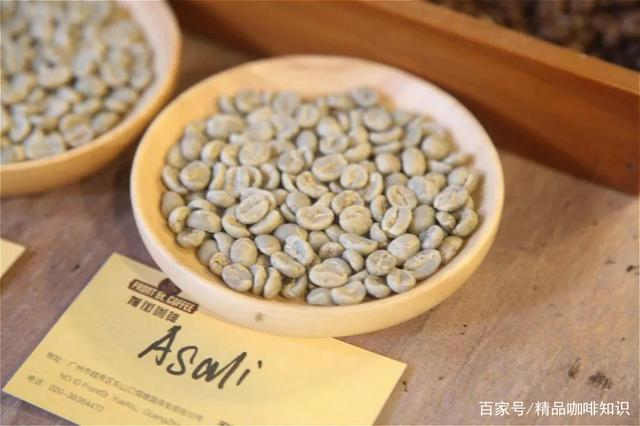
Example: FrontStreet Coffee Kenya Asali
Region: Thika, Kenya
Processing Station: Asali Honey Processing Station
Altitude: 1,550-1,750 meters
Grade: AA TOP
Varieties: SL28, SL34
Processing Method: Kenyan 72-hour washed
Roasting Recommendations
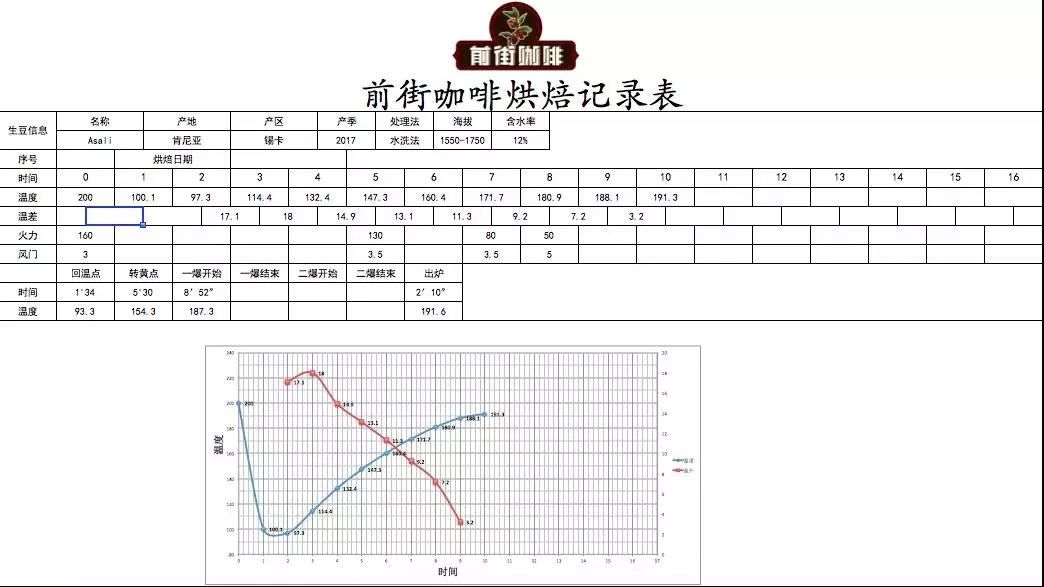
These beans are full and round. To express their bright, rich acidity fully, roast light.
Machine: Yangjia 800N, 550g green beans
Charge Temperature: 200°C
First Crack: 5'30", 154.3°C
Development After First Crack: 2'10", dropped at 191.6°C
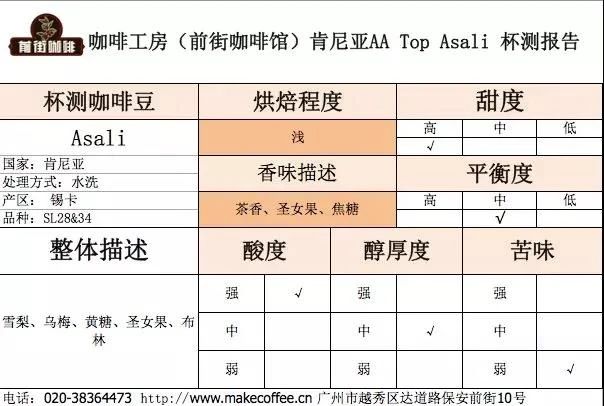
Cupping Report
Intense lemon and plum aromas in both the dry and wet fragrance. Sipped at a light roast, it reveals surprising floral and lemon notes. Green apple, berries, caramel, and coffee-cherry sweetness: bright, juicy, crisp, and sweet. Plum juice and preserved-fruit sweet-sour notes carry through, with caramel in the finish.
Brewing Recommendations
Dripper: Hario V60
Water Temperature: 90°C
Dose: 15 grams
Ratio: 1:15
Grind Size: Medium-fine (BG #6S)
Brewing Technique
Segmented Extraction
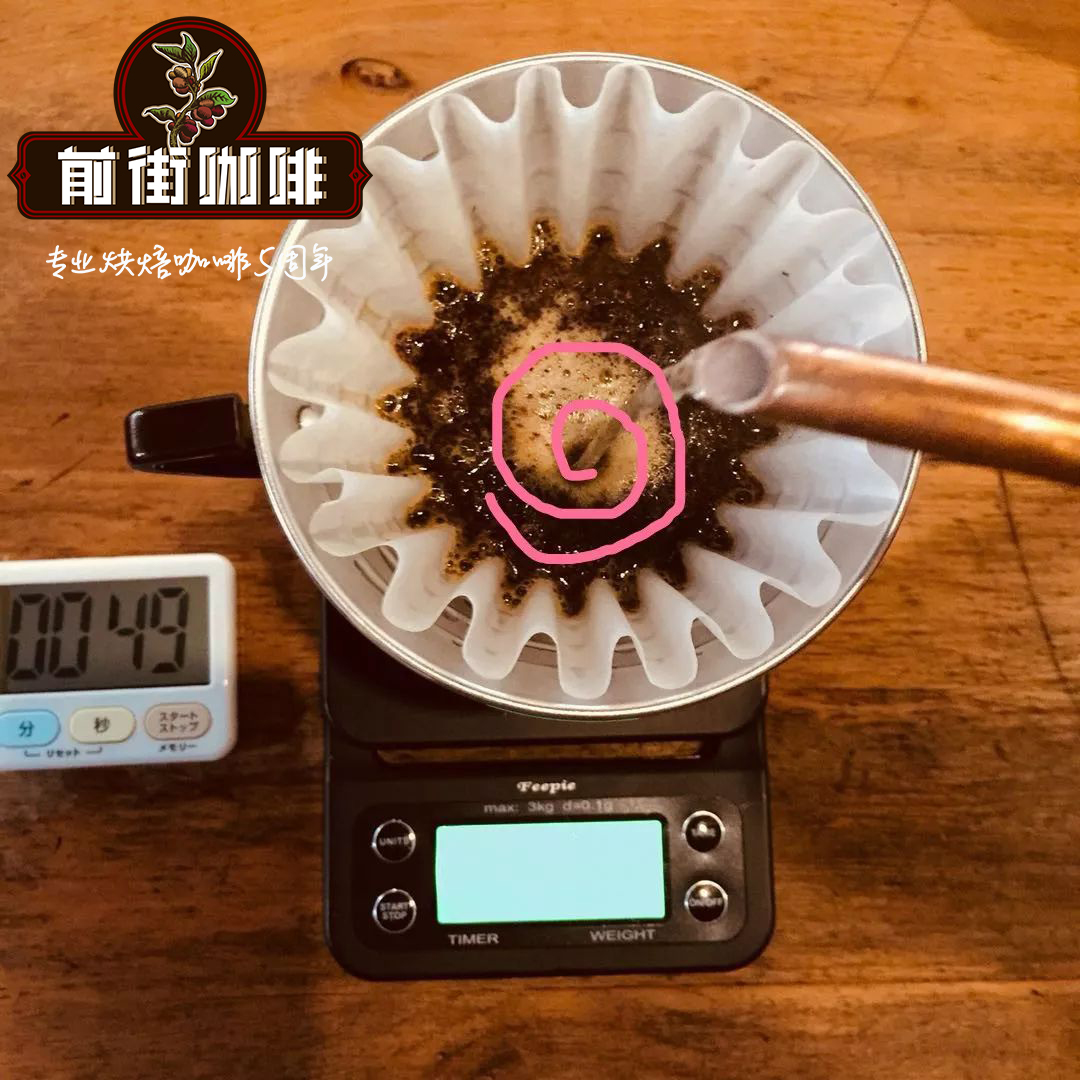
Start with 30g of water for a 30-second bloom. Pour in small circles to 125g and pause the extraction. When the water level is about to expose the coffee bed, continue pouring to 225g and stop. Once the level is about to expose the bed again, remove the dripper. (Timing starts from the bloom.) Total extraction time: 2'00".
Flavor Description
The wet fragrance offers ripe tomato and floral notes. The first sip brings cherry tomato and plum flavors with bright, clean, solid acidity and a rich mouthfeel, with the weight of an African elephant! The mid-palate shows prominent sweetness with juice-like texture. The aftertaste carries berry aromas, brown sugar sweetness, and a whisper of green tea.
FrontStreet Coffee Recommendation
If Kenya's bright berry acidity wins you over, FrontStreet Coffee's Ethiopian lineup offers the same lively charm in a different register. The washed Yirgacheffe is the ideal entry point, with clear jasmine florals and bright citrus acidity; Yirgacheffe itself is a small town in southern Ethiopia where spring-like, misty conditions nurture a light, elegant, tea-like cup, much like a refreshing lemon tea. For more traceable lots, the Gedding Cooperative, founded in 2012 by about 300 farmers in the Worka area at Yirgacheffe's southeastern tip, peels the fruit before drying, yielding a bright, delicate cup of citrus, lemon, and elegant white florals.
If you prefer natural-processed fruitiness, the Red Cherry Project natural lot (peach, cocoa, honey, lemon) and the famous Huakui natural from Hambella in Guji, Sidamo, dried 21 days on raised beds, deliver a light fermented wine note, florals, citrus, and mango with a thick body and lasting finish. For something off the beaten path, the Hama Shu washing station's 74158 variety from the JARC 74 series shows sweet notes of strawberry, star fruit, and green grape, while Kafa Forest coffee, grown wild under shade at 1400-2100 meters, offers white florals, bright lemon acidity, sweet orange, and a green-tea-like finish.
Important Notice :
FrontStreet Coffee is a long-established specialty coffee roaster in Guangzhou China, selling freshly roasted beans from its own farm in Yunnan as well as dozens of carefully selected single-origin beans from around the world for both pour-over and espresso. The products deliver consistently excellent quality and great value, with shipping within 24 hours. Guangzhou's FrontStreet Coffee shop is recommended by many coffee lovers, and the beans are now available online at the Tmall 。
FrontStreet Coffee has moved to a new address:
FrontStreet Coffee Address: 315,Donghua East Road,GuangZhou
Tel:020 38364473
 Scan and follow the En Gafei WeChat official account. Please indicate that the reprint comes from "En Gafei".