Aged Mandheling vs Fresh Mandheling: Which Tastes Better? Brewing Recommendations for Aged Mandheling Coffee Beans

FrontStreet Coffee has covered many kinds of Mandheling before, but this one is special enough to deserve its own story. Like India's Monsooned coffee, it must be aged for years to develop its character—it is called Aged Mandheling. They say wine improves with age, and Aged Mandheling depends on specialized handling to reach its best flavors. That is also why opinions split so sharply: some drinkers love Mandheling, while others find its flavors hard to accept. The storage environment must be well ventilated and cool, and the process demands extreme care—one misstep and the beans can spoil or even attract insects.
The Aging Process
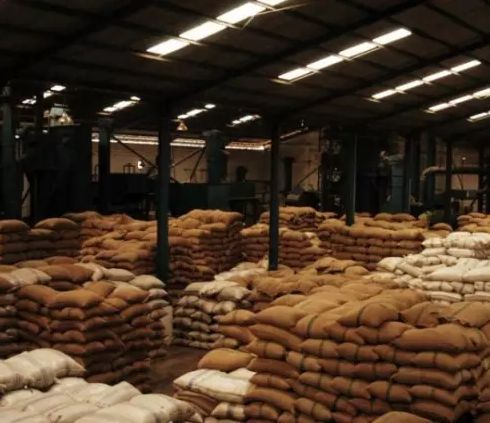
Aging is a special treatment that stores green coffee in a unique environment to soften acidity and develop aged characteristics. Like aged wine, the green beans must undergo proper processing and long storage before they can truly be called "Aged Coffee." Mandheling's fruit acidity, after long maturation, turns softer and smoother, while its body and distinctive flavors become remarkably impressive in the mouth—that is the charm of Aged Mandheling. Farmers select high-quality green beans and hold them under rigorous monitoring for static aging of up to 24 months, regularly turning the beans in storage tanks to prevent moisture and mold. The process is extremely labor-intensive, and it is what makes this Aged Mandheling more aromatic and enduring.
Aged coffee has deep roots in Indonesia. In earlier eras, shipping was slow, and carrying coffee from Indonesia to distant markets took months. Over that time the originally moisture-rich beans gradually dried, and exposure to sea breezes created rather special flavors. Modern shipping shrank transit times dramatically, so coffee with those flavors had to become a deliberately processed product. Making aged beans is a technical craft that demands careful monitoring throughout—not to preserve flavors, but to create a different, and pleasant, one.

Aged Beans or Fresh Beans?
It comes down to personal preference. The vast majority of coffees taste better fresh, but aged beans undergo fundamentally different processing—much as decaffeination changes a bean's character—so the two cannot be directly compared. To be clear: "aged" does not mean a merchant bought fresh beans, failed to sell them, and let them sit for years. Aged beans are produced at origin under specific procedures, which is why they carry vintage years. The practice dates back to the era before steamships, when shipping coffee could take several months and the long voyage transformed the flavor. People who tasted it loved it and bought in bulk, so producers began deliberately "manufacturing" aged beans under similar storage conditions, and the category became an important product line.
Green Bean Analysis
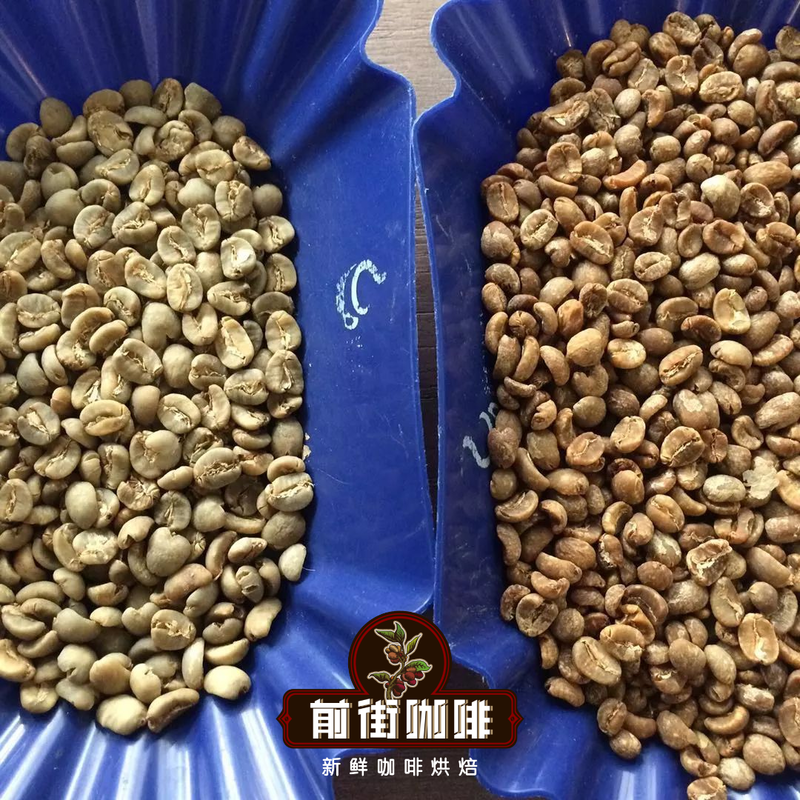
Properly stored beans change in both flavor and appearance: acidity fades, color darkens and loses moisture, texture thickens with better consistency, sweetness picks up honey-like aromas, and certain original green bean defects become less noticeable. Because storage is relatively dark and the period long, aged coffee often keeps complex notes reminiscent of mold—or what tasters call burlap and leather. During aging the beans must be held under strictly controlled conditions with regular even turning and humidity and ventilation adjustments to prevent insects or mold. Generally, aged bean storage does not happen at the growing region or estate; it is a commercial activity run by green bean dealers or brokerage houses. Properly stored beans will change their flavor and appearance: acidity diminishes, color darkens, texture thickens, sweetness carries honey, and minor defects fade away.

FrontStreet Coffee Roasting Analysis - Yangjia 800N, 550g green beans input
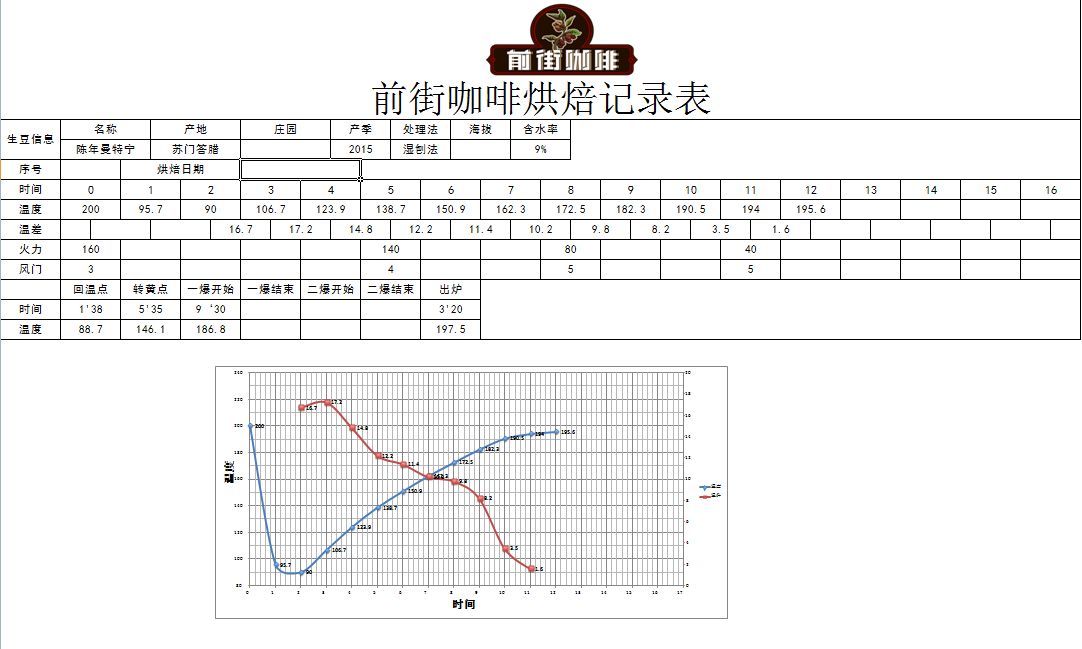
Aged Mandheling may not look glamorous. Time smooths out its acidity while raising its purity, and the medium-dark body grows rounder. Because aged Mandheling green beans are dense but low in moisture, heat adjustments at every stage demand particular care. Be careful not to scorch the oils on the bean surface. Heat the drum to 200°C and load the beans, open the damper to 3. After 1 minute of steaming, adjust heat to 160°C, keeping the damper unchanged. At 165°C, adjust heat again down to 140°C. At 5'35", temperature reaches 146°C, the bean surface turns yellow, grassy aroma completely disappears, dehydration is complete—open damper to 4. At the 9-minute mark, the bean surface shows ugly wrinkles and dark spots, the toasted bread aroma clearly transitions to coffee aroma—this can be defined as the prelude to first crack. At this point, listen carefully for the sound of first crack. At 9'30", first crack begins, reduce heat to 80°C, fully open damper to 5 (heat adjustment must be very careful—don't reduce it so much that cracking stops). At 194°C, reduce heat and drop at 197.4°C.
FrontStreet Coffee Cupping Records
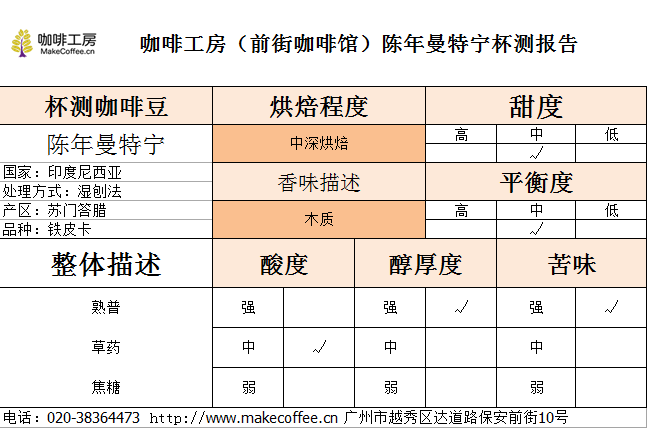
Sumatra Aged Mandheling
Region: Sumatra
Variety: Typica
Processing Method: Wet-Hulled

FrontStreet Coffee Aged Mandheling Brewing Parameters
Dripper: KONO Dripper
Water Temperature: 88°C
Grind Size: Fuji Royal grind setting 4
Analysis: The KONO dripper has few ribs at the bottom, so the filter paper sits tightly against the walls and restricts airflow. Water and grounds stay in contact longer, steeping inside the dripper—securing the extraction time and extraction rate that a coarse grind needs. The grounds extract fully, the body grows richer, and the flavor concentrates.

FrontStreet Coffee Brewing Method
Water-to-coffee ratio: 1:14
17g coffee grounds
First infusion: 25g water, 30s bloom
Second infusion: up to 238g water
Extraction time: around 2:00 minutes
Flavor Description: Herbal notes, caramel
FrontStreet Coffee Recommendation
If aged Mandheling wins you over, its fresh-crop sibling makes an instructive contrast. FrontStreet Coffee's PWN Golden Mandheling is the flagship of Indonesian washing: PWN sources top-grade Mandheling green beans, machine-sorts then hand-sorts them, and only beans above 18 mesh with fewer than 3 defects per 300g sample make the G1 grade. At a medium-dark roast it shows rich roast aromas with a clean cup and full, heavy body—perfect for drinkers who avoid acidity. For pour-over, FrontStreet Coffee suggests 87-88°C water, 15g of coffee at a 1:15 ratio, a coarse-granulated-sugar grind, and a three-stage pour of 30g to bloom, 100g to build the bed, then a gentle 95g center pour for sweetness—the cup lands on caramel sweetness layered over chocolate and nuts.
And when you would rather have that Mandheling depth through an espresso machine, the highest-repurchase FrontStreet Classic Blend layers medium-dark Mandheling over Brazilian cream-and-nut sweetness, adding butter, roasted chestnut, and caramel plus a touch of Robusta for extra crema. It pours a latte effortlessly and builds a layered Dirty just as well.
Important Notice :
FrontStreet Coffee is a long-established specialty coffee roaster in Guangzhou China, selling freshly roasted beans from its own farm in Yunnan as well as dozens of carefully selected single-origin beans from around the world for both pour-over and espresso. The products deliver consistently excellent quality and great value, with shipping within 24 hours. Guangzhou's FrontStreet Coffee shop is recommended by many coffee lovers, and the beans are now available online at the Tmall 。
FrontStreet Coffee has moved to a new address:
FrontStreet Coffee Address: 315,Donghua East Road,GuangZhou
Tel:020 38364473
 Scan and follow the En Gafei WeChat official account. Please indicate that the reprint comes from "En Gafei".