La Candela Estate Geisha Coffee Bean Flavor Profile - How to Brew Costa Rican Geisha Coffee for the Best Taste

When talking about the renowned Geisha variety, the name that comes to mind for most people is Panama's Hacienda La Esmeralda — its characteristic floral aroma and juice-like smooth texture are unforgettable. Today, however, FrontStreet Coffee wants to introduce a Geisha that is not Panamanian, but comes from Panama's neighbor: Costa Rica.
Costa Rica has a very long coffee history, having introduced coffee from Cuba in 1729 — making it the first country in Central America to grow coffee and the first to cultivate it commercially. This Costa Rican Geisha also uses the country's signature raisin honey processing, so its flavor profile differs considerably from Panama's.
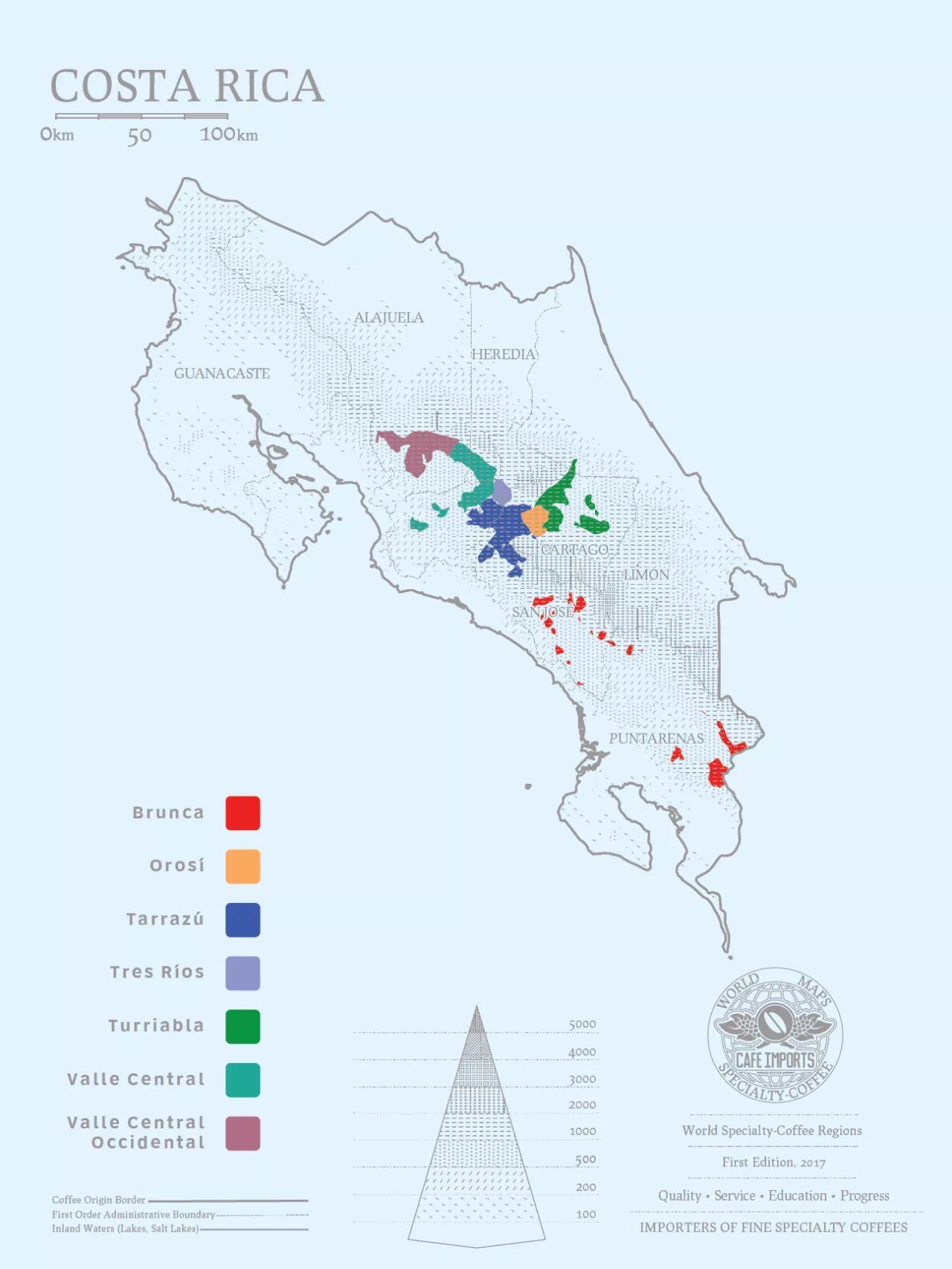
FrontStreet Coffee carries many Geisha coffees. Besides Panamanian Geisha, there is also the Geisha blend from Costa Rica's Mirasu Estate. Costa Rica has eight major coffee regions: Western Valley (Valle Central Occidental), Central Valley (Valle Central), Tarrazu, Tres Rios, Orosi, Brunca, and Turrialba. Tarrazu is the country's specialty coffee heartland, and Mirasu Estate sits right in it. The estate's climate is ideal for coffee: fertile volcanic soil, year-round rainfall, and high altitude — conditions that produce Costa Rica's famous "strictly hard beans," with excellent acidity and a flavor intensity that low-altitude beans, like many from Brazil, cannot match.

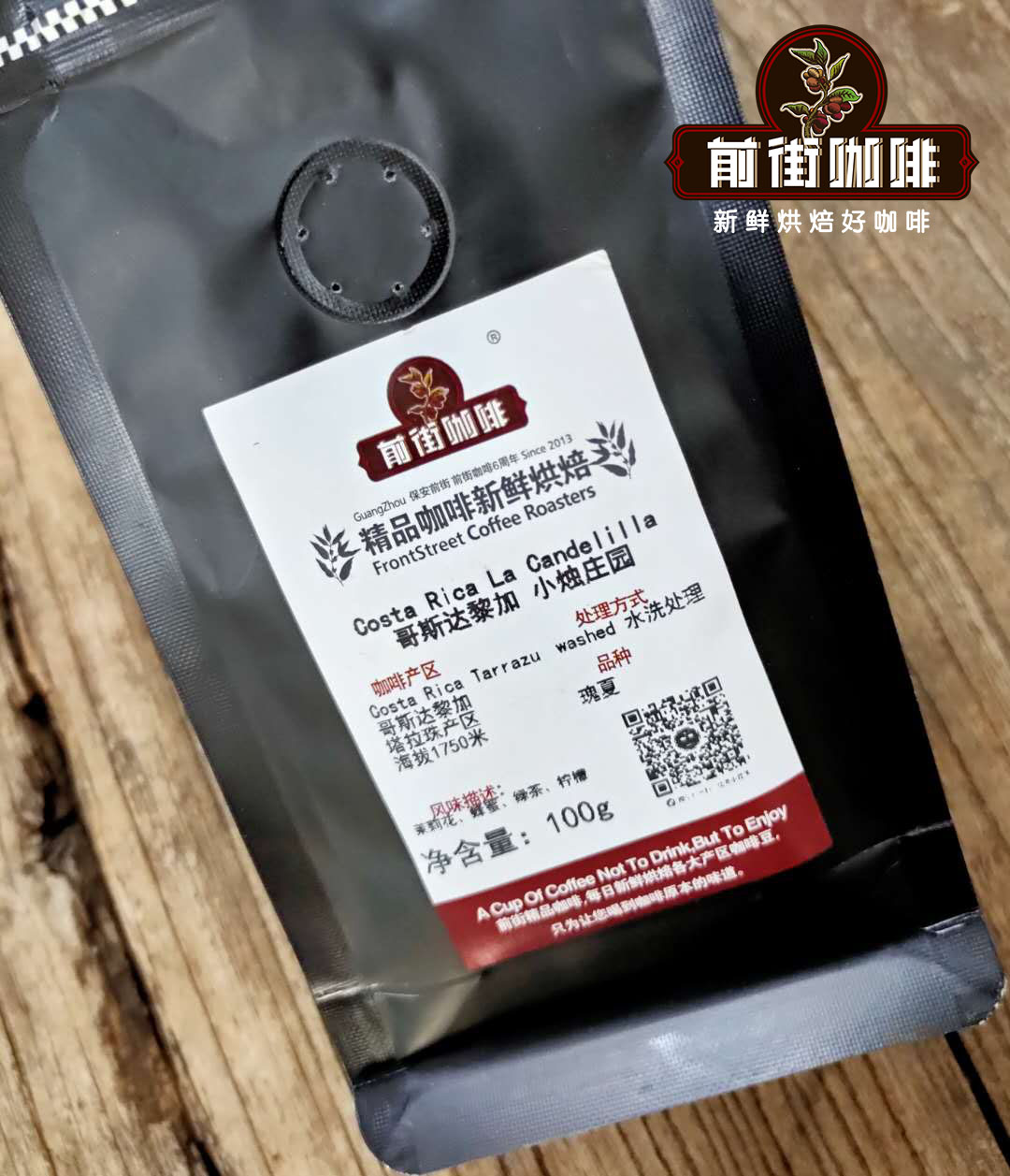
La Candela Estate also enjoys a great reputation in Costa Rica and is famous for producing one of the world's best Geisha coffees — rich acidity with distinct plum and citrus fruit aromas. FrontStreet Coffee has introduced a Geisha from La Candela Estate that is definitely worth trying.
As for Costa Rican processing, everyone knows the country's honey process is famous. After removing the skin and pulp of the cherries, the mucilage is retained for drying, giving Costa Rican honey coffees excellent sweetness. Cupping honey against washed lots, FrontStreet Coffee found the honey-processed beans noticeably sweeter, with a distinctly richer body during drying than typical washed beans.

If you have tried the Mirasu Estate Geisha that FrontStreet Coffee carries, you will find it keeps the cleanliness of a washed coffee while adding sweetness and caramel notes. And it does not use ordinary honey processing but raisin honey processing, which preserves 100% of the mucilage with zero water. Farmers first select the harvested cherries, discarding defective ones, then lay the selected cherries on raised beds to dry before depulping. The method is more difficult and time-consuming than regular honey processing, and it gives this Costa Rican Geisha rich strawberry-berry acidity with a hint of jasmine floral aroma.
This Costa Rican Geisha also differs from Panama's Red Label, Green Label, and Blue Label lots in variety: only 50% of the blend is Geisha, with the other half made up of ET47, SL28, and MAICO. Because it includes Geisha, the dry aroma carries a very intense floral fragrance.

The Origins and History of Geisha Coffee
Everyone knows Geisha from Panama's Hacienda La Esmeralda, but the variety did not originate there. It comes from the Geisha forest in Ethiopia, the homeland of coffee, and was introduced to Costa Rica in 1953 and to Panama in 1970.
At first, Geisha trees yielded poorly, so farmers were unwilling to plant them and used them only as windbreaks — nobody paid attention. It was not until Daniel Peterson of Panama's Hacienda La Esmeralda accidentally noticed the unique aroma of the beans from his Geisha trees that the variety was separated out and entered in Panama's coffee cupping competition. Unexpectedly, it won the Best of Panama green coffee competition several years running, and its price skyrocketed — Hacienda La Esmeralda had started a Geisha craze that swept the global coffee industry.

Coffee Varieties in the Blend
ET47 arrived in the 1990s, when the Costa Rican Coffee Research Institute distributed imported research varieties, bred for leaf rust resistance studies, to farmers in the Tarrazu region. The variety offers charming fruit sweetness and a very clean taste.
SL28 comes from Kenya's Scott Laboratories. Very drought-resistant, it belongs to the Bourbon genetic group, so SL28 beans resemble Bourbon varieties with their round, full shape.
Tasting Notes and Brewing Experience
As Geisha's popularity keeps growing, more and more countries have joined the ranks of Geisha producers — besides Costa Rica and Panama, countries like Colombia and Ethiopia now grow it too. FrontStreet Coffee has cupped this Mirasu Estate Geisha: ground, it gives a jasmine-like dry aroma, and after hot water is poured a wave of jasmine fragrance rises. In the cup there is very bright lemon acidity; as it cools, passion fruit and a strawberry-juice sensation emerge, with a honey-like sweet aftertaste. A very special Geisha, and definitely worth trying.

FrontStreet Coffee Brewing Recommendations
Dripper: V60 #01
Dose: 15g
Ratio: 1:15
Temperature: 90°C
Grind: Medium-fine (80% pass-through rate on China standard #20 sieve)

FrontStreet Coffee brewing method: first wet the filter paper and preheat the dripper and server. Bloom with 30g of water for 30 seconds. Pour in small circles to 125g, then, when the water level is about to expose the coffee bed, continue to 225g and stop. Once the level drops again to just above the bed, remove the dripper (timing from the bloom start). Total extraction time is 2'01".
Brewing flavor: jasmine aroma, raisin sweetness, strawberry candy sweetness, and a nutty, cream-like texture.
FrontStreet Coffee Recommendation
If raisin honey processing intrigues you, FrontStreet Coffee's Mozart is the showcase: the cherries are pre-dried on raised beds for at least three days before depulping, keeping 100% of the mucilage — a method even more demanding than black honey — and the result is a richer dried-fruit sweetness, with osmanthus, pineapple, and raisin aromas whether brewed as a pour-over, cold brew, or moka pot coffee. There is also FrontStreet Coffee's Strawberry Sugar, a blend pairing raisin-honey Costa Rican coffee with Panama Geisha for a floral tea character, grape and dried blueberry fragrance, soft acidity, an almond finish, and pronounced sweetness.
And if you want to trace Geisha back to its roots, remember the story: the variety stunned the world when Esmeralda's lot took the 2003 Best of Panama crown with a 94.6 average cupping score. FrontStreet Coffee carries Esmeralda's Red Label "Esmeralda Special" (grown at 1,600-1,800 meters, cupping above 90 points, single-plot batches) and the more affordable Green Label "Private Collection," plus the entry-level Panama Boquete Geisha with its classic orange-honeyed aroma, oolong tea character, and delicate fruit acidity. For brewing any of these, FrontStreet recommends a medium-light roast, a grind with 78% passing a #20 sieve, 91°C water, 15g of coffee in a small V60 at 1:16, and a three-stage pour finishing at 225g with a drawdown of about 2:10-2:20.
Important Notice :
FrontStreet Coffee is a long-established specialty coffee roaster in Guangzhou China, selling freshly roasted beans from its own farm in Yunnan as well as dozens of carefully selected single-origin beans from around the world for both pour-over and espresso. The products deliver consistently excellent quality and great value, with shipping within 24 hours. Guangzhou's FrontStreet Coffee shop is recommended by many coffee lovers, and the beans are now available online at the Tmall 。
FrontStreet Coffee has moved to a new address:
FrontStreet Coffee Address: 315,Donghua East Road,GuangZhou
Tel:020 38364473
 Scan and follow the En Gafei WeChat official account. Please indicate that the reprint comes from "En Gafei".