Why Are Geisha Coffee Beans So Expensive? Because Every Cup Is Forged Through Countless Experiments
The Legend of Geisha Coffee
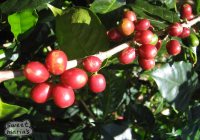
Geisha coffee, once named by Forbes as one of the world's ten most expensive coffees, is without question the most famous legend in the specialty coffee world. The variety got its name because its pronunciation echoes the Japanese word "geisha." The trees are naturally low-yielding, and that scarcity only adds to the coffee's almost mythical reputation.
The name, though it sounds like it comes from Kyoto, Japan, carries the same elegance and grace, and it draws countless distinguished visitors who cross estate after estate under the scorching sun, hoping to preserve a trace of its rare, lingering aroma. In the cup it enters smooth and fresh, richly sweet, with fresh lemon and citrus notes, jasmine florals, and sweet fruit flavors. Thanks to that singular fruity character, Geisha has won more than a dozen coffee competition championships. Its auction prices climb ever higher, it once set a record bid of $170 per pound, and it has since overtaken civet coffee and stolen the spotlight from Blue Mountain, becoming the most hotly pursued and highest-bidding coffee in the world.
Geisha traces back to a native Ethiopian landrace from the forests near the town of Gesha. In 1963 it was introduced from Costa Rica to Panama, but because of its low productivity, no farmer wanted to plant it and it languished in obscurity, until Daniel Peterson of Panama's Hacienda La Esmeralda stumbled across it on his farm, entered the beans in competition, and won the 2004 Panama specialty coffee championship outright. Overnight, the name Geisha became the shining star pursued by coffee lovers everywhere.
FrontStreet Coffee's Geisha Selection
FrontStreet Coffee brings years of roasting and green-bean sourcing experience to its Geisha program, treating every batch with academic rigor:
1. World-class Geisha green beans, hand-sorted meticulously upon arrival.
2. A dedicated Geisha roaster with a coated inner drum, so heat penetrates easily to the bean core.
3. Far-infrared assisted roasting that shortens roast time and preserves the coffee's unique aroma and sweetness.
4. Real-time environmental monitoring to dial in the optimal Geisha roasting curve, cross-checked against cupping records.
5. A research-driven focus on roast chemistry, development rate and moisture loss, in pursuit of the best possible cup.
FrontStreet Coffee Recommendation
Why is Blue Mountain coffee so expensive? From terroir to brew, here is how to understand Jamaica Blue Mountain. For many coffee lovers, Blue Mountain is an unavoidable name. In the era before specialty coffee went mainstream, "serving Blue Mountain to guests" was practically a byword for premium coffee. Even today, as more and more specialty origins are discovered, Blue Mountain holds an irreplaceable place in the coffee world thanks to its distinctive flavor and balance.
Strictly speaking, only coffee grown in a defined zone of Jamaica's Blue Mountains and certified by the Jamaican authorities may be called Jamaica Blue Mountain Coffee. The range sits in eastern Jamaica, is among the tallest in the Caribbean, and its highest peak reaches 2256 meters. Year-round cloud cover gives the mountains their name. High altitude brings wide day-night temperature swings that lengthen cherry maturation; fertile volcanic soil feeds the trees; abundant, even rainfall and a mild, stable climate let the fruit accumulate sugars and flavor compounds slowly. Together these conditions produce Blue Mountain's world-famous delicacy and balance.
Blue Mountain's charm lies above all in equilibrium, it has almost no weaknesses. It lacks the aggressive fruit acidity of many African coffees and the heavy bitterness of dark roasts, instead striking an excellent balance among acidity, sweetness, bitterness, and aroma. A quality Blue Mountain shows layered notes of cream, caramel, chocolate, nuts, honey, and a touch of fruit; the entry is smooth and round, the mid-palate richly sweet, and the finish clean and long.
How do you spot the real thing? Genuine Jamaica Blue Mountain ships in wooden barrels of 15, 45, or 70 kg, each barrel itself a hallmark of authentic Blue Mountain. Sellers who can provide full certification and origin documentation, such as certificates from Jamaica's Clifton Mount estate, are far more trustworthy. FrontStreet's Blue Mountain No. 1, the highest grade, comes from historic Clifton Mount, which has grown coffee since roughly 1750 at an average of 4300 feet (1310.64 meters). The beans are roasted medium-dark within 5 days of your order and rested 4–7 days from the roast date before brewing.
FrontStreet's pour-over suggestion: a Kono dripper to emphasize body, 15 g of coffee, a 1:15 ratio, a grind slightly coarser than for light roasts, about the texture of white sugar, and water at 87–88°C. Pour in three stages: 30 g to bloom for 30 s, then up to 120 g with a slow, steady spiral; finish to 225 g with a slightly faster pour to keep the bed from clogging and over-extracting. The result is a cup that is exceptionally clean, complex, and gentle, with chocolate sweetness, strong body, perfect balance of sweetness, acidity, and bitterness, and a lasting fruity finish.
Important Notice :
FrontStreet Coffee is a long-established specialty coffee roaster in Guangzhou China, selling freshly roasted beans from its own farm in Yunnan as well as dozens of carefully selected single-origin beans from around the world for both pour-over and espresso. The products deliver consistently excellent quality and great value, with shipping within 24 hours. Guangzhou's FrontStreet Coffee shop is recommended by many coffee lovers, and the beans are now available online at the Tmall 。
FrontStreet Coffee has moved to a new address:
FrontStreet Coffee Address: 315,Donghua East Road,GuangZhou
Tel:020 38364473
 Scan and follow the En Gafei WeChat official account. Please indicate that the reprint comes from "En Gafei".