Coffee Latte English: Milk Coffee Latte Espresso Extraction Parameters Grind Size
For professional coffee knowledge exchange and more coffee bean information, please follow Coffee Workshop (WeChat official account: cafe_style)
Understanding Espresso-Based Coffee Varieties
Standing at the counter of an espresso bar, staring down a menu full of near-identical Italian words—latte, cappuccino, macchiato, mocha—most of us have quietly wondered what actually separates them. The answer, more often than not, is the ratio. FrontStreet Coffee breaks down the classic espresso-based drinks, where their names come from, and how each one is built.
Espresso is the concentrated Italian-style coffee produced by an espresso machine. On its own it's intense—so intense that many people find it hard to drink straight. That intensity is precisely why it became a base: from espresso, an entire family of drinks was derived.
(Note: "Hot milk" below means milk heated with a steam wand but not yet frothed into foam.)
1. Caffè Latte: Coffee and Milk as Dual Protagonists
Caffè latte is Italian for "coffee with milk"—latte alone just means "milk." Order a "latte" at a bar in Italy and you may well get a confused look and a glass of milk. To get the coffee, you need to say "caffè latte."
Outside Europe—including the United States and Taiwan—people simply say "latte." But here's a quirk: the latte you drink in Italy might come without foam at all. The milk frother is a relatively recent invention, first appearing in the United States in the 1950s–60s, and before that, Italian lattes were just espresso with milk added.
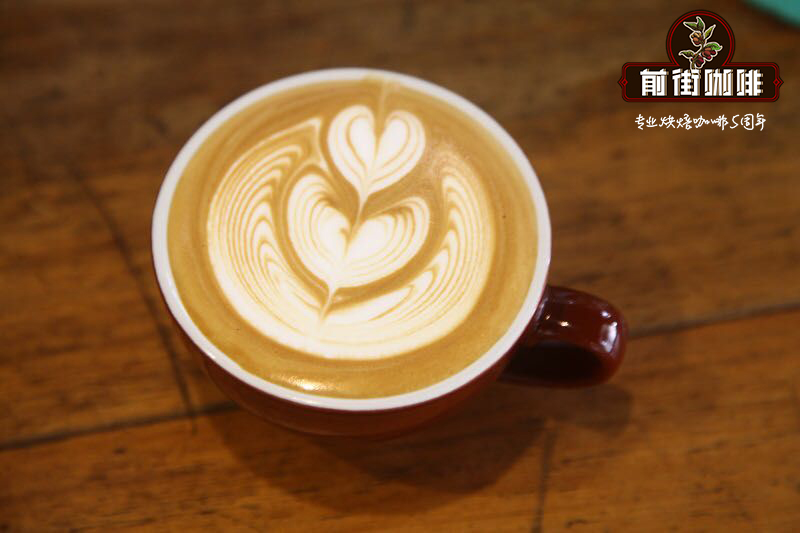
In composition, the classic ratio is one-fifth espresso, two-fifths hot milk, and two-fifths milk foam. What defines the flavor is the partnership: coffee and milk share the stage as dual protagonists, and the pleasure lies in savoring how the two blend and balance.
2. Cappuccino: Coffee Leads, Milk Supports
Tip a latte's ratio toward coffee and the cup turns predominantly dark brown with traces of white—resembling the Capuchin monks in their brown robes and white hoods. "Cappuccino" is Italian for exactly those monks, and that's how the drink got its name.
The difference from a latte is the stronger espresso share: one-third espresso, one-third hot milk, one-third milk foam. A dusting of cocoa or cinnamon on top is a common flourish. In the cup, coffee dominates with milk as the complement.
3. Café au Lait: Milk as the Protagonist
Café au lait is French: "lait" means milk, so the name literally means "coffee with milk"—coffee added into milk. And the French do add a lot of it, often serving the mixture in a bowl at breakfast alongside French bread.
There's no universally agreed ratio—how much milk counts as "a lot" is anyone's guess. Flavor-wise, milk is the protagonist, its aroma nearly drowning out the coffee entirely.
4. Mocha: Chocolate as the Protagonist
Mocha is a small port town in Yemen whose beans naturally carry a chocolate note. Over time, "Mocha" became shorthand for any coffee with chocolate aromas, and eventually the name of a drink.
The ratio: two-fifths espresso, two-fifths hot chocolate, one-fifth hot milk. It's the drink for anyone who refuses to choose between coffee and chocolate, with the small amount of hot milk smoothing the whole thing out.
5. Macchiato
A macchiato is espresso marked with just a tiny amount of milk foam—a few milliliters at most, served in an espresso cup as a white dot on the dark surface. "Macchiato" means "stained" or "marked" in Italian, which is exactly the point.
Built on a double shot it's a Long Macchiato; on a single, a Short Macchiato. The flavor is intensely rich with barely any dilution—the milk is a whisper you have to hunt for. That restraint is the appeal: a trace of milk, a lingering milky fragrance, a long aftertaste.
6. Caramel Macchiato
The Caramel Macchiato is a sweeter spin: vanilla added to the macchiato, a thick drizzle of caramel on top, and—crucially—drunk in one sip without stirring. That single mouthful delivers coffee bitterness, vanilla aroma, and rich caramel sweetness all at once, and that layered hit is what made it famous.
7. Americano
During World War II, American soldiers stationed in Italy couldn't stomach the local espresso, so they dilute-topped it with copious hot water until it tasted like home.
The Italians watched this peculiar ritual with amazement and dubbed the drink "Americano"—"American." Rather than taking offense at the teasing name, the Americans wore it proudly, and the name stuck, forever referring to espresso lengthened with hot water.
Final Thoughts on Coffee Ratios
All the ratios above are reference points, not laws. Latte and cappuccino, for instance, blur into each other—they're just points on the same milk-to-coffee spectrum. Some American Starbucks locations have even dropped the cappuccino because it's too close to a latte. In FrontStreet Coffee's view, don't obsess over the numbers; use them as starting points and adjust until you've built the drink you actually love.
FrontStreet Coffee Recommendation
Knowing the ratios is half the game; the other half is choosing beans that shine in milk. Most espresso blends are roasted medium-dark so that a latte lands on rich nut and chocolate notes with a clear coffee core—exactly why the Brazil-led FrontStreet Coffee Premium Blend and Dark Cocoa Blend are our best milk partners, pouring out silky layers of almond, walnut, and mixed-nut flavor that linger. If you want a latte with abundant crema, pick the Classic Blend or Commercial Blend: their touch of Robusta delivers extra golden foam and maxes out the body and caramel aroma. The Classic Blend—built on the traditional Mandheling-Brazil pairing—is the first-choice all-rounder: forgiving enough for a beginner's home machine yet capable for cafés, with crema so fine that lattes, cappuccinos, and Dirty drinks all come easily.
For something more distinctive in milk, the fruit-forward Strawberry Candy blend is worth a try: different Arabica origins blended to recreate a bright strawberry-candy sweetness, low in bitterness, and equally at home in a family kitchen or a café looking to serve milk coffees with a signature twist. And if your style is hot pour-over with a splash of milk—where the coffee must not be drowned—choose medium-dark single origins described with chocolate, nut, cream, or cocoa notes: Brazil Queen Estate Yellow Bourbon, Indonesian PWN Golden Mandheling, or Papua New Guinea Paradise Bird all soften beautifully with a little milk while keeping their character. Ratios, beans, milk—once those three line up, every drink on the menu becomes yours to make.
Important Notice :
FrontStreet Coffee is a long-established specialty coffee roaster in Guangzhou China, selling freshly roasted beans from its own farm in Yunnan as well as dozens of carefully selected single-origin beans from around the world for both pour-over and espresso. The products deliver consistently excellent quality and great value, with shipping within 24 hours. Guangzhou's FrontStreet Coffee shop is recommended by many coffee lovers, and the beans are now available online at the Tmall 。
FrontStreet Coffee has moved to a new address:
FrontStreet Coffee Address: 315,Donghua East Road,GuangZhou
Tel:020 38364473
 Scan and follow the En Gafei WeChat official account. Please indicate that the reprint comes from "En Gafei".