How to Make and Taste Latte Coffee: Correct Flavor Profile and Texture Characteristics - The Right Espresso Blend Ratio for Latte Coffee Beans

Coffee is a craft best learned by tasting widely and comparing notes with other drinkers.
What Is a Latte?
Latte coffee appeared many years before espresso. Europeans were mixing coffee and milk at least as far back as the 17th century. William Dean Howells first used the term "caffe latte" in his 1867 essay "Italian Journeys." Coffee was causing a worldwide sensation by then, but with no espresso machine yet invented, brewing methods remained very primitive.
"Latte," in fact, is the Italian word for milk, so in Italy ordering a latte may get you a glass of milk. Latte coffee, then, is essentially milk coffee. With the arrival of the espresso machine, the steam wand became standard equipment and milk could be heated easily at the machine, and the modern latte took shape. In the 1980s, baristas in Seattle, Washington began using rich, textured milk to "paint," and that became the prototype of latte art.

The ratio of milk to coffee, the bean selection, the extraction parameters - all vary slightly from shop to shop. Broadly, though, a latte is a coffee drink made by mixing a large amount of milk with espresso. Different beans give different latte flavors, different milks do too, and even a different coffee-to-milk ratio changes the result.
Which Beans Make the Best Latte?
As a rule, latte beans must suit an espresso machine, so very light roasts are out. The darker the roast, the stronger the coffee flavor in the latte (caramel, bitter). The lighter the bean, the more the milk comes forward. Roast level should therefore be moderate, so that coffee and milk complement each other.

FrontStreet Coffee uses its own house blend, FrontStreet Sunflower Warm Sunshine Espresso Blend, currently its proudest blended creation. It is built from FrontStreet Honduras Sherry Coffee and FrontStreet Yirgacheffe Natural Red Cherry Coffee, giving rich chocolate and caramel notes and a pleasantly intoxicating character once milk is added.
How to Make a Latte
FrontStreet's latte recipe is 1:6.5 - 40g of espresso mixed with 260g of steamed milk.
FrontStreet's espresso extraction uses 20g of coffee to produce 40g of espresso liquid in 27 seconds, and that is the base of the latte.

Next comes frothing the milk. You need a steam wand, which most semi-automatic machines have, and a container for the milk, such as a milk pitcher or latte art pitcher; the right tools make the process far more efficient.
Then there is the milk itself. Room-temperature or refrigerated, whole or skim, all of them can be frothed. For better texture, flavor, stability, and longevity, though, FrontStreet recommends refrigerated fresh whole milk.

1. The Right Amount of Milk
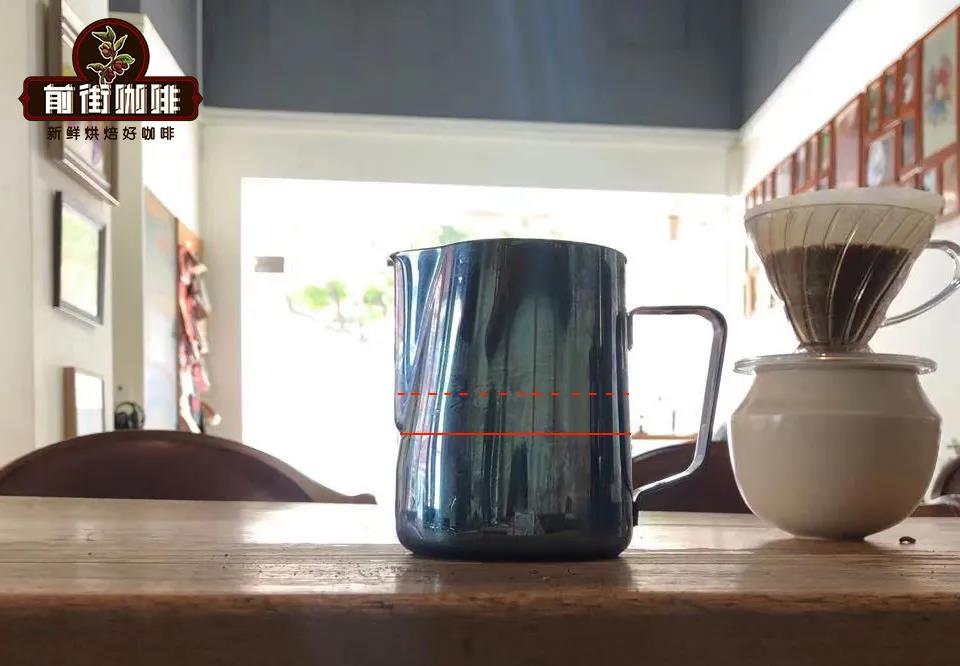
Frothing needs a sensible volume. FrontStreet recommends filling the pitcher to 40-60% of its total capacity; too little or too much will test your technique. Beyond that, think about how much milk each coffee actually uses so you do not waste it. FrontStreet uses a 550ML pitcher with 250ML of milk, which just reaches the bottom of the spout.
2. Wand Position
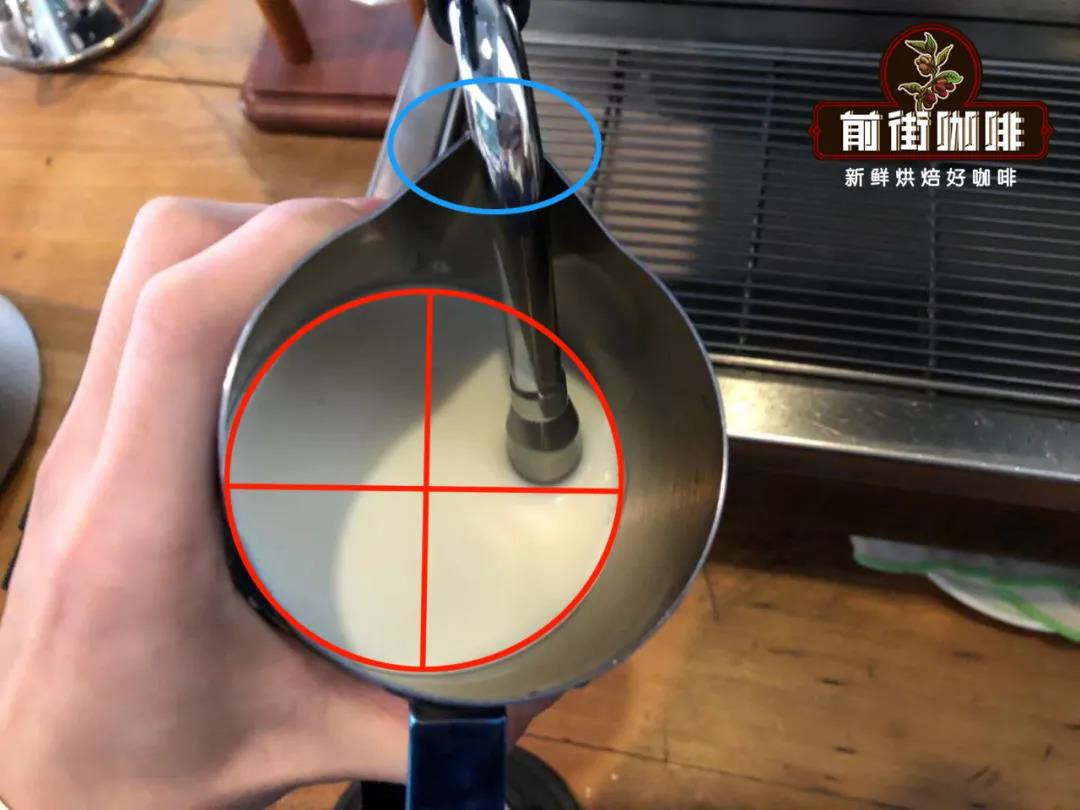
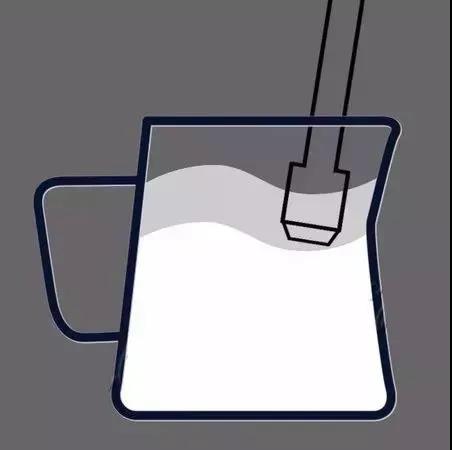
Before frothing, turn on the steam wand to release condensed water, then turn it off. Extend the wand at a 45-degree angle and use the pitcher spout to steady its position. The steam vortex will rotate counterclockwise, with the wand sitting to the right of the center of the liquid surface, in a semi-buried state.
3. The Frothing Stage
Turn on the steam switch and you will hear a "zee-zee" sound; that is the frothing stage. Frothing time depends on how thick you want the foam - longer means thicker. Generally, taking milk from 50% to 60% volume, the thickness wanted for a latte, takes about 3 seconds. The milk rotates evenly into a vortex.

4. The Smoothing Stage
Now bury the steam holes completely, heating without adding more foam. Do not bury them at the very bottom; keep them in the foam layer, which helps smooth and refine coarse bubbles. When do you stop? That depends on the milk temperature, generally kept between 55-65°C. Too hot and the proteins denature - in food, thermal denaturation generally happens around 60°C.
Integration and Latte Art
Then comes integration and latte art. Once the espresso is extracted and the milk steamed, focus on integrating the two to finish the latte. Integration is a crucial part of the drink: good integration makes the latte smooth and comfortable with no harshness. Only after proper integration can you draw the patterns we call latte art, and then the latte is done.

FrontStreet Coffee's signature latte flavor: smooth texture, a lasting chocolate taste mingled with pleasant alcoholic notes, a persistent aftertaste, and noticeable sweetness.
FrontStreet Coffee Recommendation
Latte art depends on good crema and stable extraction, and that is exactly what FrontStreet Coffee's blends are built for. The Classic Blend combines three origins in a medium-dark espresso formula inspired by the old "Mamba" recipe - Mandheling plus Brazil - with a small amount of Robusta added for aroma and crema. It smells of butter, toasted bread, and caramel biscuit, and it tastes strong and solid with fine crema and a very stable extraction, which makes it the go-to home coffee for anyone learning to pour.
The Specialty Blend is the nutty, chocolatey choice: Colombia washed coffee paired with Brazil pulped natural in a medium-dark roast, giving nut, dark chocolate, and caramel. As an Americano, a latte, or a flat white it shows cream, almond, and cocoa, and the crema stands up to cafe quality, which is more than enough for practicing latte art. It suits anyone learning at home or getting ready to open a shop.
If you want even more crema to pour with, FrontStreet Coffee's Commercial Blend builds on the Specialty Blend with a little Robusta added, giving a thicker body and more fine, dark-brown crema. Americano, latte, and mocha all come out with nut, cocoa, and caramel notes, and the art practically pours itself.
Important Notice :
FrontStreet Coffee is a long-established specialty coffee roaster in Guangzhou China, selling freshly roasted beans from its own farm in Yunnan as well as dozens of carefully selected single-origin beans from around the world for both pour-over and espresso. The products deliver consistently excellent quality and great value, with shipping within 24 hours. Guangzhou's FrontStreet Coffee shop is recommended by many coffee lovers, and the beans are now available online at the Tmall 。
FrontStreet Coffee has moved to a new address:
FrontStreet Coffee Address: 315,Donghua East Road,GuangZhou
Tel:020 38364473
 Scan and follow the En Gafei WeChat official account. Please indicate that the reprint comes from "En Gafei".