What Are Kenya PB Coffee Beans? An Introduction to Sasini Kenya Peaberries

For FrontStreet Coffee, it is undeniable that Kenya values coffee cultivation and invests serious effort in it. As a renowned coffee-producing country in Africa, Kenya's coffee history is far more recent than neighboring Ethiopia's, yet through hard work and dedication the country has made coffee one of its main economic pillars, which is genuinely remarkable. Today, FrontStreet Coffee turns its attention to Kenyan coffee.
Kenyan Coffee Cultivation Geography
Kenya sits in eastern Africa. With the equator running through its center, the country has high altitudes and a tropical savanna climate. Abundant rainfall combined with mineral-rich soil creates an excellent environment for coffee trees. Kenyan soils carry relatively high phosphate content, which gives Kenyan beans their pronounced acidity.
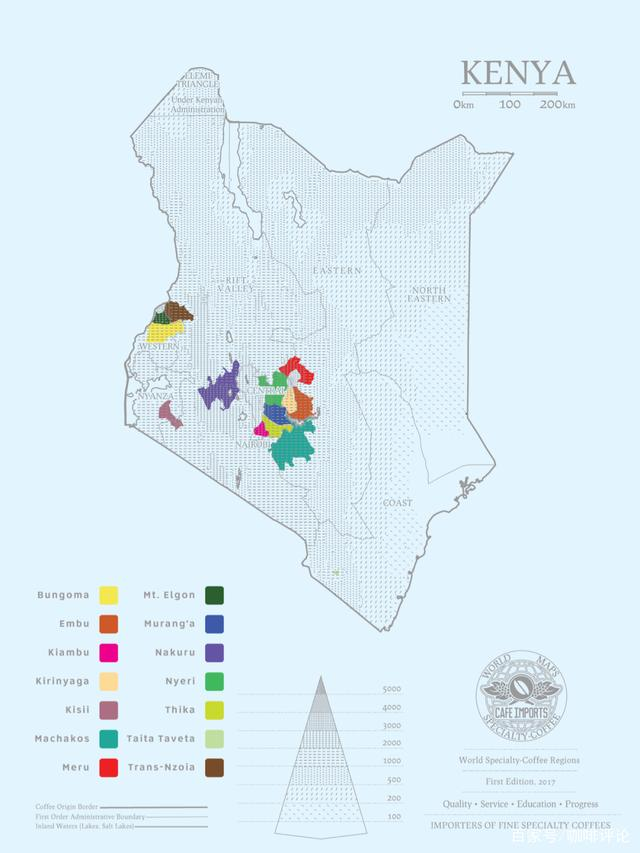
Kenyan coffee beans grow at an average altitude of 1500-2100 meters. The growing areas see wide day-to-night temperature swings, with daytime highs of 22-26°C and nighttime lows of 10-14°C. These hot days and cool nights slow the ripening of the cherries, giving them more time to develop complex flavors.
Kenyan Coffee Cultivation
Kenyan coffee cultivation began in 1893, arriving from Réunion Island. At the time, coffee agriculture was controlled by British colonists and officials, and it was not until 1935 that local Kenyans gained the right to manage it themselves. Before that, local people worked in conditions close to slavery for the British. Kenya initially grew Bourbon varieties, but after 1935 farmers began planting the Scott Laboratories selections SL28 and SL34. These two varieties are easy to cultivate, produce large beans with high yields, and possess excellent flavor profiles.

SL28 and SL34 Coffee Varieties
SL28 was first developed in the 1930s, when the Kenyan government commissioned the newly established Scott Labs to select varieties suited to the country. After 42 preliminary varieties were individually numbered and screened, SL-28 and SL-34 were finally chosen. SL28 descends from Bourbon, while SL-34 descends from Typica; the two do not belong to the same variety series. The original goal in developing SL28 was to mass-produce beans combining high quality with resistance to pests and diseases. In some growing regions, however, the selection goals were primarily high yield and disease resistance, without regard to cup quality.
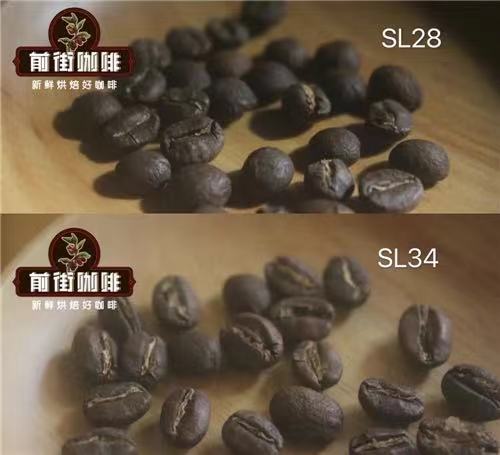
Thanks to its Bourbon genetics, SL28 yields less than expected, but its copper-colored leaves and broad, bean-shaped seeds deliver wonderful sweetness, balance, and complex, varied flavors, along with distinctive citrus and black plum characteristics. SL34 shares similar flavors, with complex, layered acidity and an excellent sweet finish, plus a smoother, cleaner mouthfeel than SL28. SL34 carries French Mission, Bourbon, and more Typica lineage. Its bean appearance resembles SL28, but it adapts better to rainforest conditions.
Differences Between Common Kenyan Coffee Grades
Kenyan coffee is graded with specific sieves, with the grade determined by cherry size. AA grade covers all beans that pass 17-18 mesh. The washed coffee from Kenya's Assalia processing plant, sold by FrontStreet Coffee, belongs to AA grade, with a full, uniform particle size. AB grade covers beans of 15-16 mesh, allowing 10% below 15 mesh, though this does not necessarily correlate with actual quality.

The Kenyan Coffee Board is very strict about coffee research, development, and quality management. Through an excellent auction system, it raises bean prices and indirectly helps hardworking farmers. It also runs agricultural education to keep improving growers' cultivation techniques. High-quality Kenyan coffee with particular, powerful blackberry fruit acidity is produced in limited quantities, and these lots are premium estate coffees that green coffee merchants compete to acquire.
What Is Kenyan PB Coffee?
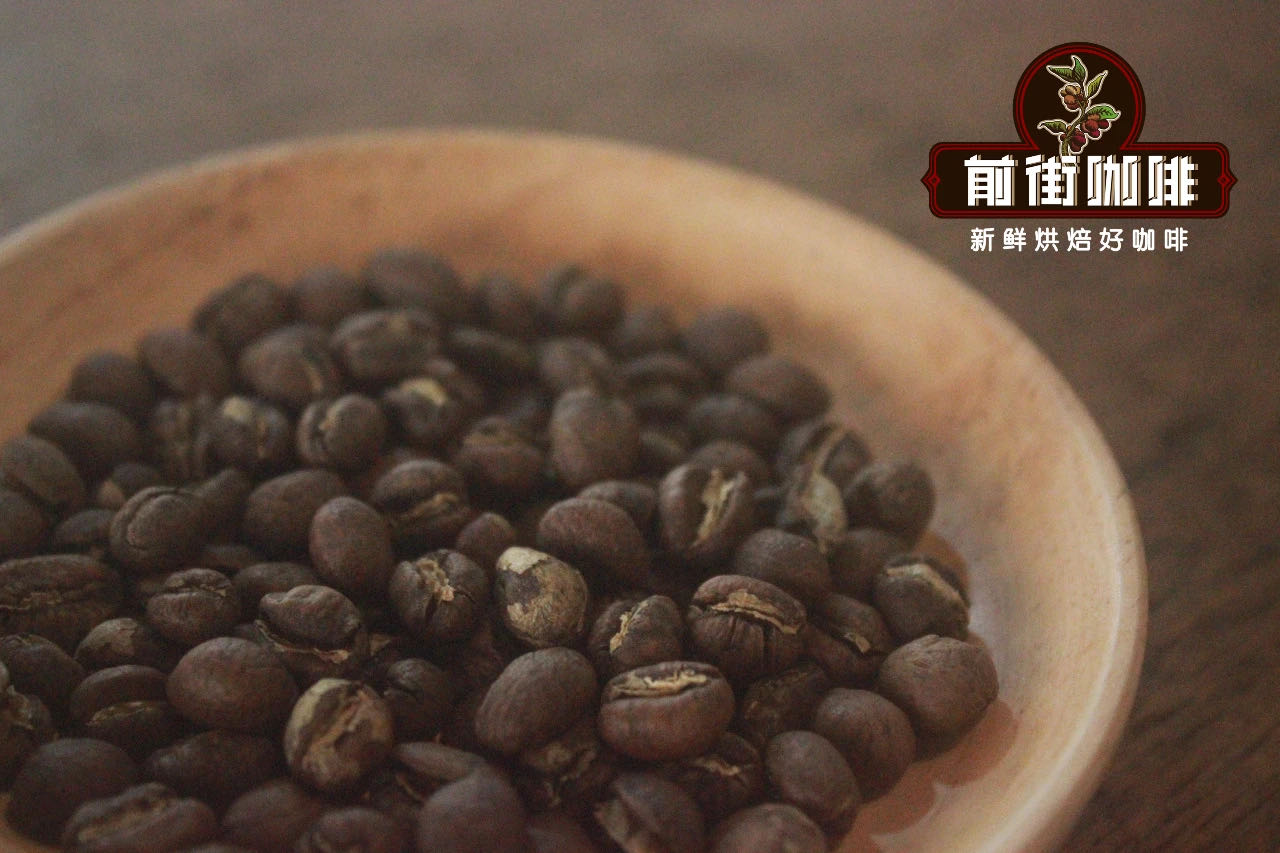
Coffee beans normally consist of two pea-shaped halves (commonly called female beans). PB (Peaberry) beans are small and round, growing in a rice-like or oval shape (commonly called male beans). Kenyan peaberries are a selected variant of Kenyan beans, hand-sorted, and rank among the most distinctive of all PB coffees. FrontStreet Coffee's Kenyan beans come from the Sasini Estate.
Kenyan Coffee Bean Processing Methods
Both Kenyan varieties sold by FrontStreet Coffee use the Kenyan 72-hour washed processing method. Unlike regular washed processing, Kenyan beans require 72 hours of fermentation, which makes the acidity fuller and more robust. After harvesting, the highest-quality cherries are selected for pulping and fermentation, with an initial fermentation of 24 hours, after which they are washed with clean river water.
Next, they undergo another 24-hour fermentation in clean river water, followed by washing. This cycle repeats three times to reach 72 hours, hence the Kenyan-style 72-hour fermentation washed process, abbreviated K72. FrontStreet Coffee believes the K72 method lets the beans ferment for a long time at low temperatures, producing brighter acidity while preserving clean, full flavors.

How to Brew High-Acidity Kenyan Coffee Beans for the Best Taste
Unique varieties, the environmental character of the growing regions, and the distinctive Kenyan 72-hour washed process together create excellent flavors in Kenyan beans. FrontStreet Coffee recommends drip brewing, which is what we commonly call pour-over extraction.
Filter: Hario V60, Grind: medium-fine (75% pass-through rate on a China #20 standard sieve), Coffee dose: 15g, Brew ratio: 1:15, Water temperature: 91°C.
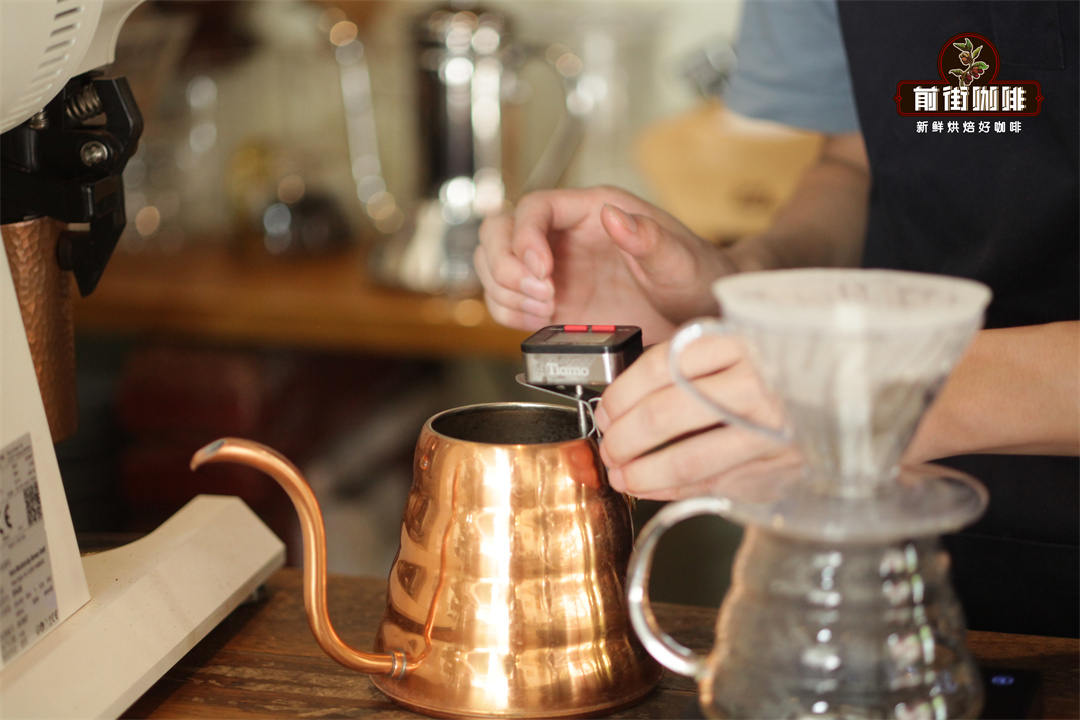
FrontStreet Coffee recommends a three-stage pour. First stage: pour 30g of water and bloom for 30 seconds. Second stage: pour 95g of water (125g on the scale), completed in about 1 minute. Third stage: pour 100g of water (225g on the scale), completed in about 1 minute 45 seconds. Total extraction time should be 2:00-2:10. Remove the filter cup and shake gently before tasting.

Kenyan coffee brewing flavor: whether AA grade beans or PB peaberries, the cup has full berry acidity, like tomato juice or mixed fruit juice, with caramel-like sweetness in the aftertaste. The layers are distinct as you drink, with bright, clean acidity.
For professional coffee knowledge exchange and more coffee bean information, follow FrontStreet Coffee's official channel.
FrontStreet Coffee Recommendation
If Kenya's bright, berry-driven profile appeals to you, the same African terroir shines through FrontStreet's Ethiopian lineup, which shares that juicy, fruit-forward character. FrontStreet Washed Yirgacheffe is the natural entry point: clear jasmine florals and bright citrus acidity, light and elegant with a tea-like body that drinks like a clean, refreshing lemon tea. For a village-level washed lot, FrontStreet Gededing Cooperative comes from the Worka area at the southeastern edge of Yirgacheffe; drying after the pulp is stripped keeps its inherent aromatics clear and penetrating, showing citrus and lemon alongside elegant white florals. FrontStreet Natural Red Cherry keeps the region's citrus while adding tropical fruit and a juicy berry character, with honey sweetness and a creamy smoothness, and its peach, cocoa, honey, and lemon notes make it a fine contrast to a washed Kenyan cup. For a darker, more fruit-forward option, FrontStreet Ethiopia Huakui from the Hambella area of Guji is dried naturally for 21 days on raised beds and turned regularly; after a light-medium roast it shows light fermented wine, florals, citrus, and mango, with a dense body and a long finish.
To brew any of these, FrontStreet suggests a V60 with 15g of coffee at a 1:15 ratio and 90-91°C water, ground to a medium-fine consistency around fine-sugar size, with about 80% passing a China #20 standard sieve. Bloom with 30g of water for 30 seconds, pour in stages to about 125g and then to 225g, and aim to finish the drawdown in roughly 2:00-2:10.
Important Notice :
FrontStreet Coffee is a long-established specialty coffee roaster in Guangzhou China, selling freshly roasted beans from its own farm in Yunnan as well as dozens of carefully selected single-origin beans from around the world for both pour-over and espresso. The products deliver consistently excellent quality and great value, with shipping within 24 hours. Guangzhou's FrontStreet Coffee shop is recommended by many coffee lovers, and the beans are now available online at the Tmall 。
FrontStreet Coffee has moved to a new address:
FrontStreet Coffee Address: 315,Donghua East Road,GuangZhou
Tel:020 38364473
 Scan and follow the En Gafei WeChat official account. Please indicate that the reprint comes from "En Gafei".