Complete Guide to Latte Coffee Beans - Latte Coffee Types, Characteristics, and Perfect Ratios

Even as single-origin coffee attracts more and more attention, the order books at FrontStreet Coffee show that espresso-based drinks still make up the lion's share of sales. When selecting espresso beans, we look at each bean's flavor, body, and balance of acidity and bitterness. FrontStreet Coffee has always believed that coffee is a remarkably inclusive culture: it can spotlight the flavors of a single origin, or blend several regions into something more complex. To make sure a coffee's character isn't drowned by milk while still harmonizing with it, we weigh everything from variety selection to the coffee-to-milk ratio.

What "Latte" Actually Means
Though "Caffè Latte" is Italian for "milk coffee," the drink wasn't invented in Italy. The story traces back to the war between the Ottoman Empire and Vienna. In 1683, the Muslim army of Muhammad IV laid siege to Vienna, and the situation grew desperate. The Christians trapped inside decided to appeal to Poland for reinforcements—but first they needed someone who could speak Turkish to slip past the Ottoman army outside the walls. Franz George Kolschitsky, a Viennese who had spent years trading in Turkey, volunteered. With his fluent Turkish he deceived the enemy, swam across the Danube, and reached the Polish king; the Christian army marched to Vienna and drove the Turks away.
The Ottoman army fled in haste, abandoning vast supplies: gold, cattle, horses, camels, and dozens of sacks of coffee beans. The Viennese had no idea what the strange beans were and assumed they were livestock feed. When the spoils were handed out, nobody wanted the unremarkable beans—except Kolschitsky, who had lived in Turkey and knew exactly how to turn them into money.

He opened a café called the Blue Bottle. At first he brewed coffee exactly as the Turks did, unfiltered—but the Viennese couldn't stomach Turkish coffee, thick and burnt with grounds. Then Kolschitsky had a clever idea: he strained out the grounds through cloth and added milk and honey, creating a refreshing new drink that swept Vienna. This was the first time milk met coffee, around the late seventeenth to early eighteenth century. The technology of the day couldn't have produced high-pressure steam wands, but Kolschitsky's innovation opened up whole new ways of drinking coffee and became the ancestor of today's Caffè Latte.
The Blue Bottle café became one of the most storied coffee houses in Europe, and many famous painters made it their subject. Vienna still treasures several paintings of Kolschitsky serving his guests—a testament to how beloved the café was.

Because "latte" simply means fresh milk in Italian, in the English-speaking world the word has come to mean coffee brewed with hot fresh milk. The French "lait" and the Italian "latte" mean the same thing: milk. "Latte coffee" is our coffee with milk added. As for the French "Café au Lait"—literally coffee with milk—English speakers generally just call it café au lait.

The term "latte coffee" didn't spread beyond Italy until the 1980s. A classic latte is one-third espresso and two-thirds fresh milk, usually without a thick foam layer. Compared with a cappuccino, it carries more fresh-milk flavor. The standard ratio is coffee : milk : milk foam = 1:2:1.
The latte is a classic marriage of Italian espresso and milk, and Italians love it as a breakfast drink. In an Italian kitchen in the morning, coffee and milk are typically warming side by side on the stove. Latte drinkers favor the milk over the espresso—yet only espresso can give plain milk its unforgettable flavor.

Italian-Style Latte
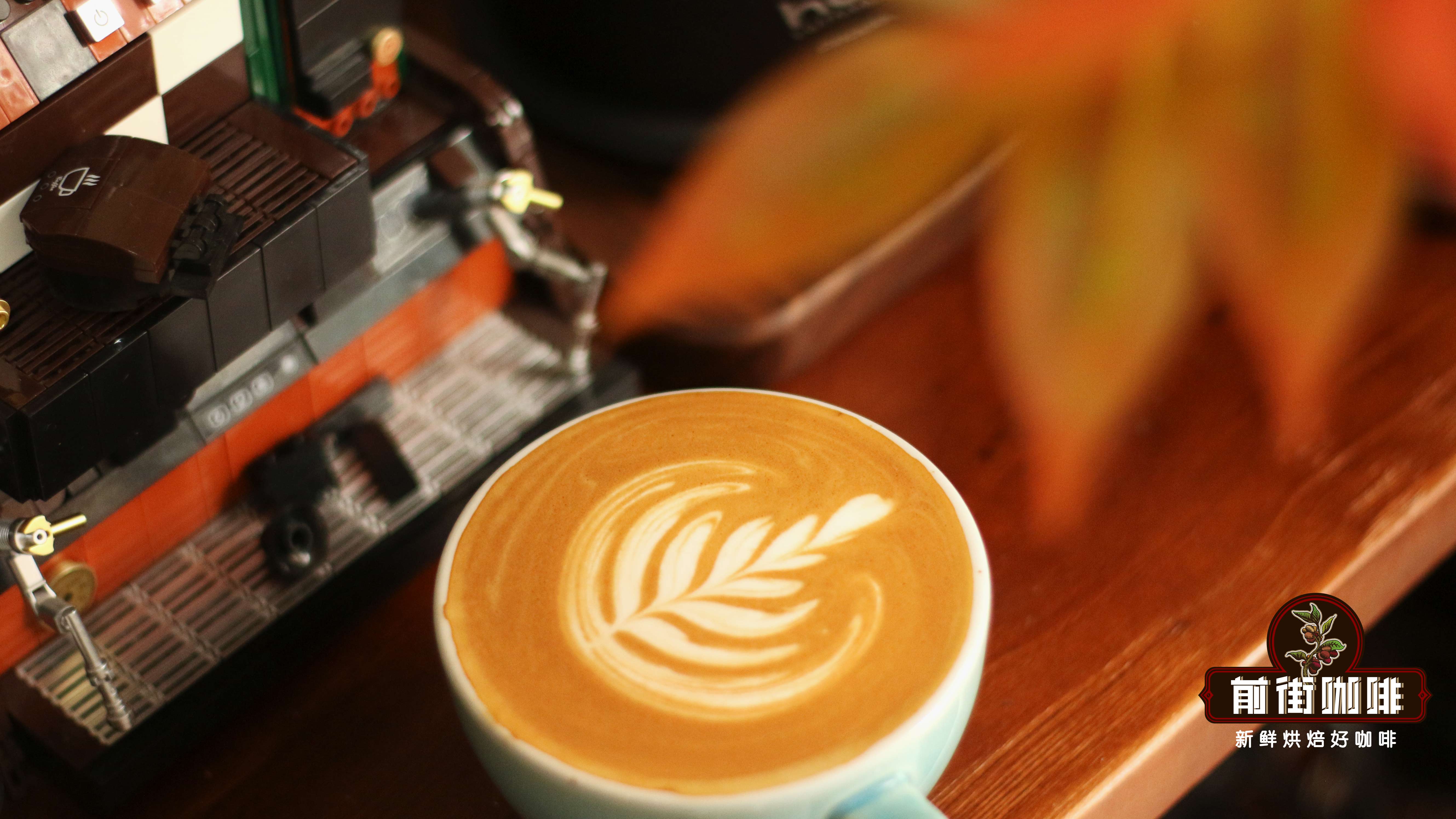
The Italian Caffè Latte calls for a small cup of espresso and a cup of milk (150-200 ml). With more milk and less coffee, it differs sharply from cappuccino. Making one is simplicity itself: pour near-boiling milk into freshly pulled espresso. There's no strict rule on how much milk to add—adjust freely to taste.
Add a cap of cold milk foam on top of the hot milk and you have the American-style latte. Starbucks' American latte follows exactly this formula: espresso at the bottom, milk heated to 65-75°C in the middle, and finally a layer of cold milk foam no more than half a centimeter thick.

Skip the hot milk entirely and top the espresso with two large spoonfuls of milk foam, and you have what Italians call an Espresso Macchiato.
Café Au Lait
Café au lait is best thought of as the European cousin of the latte—distinct from both the American latte and the Italian original. The method is just as simple: pour a cup of espresso and a large cup of hot milk into the cup at the same time, then crown the drink with two spoonfuls of whipped cream. What sets café au lait apart from both lattes is that milk and espresso meet at the very first moment, poured together into the cup—an unhurried, easygoing way of drinking coffee.
The French are café au lait's most devoted fans. On French breakfast tables you'll find round-bellied bol cups holding the source of the day's good mood. Amusingly, of all coffee cups in the world, the ones the French use for café au lait are probably the largest.

The latte is the most familiar Italian coffee drink to Chinese drinkers: a flavored coffee built by adding equal—or greater—amounts of milk to rich, concentrated espresso. Tempered by the milk, the coffee's bitterness turns smooth, sweet, and fragrant. Even people who normally avoid coffee find it hard to resist. Like cappuccino, the latte is a morning drink because it contains so much milk; Italians use it to warm the stomach alongside breakfast. Many people confuse latte and café au lait, but the distinction is simple: the latte is the Italian-style milk coffee, with milk heated by machine steam, while café au lait is the French style, with milk warmed over fire—the texture is every bit as silky.
Every café tweaks the milk-to-coffee ratio, bean selection, and extraction parameters of its latte, but broadly speaking a latte is espresso blended with a generous amount of milk.

Many readers write to FrontStreet Coffee asking what it takes to become a barista, and whether mastering latte art is enough. In truth, a barista must know how to make coffee and must absorb a great deal of coffee knowledge besides. The most fundamental skills are extracting espresso and steaming milk—so many coffee shops use a latte as the interview test to see whether a candidate has the basics.
How Does FrontStreet Coffee Make Its Latte?
FrontStreet Coffee demonstrates with its own Sunflower Warm Sunshine Espresso Blend. The bean information is as follows:
FrontStreet Sunflower Warm Sunshine Espresso Blend
Blend Components: FrontStreet Honduras Sherry Barrel & FrontStreet Ethiopia Natural Yirgacheffe Red Cherry
Composition Ratio: 7:3
Flavor Description: Vanilla, cream, fermented notes, wine notes, chocolate

Espresso Extraction Parameters:
Coffee Dose: 18 grams
Coffee Yield: 36 grams
Extraction Time: 28 seconds
Milk Parameters:
Milk Type: Whole milk
Frothing Temperature: 50°C
Foam Thickness: 1cm
Milk to Coffee Ratio: 1:9

Cup Details:
Cup Capacity: 200ml
Material: Ceramic
How to Nail the Espresso Extraction?
1. Choose Your Beans
FrontStreet Coffee generally recommends resting espresso beans for about ten days. But dark roasted beans degas faster than light roasted ones—so why such a long rest? Because espresso, unlike pour-over, gives the coffee little room to release gas. If the beans are too fresh and degassing actively, channeling easily occurs and the extraction becomes unstable.

2. Adjust the Grind Size
Once you have suitable beans, the espresso grind is the next variable—and it basically needs daily attention. The grind for espresso is never fixed at one setting. When should you adjust?
Situations that may require a grinder adjustment:
1. Sudden changes in temperature, air pressure, or humidity—most noticeable in open, unconditioned spaces.
2. Replacing old beans with new: when one bag runs out and freshly opened beans go in. New beans may differ in roast date, batch, and rest period, and therefore extract differently.
3. Continuous brewing: after 5-6 consecutive extractions, the grind can suddenly run finer. Sustained use transfers motor heat into the burrs, and friction between burrs and beans adds more heat, so the burrs expand and the gap narrows.

A bean's humidity and storage time change constantly, and burr wear changes over time too, so baristas should recalibrate the grinder regularly to keep the grounds in perfect condition.
When beans enter the grinder, the burrs crush them into particles. The smaller the gap between the burrs, the finer the particles. Finer particles pack more densely, making it harder for water to pass and greatly extending extraction time. Widen the gap and the particles grow coarser, water flows through more easily, and extraction speeds up.

As a rule, pull a shot with your previous parameters and aim to keep the time within 25-30 seconds, with a single dose of 13-14 grams and a double dose around 20 grams.
Once puck perforation is ruled out: if extraction runs long, you may be over-extracting the surface while under-extracting the interior—sharp acidity, burnt bitterness, astringency. The grind is probably too fine; nudge it coarser. If the flow turns fast and thick, with a shallow, pale extraction, the grind is probably too coarse; nudge it finer.

3. Dosing
Dosing is the first step of distribution. Uneven dosing undermines everything that follows—even the most sophisticated distribution tools can't fully undo its effect on the extraction.

What does uneven dosing do?
1. Flavor inconsistency: if the dose lands unevenly, no amount of distribution can fix the density imbalance deeper in the bed. Uneven density means a puck of uneven thickness, so water flows at different speeds through different zones. One slip and you get perforation or channeling (water's inertia makes it take the easy paths and ignore the rest), leaving parts of the puck under-extracted and others over-extracted—so the flavor swings from shot to shot.
2. Wild swings in extraction parameters: you can spend half a day adjusting the grinder chasing the wrong flow rate, the wrong time, the wrong grind—burning through a pile of beans and still never achieving stable production.

How do you practice dosing?
1. Keep a digital scale on hand
Weighing the dose before every extraction is essential for a perfect shot. Even with dosing grinders, check the accuracy of the grinder's measurement regularly—even the most advanced machines make errors.
2. Rotational dosing
Whether you dose by hand or straight from the grinder, if the grounds don't fall perfectly vertically, lateral acceleration biases the bed. When dosing by hand, for instance, a forceful flick versus a gentle one lands the pile differently—the harder the flick, the more it leans left.

The fix is to dose at a steady speed while rotating the portafilter evenly, spreading grounds across the whole basket. Absolute uniformity is impossible, but it beats a fixed-position dose by a wide margin.
4. Distribution
Several distribution methods are commonly seen:
First: Scraping Distribution
Three great scraping tools: the dosing cup lid, a bamboo paddle, and your finger. Scraping is the most common method and the first one beginners meet, usually paired with back-and-forth pushes: the "four-direction distribution" (scraping front, back, left, right) and the "rotational distribution" (360-degree sweeping).
Second: Light Tapping Distribution
Tapping and knocking are two distinct actions, usually performed in sequence. Tap the base of the portafilter briskly with your palm to shake the mound level, then follow with light vertical knocks to eliminate large voids, densifying the grounds and increasing how much coffee the basket can hold.
Third: Tool-Assisted Distribution
Every distribution gadget has its champions. The tools on the market fall into a few families: ① stirring or shaking; ② surface leveling; ③ sieve dispersion; ④ rotational distribution.

Checking Your Distribution
If the coffee stream turns unstable mid-shot with big jumps and pales quickly, you can diagnose: the puck has internal problems (cracks), or uneven tamping left low-coffee zones over-extracted (possibly itself caused by uneven distribution), or the distribution was so poor that the edges were left bare and water simply ran straight through.
After the shot, knock out the portafilter and inspect the puck. Bare edges, grounds that washed away, or obvious gaps in the puck all point to distribution problems that doomed the extraction.
4. Tamping
Tamping compacts the loose grounds with even pressure so that pressurized hot water can penetrate uniformly.
Keep it vertical. Tamp crookedly and the brew head's hot, pressurized water will hunt for the path of least resistance, extraction goes uneven, and you get what everyone calls channeling.
How hard you tamp, and which tamper you use, matters little—what matters is that the bed is compacted. Consistency from shot to shot is what counts.

How to Froth Milk?
How should latte's essential milk foam be steamed to silky perfection? FrontStreet Coffee recommends whole milk with 3.2-3.8% fat content. For this experiment we used Kowloon Dairy fresh milk.
The Milk Frothing Process:
1. Place the steam wand at the center point of the pitcher, tilted 45 degrees up and to the right near the rim, submerged about 1 cm. (This depth is a common starting point, but machines differ in steam power, so treat it as a suggestion.)
2. Open the steam, slowly lower the pitcher, and let the wand's tip break the milk surface to introduce air, producing an up-and-down rolling motion that expands the milk with foam.
3. Once aeration reaches the desired thickness, shift the wand diagonally to the right near the pitcher wall at its center point, so the foam spins in a vortex.
4. Adjust the angle and depth to roll the larger bubbles into microfoam, and stop at the target temperature.

The Principle Behind Milk Frothing
Stage one: frothing, or air intake. This is when the wand's tip touches the milk surface and steam enters the milk, whipping it into foam.
Stage two: texturing. The vortex rolls the frothed milk over on itself, breaking big bubbles into fine foam and bonding the milk molecules so the texture grows denser.
Key Point: Frothing and Air Intake
Open the steam to begin air intake and watch the milk surface. If the milk spins but you hear no "hissing," air isn't being drawn in. Lower the pitcher slightly to expose the tip a touch. When you hear the hiss of air intake, stop lowering and hold the pitcher steady.
Now watch the milk's movement. Normally it should form a vortex while taking in air and spinning.
The motion of lowering the pitcher must be subtle and gradual—never forceful. Once the sound confirms air intake, steady yourself and stop.

Steam Wand Angle While Frothing
Many people park the wand at the 2-3 o'clock or 9-10 o'clock position of the pitcher (taking the spout as 12 o'clock).
Beyond position, the angle between the wand and the liquid surface matters enormously.
Too vertical, and most steam jets downward, making it hard for the milk to form a tight vortex. Too horizontal, and the steam fires parallel to the surface—the vortex balloons into turbulence that's hard to control, or the milk overflows.

Beginner Latte Art Practice
With espresso extracted and milk frothed, first swirl the espresso in the cup so the crema clings to the walls, then tilt the cup to about 40 degrees.
As you pour, keep the stream modest so the milk plunges straight through the coffee to the bottom, then start circling to blend milk and coffee.
Key points: pour with a fine stream, and keep it fixed at the center of the coffee's surface.

Keep circling to blend until the cup is about six-tenths full, then begin your latte art.
Pushed Heart Latte Art
For the pushed heart, pour at the one-third point of the cup, push out a semicircle, then immediately push forward another. As the heart takes shape at the end, raise the pitcher and pour a thin stream so the initial semicircle wraps around the whole heart, then finish with a fine thread of milk.

FrontStreet Latte Flavor Description
FrontStreet Coffee currently builds its lattes on the house Sunflower Warm Sunshine Espresso Blend, which combines FrontStreet Honduras Sherry Barrel fermented beans with FrontStreet Ethiopia Yirgacheffe Red Cherry Project naturals. Matched with milk, the espresso shows pronounced liquor-laced chocolate with clear sweetness, a long aftertaste, and impressive cleanliness—perfect for anyone who loves boozy flavor notes.
FrontStreet Coffee Recommendation
Want to recreate café-quality lattes at home or behind your own bar? The FrontStreet Classic Blend was designed precisely for espresso machines and moka pots, and its standout strength is crema: even a beginner on a non-professional home machine can pull dense, silky crema with ease. Built on the traditional Mamba formula, it delivers a mellow, rounded cup that suits veterans and newcomers alike—our first-choice recommendation for home and commercial use alike.
Watching costs without sacrificing quality? The FrontStreet Black Cocoa Blend uses 100% Arabica beans with plenty of crema and a rich, smooth body at a friendly price—ideal for new shops. If you'd rather stand out with a fruit-forward milk coffee, the FrontStreet Strawberry Candy is a popular fruit-toned espresso blend whose Arabica components meld into a vivid strawberry-gummy sweetness; it suits daily home drinking and café service alike, works across brewing styles, and is especially welcome for drinkers who fear coffee bitterness.
Important Notice :
FrontStreet Coffee is a long-established specialty coffee roaster in Guangzhou China, selling freshly roasted beans from its own farm in Yunnan as well as dozens of carefully selected single-origin beans from around the world for both pour-over and espresso. The products deliver consistently excellent quality and great value, with shipping within 24 hours. Guangzhou's FrontStreet Coffee shop is recommended by many coffee lovers, and the beans are now available online at the Tmall 。
FrontStreet Coffee has moved to a new address:
FrontStreet Coffee Address: 315,Donghua East Road,GuangZhou
Tel:020 38364473
 Scan and follow the En Gafei WeChat official account. Please indicate that the reprint comes from "En Gafei".