Pour-Over Coffee Beginner Notes - Sharing Insights on Coffee Beans, Water-to-Coffee Ratio, Grinding, Water Temperature, Equipment, and Pour-Over Steps
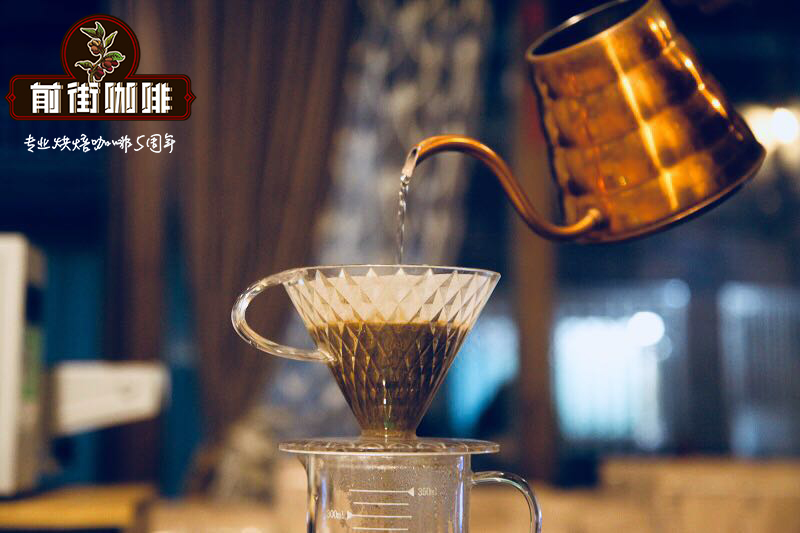
Pour-Over Coffee Tutorial, Videos, Techniques & Ratios
I started researching coffee at the beginning of the year because of a bag of beans given to me by my mother's friend.
Although I liked the aroma of coffee, I never enjoyed drinking it.
It was not until I began experimenting with pour-over that I discovered coffee could be so delicious, with so many layers and flavors.
The aroma of a successfully brewed cup is incredibly relaxing and brings joy. I started drinking coffee in 2017.
(Limited to pour-over and siphon coffee; other methods still taste bad to me.)
Pour-Over Experience
Pour-over is easy to start with, but making a good cup takes skill.
Slight differences in technique produce completely different flavors.
That is precisely why pour-over is the brewing method that allows for the most variation.
Most of my experience comes from online tutorials and discussions, adjusted through my own brewing experiments and conversations with friends.
I am still a beginner, so please feel free to correct me or discuss any errors.
Many factors affect coffee taste: variety, altitude, processing method, bean selection, roasting, grinding, water temperature, water quantity, time, and more.
During the pour-over process, each step influences the others, so let's first establish the easily controllable variables.
Coffee Beans
Coffee beans reach their peak flavor 7 days to two weeks after roasting.
Fresh beans continuously release carbon dioxide.
The best storage method is a coffee bag with a one-way valve, sealed properly to squeeze out air and prevent oxidation.
Once ground, beans begin to lose aroma and carbon dioxide, oxidizing faster and going stale.
Without carbon dioxide to create gaps between coffee particles, water flow becomes obstructed, leading to over-extraction and bitterness.
So the freshest approach is to grind immediately before brewing.
Generally speaking:
Light roast beans absorb water slowly, producing more acidic coffee with higher caffeine content.
Dark roast beans absorb water quickly, producing more bitter coffee with lower caffeine content.
Water-to-Coffee Ratio
Weigh the coffee beans.
My most commonly used coffee-to-water ratio is 1:15.
That is 20 grams of coffee grounds to brew 300ml of coffee.
This is probably the most common ratio, though you can slightly reduce the coffee amount for larger quantities.
Some say the best ratio is 16 grams of coffee to 240ml of coffee, but I do not notice much difference.
Some people also drink strong coffee at 1:10, while others prefer a weaker cup at 1:20.
Adjust according to your personal preference.
Grinding
The weighed beans need to be ground.
The recommended grind size for pour-over is similar to #2 sugar crystals, roughly 0.7-1mm particles.
Finer particles extract more easily but can also obstruct water flow, leading to over-extraction and bitterness.
Even extraction results in more distinct flavor layers.
Pour-over grinding emphasizes uniformity: the fewer fine particles, the better.
More meticulous brewers use filters to remove unwanted fine particles.
As for the silver skin after grinding, too much can cause astringency, but the impact is minimal, so most people do not bother with it.
Grinders
There are electric grinders and manual grinders.
Online recommendations for electric grinders are mostly the Little Flying Eagle or Little Flying Horse.
The ghost-tooth version is more uniform with fewer fines, but also more expensive.
For great-value manual grinders, there is the Mainland Anonymous 2 or the Helor 101.
Though considered great value, they are not much cheaper than the Little Flying Eagle or Little Flying Horse.
They are considered value-for-money because high-quality European and American manual grinders are even more expensive.
If you do not need to grind large quantities, a manual grinder will suffice.
I purchased the Anonymous 2 manual grinder, which online users say is more uniform than electric grinders.
The Anonymous 2 comes in single-origin and espresso versions.
While the espresso version can grind both single-origin and espresso, making it more versatile, the single-origin version supposedly has fewer fines and is more uniform.
I bought the November 2016 new-model single-origin version.
The official recommendation for the pour-over setting is one turn back.
I go back one and a half turns, producing grounds about 1mm in diameter.
I prefer coarser particles for smoother water flow, since I am afraid of bitterness and astringency.
I usually clean my grinder with a blower and brush.
Only when changing beans do I disassemble it for cleaning; the Anonymous 2 central column is not stainless steel, so avoid water.
Regarding silver skin: electric grinders supposedly cause silver skin to adhere to the grinder interior through static electricity and rotation, leaving less in the grounds. Manual grinders require post-grinding processing.
Personally, I place the grounds in a bowl and stir them as if pan-frying.
After stirring, the lighter silver skin rises to the surface, and I use a blower to gently blow from a distance.
Keep just enough strength to blow the silver skin away, then continue stirring while blowing.
This method is inefficient, requiring many stirs and blows, and it also blows away about 1g of grounds.
I do not notice much difference; I simply find the silver skin visually unappealing.
Water Temperature
Brewing water temperature varies with the roast level of the beans.
Currently I use:
Light roast: 93°C
Medium roast: 90°C
Dark roast: 87°C
Online recommendations are:
Light roast: 90-92°C
Medium roast: 85-87°C
Dark roast: 82-85°C
I use higher temperatures because I use coarser grounds.
Previously I used a generic manual grinder that produced very uneven, coarse grounds, requiring about 3 degrees higher temperature.
Water temperature should therefore be adjusted according to how coarse the grounds are.
Thermometer
At first I used a dial probe thermometer, which responded slowly and gave several inaccurate readings, such as freshly boiled water showing 8X degrees.
Later I switched to a digital probe thermometer, commonly known as "Black Tofu" or "White Tofu," which is much more accurate.
Dripper & Filter Paper
I use a Hario V60 02 dripper with Hario filter paper.
The ribs, the spiral raised lines on the dripper, relate to how smoothly water flows during the pour.
The technique for folding the filter paper is to fold the seam first, then unfold and press slightly.
This way, when it is placed in the dripper, the thicker seam fits snugly and will not curl up.
Pre-wet the filter paper with hot water to remove any paper taste or bleaching agents.
Pour-Over Kettle
Pour-over kettles are divided into gooseneck kettles and narrow-spout kettles.
Gooseneck kettles supposedly provide smoother water flow, but I have not yet had the chance to use one.
Narrow-spout kettles make it easier to pour small streams. I bought a Bluebird kettle.
At the time I did not do much research; I bought it because I liked the design.
Only recently did I discover that this Bluebird kettle's advantage is its spout design.
Regardless of water quantity, it lets water fall vertically at 90 degrees, which is very convenient.
Most narrow-spout kettles create arced streams when the water volume is high, because of the spout angle, making it harder to control where the water falls.
However, whatever the type, the most important thing is that the kettle feels comfortable to use.
Practice more until you can control the water output at will and maintain stable circular motions.
I find the most difficult part is stable dripping.
I am clumsy and easily nervous. During practice I can maintain stable dripping, but during actual brewing I often over-control the flow, causing it to break into intermittent thin streams.
This makes my brew flavors vary each time.
2017 Final Coffee Equipment
Pour-Over Steps
General Pour-Over Method
1. Weigh the beans and grind them.
2. Fold the filter paper, unfold it, and place it in the dripper.
3. Rinse away any paper taste or bleaching agents with hot water, and preheat the pot with hot water.
4. Pour the grounds into the dripper, gently tap the side to level the coffee bed, and place the dripper on the pot.
5. Depending on roast level, use 85-93°C water. Start pouring from the center of the grounds and spiral slowly outward, then back to the center.
Do not pour on the filter paper at the outer edge. After pouring an amount equal to or slightly more than the grounds, stop.
Fresh grounds release carbon dioxide when they meet hot water, puffing up like a castle. Bloom for 30 seconds.
6. After blooming, continue pouring to brew. The water stream should gradually increase over time.
Start from the center, spiral slowly outward, then back to the center, repeating. Do not pour on the filter paper at the maximum circle.
The grounds will keep releasing carbon dioxide, creating gaps between particles and helping water flow smoothly without pooling.
Try not to let the puffed-up coffee bed collapse, to avoid blockage.
If the liquid level rises too quickly, too much water is being poured too fast, or the grounds are blocking. Slow water flow leads to over-extraction and bitterness.
The pouring process can be divided into continuous and interrupted pouring.
A. Interrupted pouring: stop when the liquid reaches a certain height, wait until the level drops close to the coffee bed without running dry.
Then do a second or third pour, extending extraction time for full extraction. The flavor will be stronger and more bitter.
B. Continuous pouring: keep the coffee bed at a certain height. The flow needs to be smooth and steady without blockage. This results in a shorter brewing time.
It is less likely to over-extract and become bitter, resulting in a cleaner flavor.
7. When the coffee in the pot reaches the desired amount, remove the dripper, without letting the foamy, impure liquid in the dripper flow into the pot.
Shake the pot or stir the coffee liquid, then let it rest.
The total time is recommended not to exceed 2.5 minutes. Brewing too long, combined with falling water temperature, starts extracting undesirable flavors.
There are many other pour-over methods:
The Japanese KONO orthodox method, dripping for the first half and only circling at the end, with a total time up to 6 minutes.
The Kanazawa Masayuki method, normal blooming first, then dripping.
The stirring method, stirring during blooming to accelerate extraction, which gives a stronger flavor and requires a shorter total time.
YouTube has many demonstration videos by fellow enthusiasts.
Many people online share their flavor experiments.
I have not researched these too deeply due to my lack of skill.
I only use one brewing method that suits my taste, which I describe later.
Blooming
This is the most important and influential step.
The amount of water and the time for blooming are crucial.
Try several times and adjust according to the flavor profile you want.
Change blooming time and water amount to achieve the desired concentration.
Blooming lets the grounds absorb water, release carbon dioxide, and begin activation.
Only after complete release can they absorb water again and release substances.
However, the normal blooming process does not completely release everything.
During subsequent brewing they will keep releasing, possibly without reaching optimal extraction.
This is probably the purpose of dripping.
Slow dripping lets water diffuse and infiltrate slowly, extending the time for complete release from the grounds.
The entire dripping process is part of blooming.
Because of the extended time, however, the coffee will release impurities.
To reduce impurity release, try not to disturb the grounds.
Use only central dripping for slow infiltration, and keep the final circular extraction gentle as well.
Brewing
After activation, grounds transfer substances into the water by dialysis.
So not letting the grounds emerge above the water surface during brewing is the most efficient extraction method.
Interrupted pouring mainly extends extraction time, giving a stronger flavor but also more astringency.
Continuous short brewing gives a cleaner flavor.
This is also why siphon brewing, which takes only one minute, has a clean flavor.
Some mention that inconsistent, intermittent water flow results in uneven flavor but higher sweetness.
My own experiments do show higher sweetness, but often accompanied by astringency and off-flavors.
Coffee Wall / Coffee Bed
People often believe a beautiful coffee wall after brewing means successful brewing.
Forming a coffee wall does make water flow more smoothly, reducing central grounds to avoid blockage.
For this reason, some people circle only in the center to create a coffee wall.
But brewing a coffee wall does not necessarily mean good coffee.
Personally, I believe the most important factors are smooth water flow and stable pouring.
Personal Pour-Over Notes (Dripping Variation)
1. 20g grounds to brew 300ml coffee. Weighing beans, grinding, filter paper, dripper, preheating, adding grounds, leveling, and heating water are all as above.
2. Start dripping from the center of the grounds. It does not matter if the dripping is not perfect; the focus is a stable, minimal water flow.
Use the smallest possible water amount to keep the grounds moist without drying out, but do not pour too aggressively.
3. Watch the wetting state of the grounds and adjust the dripping position until all grounds are wet.
After a thin layer of coffee liquid drips into the lower pot, switch to a thin stream circling the size of a one-dollar coin for 4 seconds, then stop. Bloom for 5 seconds.
From the start of dripping to the end of blooming, try not to exceed 1 minute 30 seconds.
4. After blooming, continue central dripping for a while, then start circling with a thin stream, gradually expanding the circle over time.
5. Expand the circle from one-dollar and five-dollar coin size to ten-dollar and fifty-dollar. It is fine not to circle the outermost edge.
Do not stop pouring, but also try not to let the coffee bed get too high, meaning do not use too large a stream.
6. When the last 50ml remains, switch to a large stream for circling. When the desired coffee amount is reached, remove the dripper.
Shake the pot or stir the coffee liquid, then let it rest.
The total time is recommended not to exceed 3 minutes. Brewing too long, combined with falling water temperature, starts extracting astringent flavors.
Through continuous experimentation, this method currently produces coffee that best suits my taste.
Slight acidity, flavor and character, throat feel, and aftertaste are all balanced and appropriately expressed without being bitter or astringent.
The flavor sits between traditional circular pour-over and siphon coffee.
However, the problems I run into because of my lack of skill are:
A. If the initial dripping flow is unstable, stopping too long and then gushing, it sometimes over-extracts and sometimes under-extracts, and the flavor is less smooth.
B. In the later stages of step 5, because the grounds have stopped releasing gas, the coffee bed sometimes collapses and blocks, which is when a coffee wall is really needed.
This extends brewing time and increases astringency.
Conclusion
I need to practice more with kettle flow control and experiment more with the timing and water amount for the final circular brewing.
Flavor Profile
Coffee beans contain many substances; those released into the air and those dissolved in water are different.
Dry aroma, wet aroma, and slurping therefore produce different smells and tastes.
Slurping is for professional cupping, not regular drinking.
When people online talk about various floral and fruit aromas, I must admit I cannot detect these flavors or clearly identify those specific tastes.
Let me describe the flavors I experience.
When coffee first enters the mouth, the initial phase presents acidity and aroma.
Then comes sweetness or characteristic flavors.
Then the body richness continues into the throat feel.
After swallowing, opening the mouth releases aroma.
A little later, the aftertaste appears.
Of course, each bean performs differently.
Some coffees emphasize initial acidity, others highlight aroma or unique flavors, and some focus on throat feel, body, and aftertaste; each has its characteristics.
But light roasts mostly emphasize initial acidity, while dark roasts emphasize later bitterness.
Good initial acidity can be gentle without sharpness, with multi-layered aroma and smoothness.
Good later bitterness is rich and solid, with nutty sweetness or roasted aroma without being bitter.
After swallowing, caramel aroma emerges, with a sweet aftertaste lingering.
I personally prefer balanced beans with front, middle, and back notes, especially the rich, solid body of the middle and back phases.
But if not brewed properly and over-extracted, it becomes bitter and other flavors are lost.
My friend really loves coffees with various floral aromas.
Unfortunately, these often lack sufficient body.
Different temperatures also produce different flavor experiences.
Above 70°C is the smoothest.
Initial acidity is suppressed and not obvious, while the later bitterness is smooth and sometimes slightly sweet. As it cools, acidity emerges.
Around 50°C has the most layers.
Initial acidity becomes obvious, a rich throat feel appears, and aroma layers are more distinct. When cooled further, acidity sometimes becomes astringent.
At 30°C, room temperature, if brewed well you can taste other flavors depending on the bean. If not brewed well, bitterness, astringency, and acidity all emerge.
When iced, bitterness, astringency, and acidity all decrease, making it easy to drink, but it loses rich flavor and aroma.
If brewing fails, bitterness, astringency, and acidity often appear.
What I fear most is over-extracted bitterness, followed by astringency.
The reasons are none other than:
Bitterness
Over-extraction.
Water temperature too high, blooming too long.
Coffee particles too fine.
Astringency
Over-extraction, giving both bitterness and astringency.
Total brewing time too long, water temperature too low, giving no bitterness but astringency and heavy off-flavors.
Excessive disturbance of the grounds.
Incomplete roasting, or undercooked astringency.
Acidity
Under-extraction.
Water temperature too low, coffee particles too coarse.
Finally, let me mention the flavor differences I experience with other brewing methods.
Siphon Coffee
Rich and clean flavor, delicate and smooth layers, few off-flavors, but the taste tends toward rich and intense.
Pour-Over Coffee
Brighter and sweeter than siphon, equally rich layers but with many variables, so flavor varies greatly with pour-over skill.
American Drip Coffee Maker
Close to pour-over taste, though with fewer layers and less richness, but stable and less prone to flavor deterioration.
Canned Coffee
Single-dimensional and thin in flavor.
If grayscale were used to represent the layered flavor experience of drinking coffee from the same beans, a chart could represent my feelings.
January 13, 2018 New Pour-Over Experience
Each bean has its most suitable extraction degree and brewing method.
You need to try different brewing methods several times with the same bean to find your favorite flavor.
Coffee beans with simple or light flavor layers suit the drip pour-over method, which increases layers and concentrates flavor. They are also more suitable for siphon brewing.
Example: light roast or lighter-bodied beans.
Coffee beans with rich or intense flavor layers suit the normal bloom-and-circle pour-over method, cleanly presenting their original richness.
If you use drip brewing instead, flavors might become muddled and turbid.
Example: Geisha.
Of course, some beans taste good however you brew them. Example: FrontStreet Coffee's Butterfly.
Please correct any errors, thank you.
Is pour-over coffee really delicious? Why does coffee smell better than it tastes?
FrontStreet Coffee Recommendation
For a first pour-over bean, FrontStreet Coffee recommends its Yirgacheffe Guoddingding from Ethiopia, a washed G1 bean widely regarded as an ideal introduction to specialty coffee. It offers bright citrus, berry, and floral notes with a green-tea sweetness that stays gentle rather than sharply acidic. If you want to explore a more fruit-forward cup, FrontStreet Coffee's Ethiopia Huakui delivers strawberry, passion fruit, and jackfruit over a smooth, juice-like body.
Important Notice :
FrontStreet Coffee is a long-established specialty coffee roaster in Guangzhou China, selling freshly roasted beans from its own farm in Yunnan as well as dozens of carefully selected single-origin beans from around the world for both pour-over and espresso. The products deliver consistently excellent quality and great value, with shipping within 24 hours. Guangzhou's FrontStreet Coffee shop is recommended by many coffee lovers, and the beans are now available online at the Tmall 。
FrontStreet Coffee has moved to a new address:
FrontStreet Coffee Address: 315,Donghua East Road,GuangZhou
Tel:020 38364473
 Scan and follow the En Gafei WeChat official account. Please indicate that the reprint comes from "En Gafei".