How to Pronounce Starbucks Flat White and Does It Contain Sugar? Is Flat White Australian White Coffee Delicious?
Is Starbucks' Flat White Worth Trying?
Anyone who has visited Starbucks has probably been curious about this drink. Unlike the Americano, latte, and cappuccino—those famous Italian coffees—the Flat White rose to popularity during the third wave of coffee culture, when people began pursuing coffee flavor and overall layered complexity.
What Makes the Flat White Different?
Compared with the latte and cappuccino, the Flat White emphasizes being able to taste the espresso even through the milk. So it uses a more concentrated shot—Ristretto—and a smaller proportion of milk.

Origin and Translation
Besides "Fu Rui Bai," the Flat White has other Chinese renderings such as Australian White Coffee, Little White Coffee, Mellow Art White Coffee, and Australian Rui White Coffee. As for its "birthplace," some say Australia, others New Zealand. The two regions prepare it differently, but the shared goal is the same: a hot milk coffee with rich coffee flavor where espresso notes remain clearly audible.
Australian vs. New Zealand Style
Where exactly it was invented remains uncertain—ultimately it comes down to whether you prefer the Australian or New Zealand method. The Australian approach uses a smaller cup, combining a single espresso with a small amount of frothed hot milk, the foam about half the thickness of a latte's. The New Zealand method uses a regular-sized cup with a double Ristretto and frothed hot milk, also with thinner foam.

The Meaning of "Flat"
Either way, the milk foam is thinner than a latte's—because "flat" in Flat White is literal. Unlike cappuccino foam that rises above the rim or latte foam that sits level with it, Flat White foam typically sits below the rim.
FrontStreet Coffee has created two different Flat Whites based on these two approaches, using the "Sunflower Warm Sunshine" blend—30% natural Yirgacheffe and 70% Honduras Sherry—for the espresso. By our cupping evaluation, this blend shows fermented wine aroma, berry sweetness and acidity, roasted nut fragrance, and caramel sweetness.

Espresso vs. Ristretto
For both, the coffee is ground extremely fine, dosed and tamped into a pressurized espresso machine's portafilter, then extracted under high pressure and speed in a sealed environment into highly concentrated coffee. Before making one, it helps to understand the difference between espresso and Ristretto.

FrontStreet Coffee normally serves regular espresso, extracting at 9–10 bar with a coffee-to-liquid ratio of about 1:2. A single espresso uses 9–11 g of grounds to yield 15–25 g of liquid; a double uses 18–20 g of grounds for 35–45 g. The less liquid extracted, the higher the concentration.
Ristretto is essentially espresso with a smaller extraction ratio: same grind and dose as espresso, but less liquid over a longer extraction—typically about 1:1.6. Important: Ristretto's higher concentration doesn't mean more intense flavor, just a denser overall taste (sweetness, acidity, bitterness). Too concentrated, and it easily turns sharply acidic or burnt-bitter—so grounds and extraction time sometimes need adjusting.
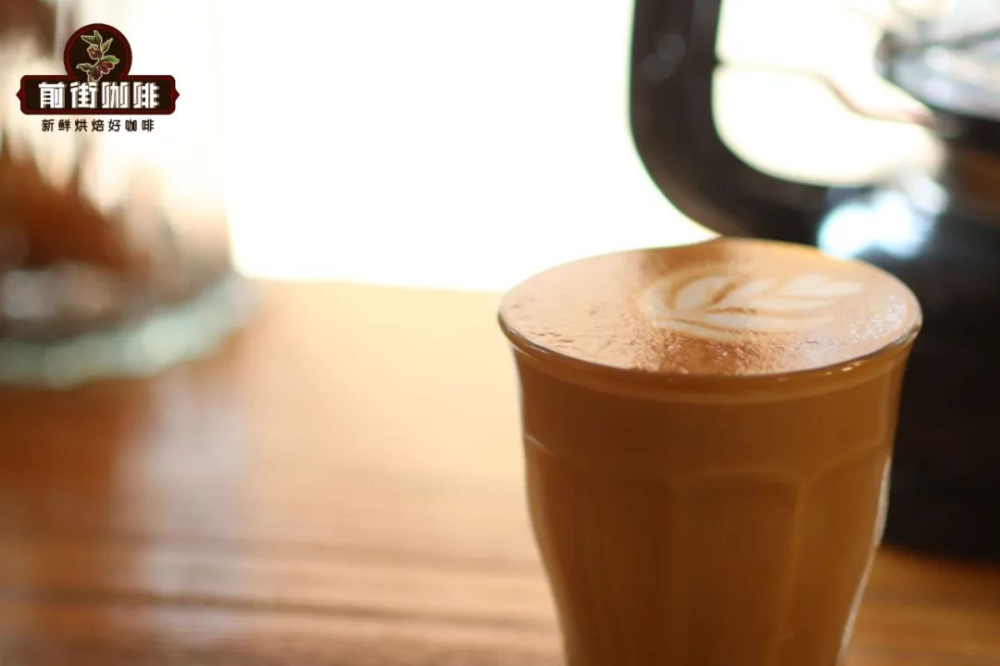
FrontStreet Coffee's Two Flat White Styles
For the Australian style, we use a 100 ml cup with a single espresso (18 g) and blend in frothed hot milk with thin foam. The flavor shows rich fermented wine aroma; the berry acidity turns noticeably sweet once the hot milk goes in, finishing with caramel-chocolate sweetness.
For the New Zealand style, we use a 200 ml cup with double Ristretto (35 g), pouring thin-foamed hot milk from the center while dispersing the espresso. This creates a gradient experience: the first sip is the espresso's rich fermented wine aroma, the second reveals a strawberry-milkshake note where coffee meets milk, and the third presents roasted nut flavors as the smaller amount of coffee blends with the milk.

For professional coffee knowledge exchange and more coffee bean information, follow Coffee Workshop (WeChat official account: cafe_style).
For more specialty coffee beans, add FrontStreet Coffee's private WeChat account: qjcoffeex.
FrontStreet Coffee Recommendation
The Flat White's history is much shorter than the latte's or the americano's, and Australia and New Zealand still argue over who invented it—but whichever way, it's a milk coffee from the Southern Hemisphere. Every café has its own "secret recipe," yet all versions share three essentials: less milk, thinner foam, stronger coffee. Compared with a latte, a Flat White is smaller, more coffee-forward, and thicker on the palate—an "upgraded latte."
A great Flat White starts with the right beans and the right milk. Lattes chase perfect coffee-milk balance; Flat Whites spotlight the espresso, with milk playing a supporting role—so choose espresso beans with strong flavor signatures. For home brewing, the butter-and-cheese flavored FrontStreet Coffee Classic Blend is a great pick: mellow and low-acid with full, fine crema and an excellent rich mouthfeel with milk. If you prefer floral-fruity aromas, the very low-bitterness FrontStreet Coffee Strawberry Candy espresso blend carries full grape and blueberry flavors with balanced sweet-tart notes—paired with fresh milk it makes a Flat White with a strawberry-milkshake character you'll remember. For milk, choose cold-chain fresh milk: when steamed, it shows off more dairy sweetness and partners the espresso beautifully.
To make one, use FrontStreet Coffee Premium Blend and pull only the front-and-middle Ristretto as the base (20 g of coffee extracting 32 g of liquid over 22–25 seconds), paired with 160 ml of fresh milk. Steam the milk thin: aeration time controls foam thickness, so aerate only 1–2 seconds—two short hisses—before sinking the wand to spin a tight whirlpool until the milk reaches 50–55°C. At 0.3 cm thick, the foam should be smooth, creamy, never watery: swirl the pitcher and the microfoam should gleam. Then pour gently into the coffee, raise the pitcher to a fine stream and stir circles through the crema with the milk's weight, lower the pitcher, and push through a white line in one smooth motion—a Flat White is born. Sipped at its moderate temperature, it's visibly silky, with Premium Blend's cream-hazelnut and white chocolate sweetness—and you'll finish the cup without feeling weighed down.
Important Notice :
FrontStreet Coffee is a long-established specialty coffee roaster in Guangzhou China, selling freshly roasted beans from its own farm in Yunnan as well as dozens of carefully selected single-origin beans from around the world for both pour-over and espresso. The products deliver consistently excellent quality and great value, with shipping within 24 hours. Guangzhou's FrontStreet Coffee shop is recommended by many coffee lovers, and the beans are now available online at the Tmall 。
FrontStreet Coffee has moved to a new address:
FrontStreet Coffee Address: 315,Donghua East Road,GuangZhou
Tel:020 38364473
 Scan and follow the En Gafei WeChat official account. Please indicate that the reprint comes from "En Gafei".