Flavor Profile Comparison: Blue Mountain Coffee vs Indonesian Mandheling Coffee Beans
No two people have exactly the same taste, and coffee is no different: some prefer sour, some prefer bitter, some prefer balance. For those who love a rich, full-bodied cup, medium-dark roasts are the answer, aromatic, rich, and heavy in the mouth. FrontStreet Coffee recommends two options.
Jamaica Blue Mountain Coffee
Jamaica is an island in the Caribbean Sea, and the famous Blue Mountains sit within it. Their highest point reaches 2,400 meters, the tallest peak in the Caribbean.
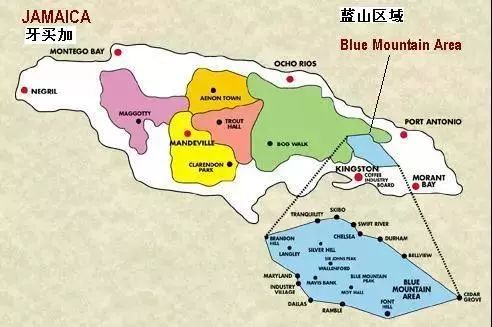
The area lies in the coffee belt, with fertile young volcanic soil, fresh unpolluted air, year-round rainfall, high humidity, and a large day-night temperature difference. The soil is rich in nitrogen and phosphorus, ideal for coffee. Fertile volcanic soil, regular rainfall, and the hazy clouds that shield the island from harsh sunlight all combine to create what we know as Blue Mountain Coffee.
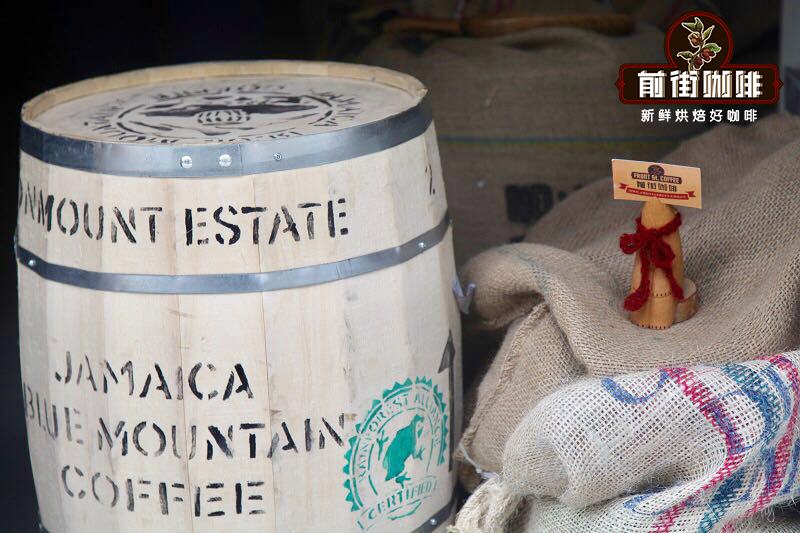
Blue Mountain Coffee is the only coffee region to this day that packs raw beans in wooden barrels; every other origin exports in burlap sacks. Note, though, that coffee grown in the Blue Mountains is not automatically Blue Mountain Coffee. The certified authentic Blue Mountain growing region covers four eastern parishes: St. Andrew, St. Thomas, St. Mary, and Portland, precisely the foothill areas the Blue Mountains span. The altitude runs from 1,000 to 1,700 meters, covering roughly 6,100 hectares. Only coffee planted in this region at 1,000-1,700 meters counts as authentic Blue Mountain.
Coffee planted within these four parishes but at only 500-1,000 meters must be downgraded to Jamaica High Mountain Coffee. Below 500 meters it becomes the lower-grade Jamaica Supreme Coffee. Coffee grown outside the designated region cannot be called Blue Mountain Coffee at all. The Jamaican government regulates Blue Mountain strictly, and at most 25% of Jamaican coffee qualifies for Blue Mountain status.
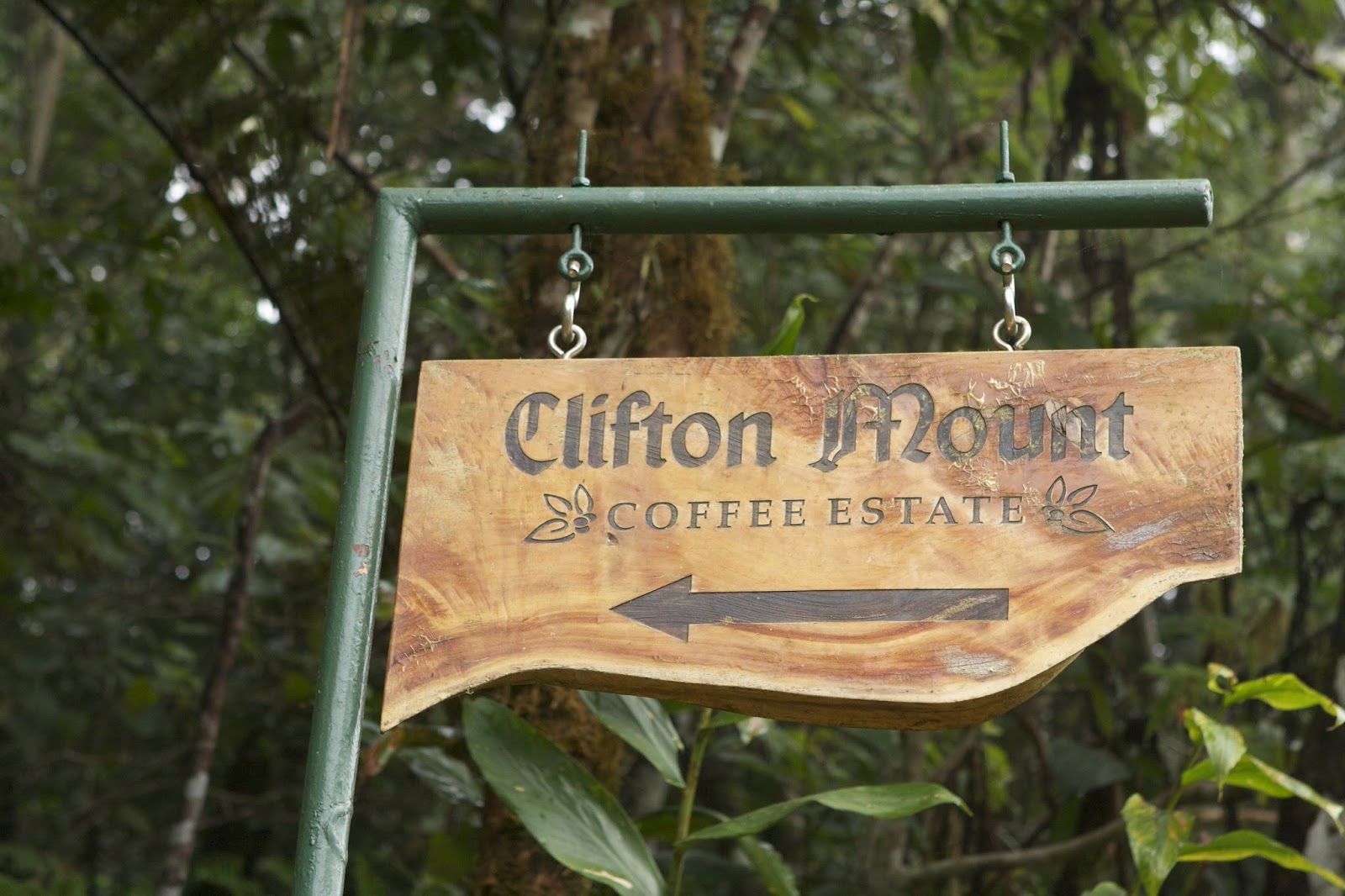
Clifton Farm
Clifton Farm has been planting and producing coffee since the mid-18th century, around 1750. Its plantation and processing facilities sit at an average altitude of 1,310.64 meters. The sufficient altitude, gentle afternoon clouds and mist that shade the forests around the mountain, ample sunlight, and mineral-rich soil give the coffee trees excellent growing conditions and extend the maturation of the cherries.
Blue Mountain Coffee is harvested entirely by hand. Workers move between the bushes on the slopes, picking each ripe cherry one by one. Because cherries on the same tree ripen at different rates and change from green to red as they ripen, a fully red cherry must be picked immediately to prevent fermentation and spoilage. It often takes dozens of separate passes to collect the whole crop. The process is extremely labor-intensive, and after drying the beans undergo strict manual selection and machine grading.
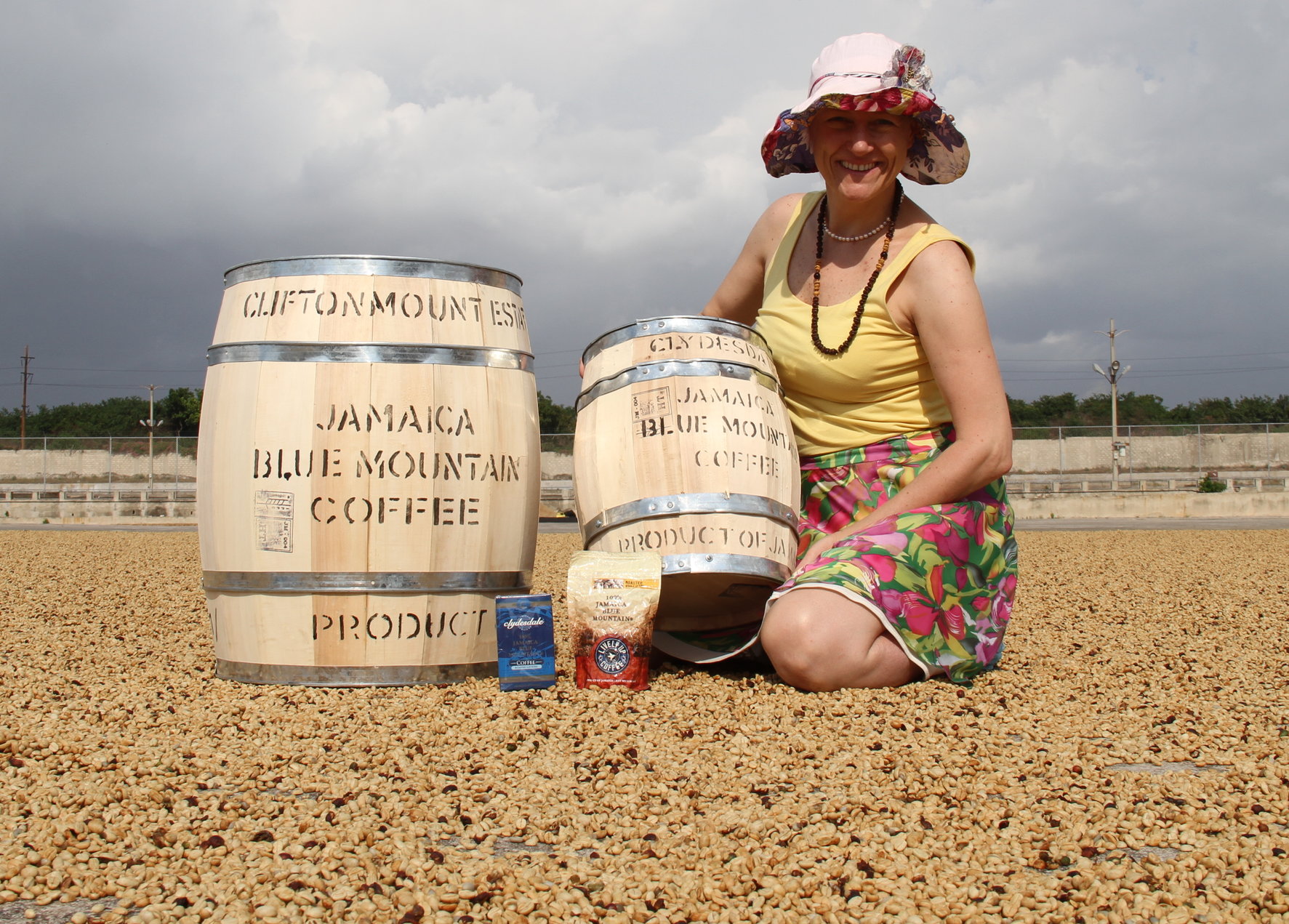
All exported Blue Mountain Coffee must pass detailed inspection by the Jamaican Coffee Industry Board. Only coffee that passes the cupping test conducted by professional quality-control staff may enter the global market.
Indonesia Gold Mandheling
Indonesia is the world's largest archipelagic country. Straddling the equator, it has a hot, humid tropical rainforest climate with abundant rainfall, and fertile volcanic soil that feeds the coffee. To understand "Gold Mandheling," we first have to talk about PWN. This abbreviation, often confused with the name of the coffee itself, stands for Pwani Coffee Company.
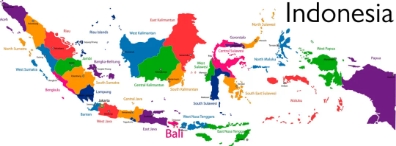
Pwani is a very well-known coffee purchasing company in Indonesia, dealing mainly in Mandheling. It has secured almost all of the country's best growing regions, so most beans from PWN are unique specialty coffees.
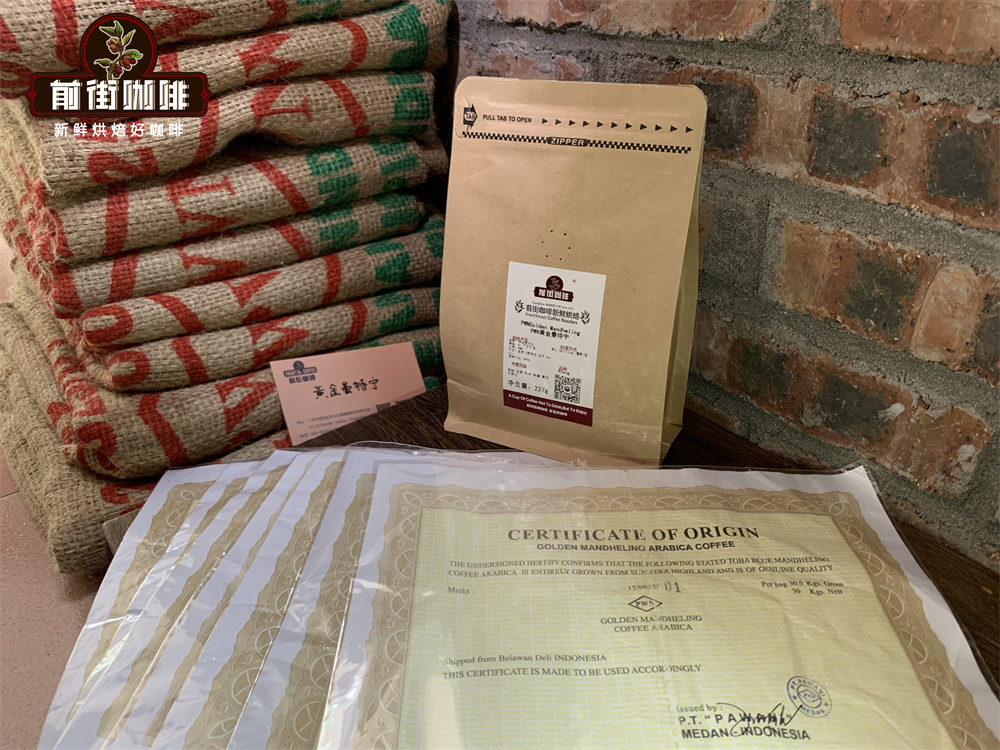
Gold Mandheling is one of the company's products. After buying the raw beans, PWN hand-sorts them repeatedly to pick out full, flawless beans. Only these fine beans, selected layer by layer like contestants in a talent show, are classified as Gold Mandheling. Known as the "King of Mandheling," Gold Mandheling is a top-grade, authentic rarity from Sumatra, highly regarded within Indonesia and a scarce gem. It is currently the world's highest-quality Mandheling, with limited production, selected specifically for large green raw beans of 18 mesh (0.8cm) and above. The vibrant green beans look as appetizing as fresh fruit and are largely exported to Japan. High altitude and fertile soil nurture these long, large Stone Mandheling beans. The bean appearance is more robust and imposing than regular Mandheling, and it undergoes three manual selections to remove defective beans. The flavor is rich and intense, even more so than ordinary Mandheling, making it the first choice for dark coffee lovers.
Coffee Story
The Japanese were the first to drink Sumatran coffee and the first to introduce refined processing procedures for it. "Gold Mandheling" is a product of Japanese collaboration in the Lake Toba area. It is purely hand-picked and goes through delicate processing that improves the quality of Mandheling. As a result, Gold Mandheling retains the intense, wild, rugged aroma that a good Mandheling should have, while adding an elegant touch that makes it a rare coffee gem.
Beans that can be called Gold Mandheling undergo three manual selections, and every bean must be 18 mesh (0.8cm) or above to be considered true Gold Mandheling coffee.
Processing Method Comparison
Blue Mountain Washed Processing Method:
1. Select floating beans
2. Remove pulp and skin
3. Ferment for 18-36 hours
4. Wash
5. Dry to 12% moisture content
6. Hull and store
7. Select and grade
Gold Mandheling Wet Hulling Processing Method:
1. Remove skin and pulp, keep parchment and mucilage
2. Ferment in water pool
3. Wash off mucilage
4. Sun-dry with parchment for 2-3 days until moisture content reaches 20-24%
5. Hull off parchment
6. Dry raw beans to 12-13% moisture content
7. Prepare for export
Gold Mandheling vs. Jamaica Blue Mountain Raw Beans
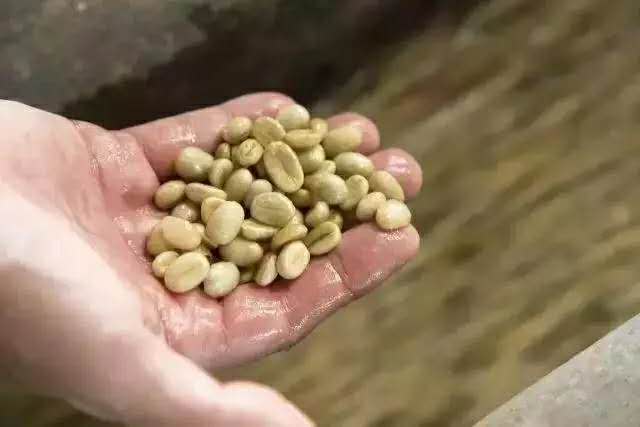
Blue Mountain Coffee's variety is Typica, an ancient coffee variety. The basic standard for No.1 Blue Mountain raw beans requires 17 mesh and above, a defect rate below 3%, and moisture content around 13%, appearing as beautiful, full blue-green raw beans.
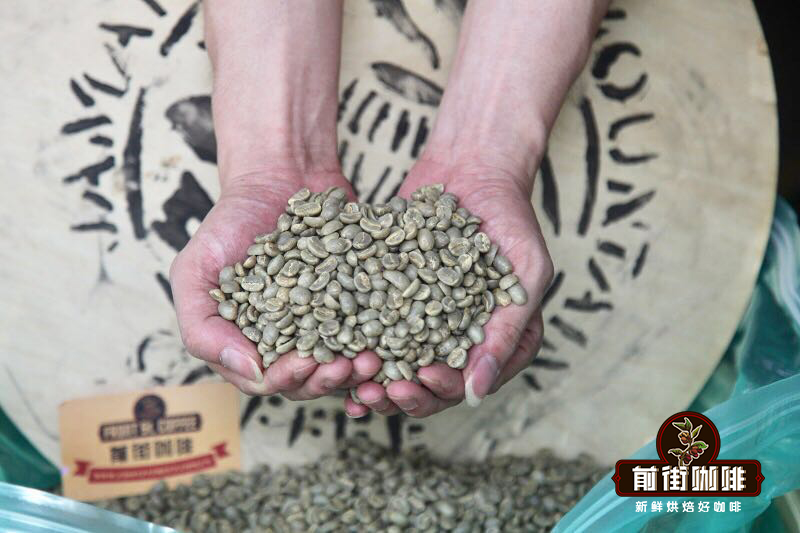
Gold Mandheling's variety is also Typica. Its raw beans are 18 mesh and above, deep green and neatly flat. There may seem to be more "goat hoof" beans, but this is not a defect. It happens because during wet hulling the coffee's moisture content is still as high as 20-24%, whereas in regular processing the moisture drops to 10-12% before hulling. In this "semi-dry" state the parchment tends to stick to the surface of the raw beans, making hulling harder than when fully dry and requiring greater friction during hulling.
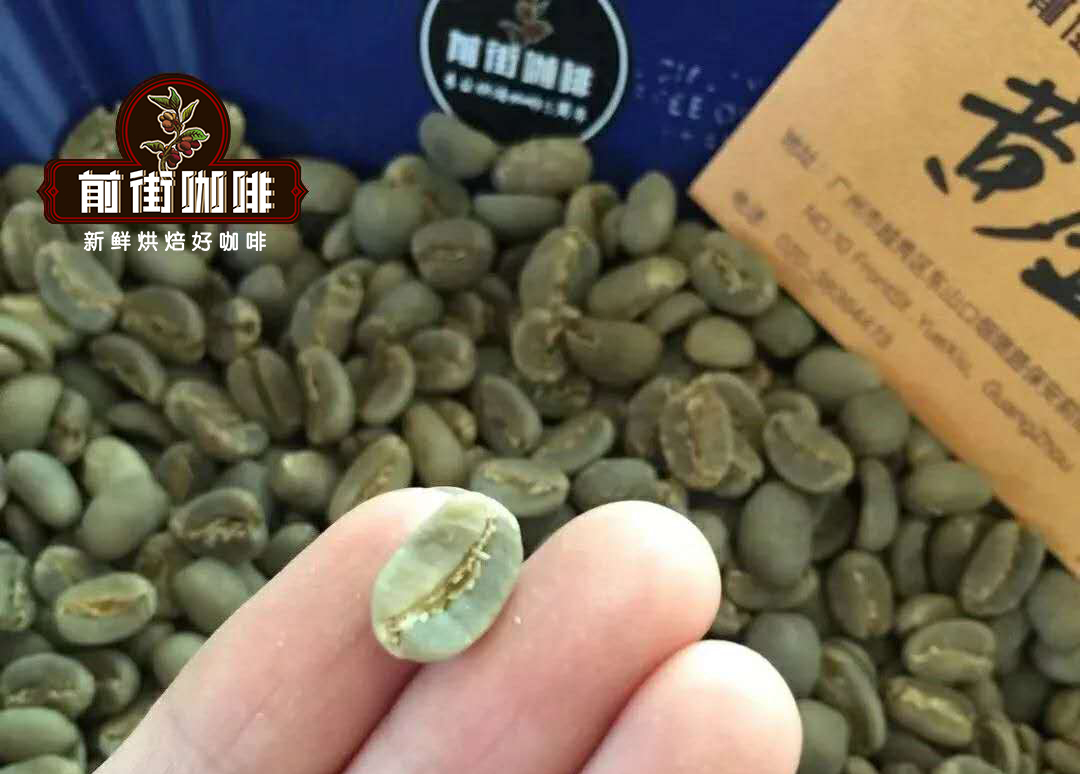
FrontStreet Coffee Jamaica Blue Mountain & FrontStreet Coffee Gold Mandheling
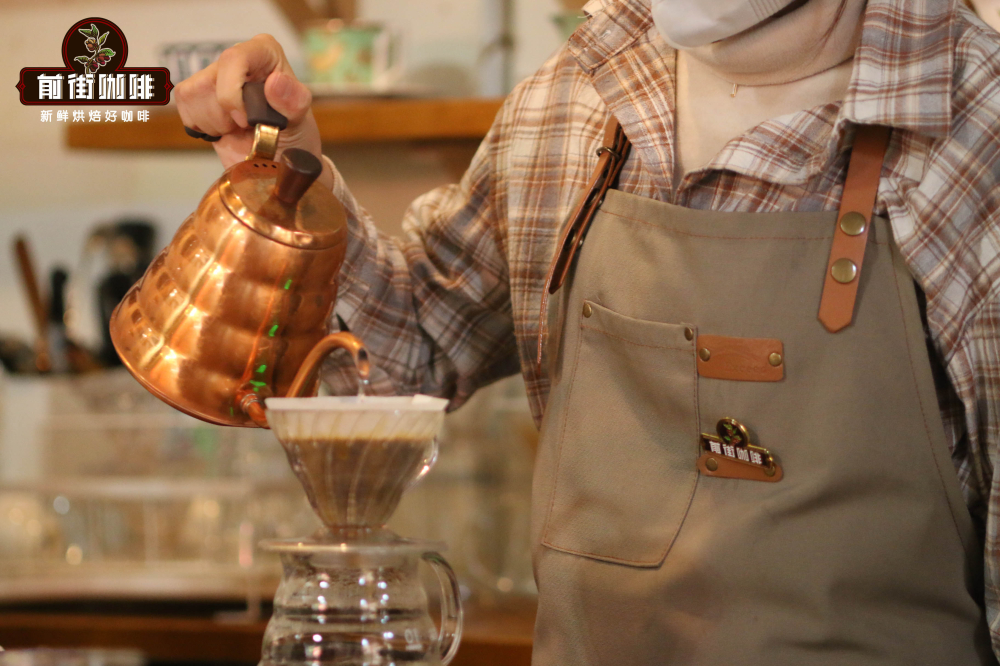
Let's compare Gold Mandheling and Blue Mountain Coffee side by side as pour-over, both in a KONO dripper with the same brewing parameters.
Brewing Parameters:
Dripper: KONO Dripper
15g coffee
Water temperature: 88°C
Coffee-to-water ratio: 1:15
Grind size: BG#6M
FrontStreet Coffee's Pour-over Method:
30g water for bloom, bloom time 30s; first pour to 125g then stop; vertical water flow, small flow slow circular pour; second pour to 225g.
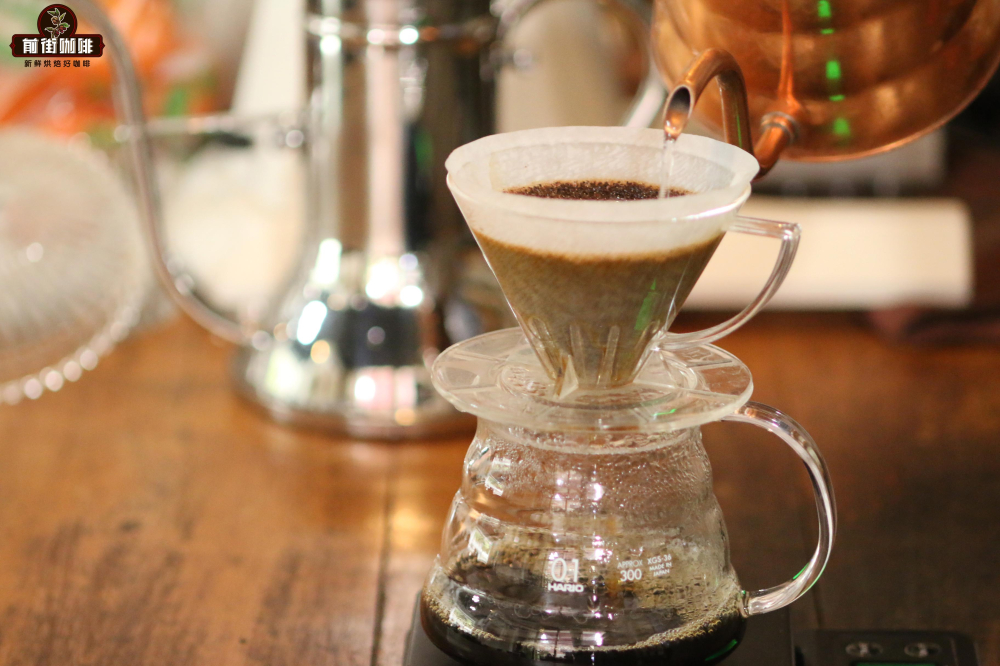
FrontStreet Coffee Jamaica Blue Mountain Flavor Description:
Very clean taste, with black chocolate, nuts, cream, and a balanced sweet, sour, and bitter profile.
FrontStreet Coffee Gold Mandheling Flavor Description:
Entry brings prominent nut, chocolate, spice, and herbal flavors, with a persistent caramel aftertaste.
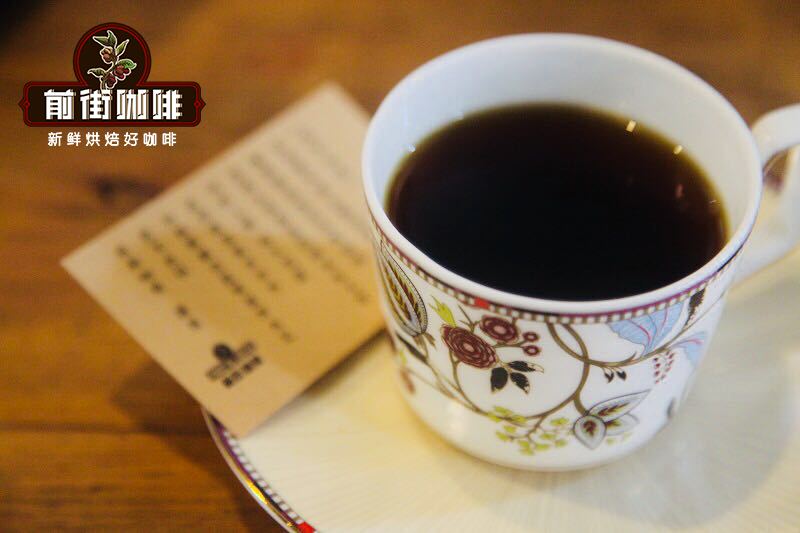
Both coffees have a full-bodied mouthfeel, but Gold Mandheling shows prominent herbal and spice notes, while Blue Mountain is cleaner with better balance across sweet, sour, and bitter. Tastes differ: if you prefer balance, drink Blue Mountain; if you prefer rich and full-bodied, drink Mandheling.
FrontStreet Coffee Recommendation
FrontStreet PWN Gold Mandheling is the definitive wet-hulled Sumatran. PWN builds this coffee to an unusually strict standard, selecting beans of 18 mesh and above and requiring fewer than three defective beans per 300g sample to meet the top G1 grade, then hand-sorting three times to remove every flaw, which sharpens the cup's cleanliness and sweetness. Sumatran weather overlaps with the cherry season, so the region developed wet hulling, removing the parchment while the beans are still semi-dry to speed drying. The result is the thick body, earthy and herbal character, and low acidity that fans of heavy coffee seek. FrontStreet roasts it medium-dark to emphasize dark chocolate and caramel while keeping the wild herbal note. Try it as pour-over at 87-88°C, 15g of coffee at 1:15, a coarse-sugar grind, using three pours: 30ml to bloom, 100ml to lift the bed and bring out the golden foam, then a gentle 95ml center pour to lift the sweetness.
FrontStreet Lintong Mandheling is the everyday Mandheling. It comes from the Lintong area around Lake Toba in North Sumatra, a traditional growing region with diverse plant life and a suitable altitude where wet hulling and local microbial fermentation create the classic Mandheling profile: a heavy aroma, a thick body, and a strong flavor. Expect clove and woody aromatics, low acidity, spice and mint notes, and a deep, persistent sweetness. Pour-over and espresso both suit it well, and through an espresso machine it yields a rich crema with a pronounced caramel aroma.
FrontStreet Jamaica Blue Mountain No.1 is the balanced counterpart. Authentic Blue Mountain avoids the sharp fruit acidity of some African coffees and the heavy bitterness of dark roasts, striking an excellent balance among acidity, sweetness, bitterness, and aroma. A good cup shows cream, caramel, chocolate, nuts, honey, and a light fruit note, smooth on entry with a sweet mid-palate and a clean, long finish. FrontStreet roasts it medium so these elements fuse into that elegant, restrained character.
Important Notice :
FrontStreet Coffee is a long-established specialty coffee roaster in Guangzhou China, selling freshly roasted beans from its own farm in Yunnan as well as dozens of carefully selected single-origin beans from around the world for both pour-over and espresso. The products deliver consistently excellent quality and great value, with shipping within 24 hours. Guangzhou's FrontStreet Coffee shop is recommended by many coffee lovers, and the beans are now available online at the Tmall 。
FrontStreet Coffee has moved to a new address:
FrontStreet Coffee Address: 315,Donghua East Road,GuangZhou
Tel:020 38364473
 Scan and follow the En Gafei WeChat official account. Please indicate that the reprint comes from "En Gafei".