Drip Bag Coffee Brewing Tutorial: Mastering Ratio, Temperature, Time & Extraction

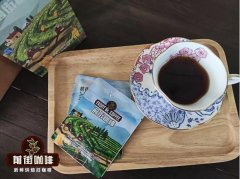
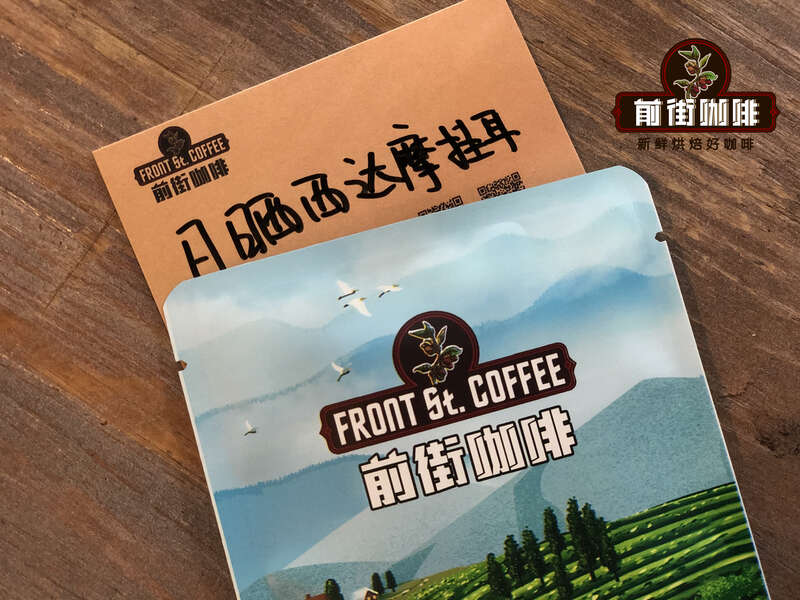
Many coffee enthusiasts love drinking specialty pour-over coffee but find that it demands a lot of equipment and skill. To solve this, FrontStreet Coffee has launched a drip bag coffee series. The FrontStreet Coffee drip bag lineup covers a range of regional flavors—Sidamo, Brazil, Honduras Sherry, and more. Other beans are available as well, and if a customer wants a particular coffee made into drip bags, FrontStreet Coffee can customize them on request. Just recently, a customer tried FrontStreet Coffee's Indonesia PWN Gold Mandheling in-store, loved the taste, but did not want to grind beans at home—so we made it into drip bags on the spot.
How to Choose Drip Bag Coffee?
1. Production Date: Freshly ground coffee powder is always the freshest coffee. Drip bag production involves careful roasting and precise grinding, followed by immediate sealing. Look for products close to the roast date, because the flavor deteriorates after 2 months.
2. Information Completeness: Coffee bean information should include variety, grind size, origin, roaster, and so on.

Advantages of Drip Bag Coffee:
1. Compared with instant coffee, drip bag coffee delivers far richer flavor. It also offers more choices—coffees from different origins, processing methods, and roast levels—so you can taste a much wider range of unique specialty coffees.
2. Drip bag coffee contains no additives such as flavorings or creamers, which makes it healthier.
3. It is affordable, quick and easy to brew, portable, and requires no brewing equipment.
FrontStreet Coffee's Sidamo has always been a customer favorite. To make daily brewing more convenient, FrontStreet Coffee packs its Sidamo into drip bags. To create the best-tasting drip bags possible, FrontStreet Coffee pays close attention to grinder cleanliness, grind size, and packaging.

Grinding
The single biggest determinant of drip bag brew quality is flow rate—neither too slow nor too fast—and that depends on the grinder. If the grinder is underpowered and the grind quality is poor, grinding inevitably produces too many fines, which leads to uneven extraction. During brewing, those fines cause "traffic jams" in the coffee bed, slowing the flow rate and over-extracting the coffee through prolonged contact. The result is a muddy, muddled taste—no matter how good the beans are, they cannot show their true character.

Grinder Cleaning
Coffee flavor depends not only on grind size but also on how clean the grinder is. FrontStreet Coffee strictly requires that the grinder be thoroughly cleaned before every batch of drip bag coffee is ground. The team also inspects grinder cleanliness on a regular schedule and supervises the entire grinding and packaging process.

Automatic Packaging Machine / Nitrogen Filling
Mechanical automatic packaging serves two purposes: first, it improves the seal of the outer packaging, and second, nitrogen is injected during packing to eliminate as much oxygen as possible, preventing oxidation and dramatically extending the fresh flavor window. Manually packed drip bags without nitrogen flushing might stay fresh for only one month, but with automatic packaging and nitrogen, the shelf life can easily reach one year.
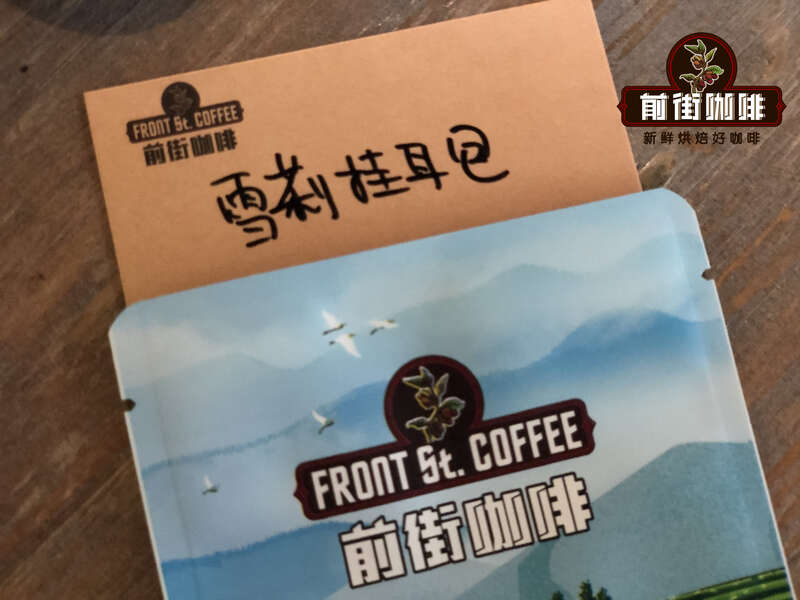
This time FrontStreet Coffee introduces two seasonal drip bag coffees along with the perennially popular Honduras Sherry drip bag. The current seasonal lineup includes the FrontStreet Coffee Ethiopia Natural Sidamo drip bag and the FrontStreet Coffee Brazil Pulped Natural Red Fruit drip bag.

FrontStreet Coffee Brazil Pulped Natural Red Fruit Drip Bag (noticeable sweetness, light lemon aroma, rich nutty flavor, and a distinct dark chocolate finish)
Coffee arrived in Brazil from French Guiana (a country in northern South America) in 1720. Brazil was a Portuguese colony at the time, while many other South American countries were Spanish colonies—which is why most of South America speaks Spanish and Brazil speaks Portuguese.
The Portuguese officer stationed in Brazil wanted to bring Guiana's coffee seeds home (exporting coffee was strictly prohibited at the time), so he won the heart of the Guiana governor's wife and smuggled the seeds into Brazil. From there, coffee took to Brazil's climate remarkably well, spreading from the north to the southeastern state of São Paulo. By 1845, Brazilian beans already accounted for 45% of the world's coffee. Today, Brazil is the largest coffee-exporting country on earth.
FrontStreet Coffee does not limit Brazil to the drip bag series—Brazilian coffee also features in the FrontStreet Coffee daily bean lineup. That says something about Brazil's place in classic coffee flavor. FrontStreet Coffee's daily beans are the "flagship" regional coffees: their basic regional flavor identity is highly recognizable, and they are affordable, great-value beans.

Pulped Natural Processing Method
In the pulped natural process, suitable cherries are selected, then the skin and pulp are removed along with part of the mucilage. A small amount of mucilage is left on the bean, which is then dried until the moisture content reaches 12%.
FrontStreet Coffee considers the pulped natural process to be essentially the same idea as honey processing. Costa Rica, for instance, is famous for honey process coffees—honey processing is simply Costa Rica's name for pulped natural, but Costa Rica refined it further into yellow honey, red honey, black honey, and more, and as a result "honey process" gradually eclipsed "pulped natural" as a term. Still, when FrontStreet Coffee cupped Costa Rican honey-process beans against Brazilian pulped natural beans, we found clear differences. Both show pronounced sweetness, but Costa Rican sweetness leans toward dried fruit and stays relatively light, while Brazilian sweetness leans toward chocolate and is comparatively rich.

FrontStreet Coffee Ethiopia Natural Sidamo (light floral notes, rich berry acidity, with fermentation undertones)
The Sidama region lies in southern Ethiopia. Agriculture dominates the local economy, and the coffee-growing areas sit around the Great Rift Valley. The largest town in Sidama province is Hawassa, an important coffee export hub. Sidama's flavors are remarkably diverse: different soils, microclimates, and countless native varieties give each town's coffee its own distinct character. Ethiopian Sidamo shows balanced flavors and elevated sweetness, with more body than Yirgacheffe—especially the winey acidity and sweetness created as the cherry pulp dries during natural processing.
Natural Process (African Drying Beds)
In the natural process, whole coffee cherries are spread directly on cement patios or drying beds to dry, making the coffee shelf-stable. Drying typically takes 2-4 weeks depending on the weather.
Coffee destined for the commercial market is usually dried on cement patios, with the cherries raked and turned constantly so they heat and dry evenly on all sides and do not mold from prolonged contact with the ground. Hand-sorted cherries intended for specialty coffee are dried naturally on African beds: the cherries are spread in a thin layer on breathable mesh beds to sunbathe, with the spreading thickness adjusted to local conditions.

FrontStreet Coffee Honduras Sherry Whiskey Barrel Drip Bag (pronounced whisky aroma, vanilla, cream, balanced, cocoa finish, moderate acidity)
This FrontStreet Coffee Honduras Sherry bean comes from Masaguara, a city in Intibuca province in the southwest. FrontStreet Coffee's bean list also includes another barrel-aged coffee from Mocha Estate—the FrontStreet Coffee Honduras Lychee Lan. The Sherry leans toward a whisky-sherry character, with rich vanilla cream and a persistent nutty chocolate finish. The Lychee Lan leans toward brandy notes, with slightly fewer flavor layers than the Sherry, though it too carries that persistent nutty chocolate finish. Judging by FrontStreet Coffee's sales rankings, the Honduras Sherry is clearly the more popular of the two.
Washed Process, Whiskey Sherry Barrel Fermentation
First, freshly harvested cherries are fully washed, then placed into barrels that previously aged sherry wine for low-temperature fermentation lasting 30-40 days (at roughly 15-20°C), followed by shade drying.
The sherry barrels are the ones used by sherry bodegas in the whisky industry for aging. Sherry production follows the Solera System aging procedure—blending sherries of different vintages for aging after fortification—which is precisely what gives sherry its distinctive flavor.

Drip Bag Coffee Brewing Method
1. Taking FrontStreet Coffee's drip bags as an example, each holds 10g of coffee powder.
2. Tear open the outer packaging, take out the drip bag, tear open the top of the bag, and pull the small "ears" on both sides to hang it on your cup.
3. Choose a cup whose mouth is not too wide, otherwise the two ears will not hook on properly. FrontStreet Coffee uses cups with a mouth diameter of roughly 8-9cm.
4. Drip bag technique is essentially the same as pour-over, just less strict—but water temperature, blooming, and circular pouring are still necessary. FrontStreet Coffee's drip bag parameters: water temperature 90°C, bloom for about 10 seconds, with bloom water equal in weight to the coffee powder.
5. After the bloom, pour water straight through to the finish. For more precision, pour in two stages. How much water you use depends on the cup: FrontStreet Coffee uses a 300ml glass, pouring in small circles and stopping when the cup is 7/10 full.

Once brewing is complete, remove the drip bag—it can only be used once, because the soluble compounds in the grounds have already been extracted. Brewing a second time yields nothing but watery, hollow coffee. Do not feel bad about single use: today's drip bags are essentially all freshly ground, and the prices are very friendly.
FrontStreet Coffee Recommendation
If you want to try the drip bag that was custom-packed for that in-store customer, look no further than the FrontStreet Coffee PWN Gold Mandheling drip bag. Golden Mandheling is the flagship of Indonesia's PWN company, produced to famously strict standards: only beans of 18 mesh and above are used, and every 300g sample of green beans must contain fewer than 3 defective beans to meet the top G1 grade—followed by three rounds of hand sorting that strip out remaining defects and raise both cleanliness and sweetness. The signature wet-hulled process (Giling Basah) behind it is what gives Mandheling its thick, syrupy body and wild herbal, earthy depth.
Prefer to brew it as a proper pour-over? With whole beans of FrontStreet Coffee PWN Gold Mandheling, we suggest 15g of coffee, a coffee-to-water ratio of 1:15, water at 87-88°C, and a grind roughly the texture of coarse sugar. Pour in three stages: a 30ml bloom to fully wet the grounds and let them degas, then 100ml to lift the bed and wash out the golden crema of oils, and finally a gentle 95ml poured into the center to push sweetness. The result is a heavy, velvety body with caramel sweetness, chocolate, and nuts.
For espresso lovers, FrontStreet Coffee also blends Mandheling into our house classic blend, where its buttery, roasted-chestnut and caramel character joins Brazil's creamy nuttiness and a touch of robusta for extra crema—equally at home in a latte or a layered Dirty. Whether in a drip bag, a pour-over, or an espresso machine, FrontStreet Coffee's Mandheling delivers that unmistakable Sumatran richness with a clean, sweet finish.
Important Notice :
FrontStreet Coffee is a long-established specialty coffee roaster in Guangzhou China, selling freshly roasted beans from its own farm in Yunnan as well as dozens of carefully selected single-origin beans from around the world for both pour-over and espresso. The products deliver consistently excellent quality and great value, with shipping within 24 hours. Guangzhou's FrontStreet Coffee shop is recommended by many coffee lovers, and the beans are now available online at the Tmall 。
FrontStreet Coffee has moved to a new address:
FrontStreet Coffee Address: 315,Donghua East Road,GuangZhou
Tel:020 38364473
 Scan and follow the En Gafei WeChat official account. Please indicate that the reprint comes from "En Gafei".