Premium Drip Bag Coffee Brewing Guide: How Many Times Can You Re-Brew Drip Coffee?

Drip bag coffee is one of the most convenient ways to brew. With nothing more than a drip bag, hot water, and a cup, you can make a delicious cup of black coffee. You might ask why drip bags are often described as a simplified version of pour-over coffee. The answer lies in how they are made: fresh coffee beans are ground to a suitable particle size, then immediately sealed into individual filter-paper packets.
FrontStreet Coffee's drip bag series covers a range of regional flavor profiles, including the FrontStreet Indonesia PWN Golden Mandheling, FrontStreet Yirgacheffe, FrontStreet Honduras Sherry, FrontStreet Brazil, FrontStreet Kenya, and FrontStreet Sidamo Guji beans, among others. We also carry other flavor types of coffee beans, and if customers would like them made into drip bags, FrontStreet Coffee is happy to accommodate.
Finding the Perfect Brew

If you look closely, you'll notice that the weight of each drip bag differs from brand to brand. FrontStreet Coffee's drip bags, for example, typically contain 10 grams, which makes them very convenient to carry. So how do you brew a drip bag properly so it actually tastes great?
Below, FrontStreet Coffee shares detailed brewing techniques for drip bag coffee!
FrontStreet Coffee: Drip Bag Coffee Brewing Guidelines
1. Warm the Cup
Before you start, pour some hot water into your cup to warm it. This keeps the brewed coffee from cooling too quickly. As coffee's temperature falls, its flavor keeps changing; if it cools too fast, you'll miss out on many of the taste experiences it has to offer.

2. Water Temperature
Brewing water temperature matters a great deal. We recommend 90-95°C. If the coffee tastes too bitter, try lowering the water temperature; if it tastes weak or astringent, raise it. That said, if you want good aroma, avoid water that isn't hot enough — for instance, the heating mode on a water dispenser won't get hot enough, and the coffee can come out bland.

3. Hang the Coffee Bag
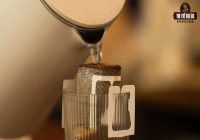
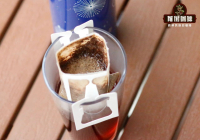
We recommend gently shaking the drip bag first to settle the grounds before tearing open the inner bag — this keeps grounds from scattering. After tearing off the seal, open the paper "ears," shake the bag to level the grounds, and hook it onto the rim of the cup.

4. First Pour — the Bloom
The first pour should use just enough water to wet all of the grounds — too much or too little will affect the flavor. Then wait about 20 seconds so the grounds absorb the water fully. You can adjust the coffee's strength by varying the bloom time: stretching it to 40 seconds will yield a stronger cup.

5. Second Pour
For the second pour, fill the filter paper to about 80% capacity, ideally with a thin, steady stream of water. When the water level drops back to the height it reached after the bloom, pour again to 80% full, and keep repeating until you reach 150-180ml. Once extraction is complete, there's no need to wait for every last drop to drain — you can simply remove the bag and discard it. Prefer it stronger? Use less water. Prefer it lighter? Use more. Adjust the ratio to your own taste.

FrontStreet Coffee Drip Bag Coffee Bean Recommendations
If FrontStreet Coffee had to recommend two beans that are especially well suited to drip bags, we would pick the FrontStreet Honduras Sherry and the FrontStreet Honduras Lychee Orchid from our bean menu. These are two of the most distinctive beans we carry, and to make sure everyone can enjoy them every day, FrontStreet Coffee turned these two Honduras beans into drip bags for convenient daily brewing.

The Story Behind Honduras Coffee
First, a little background. Honduras coffee beans are known for their balanced flavor — they work both in specialty blends and as single-origin brews. Within Honduras alone there are six major coffee-growing regions.
Before listing any new beans, FrontStreet Coffee conducts extensive research into the coffee regions of each country. Through repeated adjustments to the roasting curve, along with evaluations by cupping and pour-over, FrontStreet ensures every bean truly reflects its regional character and tastes its best before going on sale.
FrontStreet Coffee · Honduras Sherry Coffee Beans & Honduras Lychee Orchid Coffee Beans Introduction
These two beans come from the same Honduran estate, grown from different varieties and processed in different ways, each with its own distinct flavor.
Honduras sits in northern Central America, between the Pacific Ocean and the Caribbean Sea — a classic two-ocean country. Its mountainous terrain makes it highly suitable for growing coffee and bananas. Although Honduras's coffee industry developed later than those of neighbors such as Guatemala and Nicaragua, that hasn't held the industry back, thanks to the country's naturally favorable geography for coffee cultivation.

Honduras Sherry Coffee Beans
The FrontStreet Honduras Sherry beans come from the town of Masaguara in Intibucá province, in southwestern Honduras, where the Moca estate produces this wine-scented coffee.
FrontStreet's Honduras Sherry is one of our more distinctive offerings — the green beans are limited in quantity, and the fermentation-based processing behind them has become hugely popular in recent years.
FrontStreet Honduras Sherry beans are grown at an altitude of 1500-1700 meters and are a single mixed variety: Caturra, Catuai, and Pacas.
FrontStreet Coffee · Honduras Sherry Coffee Bean Processing Method
They undergo whiskey barrel fermentation combined with refined washed processing (whiskey production requires oak barrel aging, and after years of use the oak barrels absorb whiskey flavors and hold a rich wine aroma).
Freshly picked coffee cherries are first fully washed, then placed into barrels that previously aged sherry for low-temperature fermentation lasting 30-40 days (at roughly 15-20°C), followed by drying in the shade.
Coffee fermented in sherry barrels naturally carries sherry wine flavors, creating an intoxicating and unique taste that has made it enormously popular in recent years.
FrontStreet Coffee · Honduras Sherry Coffee Bean Specifications
- Country: Honduras
- Region: Masaguara
- Estate: Moca Estate
- Altitude: 1500-1700m
- Variety: Caturra, Catuai, Pacas
- Processing: Refined washed with whiskey sherry barrel fermentation

FrontStreet Coffee · Honduras Lychee Orchid Coffee Bean Specifications
- Region: Masaguara
- Estate: Moca Estate
- Altitude: 1500-1700m
- Variety: Caturra and Catuai
- Processing: Refined washed with brandy barrel processing
FrontStreet Coffee · Honduras Lychee Orchid Coffee Bean Flavor Description
Chocolate, berries, honey, lychee. The berry acidity is distinct on the palate, with subtle wine aromas emerging as the cup cools. The finish carries solid chocolate flavors that are truly impressive.
FrontStreet Coffee · Honduras Lychee Orchid Coffee Bean Introduction
FrontStreet Honduras Lychee Orchid beans are grown at 1500-1700m. The Caturra and Catuai varieties, after brandy barrel fermentation, develop a gentle lychee and honey sweetness with hints of brandy and oak barrel fragrance. Both the FrontStreet Honduras Sherry and the FrontStreet Lychee Orchid come from the Moca estate in Masaguara, Honduras.
In terms of variety, the FrontStreet Honduras Sherry includes Caturra, Catuai, and Pacas, while the Lychee Orchid includes only Caturra and Catuai — the Sherry has one extra variety (Pacas). In processing, the Sherry uses sherry barrel fermentation, while the Lychee Orchid uses brandy barrel fermentation. In flavor, the Sherry is more balanced, with moderate acidity, distinct wine notes, and dark cocoa, reminiscent of liqueur chocolates. The Lychee Orchid, meanwhile, shows persistent fermentation character alongside its wine notes, revealing lychee and grape as the cup cools, for an elegant and refined profile.
Extended Reading - FrontStreet Coffee Drip Bag Coffee Brewing Tips
1. Control the Water Volume!
For 10g drip bag packets, we recommend brewing with 150-180ml of water.
- A great cup of coffee is full of captivating flavor; too much water will dilute it into something thin and unpalatable.
2. Control the Water Temperature!
The recommended water temperature for drip bag coffee is around 90°C.
- Brewing directly with boiling water will make the coffee taste scorched and bitter.
3. Control the Process!
A proper bloom will noticeably enhance the flavor of drip bag coffee.
- That means first pouring about 20-30ml of water to wet all of the grounds completely, waiting 10-20 seconds, then pouring gently in a steady stream until you reach your target volume.
Additionally, many FrontStreet Coffee customers ask whether they should pour in stages. In practice, you can simply use a small, steady, circular stream and pour straight to 150ml. Drip bag coffee is all about simplicity and convenience — no complicated steps required.
All right — now you know how to brew one.
Next, FrontStreet Coffee will answer a few questions you're bound to have.
Can Drip Bag Coffee Be Brewed Multiple Times?
Many people assume drip bags can be re-brewed several times like tea bags, until all the flavor is gone. This is actually a misconception. Drip bags are just like pour-over coffee — they can only be brewed once. Never re-brew a used drip bag, because everything left in the spent grounds is nothing but undesirable flavors.
Can Drip Bag Coffee Be Repeatedly Brewed?
Whether it's pour-over or drip bag coffee, FrontStreet Coffee believes both are suitable for a single brew only. When we talk about "brewing coffee," what we really mean is "extraction." Water is the solvent in that process: through contact between water and grounds, flavor compounds dissolve into the water, and that water becomes the coffee we drink.
Measured by weight, only about 30% of a coffee bean is soluble; the remaining 70% is fibrous material that cannot be extracted. No matter how much you push the extraction, at most about 30% of the coffee can be dissolved. Just as tea grows weak after multiple infusions, the same is true of coffee.
Considerations When Purchasing Drip Bag Coffee
Keep in mind that with pour-over coffee, the beans are ground immediately before brewing, whereas drip bags are ground during production. The optimal flavor window for drip bag coffee is therefore relatively short. Even with freshly ground coffee inside, extended storage inevitably leads to flavor loss.
So when buying drip bag coffee, always check the production date. Although drip bags carry a shelf life of 6-18 months, that is merely the coffee's expiration date. What matters most is the optimal flavor period, which for drip bag coffee is generally about two weeks. FrontStreet Coffee suggests buying just enough for roughly two weeks of drinking at a time.
FrontStreet Coffee Recommendation
Once you've fallen for the convenience of drip bags, the natural next step is exploring what fresh pour-over can do — and the FrontStreet washed Yirgacheffe is the classic starting point. Beloved for its white jasmine florals, bright citrus and lemon acidity, and tea-like finish, and priced gently, it has long been the first specialty bean many coffee drinkers ever own. Yirgacheffe itself is a small town in Ethiopia's Sidama region, sitting at roughly 1700-2100 meters with coffee planted above 1800m — among the highest coffee regions in the world. Its instantly recognizable white florals and lemon-citrus acidity have made the name a byword for Ethiopian specialty coffee since it was separated from Sidama in the Ethiopian Commodity Exchange in 2010.
For something a step up, try the FrontStreet washed Guodingding Cooperative lot from the Worka region — processed in the most traditional washed style, it sheds any traditional bitterness in favor of fresh, bright citrus and lemon acidity layered with jasmine fragrance. Or go the natural route with the FrontStreet Red Cherry beans: only fully ripe, defect-free cherries are picked, sun-dried for three to five weeks on raised beds and turned every 2-3 hours in the early days to prevent uneven heating and over-fermentation. The result combines classic Yirgacheffe character with tropical fruit — citrus acidity, a berry-juice quality, honeyed sweetness, and a creamy smoothness.
To brew these lots at their best, FrontStreet suggests a V60 with 15g of coffee, a 1:15 coffee-to-water ratio, water at 90-91°C, and a grind that passes 80% through a #20 sieve (EK43s at setting 10, about the size of fine granulated sugar). Bloom with 30g of water for 30 seconds, then pour up to 95g more (about 125g on the scale) over roughly one minute; once the water level falls to two-thirds of the bed, pour the final 100g (about 225g total) by about 1 minute 35 seconds. Extraction finishes between 2:00 and 2:10 — remove the dripper and enjoy.
Important Notice :
FrontStreet Coffee is a long-established specialty coffee roaster in Guangzhou China, selling freshly roasted beans from its own farm in Yunnan as well as dozens of carefully selected single-origin beans from around the world for both pour-over and espresso. The products deliver consistently excellent quality and great value, with shipping within 24 hours. Guangzhou's FrontStreet Coffee shop is recommended by many coffee lovers, and the beans are now available online at the Tmall 。
FrontStreet Coffee has moved to a new address:
FrontStreet Coffee Address: 315,Donghua East Road,GuangZhou
Tel:020 38364473
 Scan and follow the En Gafei WeChat official account. Please indicate that the reprint comes from "En Gafei".