The Correct Brewing Method for Drip Coffee Bags: Parameters, Coffee-to-Water Ratio, and How Many Times Can Drip Coffee Be Re-brewed
As demand for coffee has grown in modern life, so has demand for specialty coffee. But for busy drinkers, the equipment and steps involved in brewing a good cup are a hassle - slow, fiddly, and hard to fit into a fast-paced day. That is exactly the problem FrontStreet Coffee set out to solve with drip coffee bags, so that anyone can enjoy a good cup of specialty coffee anytime, anywhere, without any brewing skill. Plenty of people tell FrontStreet Coffee's baristas that drip bags feel unprofessional, but FrontStreet Coffee disagrees with belittling them. For any delicacy to reach a wide audience, it needs a quick and convenient form.
The Invention of Drip Coffee Bags
In 1990, Japan's Yamanaka Industrial Co., Ltd. applied the idea of the tea bag to coffee, inventing filter-hanging coffee and filing for a patent. But the design could not support the weight of the brewing coffee and easily tipped out of balance, so it never reached the market. It was not until 1998 that Taiki Shoji improved the design by extending the hanging portion outward, creating the drip coffee bag we know today.

FrontStreet Coffee's Drip Coffee Bag Series
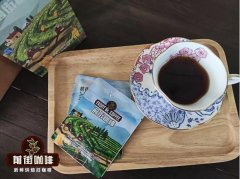
FrontStreet Coffee's drip coffee bag range includes sun-dried Ethiopian Sidamo, semi-sun-dried Brazil Red Cherry, and Honduras Sherry, along with seasonal drip bags made from beans randomly drawn from five major producing regions. Custom drip bags built from a specific bean can also be made on-site on request.
Ethiopia's Sidamo growing region sits at 1,400-2,200 m. FrontStreet Coffee's sun-dried Sidamo offers rich fruity aromas and a smooth fermented character. It chose sun-dried Sidamo beans for the drip series because they suit drinkers who want a bold flavor without an overly heavy cup, hitting a balance between aroma and mouthfeel.

FrontStreet Coffee's semi-sun-dried Brazil Red Cherry comes from the Cerrado region in central-western Brazil. Cerrado sits at 1,100-1,300 m, in the prime zone of the great plains, with high altitude and fertile soil that produce sweet, clean, full-bodied beans. Paired with Brazil's distinctive semi-sun-dried process, FrontStreet Coffee finds that beans from this region have high sweetness, low acidity, and rich nutty aromas.

FrontStreet Coffee's Honduras Sherry comes from Masaguara, a city in the Intibuca province of southwestern Honduras. Whiskey barrel fermentation places washed coffee beans into oak barrels that previously held whiskey, letting the beans absorb the whiskey aroma. FrontStreet Coffee's Sherry beans are among its best-selling varieties, tending toward a whiskey-sherry wine character with rich vanilla cream and a persistent nutty chocolate finish.

Seasonal Drip Coffee Bags
Seasonal drip bags are made by randomly drawing beans from five of the six major producing regions FrontStreet Coffee carries. Choosing a seasonal drip bag is like opening a blind box - you might get an unexpected surprise.

How to Brew Drip Coffee Bags
Note: each drip coffee bag can only be brewed once.
One FrontStreet Coffee drip coffee bag (10 g)
A pot of 90-92°C hot water
A cup of your choosing
Coffee-to-water ratio 1:15 (one 10 g drip bag brews 150 g of coffee liquid)

Warm the Cup:
Prepare your cup and pour in some hot water first to warm it. This keeps the brewed coffee from cooling down too fast. Coffee flavors keep changing as the temperature drops, and if it cools too quickly you miss a lot of those shifts.
Hang It Up:
Gently shake the drip bag so the grounds settle, which stops them from scattering when you tear it open. Pour the warming water out of the cup, tear open the seal on the drip bag, open the paper hangers on both sides, shake to level the grounds, and hang the bag on the rim of the cup.

Pre-wet:
The first pour should be just enough to wet the grounds - too much or too little will change the flavor. Then wait 20 seconds for the grounds to fully absorb the water. You can adjust the strength by the pre-wetting time: stretch it to 40 seconds for a stronger cup.
Pour Water:
For the second pour, fill to eight-tenths of the filter paper. Use a thin, steady stream. When the water level drops back to the pre-wet height, keep pouring to eight-tenths full until you have extracted 150-180 cc. Once extraction is done, you don't need to wait for the rest to drip through - just discard it.

Important!
A drip coffee bag cannot be brewed a second time. Doing so only yields unpleasant and unhealthy coffee. Don't feel wasteful about it - drip bags were made to be an affordable, quality product.
FrontStreet Coffee Recommendation
If the semi-sun-dried Brazil Red Cherry is the drip bag you enjoy most, the same flavor works beautifully as whole beans. FrontStreet's Brazil Cerrado Red Bourbon is a classic single-origin Brazilian bean from the well-known Cerrado region. Roasted medium, it opens up creamy peanut, toast, caramel, and hazelnut aromas with a round, low-acid cup and a lightly bitter finish. It works in pour-over, Moka pot, siphon, French press, and SOE alike.
For a more distinctive Brazilian bean, FrontStreet's Queen's Estate Yellow Bourbon comes from Mogiana, where fertile red volcanic soil builds full, sweet aromas. The rare Yellow Bourbon mutation gives a cleaner fruit character and a sugarcane sweetness you won't find in other regions, plus fruit and chocolate notes.
And if Brazil is what you want in an espresso, FrontStreet's espresso blends lean on it heavily. The Classic Blend's crema, the nutty Premium Blend, the balanced Black Cocoa Blend, and the shop-focused Commercial Blend all include Brazilian beans, adding chocolate and cream aromas with soft sweet-bitter balance that keeps extraction stable.
Important Notice :
FrontStreet Coffee is a long-established specialty coffee roaster in Guangzhou China, selling freshly roasted beans from its own farm in Yunnan as well as dozens of carefully selected single-origin beans from around the world for both pour-over and espresso. The products deliver consistently excellent quality and great value, with shipping within 24 hours. Guangzhou's FrontStreet Coffee shop is recommended by many coffee lovers, and the beans are now available online at the Tmall 。
FrontStreet Coffee has moved to a new address:
FrontStreet Coffee Address: 315,Donghua East Road,GuangZhou
Tel:020 38364473
 Scan and follow the En Gafei WeChat official account. Please indicate that the reprint comes from "En Gafei".