How to Introduce Flona Coffee - What's the Story and Meaning Behind the Flowers on Flona Coffee Packaging?
Pour-Over Coffee and the Third Wave
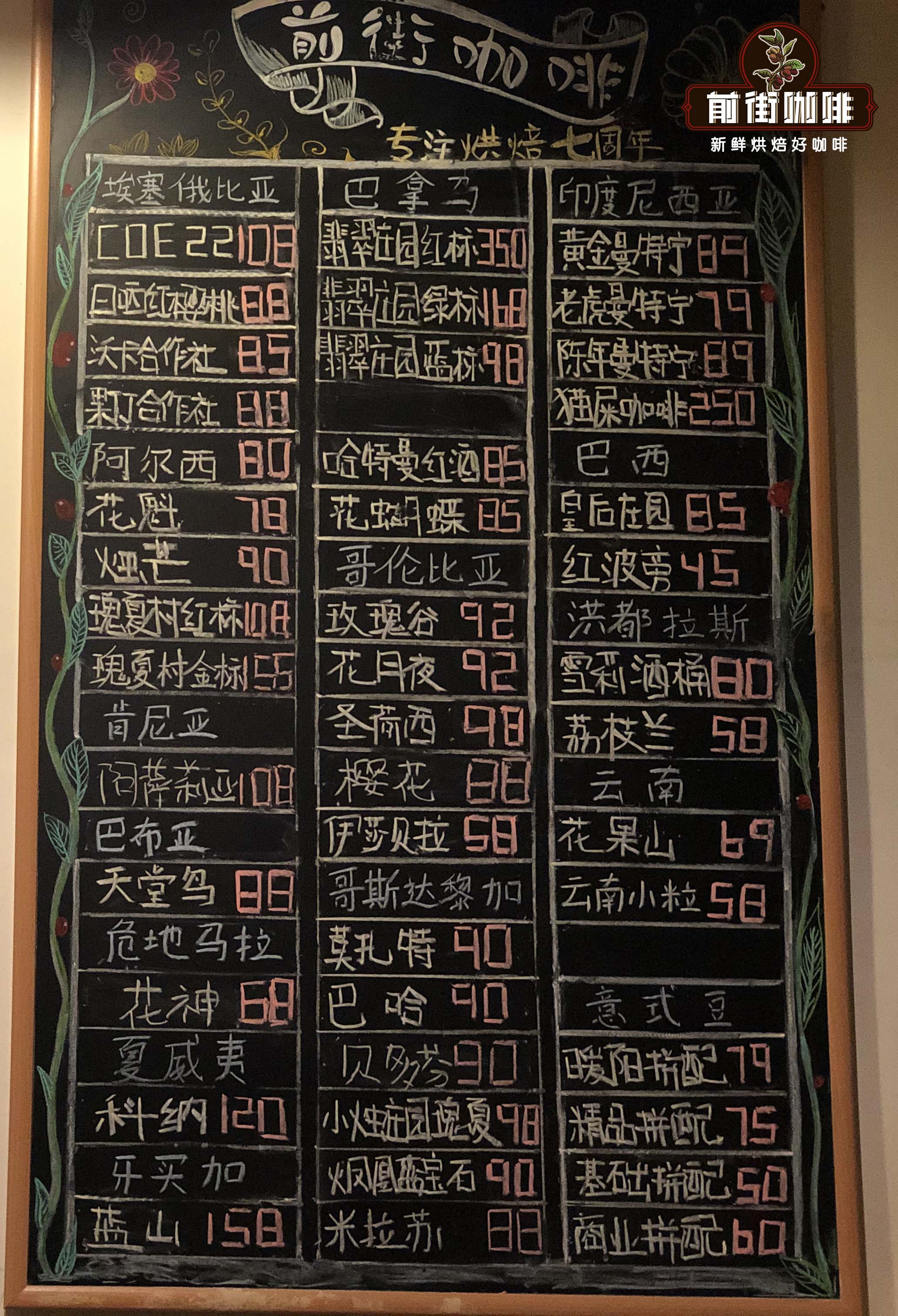
Propelled by the third wave of specialty coffee, pour-over coffee keeps stepping into the mainstream. It is a beautifully simple brewing method that expresses regional character at its fullest - though it also demands more from the beans. FrontStreet Coffee's shop focuses on single-origin beans, stocking more than 50 different coffees from origins around the world, and it also sells espresso blends, so everyone can find beans that match their taste.
The Caffè Verona Inspiration
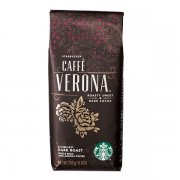
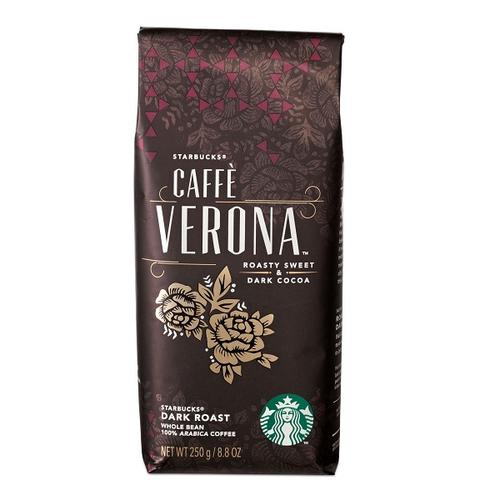
Customers often bring up Starbucks' Caffè Verona when buying beans. Its packaging features a golden rose echoing the theme of a "romantic love story," framed by triangular geometric patterns inspired by European parquet floors for a classical, romantic European feel. The pattern also recalls rose thorns, describing the coffee itself: roasted aromas mixed with the bitterness of black cocoa - like a rose, floral fragrance entwined with the sting of thorns. That espresso blend names no origins or ratios, but FrontStreet Coffee can use its own blends to explain how blending works.
Understanding Coffee Blends
Blends fall into espresso blends and single-origin blends, and FrontStreet Coffee has launched four espresso blends in different styles. There are two ways to blend: mixing green beans in set proportions - or toward a target flavor - before roasting, called "blending before roasting"; or mixing already roasted beans, called "blending after roasting." All four of FrontStreet Coffee's espresso blends use the latter.
Some customers wonder why beans need blending at all - doesn't that just muddle things? Not at all. In FrontStreet Coffee's view, every bean has strengths and weaknesses. If a bean produces too little crema under an espresso machine, add a crema-rich bean to complement it. If its shot runs too acidic, too bitter, or too sweet, find partner beans that balance it toward the flavor you want.
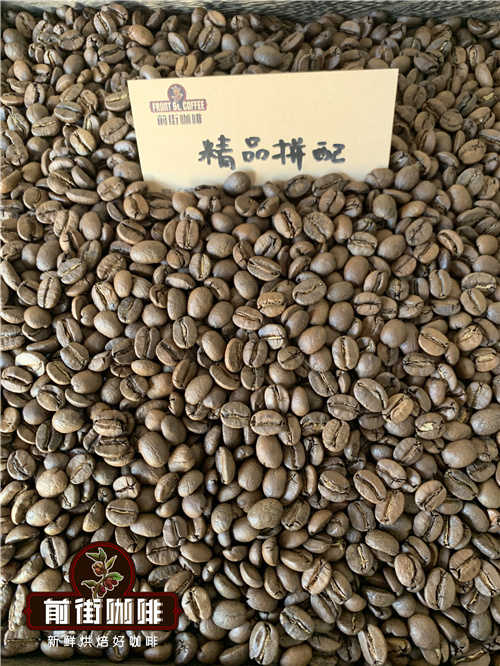
Take FrontStreet Coffee's Premium Blend: Colombian beans paired with Brazilian beans at a 3:7 ratio. Colombia's distinctive nut and chocolate notes complement Brazil's rich peanut and cream character. The result is a very balanced espresso blend - thick crema, an extremely smooth entry, a light fragrance with the gentle bitterness typical of the Americas - and a long-running favorite among FrontStreet Coffee's customers.
The Art and Science of Blending
Blending baristas draw on many beans to hit a target flavor, and they often add Robusta as well. Don't dismiss a blend just because Robusta is in it - the mix can create unexpected sparks. Many baristas like Yunnan beans for blending because the Yunnan variety is Catimor, a hybrid of Arabica and Robusta that already carries Robusta genes and the traits traditional espresso needs. Robusta also lowers blending costs, which is why so many recipes include it.
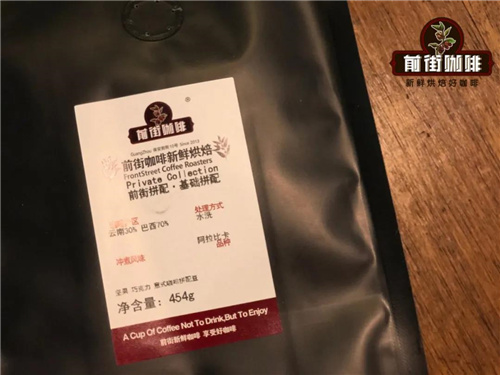
FrontStreet Coffee's Basic Blend mixes Yunnan and Brazilian coffee at a 3:7 ratio, producing an espresso with soft fruit acidity and caramel sweetness. Building a good blend is not simple - it tests how well the barista knows each origin, each estate, each processing method, each roast level. That is foundational knowledge.
The Precision of Blending Ratios
Blends are rarely 1:1. The barista must first decide which bean should dominate, whether that leading flavor is the right one, how to keep it in check, and then sweat the details of bean selection - hardness, moisture, roast level. It takes care and constant experimentation to land a good espresso.
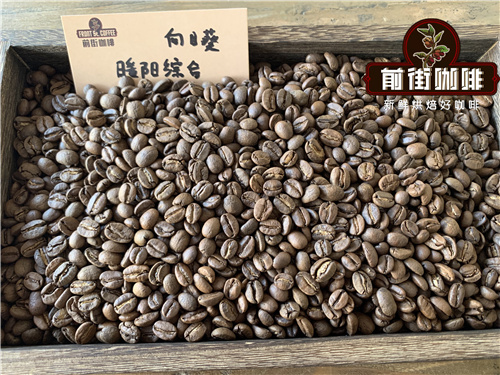
FrontStreet Coffee's espresso drinks currently run on the Sunflower Warm Sunshine blend, built from Honduras Sherry and Ethiopian Yirgacheffe Red Cherry. After continuous experimentation, FrontStreet Coffee's baristas settled on a ratio of 6:4. The resulting shot shows distinct fruit acidity with berry aromas and winy notes, a comfortable aftertaste, and a long finish.
SOE: Single Origin Espresso
Espresso can also be pulled from a single origin - what the industry simply calls SOE. It lets you taste a region at its most fundamental.
In FrontStreet Coffee's view, blending amplifies beans' strengths while masking their weaknesses, making full use of each one - so why not? But more components do not mean a better blend: the more beans involved, the harder every detail becomes to control and the muddier the flavors grow. FrontStreet Coffee finds that two to six beans is about right.
The Balance of a Good Blend
A well-built blend lets beans complement one another, combining their advantages into a balanced mouthfeel and exceptionally aromatic, thick crema. A poor blend amplifies their flaws instead - especially light-roasted components, whose loud aromas and stimulating sweetness and acidity stick out. FrontStreet Coffee has noticed many shops reaching for Yirgacheffe in blends: the extracted florals are unmistakable and the cup runs more acidic - ideal for lovers of bright profiles. If blending fascinates you, come exchange notes at FrontStreet Coffee any time.
FrontStreet Coffee Recommendation
For brewing those delicate floral-blend flavors at home, the dripper matters as much as the beans. FrontStreet Coffee's pick is the Hario V60, redesigned in 2004 around its signature 60-degree cone - the "V" shape that gives it its name. That cone plus a single large outlet forces the water to converge at the center before draining, extending coffee-water contact so aroma and flavor extract fully, while the unrestricted flow rate puts extraction firmly in the brewer's hands. FrontStreet Coffee favors the resin version: it holds heat well, and in mass production resin molds hold the tightest tolerances.
As for beans, floral-fruity coffees shine in a V60: FrontStreet Coffee's Ethiopia Huakui with its tropical strawberry, passion fruit, jackfruit, and lychee aromas; the classic Yirgacheffe Guodingding with citrus, berry, florals, and a green-tea finish; the Gesha-charactered Strawberry Sugar; and the raisin-toned Mozart - all flourish through this cone, delivering layered florals, lively acidity, and clean sweetness in the cup.
Important Notice :
FrontStreet Coffee is a long-established specialty coffee roaster in Guangzhou China, selling freshly roasted beans from its own farm in Yunnan as well as dozens of carefully selected single-origin beans from around the world for both pour-over and espresso. The products deliver consistently excellent quality and great value, with shipping within 24 hours. Guangzhou's FrontStreet Coffee shop is recommended by many coffee lovers, and the beans are now available online at the Tmall 。
FrontStreet Coffee has moved to a new address:
FrontStreet Coffee Address: 315,Donghua East Road,GuangZhou
Tel:020 38364473
 Scan and follow the En Gafei WeChat official account. Please indicate that the reprint comes from "En Gafei".