What Does SOE Coffee Mean and Why Is It More Expensive Than Blends? Is It Worth Paying Extra for SOE Americano and Latte?
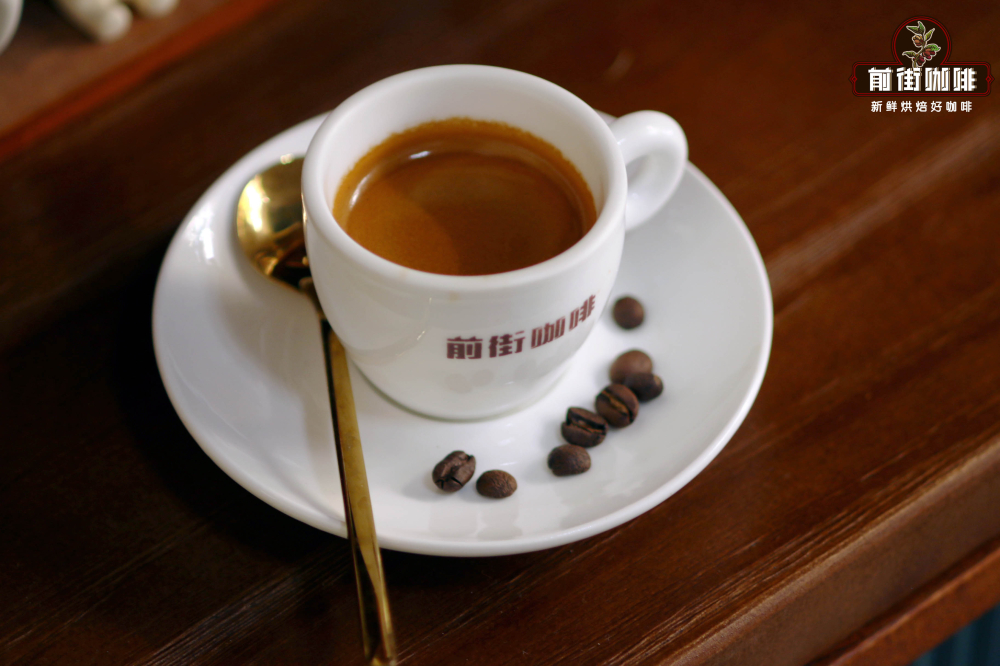
As espresso coffee has grown more popular, SOE (Single Origin Espresso) has become increasingly trendy. Customers often come to FrontStreet Coffee asking "Can I choose the beans for espresso?" or "Do you offer SOE coffee?"
What Is SOE Coffee?
SOE stands for "Single Origin Espresso," meaning espresso made from beans of a single origin. As the name suggests, the beans come from one specific region. If FrontStreet Coffee brews espresso from Ethiopian Yirgacheffe beans, for example, that is an SOE. But not every bean suits SOE.

Espresso machines amplify a bean's original flavors. Extracting FrontStreet Coffee's Ethiopian Yirgacheffe, whose character is citrus and lemon and fairly refreshing, through an espresso machine yields an especially acidic SOE. Likewise, extracting FrontStreet Coffee's Indonesian Mandheling, whose character is herbal and earthy, gives a rather bitter, burnt SOE.
SOE on the market also differs from single-origin beans in roast level. Some distinctly acidic beans are roasted lighter when used for pour-over and other drip methods; used in an espresso machine, they would be roasted darker. SOE for espresso is therefore, in theory, not suited to pour-over. Likewise, most lightly roasted beans are not suited to espresso machines, because their minimal water absorption and expansion make channeling likely, which naturally gives poor flavor.

Characteristics of SOE Coffee
As noted, espresso from an espresso machine intensifies flavor. SOE beans are therefore generally not roasted too dark. Compared with traditional darker espresso roasts, their flavors are harder to extract, so the parameters need careful thought.
On the other hand, when building drinks on an SOE base, it helps to adjust the ratio of espresso to milk or water. Reducing the milk or water highlights the coffee and keeps it from tasting bland. Finally, bean selection for SOE is strict. SOE shows outstanding character, but because it comes from a single origin, its flaws are also easily magnified, so roasting and particle size both shape the flavor.

Earlier articles have noted that beans are affected by weather, cultivation and roasting, causing subtle flavor differences between batches each year. Using such single-origin beans for SOE therefore cannot guarantee that every cup tastes consistent. This is also why FrontStreet Coffee has not put SOE on its menu. FrontStreet Coffee's original mission in opening the cafe was to ensure that guests always find stable single-origin coffee with distinctive regional character, alongside high-quality espresso and milk coffee. SOE carries too much risk in flavor consistency. That said, SOE does have advantages, which we take up next.
Advantages of SOE Coffee
The greatest strength of SOE is that, like single-origin coffee, it comes from a single origin, so its flavors are purer. Compared with the blended espresso beans described above, it also offers clearer flavor layers.
Disadvantages of SOE Coffee
As noted, making SOE sounds simple — just swap the usual espresso beans for single-origin beans — but extracting good flavor is actually hard. In roasting terms, to express the origin while working in an espresso machine, the beans must be roasted carefully: not too dark, which would bury the origin flavors, and not too light, which would throw the SOE's acidity out of balance and make extraction harder. High-quality SOE therefore places real demands on the roaster's skill.

Second, as mentioned, each year's batches differ subtly, and espresso's pressurized extraction is very sensitive to many factors. Freshness and batch-to-batch differences therefore also affect SOE extraction. For all these reasons, SOE coffee is much more expensive than regular espresso.
That is FrontStreet Coffee's summary of SOE. We hope readers now understand it more deeply. Since we also touched on blended espresso beans, the next section offers a supplementary introduction to blends.
What Is Blended Coffee?
As noted earlier, blended coffee is mainly used for common espresso drinks like mocha and latte, with the aim of optimizing flavor. Generally, a blend combines two or more different varieties of coffee beans. Only when roasted into beans suited to an espresso machine are they called espresso beans.
Such a blend cannot be created casually. It requires the blender's own understanding of coffee flavors, letting different beans offset each other's strengths and weaknesses to produce a blend with excellent flavor.
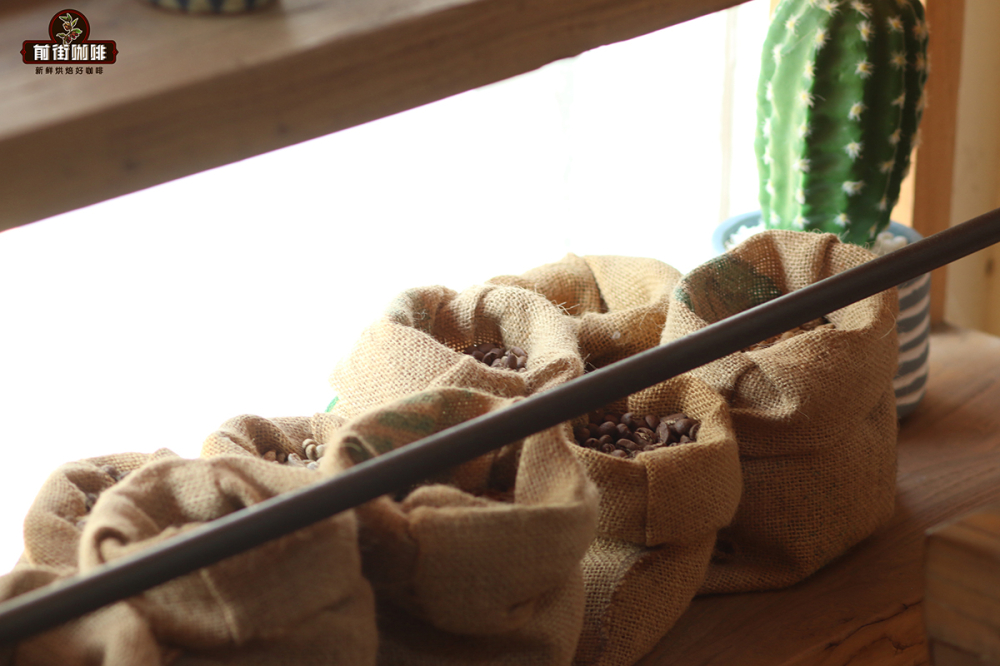
Mixing two regional beans at a 1:1 ratio, for instance, would produce dark, strange flavors, so ratios are strictly defined. FrontStreet Coffee's blending approach is to balance acidity, bitterness, sweetness, aroma and body into a coffee with its own flavor identity.
FrontStreet Coffee also carries four types of espresso blends in-store, each distinct, all the best-ratio beans selected by our roasters through extensive ratio testing.
Among them, FrontStreet Coffee's Sunflower Warm Sunshine Blend gives off a distinct fermented wine aroma when pulled as espresso. On the palate, citrus and berry acidity emerge at once, accompanied by a whiskey aroma and a dark chocolate aftertaste. Its composition is a 7:3 blend of FrontStreet Coffee's Yirgacheffe Natural Red Cherry and FrontStreet Coffee's Honduras Sherry.

FrontStreet Coffee therefore suggests that drinkers who want stable-tasting espresso will find blended beans a better choice than SOE, with better value for money as well.
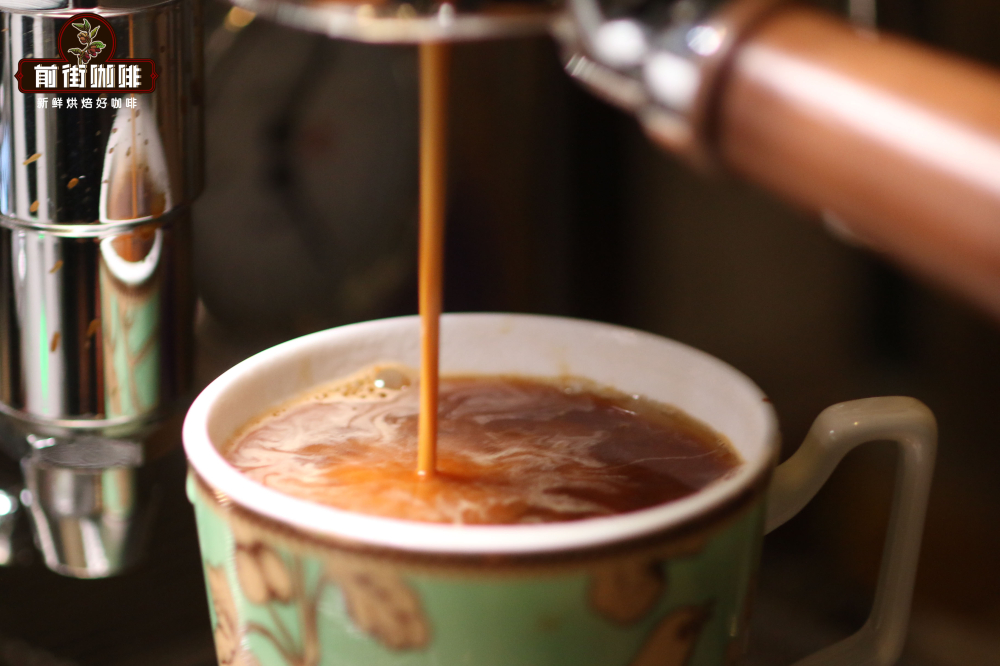
FrontStreet Coffee has found that many people assume SOE simply means putting single-origin beans into an espresso machine to create a single-origin series. It is only when they take various floral, fruity beans home and try them on a coffee machine that something goes wrong. First comes the chaotic spraying shown below, then the shock of an extremely acidic espresso and a refusal to take a second sip, and finally the question of whether their equipment is poor or their technique was flawed.

In fact, the reason you cannot reproduce the shop's SOE at home likely has nothing to do with equipment or technique — the bean's roast level is simply not suited to espresso. From FrontStreet Coffee's baristas' experience, choosing a bean suited to SOE not only makes a delicious espresso easy but also makes an Americano or latte, with water or milk added, twice as effective. FrontStreet Coffee's bean menu offers two single-origin beans in SOE versions: the strawberry-flavored FrontStreet Coffee Hawkuai SOE and the classic Yirgacheffe-flavored FrontStreet Coffee Ethiopia Konga SOE. Just select an espresso roast when ordering.

SOE Espresso Extraction Parameters
Coffee dose: 20g
Coffee yield: 35g
Extraction time: 27 seconds
Grind size: Galileo 1.9 setting
SOE flavor description: citrus, berries, fermented aroma, viscous, medium bitterness, medium-high acidity, bright and lively.
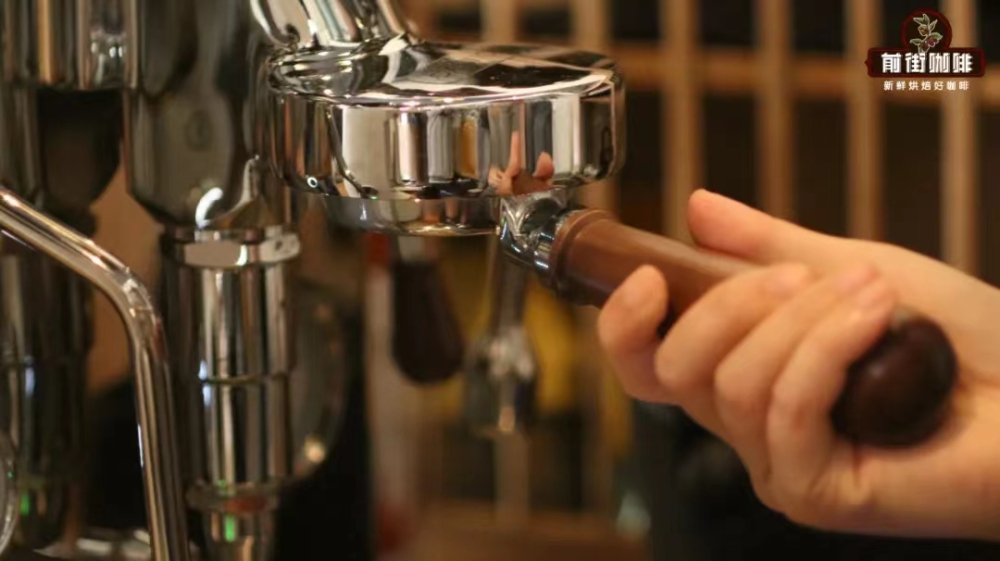
With the SOE extraction covered, let's turn to how FrontStreet Coffee extracts its Sunflower Warm Sunshine espresso blend.
Blend combination: FrontStreet Coffee Honduras Sherry & FrontStreet Coffee Yirgacheffe Natural Red Cherry
Blend ratio: 7:3
Blend Coffee Bean Extraction Parameters
Coffee dose: 20g
Coffee yield: 40g
Extraction time: 30 seconds
Grind size: Galileo 2.2 setting
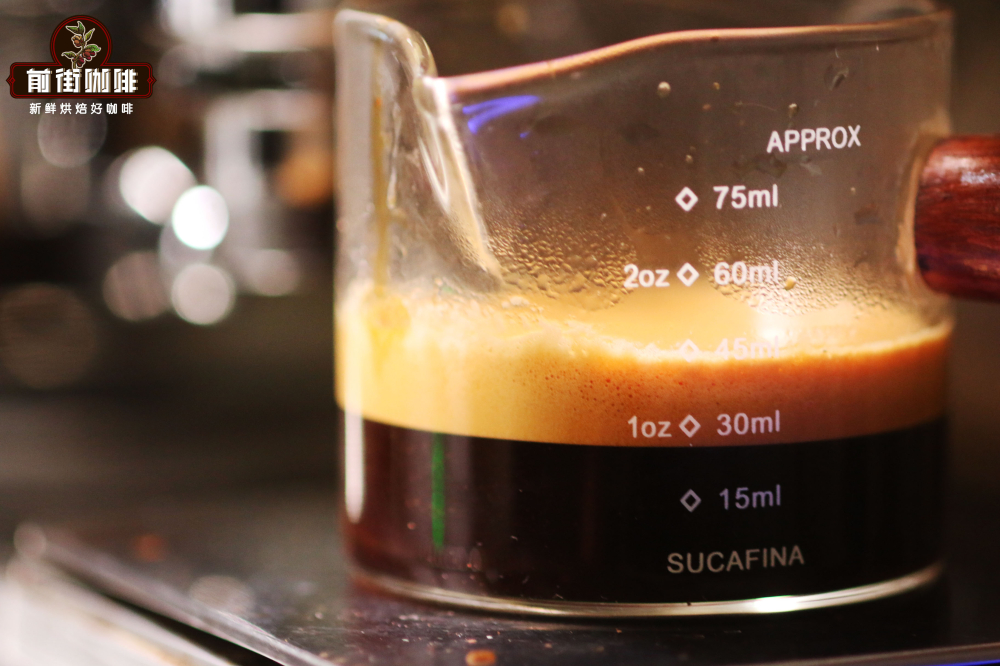
[FrontStreet Coffee Sunflower Warm Sunshine Espresso Blend] Flavor: a smooth texture, with distinct fruit acidity on entry accompanied by a light berry aroma, a whiskey fragrance and a rich chocolate flavor, with a noticeable sweet aftertaste.
FrontStreet Coffee Recommendation
If you want to understand the Ethiopian terroir that makes SOE so appealing, start with the most classic washed example: the FrontStreet washed Yirgacheffe, known for jasmine, bright citrus and lemon acidity and a tea-like body, and a popular, affordable introduction to washed Ethiopian coffee. Yirgacheffe is a small town in Ethiopia's Southern Sidama zone at about 1,700-2,100 meters, with coffee trees planted above 1,800 meters — one of the highest coffee regions in the world. Its jasmine florals and lemon-citrus acidity are so recognizable that Yirgacheffe became shorthand for Ethiopian specialty coffee.
Within Yirgacheffe, the town splits into many small areas and villages, and one of the standout cooperatives is the FrontStreet Gutingding Cooperative. It lies in the Worka area at Yirgacheffe's southeastern edge and was originally part of the Worka cooperative under the Yirgacheffe union YCFCU; as buyers pursued traceability, it was discovered as a single-origin source and split off. Gutingding follows the traditional washed method — often called Yirgacheffe's last clean corner — and its coffee shows a fresh, bright citrus and lemon acidity with jasmine fragrance rather than the traditional bitter note.
The FrontStreet natural Red Cherry, from the same region, uses a whole-ripe-cherry natural process: only fully ripe, sound fruit is picked, screened, then dried directly on raised beds, turned every 2-3 hours in the first days to avoid uneven heat and over-fermentation. After three to five weeks of drying, the outer fruit is machine-scraped off and the beans are stored. Because the fruit dries on the bean, the coffee keeps its typical Yirgacheffe character while gaining tropical natural fruit — citrus acidity, a berry juice quality, honey sweetness and a creamy smoothness. Brewed as pour-over with a V60, 90-91°C water, 15g of coffee, a 1:15 ratio and a medium grind (EK43s setting 10, fine-sugar size, 80% through a No. 20 sieve), it needs no special technique: bloom with 30g of water for 30 seconds, pour to about 125g on the scale over about a minute, then at one-third of the bed add the remaining 100g to reach about 225g, finishing the pour around 1'35" and the drawdown by about 2'00"-2'10".
Important Notice :
FrontStreet Coffee is a long-established specialty coffee roaster in Guangzhou China, selling freshly roasted beans from its own farm in Yunnan as well as dozens of carefully selected single-origin beans from around the world for both pour-over and espresso. The products deliver consistently excellent quality and great value, with shipping within 24 hours. Guangzhou's FrontStreet Coffee shop is recommended by many coffee lovers, and the beans are now available online at the Tmall 。
FrontStreet Coffee has moved to a new address:
FrontStreet Coffee Address: 315,Donghua East Road,GuangZhou
Tel:020 38364473
 Scan and follow the En Gafei WeChat official account. Please indicate that the reprint comes from "En Gafei".