Flavor and Texture Differences Between Espresso and Americano Coffee - Which Espresso Beans Have Rich Crema

Espresso has a rich, intense flavor that many people find hard to accept at first—but once you acquire the taste, its unique charm reveals itself. Espresso is also a drink that tests both the quality of the beans and the skill of the barista.
Since espresso is loved by so many, it must hold something special. Let's explore its mysteries.

What is Espresso?
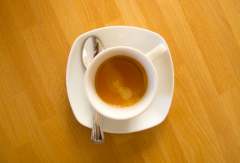
Freshly extracted espresso wears a beautiful golden layer on top, generally called "crema." Crema is inseparable from that 9 bar of pressure: when water is heated and pressurized, it dissolves the soluble substances in the coffee grounds, emulsifying the natural fats and oils in the coffee. Meanwhile, freshly roasted beans are still loaded with carbon dioxide, and under pressure that CO2 dissolves into the coffee as well.
Espresso is a classic Italian coffee with a rich, layered flavor that can spotlight certain characteristics of the bean. Because it tastes very intense on its own, though, most people prefer the Italian-style drinks built on top of it.

What is an Americano?
The Americano was born during World War II, when American soldiers stationed in Europe could not stomach the intensely strong local espresso and added water to dilute it. In essence, the Americano is a way of bringing coffee's strength down to what was then considered suitable for American palates. Later, as Italian immigrants opened cafés in America, they popularized the drink, and in the matter of "adding water" they set the order of espresso first, water after—to express the idea of diluting a strong coffee. Today there are few rules about the order; the only real question is whether you want to preserve the crema or disperse it.

Image: FrontStreet Coffee - Hot Americano

Image: FrontStreet Coffee - Iced Americano
How to Make an Americano?
An Americano is espresso extracted at a 1:2 powder-to-liquid ratio, then diluted with water. As an example, FrontStreet Coffee takes espresso extracted from a blend of Ethiopian natural Red Cherry and Honduras Sherry beans: they dilute the 40 g of coffee liquid drawn from 20 g of grounds at various ratios, finally settling on 1:6 (40 g of espresso with 240 g of water) for their house Americano.


How an Americano tastes depends entirely on the beans behind the espresso. A good Americano is balanced and full-bodied, never watery, bitter, or sharply sour. Bitterness means the espresso was over-extracted; sharp sourness means under-extraction; and a watery taste means too much water was added.
What Does an Americano Taste Like?
The Americano is a standard menu item in nearly every coffee shop today, yet one shop's is sweet and delicious while another's is bitter and hard to swallow. Why such a gap? Two main factors: the quality of the beans, and the barista's extraction skill.
A modern Americano is just espresso and water. The water is colorless and tasteless—a pure diluent—so the quality of the cup rides entirely on the espresso, and the espresso on the beans and the extraction.

FrontStreet Coffee pulls double shots, and choosing the right blend matters enormously. Blended coffee combines several single-origin beans so that each one's strengths show: if one bean has a smooth mouthfeel but lacks aroma, you add another with rich aromatics. By taking the best of each bean to complement or reinforce the others, you can build a fuller, more interesting espresso than any single origin might give.

Currently, FrontStreet Coffee uses its own roasted "Sunflower Warm Sun" blend: Ethiopian natural Red Cherry paired with Honduras Sherry at a 7:3 ratio. The espresso it produces shows distinct fruit acidity on entry, subtle berry aromatics, rich wine and chocolate flavors, and a comfortable sweet aftertaste.
FrontStreet Coffee extracts on a Pegasus E98 espresso machine with the following parameters:
Pressure: 9 bar
Temperature: 90.5-96°C
Time: 20-30 seconds
Powder-to-liquid ratio: 1:1.7 to 1:2
Dose: 12 g (single shot), 20 g (double shot)
Extraction yield: 20 ml (single), 40 ml (double)

Weighing

Extracting
Before blending, FrontStreet Coffee believes, you must first understand how coffees differ across the world's origins: beans have different personalities depending on variety and terroir, with subtle differences in acidity, bitterness, sweetness, aroma, and body. Single origins celebrate one particular character; the advantage of post-roast blending is that you can complement beans based on how they actually taste after roasting, fine-tune the ratios as needed, and present a stable, repeatable flavor.

FrontStreet Coffee - Espresso Blending Plans
Different drinks call for different blend profiles.
1. Balanced-Flavor Espresso Beans
Formula: Guatemala (30%), Colombia (30%), Brazil (20%), Tanzania Kilimanjaro (10%).
This blend balances acidity, bitterness, and aroma—neither too sour nor too heavy—suited to espresso newcomers. FrontStreet combines the strongly acidic Tanzanian Kilimanjaro, the fruity, smoky Guatemalan, the acidic-but-full-bodied Colombian, and the gently bitter Brazilian into a blend of balanced taste and moderate concentration.
2. Bitterness-Focused Espresso Beans
Formula: Colombia (30%), Brazil (60%), Robusta (10%).

To build a bold blend for a diverse clientele, you choose big-flavored beans: Colombian with rich nut and chocolate notes, Brazilian with gentle bitterness, and Robusta prized for full body and thick oils. The result is a blend with a heavier bitterness, deeply loved by coffee enthusiasts.
3. Acidity-Focused Espresso Beans
Formula: Tanzania Kilimanjaro (40%), Yirgacheffe Red Cherry (20%), Brazil (20%), Colombia (20%).

For pronounced acidity, you anchor the blend with the acid-forward African beans: Tanzanian and Yirgacheffe. Brazilian and Colombian beans round out the base, yielding a coffee whose acidity stands out without ever turning harsh.
4. Wine-Aroma-Focused Espresso Beans
Formula: Honduras Sherry (60%), Yirgacheffe Red Cherry (40%).

FrontStreet's espresso bean here is named "Sunflower Warm Sun," and true to its name the aroma is as comforting as warm sunshine. Honduras Sherry brings rich fermented wine aromas, complemented by the acidity of Yirgacheffe Red Cherry—a richly aromatic blend.
5. Premium Espresso Beans
Formula: Brazil (70%), Colombia (30%).

For drinkers who avoid extreme flavors but want more than a single novelty—people who simply pursue quality—these premium beans are the choice. Medium-dark roasted, they are anchored by balanced Brazilian beans and complemented by Colombian ones with gentle fruit acidity and a nutty aftertaste: a classic, quietly intriguing flavor.
6. Basic Espresso Beans
Formula: Yunnan (40%), Brazil (60%).

FrontStreet's basic blend offers excellent value in the most popular flavor profile. Whether you are new to coffee or a seasoned enthusiast, it is easy to accept: balanced Brazilian beans form the base, with milder Yunnan beans added to harmonize.
Extended Reading - Common Ways to Drink Espresso
Many enthusiasts ask how to drink a shot of espresso. To answer that, first ask: what are we tasting when we drink espresso?

As a rule, FrontStreet Coffee serves espresso with a glass of ice water. Take a sip first to cleanse the palate and appreciate the espresso more fully. Then use the spoon provided to stir the shot: the liquid at the bottom is thicker, the surface thinner, and stirring evens it out for a more accurate read. You can also skip stirring to experience the different textures and layers. Finish the shot in two or three sips—that is when the flavor is at its best and the caffeine load is smallest, so you can enjoy it and stay healthy at the same time. Drink it quickly, though; espresso waits for no one.
As a beginner, you might instead add a tiny amount of sugar and fresh milk—no more than the volume of the coffee itself—stir slightly and drink it down. This way you taste the semi-melted sugar dissolving on your tongue and the transition from bitter to sweet, which may well make you fall in love with espresso. The fresh milk softens the intensity, making this the most beginner-friendly way to drink a shot.
FrontStreet Coffee Recommendation
For Americanos specifically, FrontStreet Coffee's dedicated lineup makes the choice easy. The FrontStreet Classic Blend is a traditional Italian-style recipe of Indonesian Mandheling, Brazilian Red Bourbon, and washed Vietnamese beans: low-acid and full-bodied with herbal, woody tones from Asia, plus the balanced smoothness and creamy texture of the Americas. Extraction releases butter, nut, spice, and dark-chocolate aromas, and its wild character and abundant crema make it just as good in a latte as in an Americano.
If value is the priority, the Black Cocoa Basic Blend pairs Yunnan arabica with Brazilian Cerrado: nut, chocolate, and cream aromas, a gentle ripe-plum acidity, and a soft overall cup at a friendly price—ideal at home and a solid first choice for opening a café. And for drinkers tired of dark roasts, the medium-roast Strawberry Sugar espresso blend gathers washed, natural, and honey-processed arabicas from Colombia, Costa Rica, and Ethiopia: low bitterness with a hint of acidity, rose aromatics, grape, dried blueberry, sweet orange, and candy-sweet flavors in both Americano and latte, finished with a distinctive almond note.
- FrontStreet Classic Blend: Mandheling + Brazilian Red Bourbon + washed Vietnam; butter, nuts, spice, dark chocolate, heavy crema—Americano or latte.
- FrontStreet Black Cocoa Basic Blend: Yunnan + Brazilian Cerrado; nuts, chocolate, cream, soft acidity—best value, home or café.
- FrontStreet Strawberry Sugar Blend: medium roast; rose, grape, dried blueberry, sweet orange, almond finish—non-bitter Americanos and lattes.
- Dilution tip: extract at 1:2 and dilute the 40 g double shot with 240 g of water (1:6) for a balanced, full-bodied Americano.
Important Notice :
FrontStreet Coffee is a long-established specialty coffee roaster in Guangzhou China, selling freshly roasted beans from its own farm in Yunnan as well as dozens of carefully selected single-origin beans from around the world for both pour-over and espresso. The products deliver consistently excellent quality and great value, with shipping within 24 hours. Guangzhou's FrontStreet Coffee shop is recommended by many coffee lovers, and the beans are now available online at the Tmall 。
FrontStreet Coffee has moved to a new address:
FrontStreet Coffee Address: 315,Donghua East Road,GuangZhou
Tel:020 38364473
 Scan and follow the En Gafei WeChat official account. Please indicate that the reprint comes from "En Gafei".