Coffee Processing Methods: What Types of Natural Processing Exist? What's the Difference Between Natural and Semi-Natural Processing?
According to FrontStreet Coffee, a good processing method is what coaxes the rich flavors out of a coffee cherry. Much like how great wine depends on proper winemaking, the way green coffee is processed after harvest is decisive: different methods produce distinctly different flavor characters in the cup.
Dry Process / Natural Method
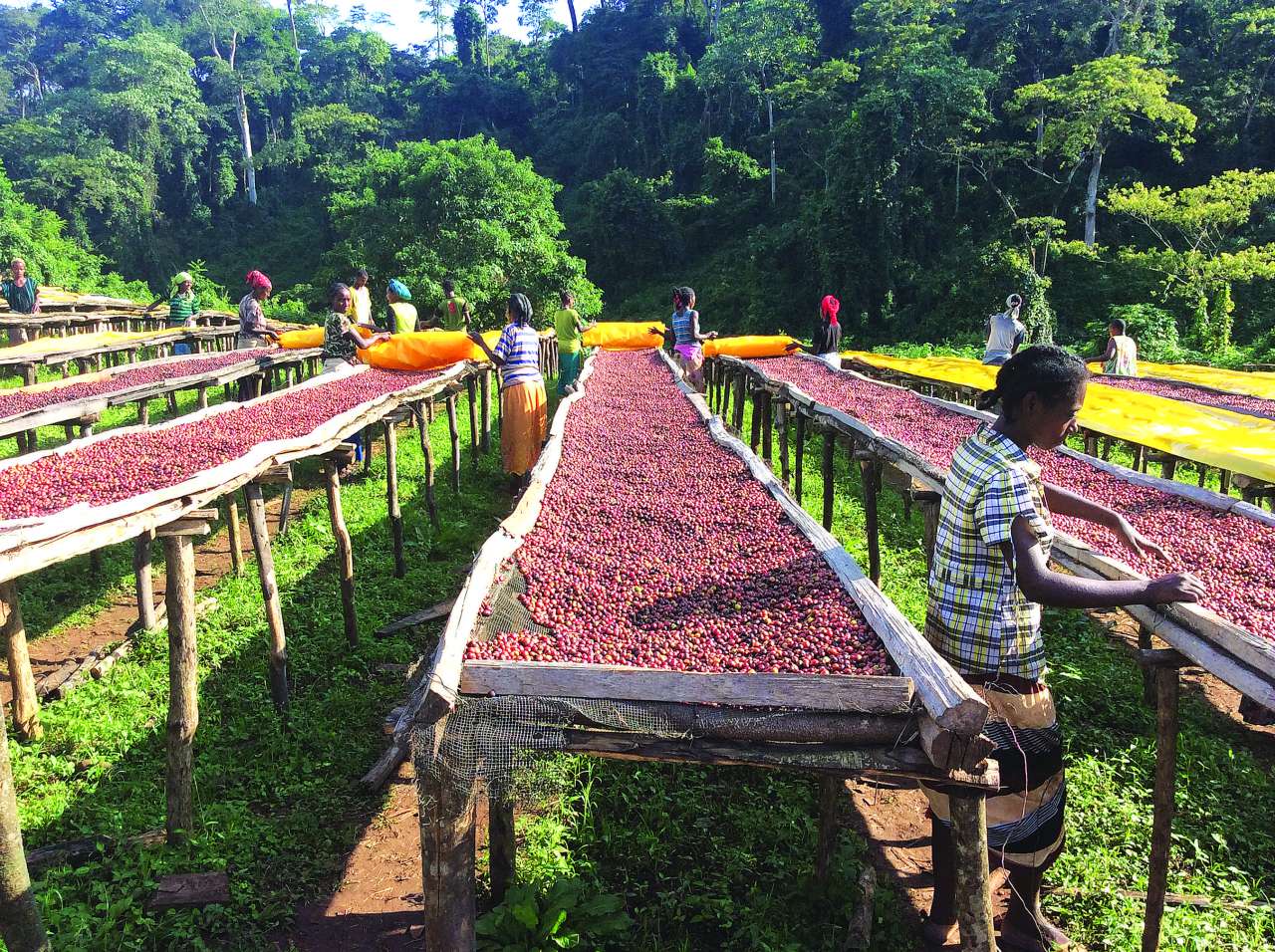
The dry process—better known as the natural process—is the oldest and most traditional way to prepare coffee. Over a thousand years ago, Arabs were already drying coffee this way. Harvested cherries are laid out directly on patios to dry in the sun for roughly 27–30 days, during which moisture drops from about 60% to around 12%. Conceptually it couldn't be simpler, and it's cheap to run, but it's full of variables and risk—rain, uneven drying, mold. For a long time it was the method of choice for lower-grade commercial beans, though modern craft naturals have rewritten that reputation.

Flavor Profile
Natural processed coffees show soft acidity and even bitterness, heavy body, layered complexity, and noticeably elevated sweetness. Well-made naturals carry fruity, even wine-like notes. FrontStreet Coffee recommends its Natural Red Cherry, Blossom (Huakui), and Queen Estate beans as good examples of the smooth, fruit-laden mouthfeel traditional naturals deliver.
Natural Drying Process
Fresh cherries are spread on drying patios and turned constantly for roughly 2–4 weeks until they dry naturally to about 12% moisture—constant turning keeps every cherry heating evenly. Once dry, the bean pulls away from the dried skin, and hulling machines strip off the pulp, skin, and other layers before sorting finishes the lot.

This is the classic method behind Yemen Mocha, Ethiopia Harar, Brazilian, and Indonesian Sulawesi coffees.
Wet Process / Washed Method
The washed process was developed by the Dutch in the 18th century and suits rainy climates well. It's more involved than sun-drying, yet it remains the most common processing method in the world, accounting for roughly 70% of total production. Harvested cherries go through depulpers, which separate most of the fruit flesh from the beans. The parchment coffee then moves into clean fermentation tanks, where soaking breaks down the remaining mucilage. Density sorting in water removes underripe and defective beans, which float. Because fermentation can be controlled, the finished cup carries none of the impurities typical of sloppy naturals: washed coffees present distinct fruit acidity and a clean, bright profile—no astringency or harsh edges—though that very cleanliness comes with slightly less body.

Flavor Profile
Washed coffees show stronger, cleaner acidity with a refreshing, luminous mouthfeel. FrontStreet Coffee recommends its Flower Butterfly, Guodingding, and Emerald Geisha as benchmarks of the style.
Washed Process Steps
Float separation: Cherries are rinsed in clean water and the unripe fruit floating on the surface is removed.
Depulping: Fresh cherries pass through depulping machines to strip away skin and flesh.
Mucilage removal: The pulped seeds go into fermentation tanks, where natural fermentation for roughly 16–36 hours dissolves the sticky mucilage before a final wash.
Drying and hulling: The parchment dries in the sun for another 1–2 weeks until moisture reaches 12%, then hulling machines remove the parchment.

Washed green beans have a distinctive bluish-green color and handsome appearance. Guatemala, Colombia, Blue Mountain, Kona, Kenya, Java, and Panama coffees are all washed coffees.
Semi-Washed Method (Wet-Hulled)
The semi-washed method—better known in the industry as wet-hulling—handles drying differently from every other method. Instead of drying the beans all the way to 11–12% moisture, the coffee is first dried only to about 30–35%, then hulled while still soft, exposing the green bean surface directly. Drying then continues until the beans reach a moisture level that resists spoilage and allows storage. This two-stage drying leaves the beans a swampy deep-green color. Wet-hulled coffees show low acidity and an unusually full, heavy body; FrontStreet Coffee's Golden Mandheling is a classic example.

Flavor-wise, semi-washed coffee sits between natural and washed. The method is prevalent across Indonesia—Mandheling is overwhelmingly wet-hulled—and Brazil has adopted it in recent years as well. There's also a related "pulped natural" style that mirrors the washed approach: skin and part of the flesh are removed, the sticky beans dry with mucilage still attached, are re-moistened, and a specialized machine grinds away the remaining fruit to release the seeds.
Honey Process / Miel Process
The honey process takes its name from the extremely sticky mucilage coating the beans before drying—the tacky texture resembles honey. When the fruit flesh separates from the bean, the surrounding mucilage turns sticky as it draws moisture from the air during sun drying. The "honey" here is that mucilage layer. After harvest, machines remove only the skins, leaving the flesh and mucilage attached for drying, so the sugars of the fruit infuse the bean—without demanding the full drying time of a natural.

Flavor Profile
Honey processed coffees feature low acidity, high sweetness, and fruity aromatics. The cup is cleaner than a natural's, with a fermented, wine-like note lingering in the finish. FrontStreet Coffee recommends its Strawberry Sugar beans to taste the style.
Honey Process Steps
Skin removal: Cherries are washed, then depulped with the flesh and mucilage left intact.
Sun drying: The sugary mucilage stays on through drying, with constant turning to keep mold off the beans.
Green bean recovery: Once dry, flesh, mucilage, and husk are all removed in a single pass.
Honey processing is one of the trendiest methods in specialty coffee today, with Central American producers—Costa Rica and El Salvador above all—having refined it into an art.
FrontStreet Coffee Recommendation
Ethiopia, the birthplace of coffee, is the best place to see how processing shapes flavor, because thousands of native heirloom varieties there are finished in every style imaginable. For the washed side of the spectrum, FrontStreet Coffee's washed Yirgacheffe is the ideal entry point: jasmine florals, bright citrus acidity, and a light, tea-like body that drinks like a clean lemon tea.
For naturals, FrontStreet Coffee's Yirgacheffe Red Cherry Project lot is a textbook example—only fully ripe, defect-free cherries are selected, dried for about two weeks until the sugars of the fruit soak into the bean, then hulled and double-sorted by density and by hand. The result is a spotless, intensely fruity cup of peach, cocoa, honey, and lemon. At the other extreme, the FrontStreet Blossom (Huakui) from Hambella in Guji, Sidamo dries whole cherries on raised beds for 21 days with constant turning and hand-sorting every three to five days; after a medium-light roast it shows faint fermented wine notes, florals, citrus, mango, and honeyed sweetness with a cocoa-spice finish and lasting aftertaste.
Brewed as a pour-over, both styles reward a gentle approach: try a V60 at 90–91°C with a 1:15 ratio and a medium-fine grind, and let the processing—washed clarity versus natural sweetness—tell the story of the same origin.
Important Notice :
FrontStreet Coffee is a long-established specialty coffee roaster in Guangzhou China, selling freshly roasted beans from its own farm in Yunnan as well as dozens of carefully selected single-origin beans from around the world for both pour-over and espresso. The products deliver consistently excellent quality and great value, with shipping within 24 hours. Guangzhou's FrontStreet Coffee shop is recommended by many coffee lovers, and the beans are now available online at the Tmall 。
FrontStreet Coffee has moved to a new address:
FrontStreet Coffee Address: 315,Donghua East Road,GuangZhou
Tel:020 38364473
 Scan and follow the En Gafei WeChat official account. Please indicate that the reprint comes from "En Gafei".