Research on Espresso Blends: Why Blend? The Relationship Between Flavor and Espresso Blend Formulas
FrontStreet Coffee · The Art of Blending Espresso Beans
What Are Espresso Blend Beans?
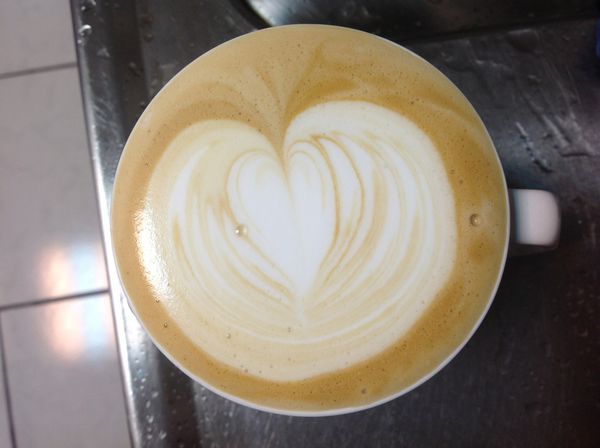
Plenty of people love a latte, and I am one of them. Before I was introduced to specialty coffee, a latte was all I drank, and all I knew was that it meant espresso mixed with milk. I had no idea that the espresso itself was usually several different coffees blended together. The heart of a good latte is the espresso formula behind it, and building a delicious blend takes real expertise.
Why Blend at All?
There are three main reasons. The first is to build a distinctive cup by combining beans of different origins and different roast levels in set proportions. The second is to balance cost. The third is to create a consistent, repeatable espresso formula.
A Working Theory of Blending
I find it useful to sort coffee beans into three groups: white, gray, and black. White beans mainly supply fragrance and front-end acidity. Gray beans mainly supply the sweet mid-palate and body. Black beans mainly supply the bitterness and aftertaste at the back. Beans are then assembled according to their character and their suited roast level, with a workable ratio of 3:5:2. Some beans sit between two groups—white-gray or gray-black—so experimentation is needed to find the best placement and reach the most complete blend.
White (front-end fragrance and acidity), light roast — Kenya, Guatemala, Yirgacheffe.
Gray (mid-palate body and sweetness), medium-dark roast — Brazil, Costa Rica honey process, El Salvador.
Black (back-end bitterness and aftertaste), dark roast — Mandheling, Kenya, Guatemala.
Gray-black — Colombia, roasted medium-dark, leaning toward a bitter aftertaste.
Espresso formulas put sweetness first, since sweetness marries so well with milk. A little white, more gray, and a moderate amount of black is worth trying: Guatemala plus Brazil plus Kenya.
The practical method is straightforward. Sort each bean by whether it contributes front-end aroma, mid-palate body, or back-end sweet aftertaste, then blend and taste them one pair at a time.
Reference Espresso Blends
1. Kenya AA (medium roast) + Mandheling G1 (medium-dark) + Guatemala Antigua Flora de Oro (extremely light roast). Sweetness, body, and a subtle floral aroma, with good texture and a pleasing taste. Some tasters found the coffee flavor a little too soft.
2. Kenya AA (medium roast) + Mandheling G1 (medium-dark) + Ethiopia Yirgacheffe, washed (light roast). Ample sweetness, a heavier body, subtle floral and fruit acidity, and a delicious taste. The coffee flavor was still judged not quite assertive enough.
FrontStreet Coffee Recommendation
Both reference formulas lean on Yirgacheffe to supply the front-end fragrance and acidity that a blend needs, which makes it a good moment to look at where that flavor comes from. Yirgacheffe is a town in southern Ethiopia, inside the Sidamo zone, with elevations of roughly 1,700–2,100 meters; the coffee trees themselves are planted above 1,800 meters, making this one of the highest coffee-growing regions in the world. The area was originally wetland, and over time the name "Yirgacheffe" became shorthand for a distinctive white floral aroma and a lemon-citrus acidity. By 2010 the name carried so much weight that the Ethiopia Commodity Exchange separated Yirgacheffe from the Sidamo region, which is how it became the household name it is today.
For a blend component that is easy to work with, FrontStreet Coffee's washed Yirgacheffe Gudingding is a solid starting point: white jasmine, bright citrus and lemon acidity, and a tea-like body, at a price that makes it many drinkers' first serious bean. It comes from the Gudingding cooperative at the southeastern edge of Yirgacheffe, in the Worka area—once part of the Worka cooperative within the Yirgacheffe Coffee Farmers' Cooperative Union, later excavated as a single-zone lot as the market's appetite for traceability grew. Gudingding still follows the most traditional washed processing, and the result carries the clean citrus and jasmine lift associated with the region. If you want the same origin with more fruit, FrontStreet Coffee's sun-dried Red Cherry uses only fully ripe whole cherries, dried on raised beds with a turn every two to three hours in the first days to prevent uneven fermentation; after three to five weeks of sun-drying, the outer fruit is removed by machine and the beans are taken to storage. Because the fruit is dried onto the bean, it keeps the typical Yirgacheffe profile while adding a tropical, sun-dried fruitiness—citrus acidity, berry juice, honey sweetness, and a creamy smoothness.
In a blend, brew it as the light-roast white component the theory calls for. As a single origin, a V60 with water at 90–91°C, 15g of coffee at a 1:15 ratio, and a medium-fine grind works well: pour 30g of water for a 30-second bloom, add 95g more (about 125g on the scale) over roughly a minute, then when the bed drops to two-thirds, pour the remaining 100g (about 225g on the scale) over about 35 seconds, finishing the drawdown in 2:00–2:10.
Important Notice :
FrontStreet Coffee is a long-established specialty coffee roaster in Guangzhou China, selling freshly roasted beans from its own farm in Yunnan as well as dozens of carefully selected single-origin beans from around the world for both pour-over and espresso. The products deliver consistently excellent quality and great value, with shipping within 24 hours. Guangzhou's FrontStreet Coffee shop is recommended by many coffee lovers, and the beans are now available online at the Tmall 。
FrontStreet Coffee has moved to a new address:
FrontStreet Coffee Address: 315,Donghua East Road,GuangZhou
Tel:020 38364473
 Scan and follow the En Gafei WeChat official account. Please indicate that the reprint comes from "En Gafei".