What is Milk Foam: The Principles and Methods of Milk Frothing and Factors Affecting It
Introduction
Many coffee lovers who venture into espresso want to pour beautiful latte art. The prerequisite for elegant patterns is the ability to produce fine, dense milk foam. Of course, fine foam is not only about looks; it also improves the texture of any milk-based coffee drink. In this issue, FrontStreet Coffee will teach you how to froth milk.
Milk Frothing Methods
There are many ways to froth milk, but they generally fall into two categories. One is simultaneous frothing and texturing, where both stages happen together; the other separates them, so you first introduce air and then texture the foam. To keep things clear, this guide uses the separated approach, which makes the process easier to understand.
Preparing for Milk Frothing
First you need a steam wand, and most semi-automatic espresso machines come with one. Next you need a container for the milk, such as a milk pitcher or latte art pitcher; the right tools make the job twice as easy.
Finally there is the milk itself. Whether you use room-temperature or cold milk, whole or skim, all of it can be frothed. That said, if you want better texture and flavor, and more stable, longer-lasting foam, FrontStreet Coffee still recommends cold, refrigerated whole fresh milk.
The Principle of Milk Frothing
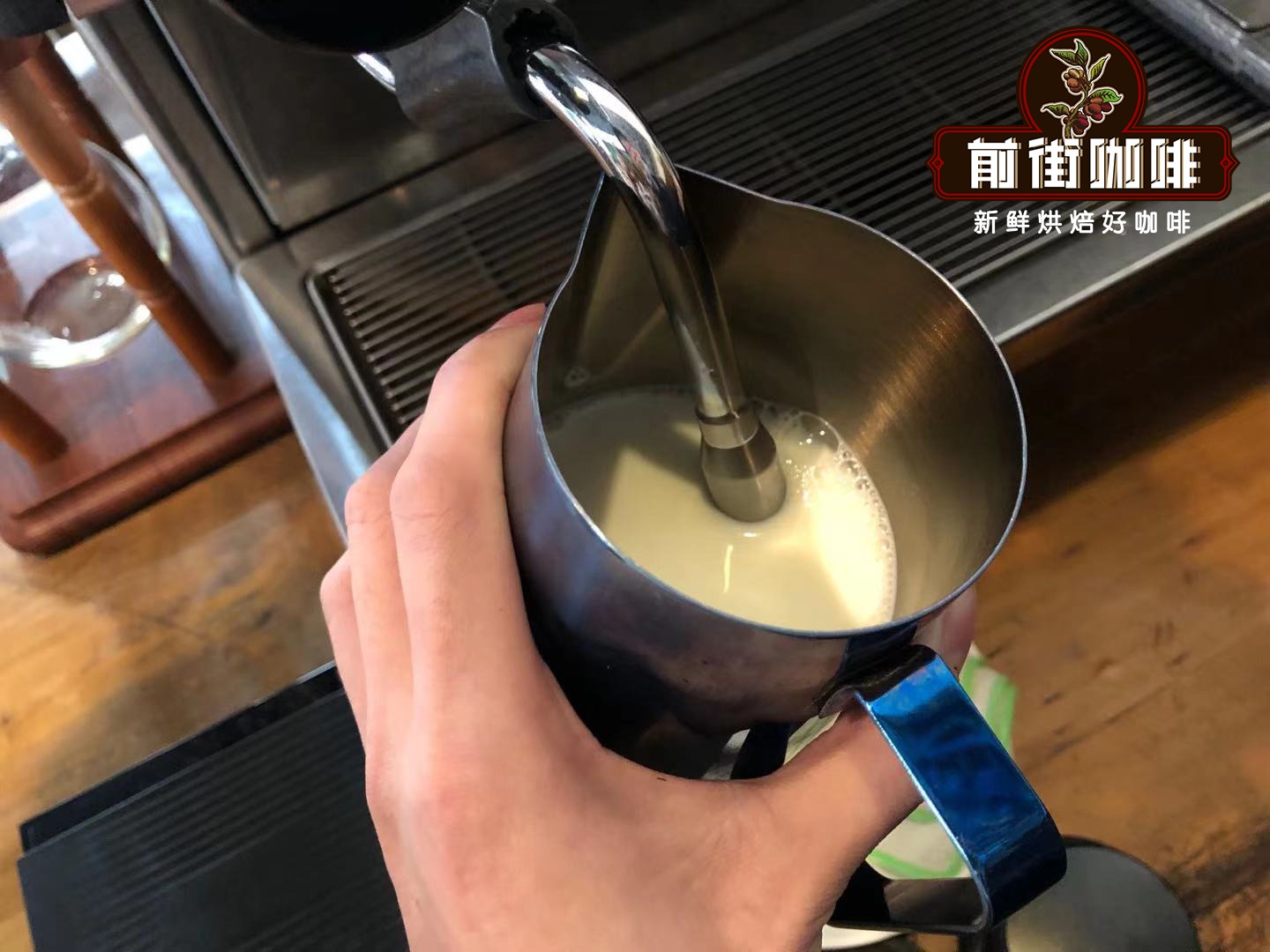
When you turn on the steam wand, you will notice it has 4 steam holes; different brands and models vary, and some have a single hole, 2 holes or 3 holes. If we hold the wand partly at the surface of the milk and turn it on, air enters and froths the milk. If the wand is fully submerged, it will not froth the milk at all; the hot steam only heats it.

Milk Frothing Demonstration
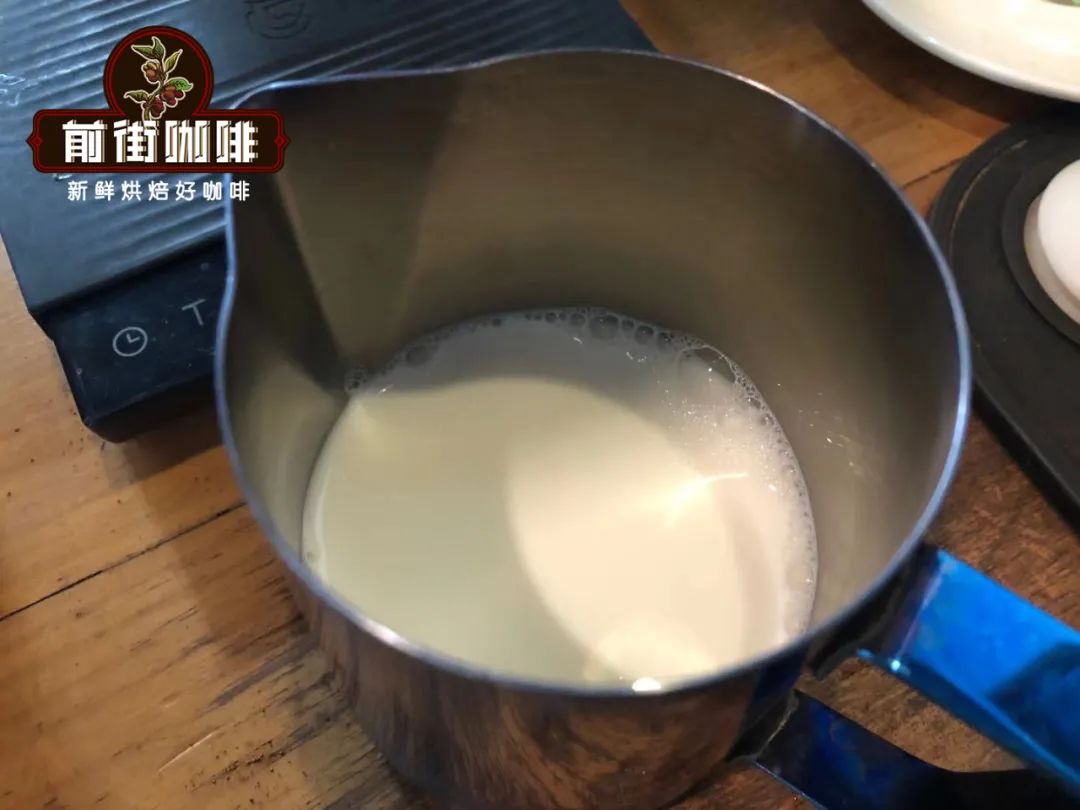
1. Optimal milk volume for frothing. Frothing needs a sensible amount of milk. FrontStreet Coffee recommends filling the pitcher to 40-60% of its total capacity. Too little or too much will test your technique. Beyond that, you also need to think about how much milk one cup of coffee actually uses, so you do not waste any. For the 550ML pitcher FrontStreet Coffee uses, we pour in 250ML of milk, just reaching the bottom of the pitcher's spout.
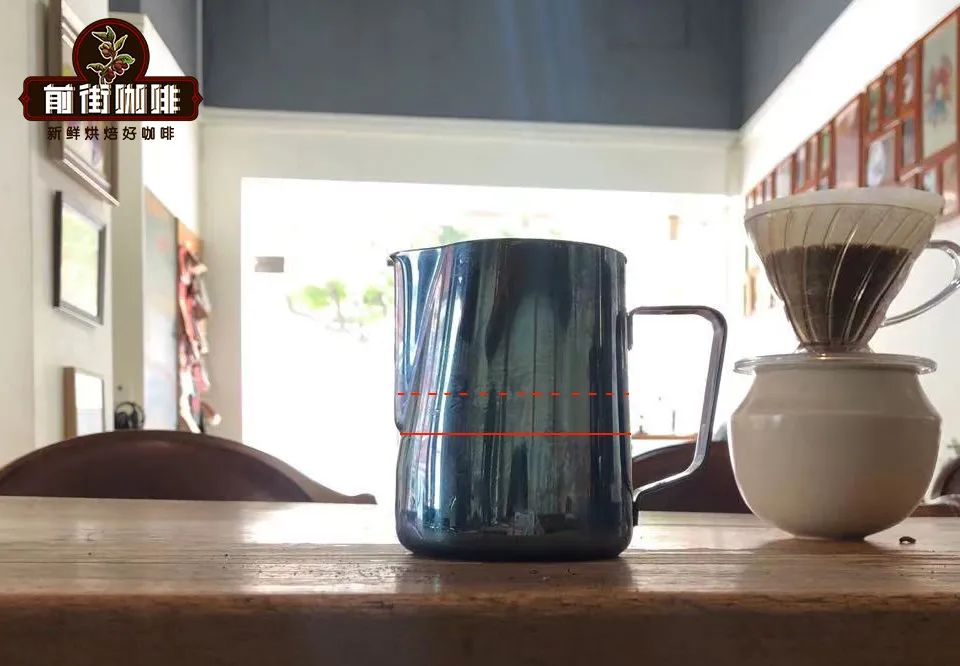
(The solid line shows the milk level; the dashed line shows the volume after frothing.)
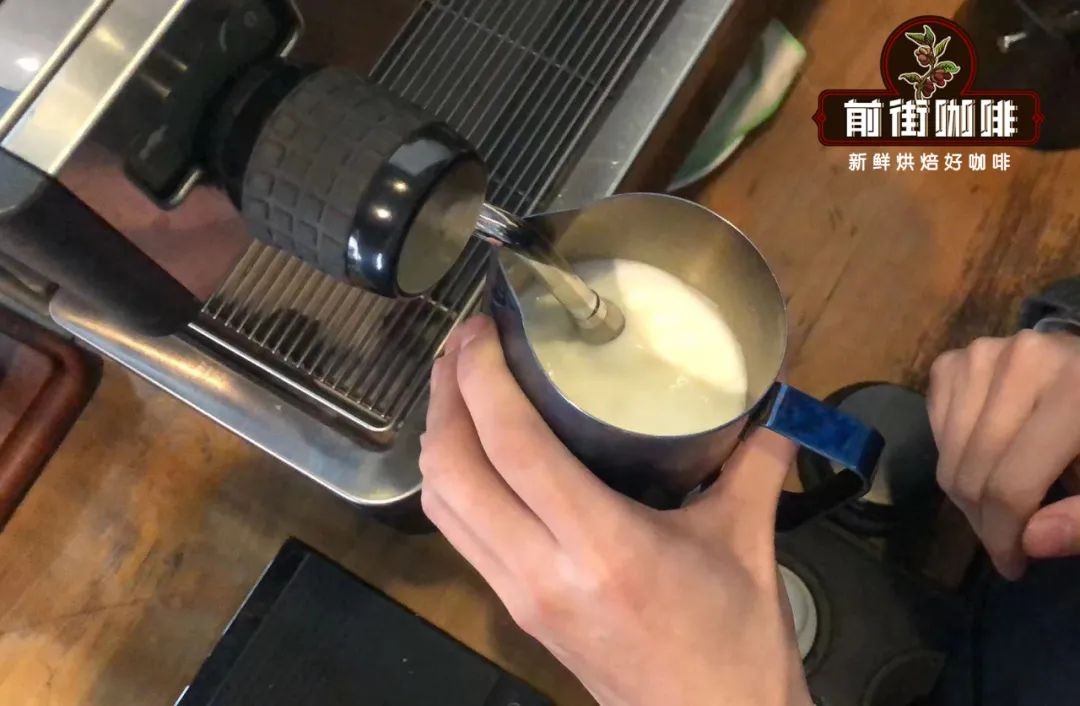
2. Frothing position. Before you start, open the steam wand briefly to release condensed water, then close it. Position the wand at a 45-degree angle, using the pitcher's spout to steady it. This time we will create a counterclockwise steam vortex, with the wand on the right side of the liquid surface center cross, partly submerged.

3. Frothing stage. Turn on the steam switch and you will hear a hissing sound; this is the frothing stage. The time varies with the foam thickness you want, since a longer froth gives thicker foam. Generally, frothing milk from 50% to 60% volume, which is the thickness for latte foam, takes about 3 seconds. The milk should rotate uniformly to form a vortex.
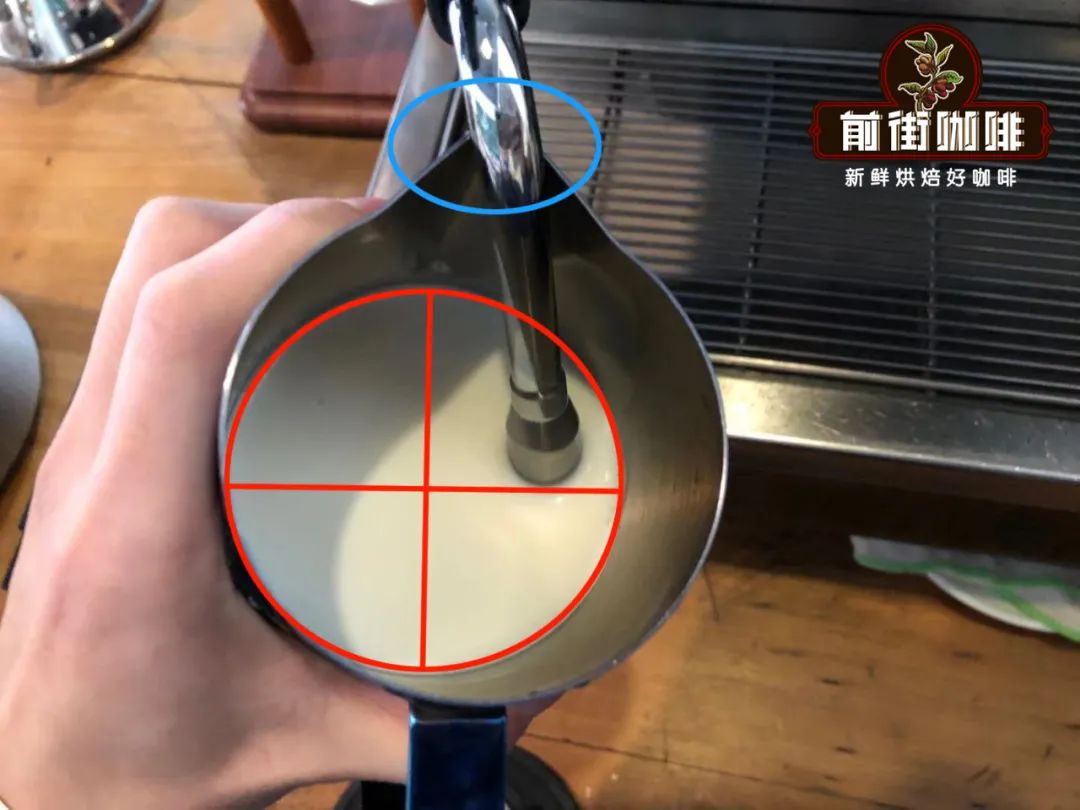
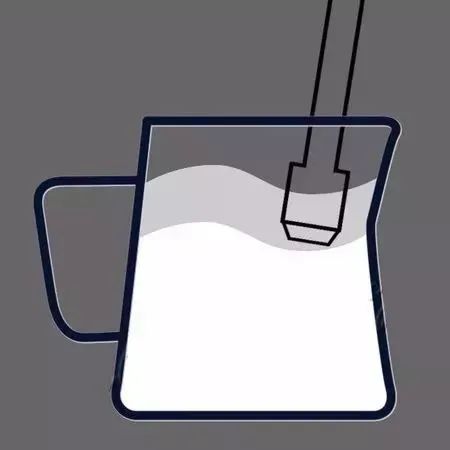
4. Texturing stage. Now you need to fully submerge the steam holes so the wand only heats, with no more frothing. Do not bury the holes at the very bottom; instead, place them in the foam layer, which helps with texturing by turning coarse foam finer. When should you stop? That depends on your milk temperature, which is generally kept between 55-65°C. Too high a temperature causes protein denaturation, and heat-induced protein denaturation in food becomes pronounced past 70°C.
Fine, dense milk foam, when you shake the pitcher, has a yogurt-like, set texture, with a delicate surface that reflects like a mirror; exceptionally smooth.
What's the Ideal Temperature for Milk Frothing?
To explore how temperature affects coffee, FrontStreet Coffee ran an experiment with milk temperature as the variable, tasting milk at different temperatures, lattes made with milk at different temperatures, and observing how milk temperature affects latte art.
| Milk Temperature | Milk Texture & Sweetness | Milk Fluidity | Latte Flavor |
|---|---|---|---|
| Group A: 4°C (unfrothed) | Smooth, medium sweetness | ||
| Group B: 39°C | Smooth, medium sweetness | Relatively high | Slightly thin foam, noticeable milk sweetness |
| Group C: 52°C | Silky smooth, medium-high sweetness | High | Moderate foam thickness, high sweetness perception, overall pleasant |
| Group D: 71°C | Dense, low sweetness | Low | Slightly thick foam, overall temperature too high, uncomfortable to drink |
The results make it clear that the milk temperature in Group C is the most suitable: high sweetness, dense foam, and not so hot that it burns the mouth or feels uncomfortable to drink.

But why do we get these results? We need to understand what milk contains.
Fat
Fat affects milk's richness, quality and foam persistence. The higher the fat content, the richer the milk and the longer the foam lasts. Fat also works the other way: less fat lets proteins better embrace the air introduced during frothing, creating more foam.
Sugar
The sugar in milk is lactose, the source of the sweetness we can taste directly, even without adding any extra sugar. As temperature rises, though, that sweetness becomes harder to detect. This is the same idea behind the familiar warning that you cannot enjoy food while rushing; when food is very hot, our senses struggle to taste it properly.
Protein
When you froth milk, rising temperature gradually unwinds proteins from their tangled state into a form that is hydrophilic at one end and hydrophobic at the other. As we inject steam, the hydrophobic ends avoid the water in the milk and embed themselves in air bubbles, so the bubble surface forms a barrier of hydrophilic ends. This is what we call a surfactant.
The quality of the protein surfactants determines the quality of the foam. However, once the temperature exceeds 70°C, proteins denature or break down, which bursts the bubbles held together by those proteins and spoils the foam.
From all of the above, we can conclude that the recommended milk frothing temperature is between 55°C and 65°C. Proper heating helps us create dense foam and more noticeable sweetness. At the same time, we must be careful not to let the temperature climb too high; once proteins are heated above 70°C they denature or break down, causing the foam to collapse, and an over-hot drink is simply unpleasant to drink.
FrontStreet Coffee Recommendation
Latte art lives or dies by the quality of the crema and the milk, and the bean you choose matters just as much as your technique. For anyone learning at home, FrontStreet Coffee Classic Blend is the natural starting point. It is a medium-dark espresso recipe built from three origins, inspired by the old "Mamba" style of Mandheling and Brazil, with a small amount of Robusta added for aroma and body. It extracts with clear butter, toasted bread and caramel notes, a strong flavor and a solid mouthfeel, and the fine crema is stable and consistent.
If you prefer a nuttier, richer profile, choose FrontStreet Coffee Premium Blend. This medium-dark espresso combines washed Colombian coffee with semi-washed Brazilian coffee, so it shows nut, dark chocolate and caramel flavors. Whether you make an Americano, a latte or a flat white, it brings out creamy, almond and cocoa aromas, with crema that matches a cafe and more than enough richness for practice.
For those planning to open a shop, FrontStreet Coffee Commercial Blend is designed with you in mind. It starts from FrontStreet Coffee's Premium Blend and adds a little Robusta, a traditional Italian approach, to build more fine dark-brown crema and a heavier body. It carries nut, cocoa and caramel into Americanos, lattes and mochas alike, and makes pouring patterns noticeably easier.
Important Notice :
FrontStreet Coffee is a long-established specialty coffee roaster in Guangzhou China, selling freshly roasted beans from its own farm in Yunnan as well as dozens of carefully selected single-origin beans from around the world for both pour-over and espresso. The products deliver consistently excellent quality and great value, with shipping within 24 hours. Guangzhou's FrontStreet Coffee shop is recommended by many coffee lovers, and the beans are now available online at the Tmall 。
FrontStreet Coffee has moved to a new address:
FrontStreet Coffee Address: 315,Donghua East Road,GuangZhou
Tel:020 38364473
 Scan and follow the En Gafei WeChat official account. Please indicate that the reprint comes from "En Gafei".