What Coffee Beans Are Suitable for Moka Pots to Produce Crema? Moka Pot Usage Guide and Coffee Grind Size
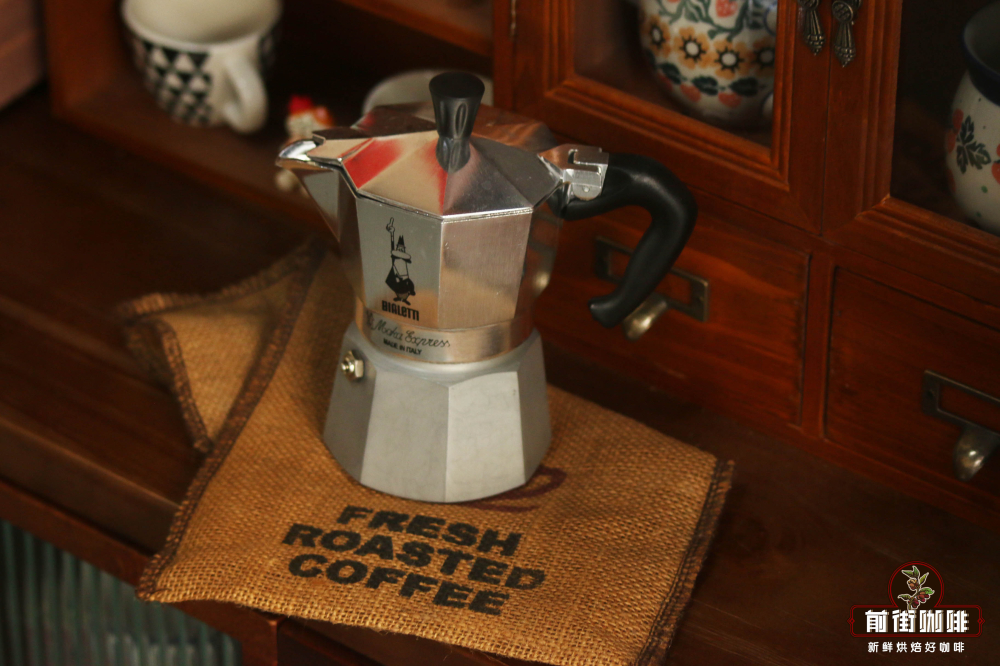
Today FrontStreet Coffee will share how to use this brewing device that has become popular across Europe, teaching everyone how to brew a satisfying cup with a Moka pot.
A Moka pot is a tool for extracting espresso, commonly used in European and Latin American countries and known in the United States as an "Italian drip pot."
The Moka pot was invented in 1933 by the Italian Alfonso Bialetti. It brews coffee using heat at the base, belongs to the percolation category, and is the most economical machine for making Italian coffee. It is widely used in Italian households. Alfonso Bialetti was an inventor and designer who, after completing his studies in France, entered Italy's then-flourishing aluminum industry.
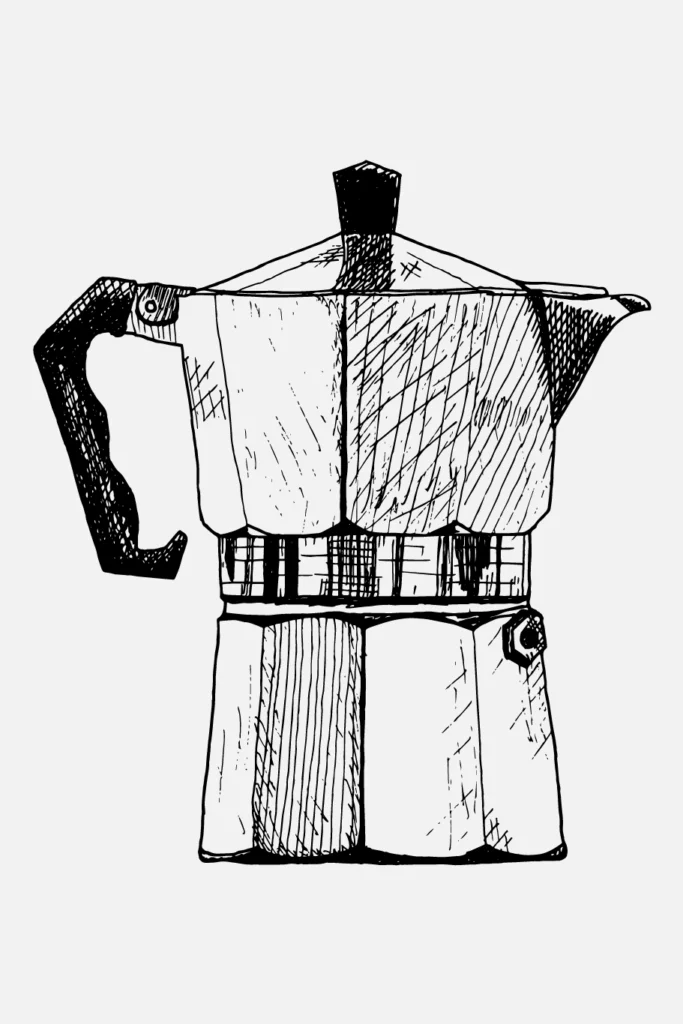 In 1918, Alfonso founded his own factory and established the Bialetti Company, selling aluminum-related metal products, including household cleaning utensils and other tools. Then one day, watching the washing machines of the era at work, he was inspired—and the coffee brewing device was born.
Moka Pot Extraction Principle
The Moka pot is a common brewing device in European households. In 1933, Alfonso Bialetti invented it and it became popular in Italy. Today it is a must-have in every Italian household, and Bialetti Moka pots hold half of the Moka pot market.
FrontStreet Coffee has learned that many people want to make espresso-like concentrated coffee at home, but not everyone has the budget or the space for an espresso machine. As the most economical choice, nothing beats the Moka pot.
To brew a delicious cup of Moka coffee, you first need to understand the structure and working principle of the Moka pot.
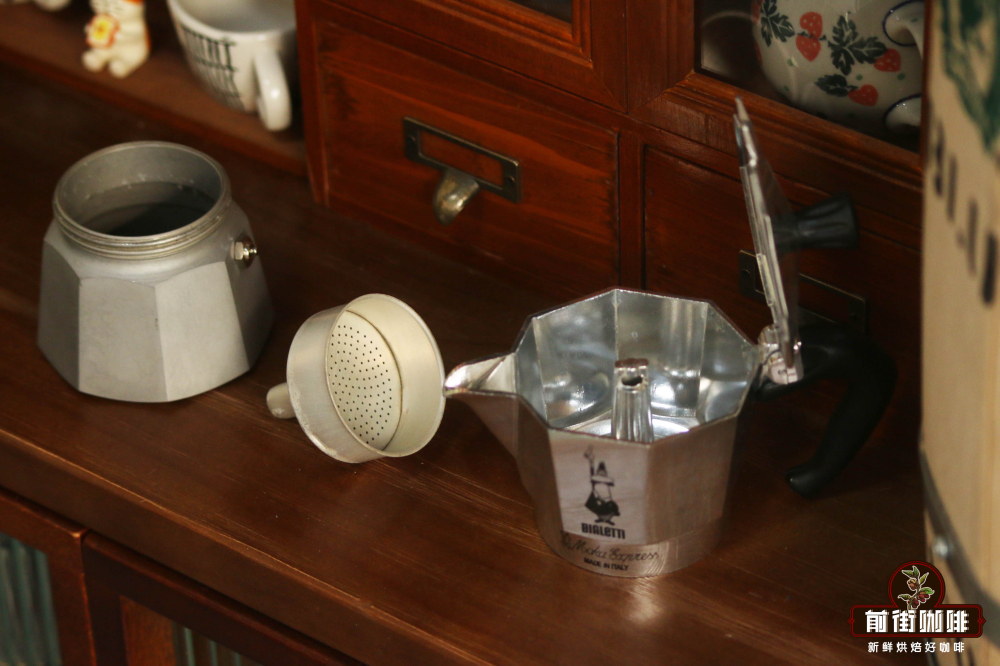 The Moka pot consists of three parts: the upper chamber, the coffee basket, and the lower chamber. The lower chamber is the water reservoir, the coffee basket holds the ground coffee, and the upper chamber collects the extracted coffee. The principle is quite simple: it uses the steam pressure generated in the lower chamber. When the steam pressure becomes strong enough to penetrate the coffee grounds, it pushes hot water up to the upper chamber, brewing rich, aromatic coffee.
What Coffee Beans Are Suitable for a Moka Pot?
Since coffee brewed in a Moka pot tends to be rich and bold in texture, dark-roasted beans can better showcase that mellow richness. Additionally, the crema we usually refer to in espresso is actually composed of countless small carbon dioxide bubbles, and dark-roasted beans contain more carbon dioxide. When you brew dark-roasted beans with a pour-over method, you can watch the grounds degas very actively during the bloom stage.
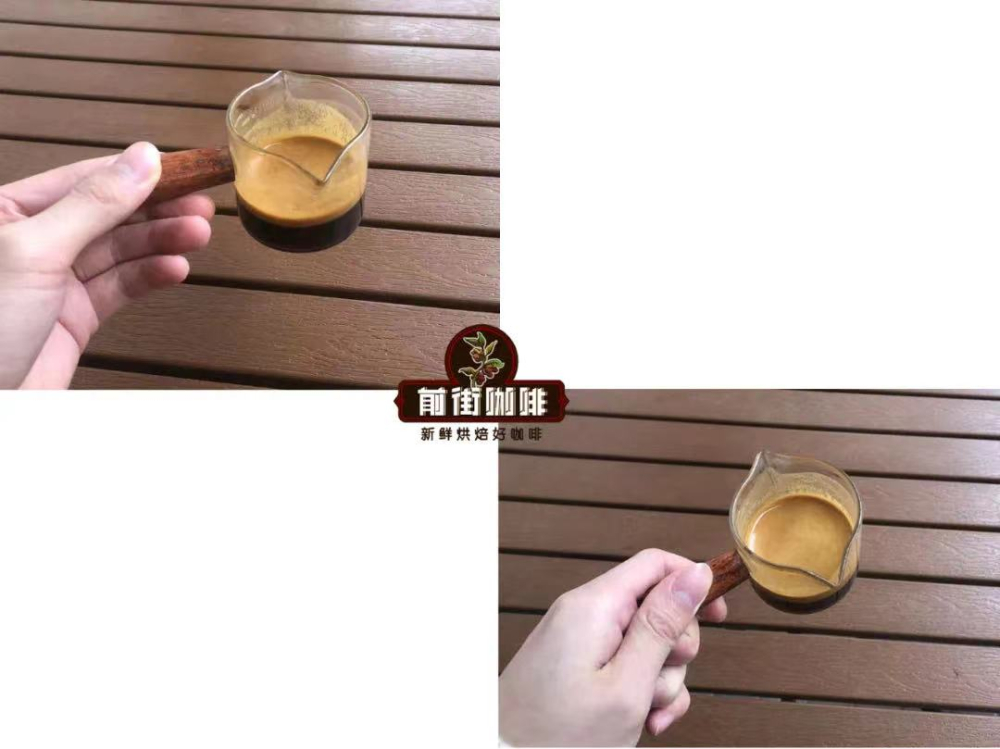 Most people expect Moka pot coffee to be rich, mellow, and full of crema. Moka pots are therefore suited to darker-roasted beans. FrontStreet Coffee's bean menu offers several dark-roasted coffees, such as FrontStreet Coffee Brazil Queen Estate, FrontStreet Coffee Indonesia PWN Gold Mandheling, and FrontStreet Coffee Jamaica Blue Mountain.
If you want rich nutty notes, FrontStreet Coffee Brazil Queen Estate Natural Yellow Bourbon is an excellent choice. Because of its thicker mucilage layer, Yellow Bourbon has more pronounced sweetness. In natural processing the whole fruit skin and pulp are preserved, allowing more sugars to penetrate into the green beans. This FrontStreet Coffee Brazil Queen Estate bean is sweet, delicious, and heavy in texture.
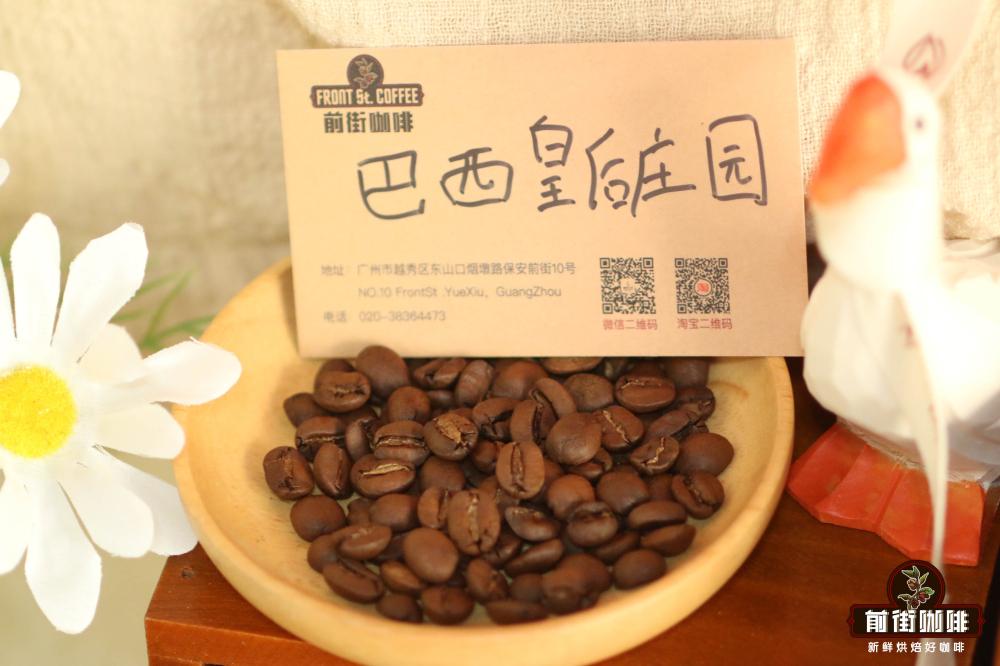 FrontStreet Coffee Brazil Queen Estate Coffee Beans
Region: Brazil, Mogiana Region
Estate: Queen Estate
Altitude: 1400-1950m
Variety: Yellow Bourbon
Processing: Natural
Flavor Notes: Nuts, Cream, Cane Sugar, Fermented Fruits
FrontStreet Coffee's Steps for Making Espresso with a Moka Pot:
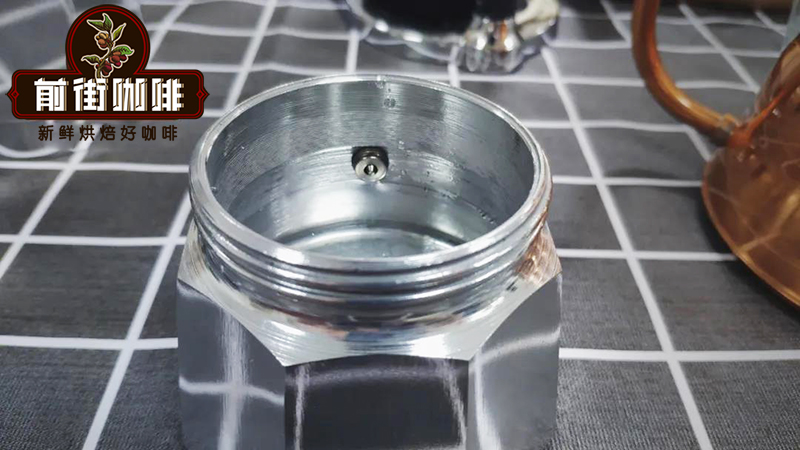
1/ Pour pure water into the lower chamber of the Moka pot, with the water level about 0.5cm below the pressure relief valve.
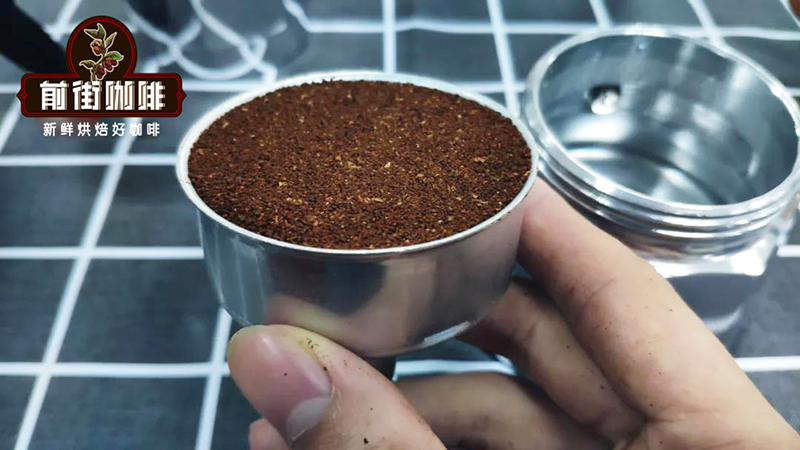
2/ Choose a grind slightly coarser than espresso. You can reference the size of the filter basket gaps to make sure coffee particles won't fall into the lower chamber. Slowly pour the grounds into the basket, gently tap to distribute them evenly, and when the coffee forms a small mound, use distribution techniques to level the surface.
Filling the basket completely helps avoid extracting undesirable flawed flavors. When the density of grounds in the basket is more uniform, it prevents some coffee from being over-extracted while other parts are under-extracted, which would lead to uneven flavors or bitterness.
3/ Place the basket into the lower chamber, screw the upper and lower parts together, and set the pot on an electric ceramic stove over high heat.
4/ When the Moka pot heats to a certain temperature and you hear a distinct whistling sound, turn the electric ceramic stove to low heat and open the upper chamber lid.
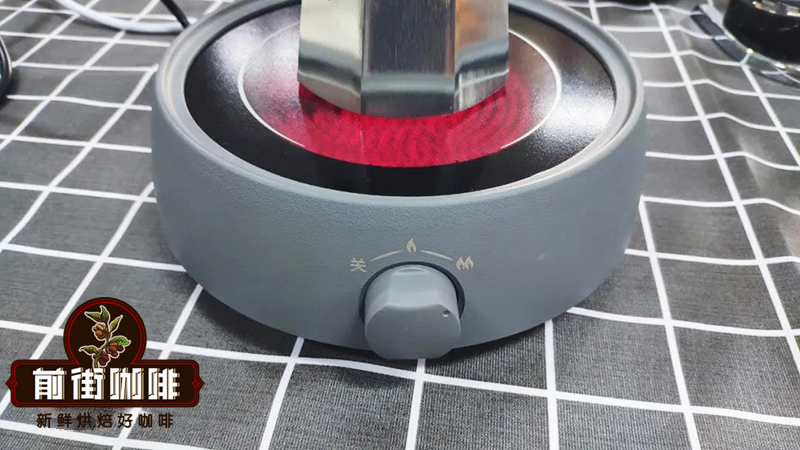
5/ When the coffee liquid in the upper chamber reaches about halfway, turn off the electric ceramic stove. The residual heat and pressure will "push" the remaining coffee into the upper chamber.
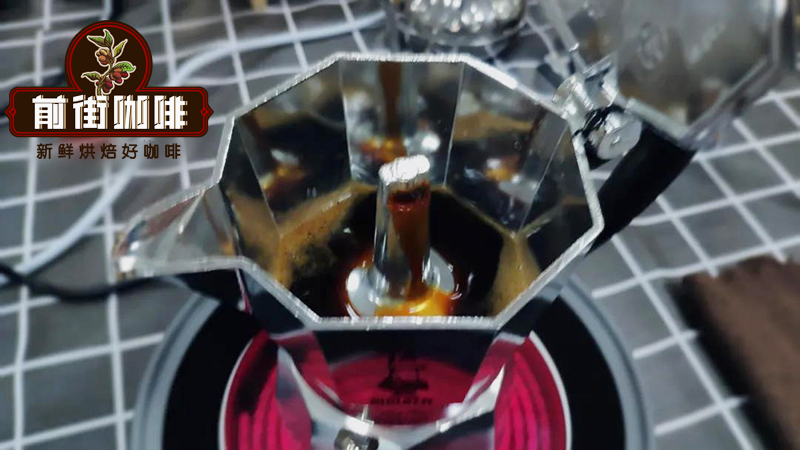
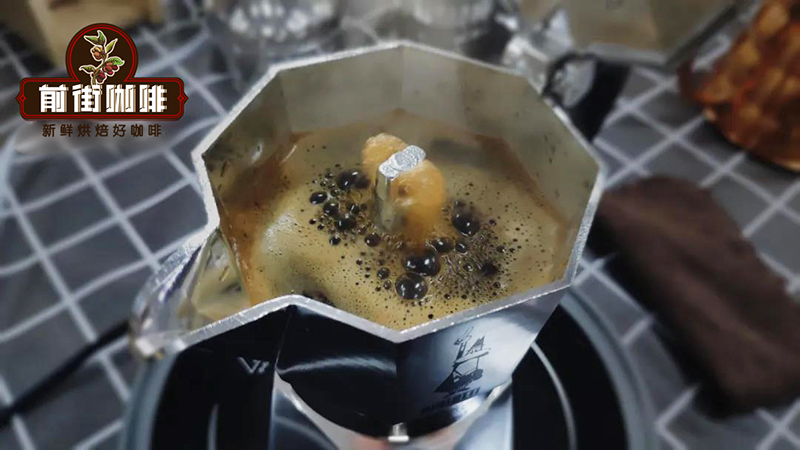
6/ When all the coffee has been extracted into the upper chamber, pour it into a cup and enjoy. Moka pot coffee is very rich and can even extract crema. You can also mix it with an appropriate amount of water or milk for an even better flavor.
FrontStreet Coffee's Precautions for Using a Moka Pot
When filling the lower chamber, take special care that the water level does not exceed the pressure relief valve position.
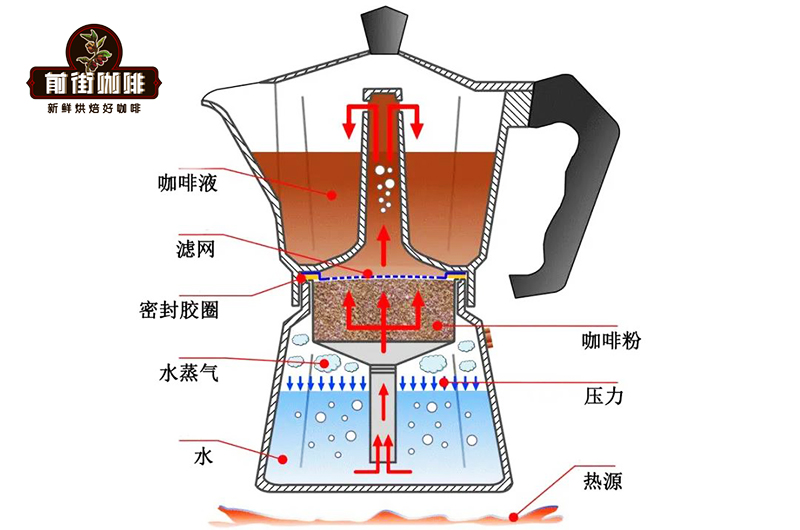
Also, because the Moka pot uses heat to generate steam in the lower chamber and push hot water upward, pressure is involved. When brewing with a Moka pot, pay attention to controlling both heat and grind size.
The finer the grind, the richer the coffee flavor, which raises a question: what is the appropriate grind size for a Moka pot?
If you have the chance, compare the portafilter of an espresso machine with the filter basket of a Moka pot. You'll notice the Moka pot basket has larger gaps. To prevent grounds from falling through into the lower chamber, the grind for a Moka pot needs to be coarser than for an espresso machine, roughly between 0.3mm and 0.55mm.
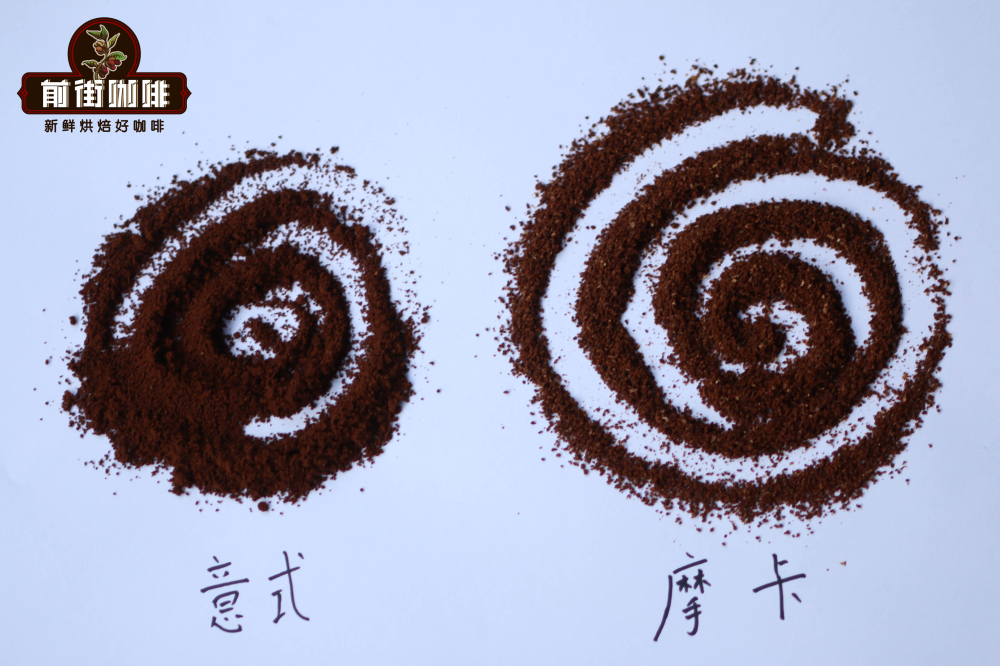 Of course, it is extremely difficult for the human eye to measure such minute differences directly. The simplest method is to use a particle-size ruler or Moka-specific pre-ground coffee for comparison. Beyond that, you can also adjust through hands-on experience. By watching the coffee emerge from the upper chamber, you can judge the grind: if it is too coarse, the coffee will gush out like a fountain; if it is too fine, you might hear the whistling sound of boiling water but see no coffee emerge. In that case, FrontStreet Coffee suggests immediately turning off the heat and taking proper safety precautions.
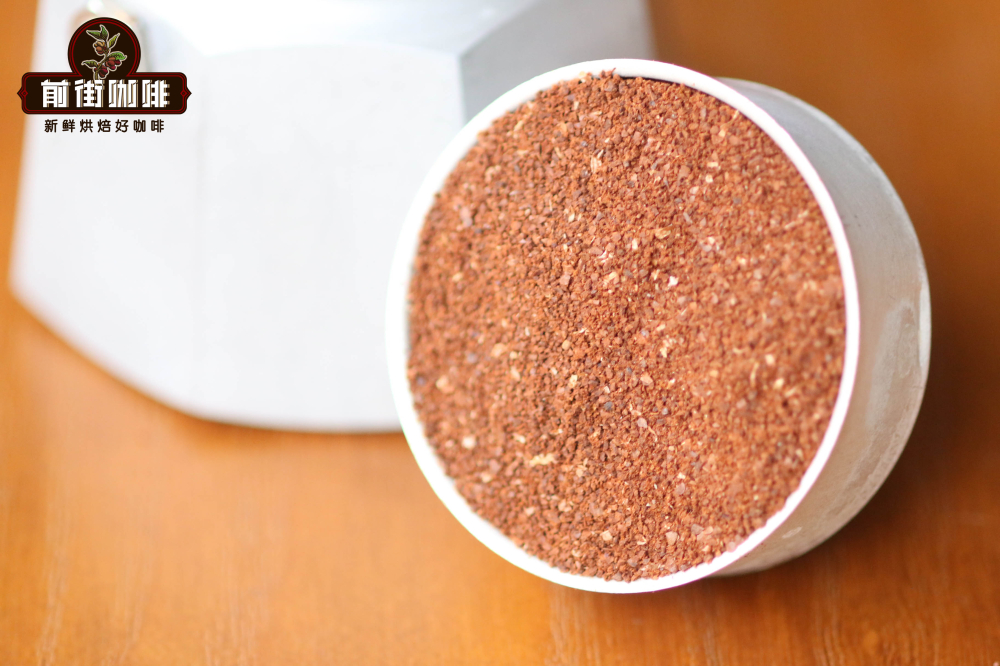
Coffee extracted with a Moka pot has a bold flavor, balanced acidity and bitterness, and a crema layer, making it the brewing device closest to espresso. It is easy to use and has become a symbol of home espresso making. If you have a milk frother at home, you can even try some latte art.
FrontStreet Coffee Recommendation
For a Moka pot, FrontStreet Coffee generally suggests starting with a blend. The Classic Blend is designed specifically for espresso and the Moka pot, and its greatest strength is outstanding crema—even a beginner with a non-professional home machine can pull dense, fine crema with it. Lattes, cappuccinos, and Dirty all depend on good crema, and this blend nails it, using the traditional Mamba recipe for a mellow, warm body that both veterans and beginners accept easily. FrontStreet Coffee's Black Cocoa Blend is 100% Arabica: for anyone who wants good body and a fair price rather than maximum crema, it offers plenty of crema and a full body at a friendly cost. The Chestnut Blend pairs Honduran Caturra with Papua New Guinea Typica in a balanced 100% Arabica recipe, with roasted-chestnut nuttiness and caramel-brown-sugar sweetness, soft chocolate and rounded acidity in the middle, and a clean, lingering finish of nuts, cocoa, and faint spice. If you prefer a single origin, FrontStreet's PWN Indonesia Gold Mandheling is deep-roasted with very low acidity, a thick, lingering body, herbal and dark-chocolate aromas, and a faint earthy note—ideal for anyone who likes bold, low-acid coffee. FrontStreet's Brazil Queen Estate is low in acidity and beautifully balanced, with intense nut and cocoa aroma, clear caramel sweetness, and a smooth, never-astringent body that also works for pour-over or espresso. And FrontStreet's Papua New Guinea Bird of Paradise—often called "Little Blue Mountain" for its resemblance to Jamaica Blue Mountain—uses the same Typica variety as Blue Mountain, grown at 1,600-1,800 m in volcanic soil, reaching AA grade with plump beans and very few defects, triple-washed for a clean, sweet cup. Whatever you choose, a grind between 0.3mm and 0.55mm, water filled to just below the valve, and prompt removal from the heat will give you the best result.
Important Notice :
FrontStreet Coffee is a long-established specialty coffee roaster in Guangzhou China, selling freshly roasted beans from its own farm in Yunnan as well as dozens of carefully selected single-origin beans from around the world for both pour-over and espresso. The products deliver consistently excellent quality and great value, with shipping within 24 hours. Guangzhou's FrontStreet Coffee shop is recommended by many coffee lovers, and the beans are now available online at the Tmall 。
FrontStreet Coffee has moved to a new address:
FrontStreet Coffee Address: 315,Donghua East Road,GuangZhou
Tel:020 38364473
 Scan and follow the En Gafei WeChat official account. Please indicate that the reprint comes from "En Gafei".