What is Mocha Coffee? What Does the Most Authentic Mocha Coffee Taste Like?

The Difference Between Pour-Over Mocha and Espresso Mocha - Flavor and Characteristics
You have probably heard of mocha coffee, but most people assume it is simply coffee plus milk plus chocolate. The most authentic mocha is something quite different.
What Is Mocha Coffee?
"Mocha" carries several meanings. Around 600 AD, coffee beans from Ethiopia began the world's coffee trade in Yemen. Because Yemen's most important early export port was Mocha - long since silted up - coffee produced in Yemen came to be called "Mocha" beans; over time some people used "Mocha" as a nickname for coffee itself, much as "Java" is used today.

Later, because mocha coffee's aftertaste resembles chocolate, beans with that characteristic also came to be called mocha beans - Yemen Mocha, Harar Mocha, Tanzania Mocha, and so on. So although they all say "Mocha," the meanings are quite different. Summarized:
Mocha Beans: Today refers to coffee beans with a chocolate-like aftertaste.
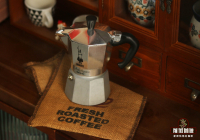
Mocha Pot: Invented and popularized by the Italian company Bialetti. Using "Mocha" as a trademark was fairly casual and has little to do with mocha beans.

Mocha Coffee: Originally meant black coffee with a chocolate-like aftertaste; it now extends to a mixed drink of hot chocolate and coffee.
How Yemen Coffee Is Named
There is still no universal standard for naming Yemen coffee, nor an official grading system. Local residents have their own classification, with hundreds of coffee codes and names for internal use, but these do not apply to the commercial export market. In the commercial market, Yemen Mocha generally uses one of two approaches: naming by place of origin or naming by variety.
Yemen Mocha Mattari and Yemen Mocha San'ani use the place of origin - Bani Matar province and the hillside areas near the capital San'a respectively. Yemen Mocha Ismaili uses the variety name, and its production area is in Hirazi, southwest of Bani Matar.
FrontStreet Coffee's Roasting Recommendation
A coffee expert once said: "Yemen Mocha has too diverse a flavor. Not only do different origins, varieties, and batches differ - every bag, even every cup, tastes different." Because it is so complex and variable, roasting Yemen Mocha to bring out its best is a real challenge for any roaster.
Lightly roasted, Yemen Mocha beans have brighter fruit acidity with fruit sweetness, spice, and chocolate; at medium roast they show red berry, vanilla, cream, caramel, and chocolate; roasted dark, they take on distinct chocolate, nut, and spice notes. We chose medium. Yemen Mocha is a green bean with relatively low moisture content, and given how uneven the beans are in size, the drop temperature for low-moisture beans should not be too high. Early dehydration should also be accelerated to preserve moisture for first crack to develop flavor and texture. Preheat for 30 seconds, open the air damper to 3; once the green beans turn light green or white, open it to 4, and after first crack open it to 5, the maximum.
Caramelization produces the ideal roast level for nut, chocolate, and caramel flavors, and it also tempers mocha's tricky acidity to some degree. Note, though, that mocha carries a full chocolate flavor, and over-roasting easily turns it rubbery.
Roasting Profile:
Preheat the roaster to 170°C and drop the beans in with the air damper at 3. After 1 minute, adjust the heat to 140°C, damper unchanged. Roast until 5'00'', when the temperature reaches 147.2°C, the bean surface turns yellow, the grassy smell disappears completely, and dehydration is complete. Adjust the heat to 110°C and the damper to 4.
At 8:00 minutes, ugly wrinkles and black spots appear on the bean surface and the toast smell clearly turns to coffee aroma, which can be called the prelude to first crack. Listen carefully for it. At 8'23'' first crack begins; reduce the heat to 60°C and open the damper fully - adjust the heat very carefully, not so low that the cracking stops - and drop at 197.9°C.
Brewing Parameters:
Filter: V60
Water Temperature: 92-93°C
Dose: 15g
Ratio: 1:15
Grind Size: Fine sugar size (sieve through #20 sieve to 78%)

First, pour 30g of water for a 30-second bloom, then pour 95g (the scale will read around 125g), finishing in about 1 minute. When the water level drops to two-thirds of the bed, pour the remaining 100g (the scale will read around 225g), finishing in about 1 minute 35 seconds. Complete extraction at 2'10'', remove the filter cup, and finish brewing.
FrontStreet Coffee Recommendation
Yemen Mocha is the ancestor of the modern coffee trade, and its lineage runs back to Ethiopia - which is why Ethiopian beans are the most natural place to look next. FrontStreet Coffee's washed Yirgacheffe is the classic introduction: white jasmine on the nose, bright citrus and lemon acidity, and a clean, tea-like body. It is lighter and more floral than a Mocha, but it shares the same clarity.
For the fruit and body that a natural process brings, FrontStreet Coffee's Yirgacheffe Natural Red Cherry is a good step. Only fully ripe, all-red cherries are used, dried in the sun for about two weeks, then passed through density and color sorting and a final hand-pick so the lot is remarkably clean. The cup shows peach, cocoa, honey, and lemon - not far from Mocha's chocolatey register.
And for the deeper, more savory end of that family, FrontStreet Coffee's Huakui is a natural from Hambella in Guji, Sidamo. The 200-hectare farm dries its cherries on raised beds for 21 days, turning them constantly and removing defective or moldy cherries every three to five days. Roasted medium-light, it opens with a faint fermented wine note, florals, and citrus, then mango, with honeyed sweetness, cocoa, a touch of spice, a thick body, and a long finish. Brew any of these the way this Mocha recipe suggests - a V60, 15g of coffee, a 1:15 ratio, water in the low 90s, and a grind in the fine-sugar range - and the comparison is easy to taste.
Important Notice :
FrontStreet Coffee is a long-established specialty coffee roaster in Guangzhou China, selling freshly roasted beans from its own farm in Yunnan as well as dozens of carefully selected single-origin beans from around the world for both pour-over and espresso. The products deliver consistently excellent quality and great value, with shipping within 24 hours. Guangzhou's FrontStreet Coffee shop is recommended by many coffee lovers, and the beans are now available online at the Tmall 。
FrontStreet Coffee has moved to a new address:
FrontStreet Coffee Address: 315,Donghua East Road,GuangZhou
Tel:020 38364473
 Scan and follow the En Gafei WeChat official account. Please indicate that the reprint comes from "En Gafei".