Kono Dripper Pour-Over Method Comparison: Honkaku Style VS Kanazawa Style - KONO Drip and Stir Brewing Techniques
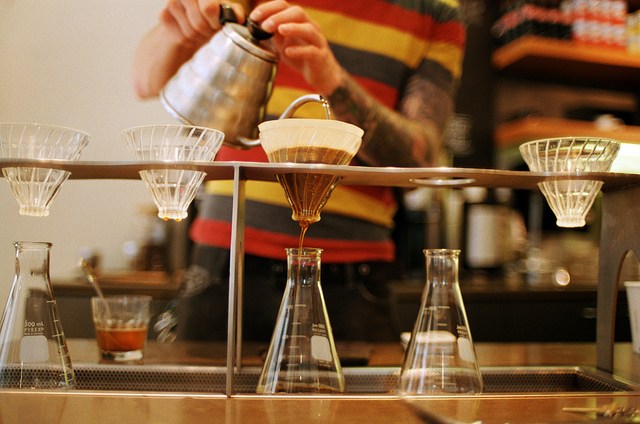
Pour-Over Coffee Dripper Knowledge: Flow Rate and the Three Key Variables
Water column height, flow rate, and agitation are the three critical variables in pour-over coffee. Part of what makes pour-over so fascinating is that there has never been a single standard procedure—any variable can move the cup's flavor. This guide walks through several less common approaches: the KONO school's drip method, the stirring method, and automated pour-over machines.
Two Major KONO School Pour-Over Methods: Honkaku Style vs. Kanazawa Style
Unlike the usual continuous circular pour, the KONO dripper has its own distinctive technique—so distinctive that filter-paper brewing can achieve the clean, full-bodied texture usually associated with cloth (flannel) brewing. And KONO technique is not limited to one approach. Below are its two classic representatives.
Honkaku School: The Drip Technique Demands Practice
The Honkaku school drips water drop by drop onto the grounds, holding a central point and avoiding excessive agitation. It demands very steady flow control and pairs best with a narrow-spout kettle.
Once the bed is saturated and coffee begins dripping from the bottom, you can switch to a thin stream through the middle and later stages, letting the released aromatics blend into the coffee liquor. Finally, just before removing the dripper, raise the water column and pour a larger volume to stir up the grounds at the bottom, lifting foam and trapped fines to the surface so they do not turn the cup bitter.
One more note: because the staged pours produce differing volumes and concentrations, give the finished coffee a stir to even it out before serving.
So what does drip-method coffee taste like? FrontStreet Coffee brewed a Golden Mandheling this way and shared the results:
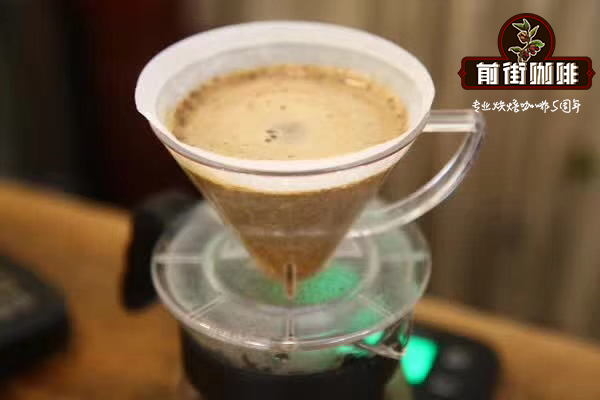
Dripper: KONO; Water temperature: 88°C; Coffee-to-water ratio: 1:14; Grind size: medium; Coffee dose: 20g
Technique: begin with drop-by-drop water, using about 40g to wet the bed. Once the grounds are saturated, switch to a thin stream, spiraling around a central area about the size of a coin. When the water level rises to roughly the height of the coffee layer, raise the column and increase the flow to fully saturate the grounds (about 300g total at this point), then remove the dripper and stir well.
Flavor: gentle fruit acidity, herbs, licorice, chocolate, caramel, cream, and a touch of smokiness
Kanazawa Style: "Dragonfly Touching Water," Front-Loaded Extraction
The Kanazawa style originates with Masayuki Kanazawa. After the bloom, this method uses intermittent, drop-by-drop pours—like a dragonfly touching water—to extract a highly concentrated liquor. It calls for a crane-neck kettle to control the volume. The principle: use slow pouring to draw out the best flavors early, in effect replacing the later stage of the brew, which is where impurities and bitterness most easily appear.
Masayuki Kanazawa is a renowned Japanese coffee master who served as a consultant for Japan's KONO Company and wrote "KONO-style Kanazawa Coffee: The Promise of Delicious Coffee," a book on KONO dripper technique; only a Japanese edition is currently available.
Can Stirring Replace Blooming? The Stirring Method
The stirring method replaces blooming with agitation to raise extraction efficiency. It was popularized by the influential Australian barista Matt Perger, winner of the 2012 World Brewers Cup (WBrC) and runner-up at the 2013 World Barista Championship (WBC), among many other awards.
The process: pour 50g of hot water, stir, rest about 30 seconds, then continue with a large, steady stream. On light-roasted beans this method can boost sweetness while making the acidity more vibrant. Interestingly, Perger notes in his videos that he pours counterclockwise—but, he jokes, if you are in the Northern Hemisphere you should pour clockwise.
Machines Replace Hands: Automatic Pour-Over Machines
Taiwan has produced its own entry in this space. Barista Lin Zhide spent three years developing "OTFES," an automatic pour-over machine that controls flow rate, water temperature, and time. Huang Xiuling, director of Swing Black Coffee, sums up the philosophy: "Let machines do things for people, while people do more important things." More to the point, pour-over machines should highlight human value—letting more people enjoy specialty coffee at affordable prices.
Conclusion
Having seen these special techniques, are you tempted to try one?
Whether it is the KONO school, the stirring method, or the new wave of automatic machines, none escapes the essence of pour-over: the human factor. Advanced techniques exist to give coffee a distinctive personal signature. Even a machine needs someone behind it with a brewing philosophy, thinking about how to present the cup in front of them as well as it can be presented.
FrontStreet Coffee Recommendation
Technique aside, no method rescues a poorly chosen bean. If you want to reproduce that clean, full-bodied, flannel-like texture the KONO drip method is famous for, start with a bean built for it: FrontStreet's PWN Golden Mandheling is the classic partner—after rigorous screening (beans 18 mesh and above, fewer than 3 defects per 300g sample, three rounds of hand sorting), it delivers a clean, smooth cup with clear woody aroma and caramel sweetness. For a richer, wilder expression, FrontStreet's Lintong Mandheling brings herbal, spice, and mint-like notes over a thick, low-acid body. Both are roasted medium-dark at FrontStreet Coffee to present black chocolate and caramel flavors while keeping Mandheling's untamed herbal character intact.
Important Notice :
FrontStreet Coffee is a long-established specialty coffee roaster in Guangzhou China, selling freshly roasted beans from its own farm in Yunnan as well as dozens of carefully selected single-origin beans from around the world for both pour-over and espresso. The products deliver consistently excellent quality and great value, with shipping within 24 hours. Guangzhou's FrontStreet Coffee shop is recommended by many coffee lovers, and the beans are now available online at the Tmall 。
FrontStreet Coffee has moved to a new address:
FrontStreet Coffee Address: 315,Donghua East Road,GuangZhou
Tel:020 38364473
 Scan and follow the En Gafei WeChat official account. Please indicate that the reprint comes from "En Gafei".