Ethiopia Limu Region Washed G1 Coffee Flavor: How to Enjoy Washed Limu Coffee Beans
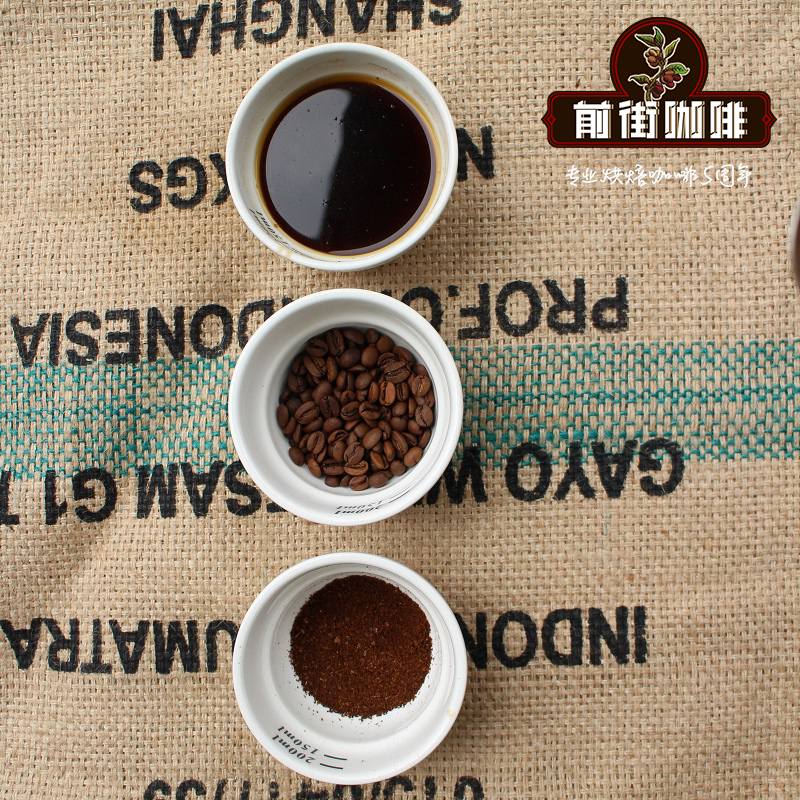
Where does coffee come from — or rather, where is coffee's birthplace? It is one of those questions that marks the start of a coffee journey. Coffee originates in Ethiopia, in Africa. Yes, the very continent some picture as poor and barren is where coffee began.
Introduction to Ethiopian Coffee Regions
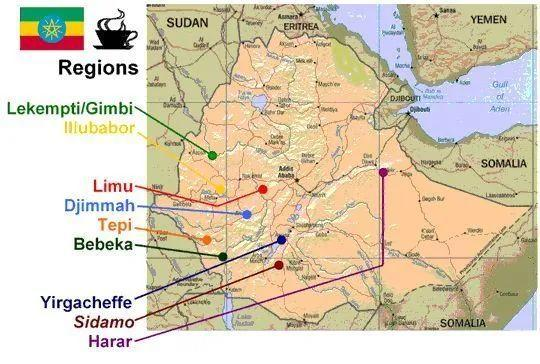
Ethiopian coffee comes primarily from eight major regions: Ekempti, Limu, Illubabor, Djimma, Harrar, Teppi/Bebeka, Sidamo and Yirgacheffe. Ethiopian coffee is held in high regard, with particular interest and passion for the three famous regions of Harrar, Sidamo and Yirgacheffe.
The Sidamo Region
Sidamo province lies in southern Ethiopia, with Arsi province to the north, extending east to connect with Bale province and bordered to the west by the Gamu Gofa provincial administrative region. The Sidamo administrative region oversees two extremely famous producing areas: Yirgacheffe and Kochere. Its economy is primarily agricultural, with coffee areas clustered around the Great Rift Valley.
The Limu Region
Limu mainly produces washed beans, with a profile a little milder than Sidamo's, often featuring sweet lemon and citrus. Though not as famous as Sidamo or Yirgacheffe, Limu produces many distinctive beans. Its producers are mainly local smallholders, though the region also has some large state-owned plantations. Local coffee grows at altitudes between 1400-2200m, primarily from local native varieties, with the harvest season running from November to January.
This batch of Limu washed G1 comes from within the Limu area, northwest of Djimma. It is produced by local smallholder farmers and was classified as the highest grade, G1, through EXC cupping evaluation, making it a green bean with excellent value. For drinkers who often enjoy Yirgacheffe and Sidamo, trying a Limu washed G1 adds variety to the conversation.
The variety grown is Ethiopia's native Heirloom. Local smallholders farm using 100% organic methods. The soil is Vertisol. The growing altitude ranges from 1850 to 1900 meters. Limu coffee's flavor features delicate floral notes, bright fruit acidity of apple, aloe and kumquat, and a multi-layered mouthfeel, with the middle to back end turning to fragrant lime, sandalwood and a sweet aftertaste with hints of cocoa.
Brief Introduction to the Limu Region
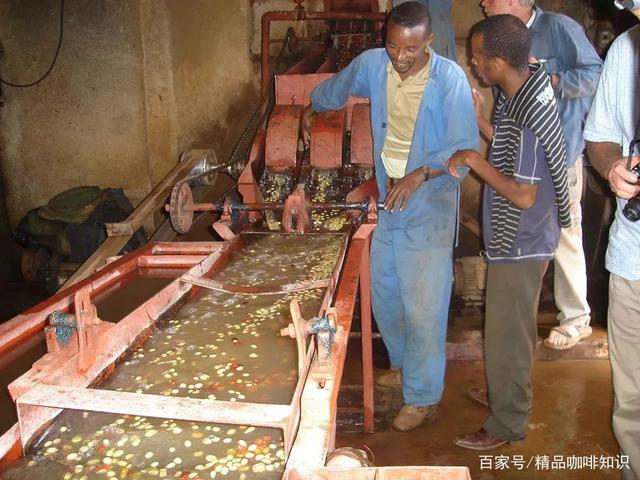
Limu is a small Ethiopian producing area in the country's southwest, with altitudes ranging from roughly 1200 to 1900 meters. It is mainly exported to European and American markets and was previously hard to buy domestically, though it is very popular in Europe and America, with fame second only to Yirgacheffe.
Limu uses three processing methods: natural, washed and semi-washed. Its flavor differs from Sidamo and Yirgacheffe, with noticeably lower viscosity and floral and citrus acidity weaker than Yirgacheffe's or Sidamo's. It does, however, feature a grassy fragrance, brown sugar aroma and sandalwood notes.
What Are Heirloom Varieties?
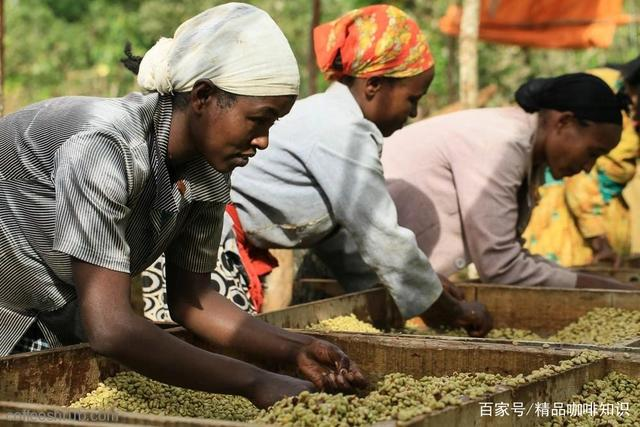
Getu Bekele, East African supply chain manager for America's Counter Culture Coffee, has worked to build an index of Ethiopian coffee varieties. He notes that in Ethiopia the term "heirloom" emerged after the specialty coffee movement began, when buyers who could not distinguish Typica from Bourbon collectively called these unknown varieties "heirloom."
Getu explains, however, that Ethiopian producers use different names to tell different coffee trees apart. They typically do not use globally recognized scientific names, instead using local terminology or borrowing characteristics of native trees to name specific varieties.
Medina Hussein, export department manager at coffee exporter DW Coffee and also an Ethiopian coffee supplier, notes that specialty buyers distinguish Ethiopian coffees by region, altitude and cupping score rather than by variety.
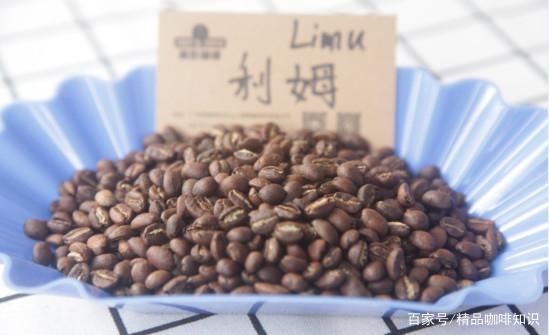
FrontStreet Coffee Ethiopia Limu G1 Washed Showcase
Product: Ethiopia Washed Limu G1
Flavor Description: Delicate floral notes, bright fruit acidity of apple, aloe and kumquat, a multi-layered mouthfeel, with the middle to back end turning to fragrant lime, sandalwood and a sweet aftertaste with hints of cocoa.
Country of Origin: Ethiopia
Region: Limu Region
Variety: Heirloom (local native varieties)
Producer: Local smallholder coffee farmers of the Limu region
Altitude: 1850-1900m
Grade: Washed G1
Harvest Period: November to January
Soil: Vertisol

FrontStreet Coffee Roasting Recommendations
Limu beans have medium density. FrontStreet Coffee's roaster believes medium roast best showcases Limu's character. The entry presents a fresh grass fragrance with apple's acidic aroma, and that acidity gives the coffee a fuller mouthfeel, with cocoa and berry in the aftertaste.
Using a fast-roasting mode, preheat the drum to 200°C before adding beans, with the air damper at 3. After 1 minute, reduce heat to 160°C, keeping the air damper unchanged. Roast to 5'10" at 150°C, when the bean surface turns yellow and the grassy aroma disappears completely, indicating dehydration is complete. Adjust heat to 130°C and open the air damper to 4. At 168°C — the Maillard reaction point — reduce heat to 100 to develop flavor. At 180°C, reduce heat again to 80, entering first crack with medium heat.
At 8 minutes, wrinkles and dark spots appear on the bean surface, and the toasted-bread aroma clearly shifts to coffee fragrance — the prelude to first crack. Listen carefully for the sound. First crack begins at 8'33", with the air damper fully open. Reduce heat to 50 at 189°C and roast to 194.6°C before dropping. Development time is 2'25".
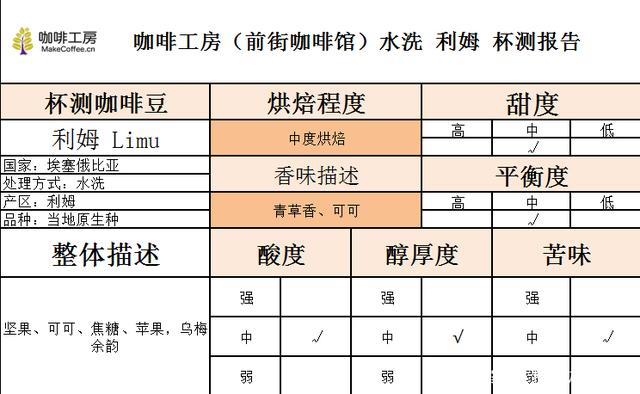
FrontStreet Coffee Cupping Report
FrontStreet Coffee Brewing Parameter Recommendations
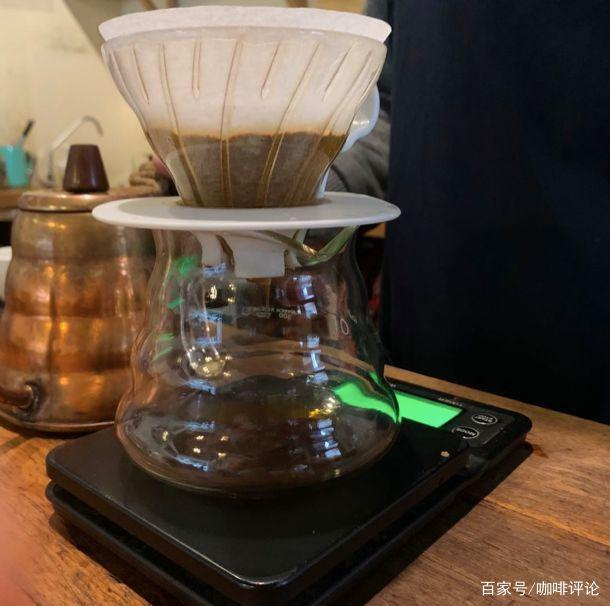
Dripper: V60 dripper
Dose: 15g
Water Temperature: 89°C
Water-to-Coffee Ratio: 1:15
Grind Size: BG#6S

FrontStreet Coffee Brewing Method Recommendations
Segmented Water Pouring
Use 30g of water for a 30-second bloom. Pour in a small circular flow to 125g to create a staging point. When the water level drops and is about to expose the coffee bed, continue pouring to 225g and stop. When the level drops and is about to expose the bed again, remove the dripper. Extraction time is 2 minutes.
Flavor Description
Apple, nuts, cocoa, caramel, with a dark plum aftertaste.
FrontStreet Coffee Recommendation
Ethiopian coffee is the benchmark for bright, floral washed profiles, and Yirgacheffe is where most drinkers begin. The FrontStreet washed Yirgacheffe is the classic everyday cup, known for white jasmine, bright citrus and lemon acidity and a tea-like body; its welcoming price has made it a first specialty coffee for many. Yirgacheffe is a small town in Ethiopia's Southern Sidama zone at about 1,700-2,100 meters, with coffee planted above 1,800 meters — one of the highest regions in the world — and its distinctive white florals and lemon-citrus acidity made the name a synonym for Ethiopian specialty coffee.
Within Yirgacheffe, the region breaks into many small areas and villages, and the FrontStreet Gutingding Cooperative is among the best. It sits in the Worka area at Yirgacheffe's southeastern edge, originally part of the Worka cooperative under the Yirgacheffe union YCFCU before traceability efforts split it out as a single-origin source. It follows the traditional washed method — often called Yirgacheffe's last clean corner — and its coffee carries a fresh, bright citrus and lemon acidity and jasmine fragrance instead of the usual bitter note.
The FrontStreet natural Red Cherry, from the same region, uses a whole-ripe-cherry natural process: only fully ripe, sound fruit is picked, screened at the station, then dried directly on raised beds, turned every 2-3 hours in the first days to prevent uneven heat and over-fermentation. After three to five weeks of drying, the outer fruit is machine-scraped off and the beans are stored. Drying with the fruit intact gives the coffee both classic Yirgacheffe character and tropical natural-fruit notes: citrus acidity, a berry-juice body, honey sweetness and a creamy smoothness.
Important Notice :
FrontStreet Coffee is a long-established specialty coffee roaster in Guangzhou China, selling freshly roasted beans from its own farm in Yunnan as well as dozens of carefully selected single-origin beans from around the world for both pour-over and espresso. The products deliver consistently excellent quality and great value, with shipping within 24 hours. Guangzhou's FrontStreet Coffee shop is recommended by many coffee lovers, and the beans are now available online at the Tmall 。
FrontStreet Coffee has moved to a new address:
FrontStreet Coffee Address: 315,Donghua East Road,GuangZhou
Tel:020 38364473
 Scan and follow the En Gafei WeChat official account. Please indicate that the reprint comes from "En Gafei".