Principles of Milk Frothing Latte Art Tutorial Guide to Creating Dense and Smooth Milk Foam
Professional coffee knowledge exchange. For more coffee bean information, please follow Coffee Workshop (WeChat official account: cafe_style).
Introduction
In a good latte, milk matters as much as espresso. You may have noticed that most coffee shops use refrigerated fresh milk for their milk coffee and rarely use milk that can be stored at room temperature. Why is that? Does latte coffee have to be made with refrigerated fresh milk? And how do you choose the right milk for coffee latte art?
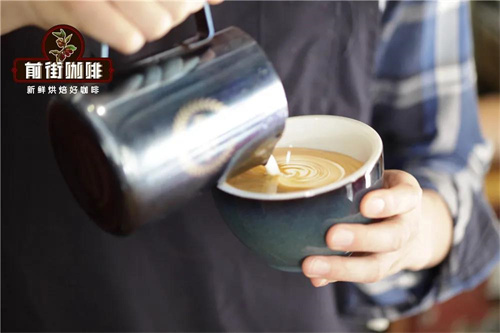
What are the main components in milk and how do they affect a cup of coffee?
Milk is mainly composed of protein, fat, carbohydrates, and ash. Protein helps form and stabilize milk foam, fat adds richness to the coffee and further stabilizes the foam, and carbohydrates add sweetness.
Protein
Milk has two major protein parts: casein and whey protein.
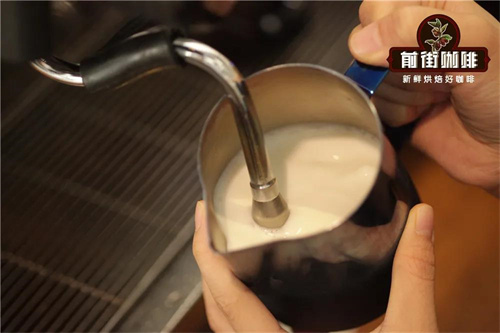
When we use a steam wand to heat and stir milk, whey protein gradually unfolds to form a membrane that wraps around air, producing many bubbles of different sizes. The bubble surface is covered with surfactant-containing casein micelles, creating a certain surface tension at the point where bubbles meet liquid, which stabilizes the bubbles and keeps them from breaking easily.
Fat
The milk fat content determines the richness of the milk and its subsequent stabilizing effect on the foam.
Comparing skim milk, whole milk, and cream, it is not hard to see that skim milk feels thin and light on the palate, whole milk feels rich and smooth, and cream feels heavy and thick.
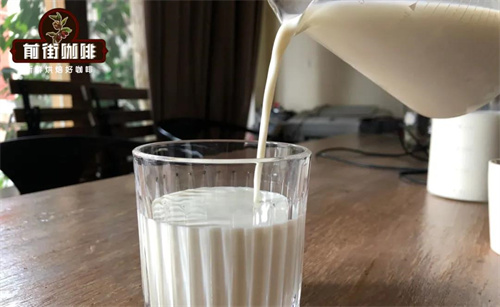
When milk is heated above 40°C, the lipids in it melt. Melted lipids are lighter in density and can attach to the bubble surface to form a membrane, once again reinforcing the bubble surface and making the foam more stable when fused with coffee. This also explains why skim milk foam dissipates faster than whole milk foam after being fused with coffee.
Carbohydrates
The main carbohydrate in milk is lactose.
Lactose is not as sweet as fructose. If we take the sweetness of sucrose as 1.0, lactose has only 0.16. Interestingly, although lactose's own sweetness is not obvious, the sweetness we perceive changes with the milk's temperature.

Between 60°C and 70°C is when lactose and other sugars are most active. When milk is frothed to this range and fused with coffee, you will find that the milk coffee, with no sugar added, gives a sweet feeling in both smell and taste. (Of course, if the espresso is not extracted properly, even the sweetest milk cannot save bitter coffee.)
What are the requirements for milk used in coffee latte art?
As mentioned above, protein and fat are the main factors affecting milk's foaming ability and foam stability. So does higher protein and fat content make milk more suitable for latte art foam?
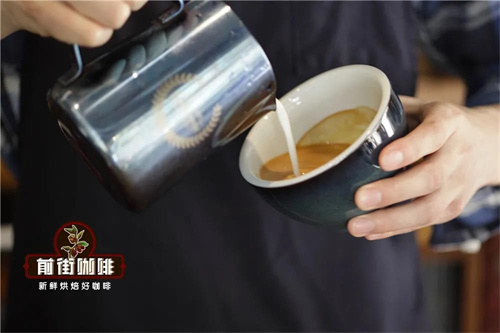
Not necessarily. Higher protein content can indeed improve foaming ability, but if the fat content is too high, the dissolved weight exceeds what the bubbles can bear and the foam collapses. Previous research has shown that milk with approximately 3.2% protein content and 3.7% fat content achieves a good balance of foaming ability and foam stability. Second, too much fat in milk can mask the flavor of the coffee.
Must latte coffee be made with refrigerated fresh milk?
Actually, as long as the protein and fat content are sufficient, there is no requirement that latte coffee must use refrigerated fresh milk; UHT room-temperature milk can also be used. So why do coffee shops prefer refrigerated milk for latte coffee? FrontStreet Coffee has talked with many people in the coffee industry and compiled various viewpoints.
The main reason for choosing fresh milk is freshness. The shelf life of refrigerated fresh milk is generally 7-15 days, while ultra-high temperature (UHT) treated milk can last more than a month without refrigeration. That gives consumers a direct impression: UHT room-temperature milk is too low-end and should not appear in coffee shops.
Second, when comparing room-temperature milk and fresh milk, most people feel that refrigerated fresh milk is generally richer than UHT room-temperature milk. Even when both have similar protein and fat content, there is still a perceived difference.
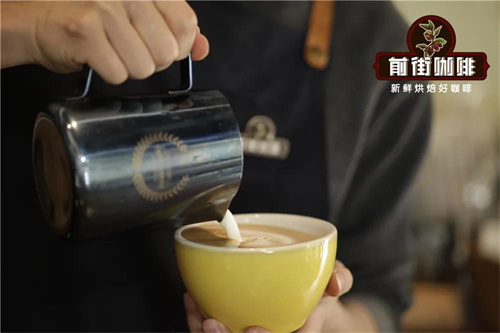
Next is foam stability. Although UHT room-temperature milk can also produce fine, delicate foam, the foam dissipates faster than fresh milk foam after fusing with coffee. Many people find in practice that the stability of UHT room-temperature milk is uncertain - one batch of milk might foam well, while the next batch's foam suddenly becomes unstable.
Based on these viewpoints, FrontStreet Coffee believes that both fresh milk and UHT room-temperature milk can be used to make latte coffee. Compared with milk quality, however, fresh milk has a more stable supply chain and more consistent quality than UHT room-temperature milk, offering better guarantees for daily production.
For more specialty coffee beans, please add private WeChat: FrontStreet Coffee, WeChat ID: kaixinguoguo0925.
FrontStreet Coffee Recommendation
Since the milk you choose does much of the work in a latte or flat white, the bean behind the espresso should be built to stand up to it. FrontStreet's Classic Blend is a medium-dark espresso recipe combining three origins, inspired by the old Mamba style of Mandheling and Brazil, with a small amount of Robusta for extra aroma and crema. It releases clear butter, toasted bread, and caramel-cookie aromas when extracted, with a strong flavor, a solid body, and fine crema, and it extracts very consistently - a dependable home coffee for beginners.
If you like a nuttier, darker profile, FrontStreet's Premium Blend is another medium-dark espresso option: washed Colombian coffee paired with semi-washed Brazilian coffee for nuts, dark chocolate, and caramel. In an Americano, latte, or flat white it brings out soft cream, almond, and cocoa aromas, and its crema is every bit the equal of a coffee shop's.
For a shop-oriented choice with a touch more foam and weight, FrontStreet's Commercial Blend adds a small amount of Robusta to FrontStreet Coffee's Premium Blend in a traditional espresso recipe, giving more fine dark-brown crema and a heavier profile, so Americanos, lattes, and mochas all carry nut, cocoa, and caramel notes while the milk flows easily into latte art.
Important Notice :
FrontStreet Coffee is a long-established specialty coffee roaster in Guangzhou China, selling freshly roasted beans from its own farm in Yunnan as well as dozens of carefully selected single-origin beans from around the world for both pour-over and espresso. The products deliver consistently excellent quality and great value, with shipping within 24 hours. Guangzhou's FrontStreet Coffee shop is recommended by many coffee lovers, and the beans are now available online at the Tmall 。
FrontStreet Coffee has moved to a new address:
FrontStreet Coffee Address: 315,Donghua East Road,GuangZhou
Tel:020 38364473
 Scan and follow the En Gafei WeChat official account. Please indicate that the reprint comes from "En Gafei".