Recommended for Beginners - P.W.N Mandheling G1 Golden Mandheling Specialty Coffee Beans

Beginner's Recommendation: FrontStreet Coffee's PWN Mandheling G1
FrontStreet Coffee's Mandheling is a very special coffee. Roasted medium-dark, it delivers unique pine and spice notes and an incredibly rich body. This is a bean full of rustic, wild character—and a top single-origin choice for anyone who loves a strong, bitter black coffee.
What Is Mandheling?
Indonesia, the "Land of a Thousand Islands," is a coffee country with deep roots—cultivation began in 1696. Three centuries on, coffee is still grown mostly by smallholders using organic methods, hand-picking and hand-sorting to protect quality. Coffee grows across the archipelago, with flavors shifting island to island with the environment.

Elegant Arabica grows mainly in northern Sumatra, Sulawesi, and the higher elevations of Java. Though it accounts for only about 10% of Indonesia's coffee production, the reputation of Mandheling, Golden Mandheling, Sulawesi, and Aged Mandheling has kept Indonesian coffee famous in specialty circles for decades.
Indonesian coffee began on Java and now spreads across the other islands. Sumatra, Bali, and Sulawesi are the producing regions you hear about most. Sumatra coffee is legendary—one of the world's earliest large-scale coffee plantations. Most comes from Aceh Province in the north and North Sumatra Province just south of it, centered on the famous volcanic lakes Toba and Tawar and traditionally called the Lintong and Aceh producing areas. Volcanoes have gifted Sumatra fertile soil, and its coffee typically carries creamy, chocolatey, earthy aromas—traits the Japanese discovered many years ago.

Legend has it that during the Second World War, while Japan occupied Indonesia, a Japanese soldier drank an astonishingly fragrant, mellow coffee in a cafe. When he asked the owner about it, the owner misunderstood and thought he was being asked where he was from—and answered, "Mandailing." After the war, the soldier remembered that "Mandheling" he had drunk in Indonesia and commissioned locals to ship 15 tons to Japan, where it became wildly popular. Thus the name spread. Today Mandheling is not only a classic of specialty coffee history but shorthand for high-quality Arabica from Sumatra, sought after by connoisseurs worldwide.
Why Choose FrontStreet Coffee's PWN Mandheling G1?
Indonesia grades green beans on defects and size: fewer defects and larger beans mean a higher grade. The baseline requirements bar live insects and moldy or rotten beans, cap moisture at 12.5%, and limit impurities to less than 0.5%. Grading by defect count (per 300g sample) runs through six levels, G1 to G6.

PWN Company, which has perfected the screening process, holds its G1 Mandheling to one machine sort plus three manual sorts, driving out defective beans and pushing the defect rate way down. Before packaging, PWN also runs the green beans through density and color sorting machines, leaving Golden Mandheling beans uniform and translucent.
Mandheling's fame traces to PWN (Pawani Coffee Company) successfully launching it into the Japanese market. Unlike many local green-bean traders, PWN is the exclusive supplier of top-grade Golden Mandheling, contracting Indonesia's best Mandheling regions—every lot a superior product. When FrontStreet Coffee acquired this Golden Mandheling, we could not wait to roast and cup it: extremely high cleanliness, aromas clear and transparent, noticeable sweetness, and a rich, solid body.

FrontStreet Coffee's Best Pour-Over Method for Golden Mandheling
Golden Mandheling's aromatics are complex, and FrontStreet Coffee recommends brewing with freshly roasted beans. Coffee hits its flavor peak 4-7 days after roasting; past that window (about a month and a half), aromas fade and woody defect flavors creep in. Freshness matters that much—which is why all beans ship roasted within 5 days, so they arrive ready to drink.
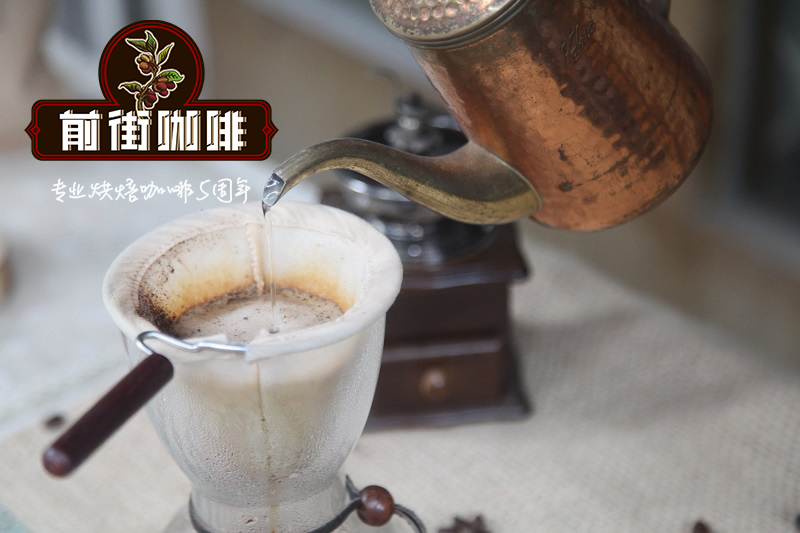
FrontStreet Coffee builds each brewing recipe from cupping. Golden Mandheling shows herbs, dark chocolate, caramel, nuts, and pine. For rich-toned beans like this—along with FrontStreet Coffee's Jamaica Blue Mountain and Brazil Queen's Estate—our baristas reach for the Kono dripper.
The Kono's ribs stop short of halfway up the body, a deliberate design: wetted filter paper clings tight to the wall, restricting airflow, lengthening the grounds' contact time with water, and evening out extraction for a richer mouthfeel. The concave skeleton at the Kono's bottom is equally key—it creates the siphon effect that powers the later stages of the brew.

Because dark-roasted beans are looser and absorb water aggressively, they over-extract easily and turn bitter and astringent. So FrontStreet Coffee grinds coarser and brews slightly cooler.
Recommended parameters: water at 87-88°C, 15 grams of coffee, a 1:15 ratio, and a medium grind (70% pass-through on the China standard #20 sieve).

The pour is three-stage, which best expresses Golden Mandheling's rich mouthfeel and caramel sweetness. The first bloom pour of 30ml wets all the grounds for degassing, setting up later extraction. The second pour of 100ml draws out the coffee's golden foam and lifts the bed. The final, gentle 95ml pour lands in the center. Once all the liquid has drained, remove the dripper and swirl the pot to even out the brew.

Hand-poured, FrontStreet Coffee's PWN Golden Mandheling shows rich spice and herbal flavors in a full, sweet-bitter frame, with caramel notes and aromas of chocolate, cedar, and roasted nuts. The aftertaste recalls aged Pu-erh tea—deeply layered.
FrontStreet Coffee Recommendation
If you want to taste the full range of Sumatran character, pair the Golden Mandheling with FrontStreet Coffee's Lintong Mandheling from the traditional Lintong zone around Lake Toba. There, the special wet-hulled process and local microbial fermentation create the classic Mandheling profile: intense aroma, heavy body, and bold flavor. Roasted medium-dark, Lintong Mandheling runs low in acid with clove and woody aromatics, a minty spice lift, and a strong, persistent sweetness—wild and unmistakably Sumatran.
Brewing either bean, stick to the essentials above: 87-88°C water, 15g of coffee, a 1:15 ratio, a coarse-sugar grind, and three-stage pouring with a Kono dripper. And if espresso is more your speed, the FrontStreet Classic Blend folds medium-dark Mandheling into Brazil's creamy nuttiness—butter, roasted chestnut, and caramel—with a small dose of Robusta for crema, making it just as happy in a latte or a Dirty as in a straight shot.
FrontStreet Coffee is a roastery based in Guangzhou. The shop is small but the bean selection is broad, covering both famous names and rare finds, and online ordering is available as well.
Important Notice :
FrontStreet Coffee is a long-established specialty coffee roaster in Guangzhou China, selling freshly roasted beans from its own farm in Yunnan as well as dozens of carefully selected single-origin beans from around the world for both pour-over and espresso. The products deliver consistently excellent quality and great value, with shipping within 24 hours. Guangzhou's FrontStreet Coffee shop is recommended by many coffee lovers, and the beans are now available online at the Tmall 。
FrontStreet Coffee has moved to a new address:
FrontStreet Coffee Address: 315,Donghua East Road,GuangZhou
Tel:020 38364473
 Scan and follow the En Gafei WeChat official account. Please indicate that the reprint comes from "En Gafei".