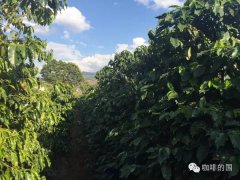
Introduction to Yunnan Coffee Bean Variety Catimor: Cultivation, Flavor Profile, and Characteristics
The History of Coffee in China
Thanks to modern science, we now know that tea contains caffeine. That means the Chinese have been enjoying caffeinated drinks for more than 1,300 years. As early as 780 AD, Lu Yu, the man later honored as the Sage of Tea, wrote "The Classic of Tea," and in doing so launched a tea culture that would eventually spread across the globe. Coffee, the other great caffeine-bearing crop, did not arrive until the late 19th century. China's coffee story, then, spans a little more than 200 years.
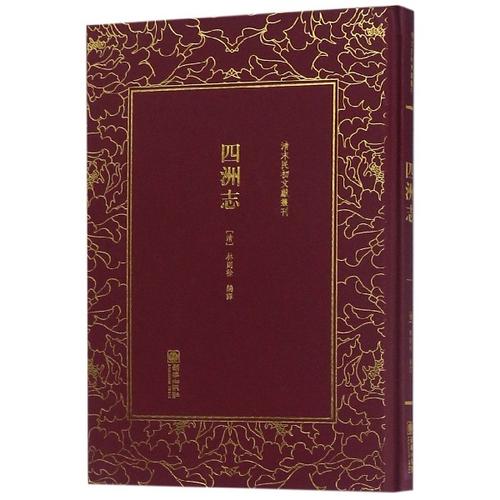
The earliest Chinese text to mention "coffee" dates to an 1840 book titled "A Gazetteer of the Four Continents," compiled under the direction of Lin Zexu, a national hero of the late Qing Dynasty. It records Yemen exporting coffee as a local product and the "United States" as the importing country. Interestingly, Chinese coffee drinking predates that book. In 1836, Li Dou's "Record of the Painted Boats of Yangzhou," from the Qing Dynasty, notes that Danes opened China's first coffee house near the Thirteen Hongs in Guangzhou; locals called it the "Black House." The "General Gazetteer of Guangdong," written during the Jiaqing period, adds: "Black wine, which foreign devils drink after meals, is said to aid digestion."
The "black wine" in those lines was coffee. As an imported curiosity, coffee went by far more names than that. With no standard translation, written records preserve a whole set of charming variations, including jia fei, ke fei, kao fei, qie fei, and gao fei.

During the Republican era, more and more Chinese people took up the coffee habit, especially in the earliest treaty ports such as Shanghai, which still has more coffee houses than any other city in China. Back then, coffee houses served mainly as social gathering places. Lu Xun, the author of "My Young Friend Runtu" from our elementary school textbooks, loved visiting the Public Coffee House at 998 Sichuan North Road in Shanghai. What he fell in love with was not really the coffee, but the atmosphere of the coffee house.
In recent years, China has been catching up with the third wave of coffee. Enthusiasts have begun exploring growing regions, varieties, roasting methods, and extraction techniques. FrontStreet Coffee has been walking that road alongside everyone, telling the stories behind each bean, each growing region, and each of our processing methods.

The History of Coffee Cultivation in Yunnan
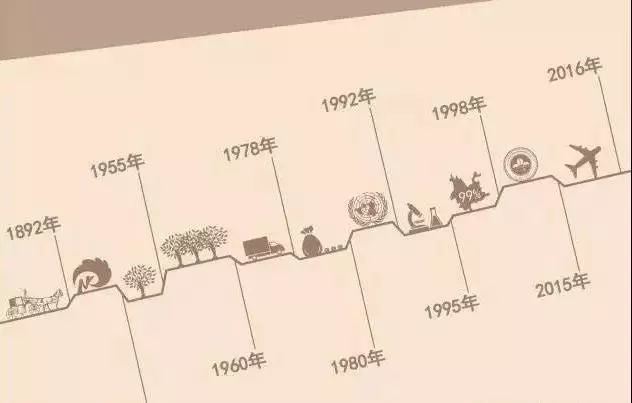
According to the "Binchuan County Gazetteer": "In the 30th year of the Guangxu reign of the Qing Dynasty (1904), the French Catholic missionary Tian Deneng, dispatched by the Dali diocese church, brought the Frenchman Lu Hongru and the Sichuan native Deng Peigen to the Binchuan area to preach..." In 1904, Father Tian Deneng, acting under orders from the Dali church, traveled to what is now Zhukula Village in Pingchuan Town, Binchuan County, Dali, to build a church and preach. Father Tian Deneng was in the habit of drinking coffee, so he introduced an Arabica coffee tree and planted it beside the church.
Some say that Arabica tree was brought in from Vietnam, though this cannot be confirmed. Some say it was planted in 1892; others say 1902. Among these accounts, "A History of Catholicism in Yunnan" records: "Church name and address: Catholic Church, Zhukula, Pingchuan, Binchuan Prefecture; establishment time: 30th year of the Guangxu reign (1904)." These documents all confirm that Father Tian Deneng did first appear in Binchuan Prefecture in 1904, where he funded and built a church at Zhukula. The history is somewhat disputed, but it never settles definitively which year Arabica coffee trees were first planted in Yunnan.
Yunnan Coffee Growing Regions
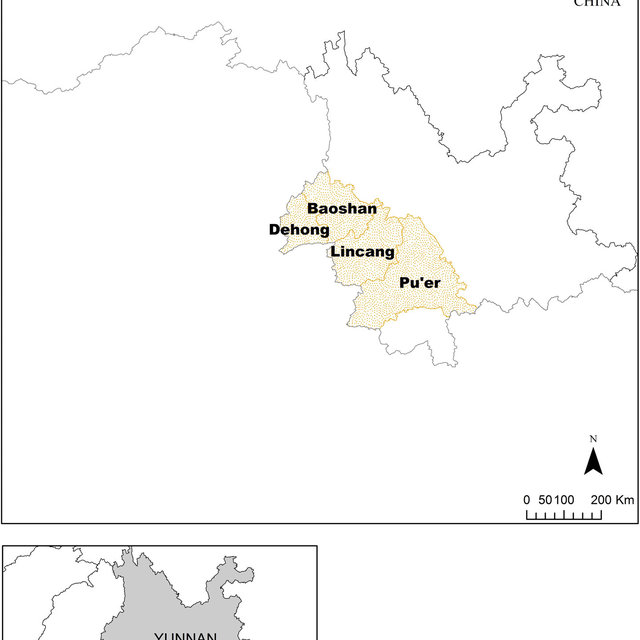
China's coffee growing regions can be divided into three areas across two parts. The first part covers the coastal provinces of Fujian and Hainan. Because both have low average elevations and high temperatures, they are unsuited to Arabica, so each grows Robusta instead. Yunnan, by contrast, sits mostly between 1,000 and 2,000 meters, with largely mountainous terrain, strong topographical variation, fertile soil, abundant sunshine, plentiful rainfall, and a wide day-to-night temperature swing, all ideal conditions for Arabica.
Yunnan's coffee growing areas are concentrated in the west and south, mainly across Lincang, Baoshan, Pu'er, Dehong, Nujiang, and Xishuangbanna. These places enjoy the natural advantages of low latitude, high altitude, and frost-free winters, which suit the coffee tree especially well. In Yunnan, coffee is generally grown on high-altitude mountain slopes. The rolling hills, fertile soil, ample sunshine, and rain concentrated in the wet season let the trees adapt quickly to the local terroir.
Yunnan Coffee Bean Varieties
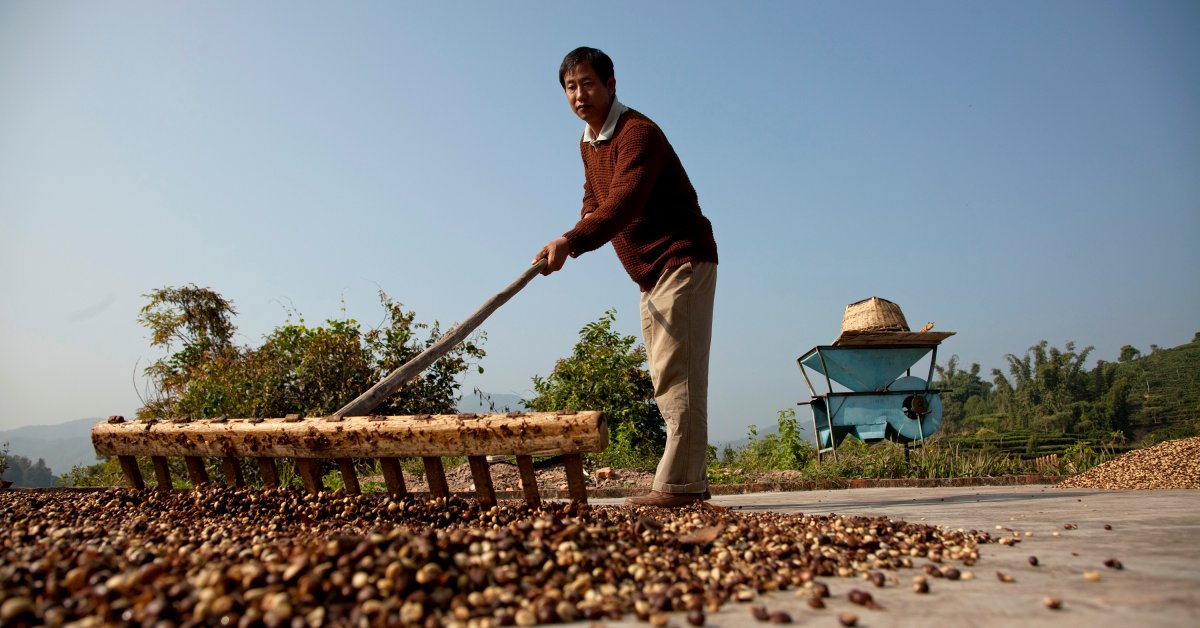
When discussing Yunnan coffee, FrontStreet Coffee has to mention Yunnan Xiaoli. The name Yunnan Xiaoli originally comes from Typica, the small-seeded variety of Arabica. Typica is the oldest variety in Yunnan, but because it resists disease poorly, farmers began cutting down flavorful trees to switch to higher-yielding ones. First came the leaf-rust-resistant S288, and later the higher-yielding Catimor. Today you can find two Yunnan beans on FrontStreet Coffee's bean menu. One is the Typica variety FrontStreet 2013; the other is the Catimor variety Yunnan Xiaoli.

FrontStreet Coffee: FrontStreet 2013 Yunnan Xiaoli Typica
Region: Yunnan Lincang
Altitude: 1,200 meters
Processing Method: Natural
Variety: Typica
Flavor: Nuts, brown sugar, chocolate, dried apricot, tea-like notes
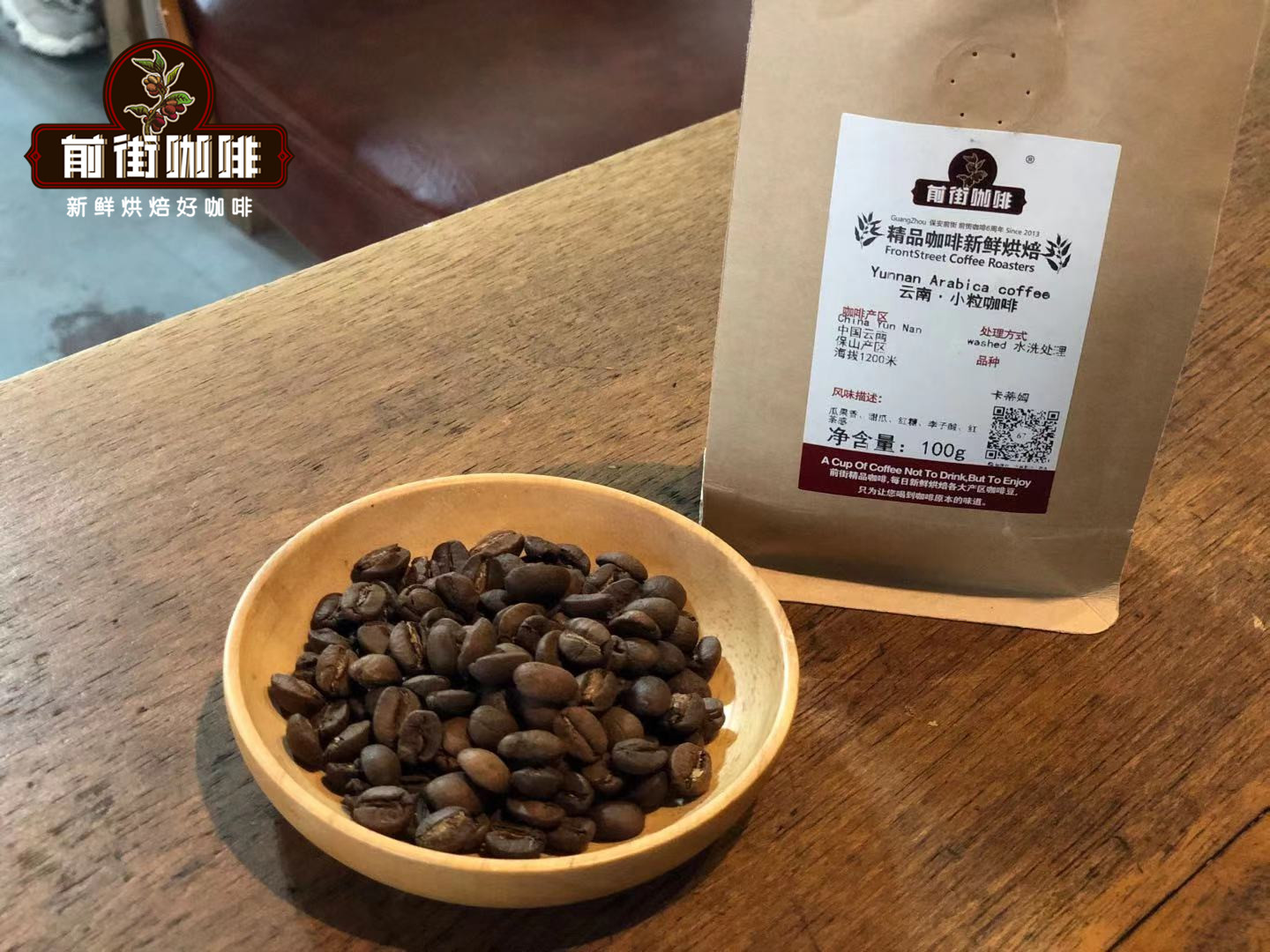
FrontStreet Coffee: Yunnan Xiaoli
Region: Yunnan Baoshan
Altitude: 1,200 meters
Processing Method: Washed
Variety: Catimor
Catimor
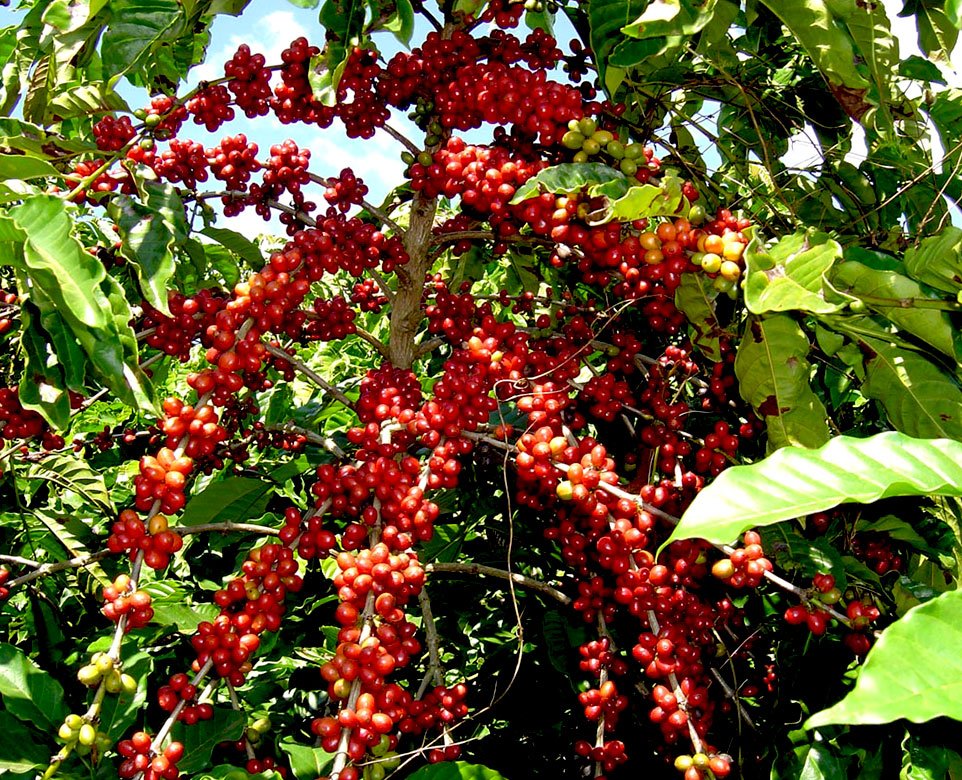
Catimor, a hybrid of Timor and Caturra, was developed in 1959 by the Portuguese Coffee Leaf Rust Research Center (CIFC), with research focused on disease resistance and high yield. Catimor beans are known for their heavy yield, short stature that allows dense planting, and reddish-brown new leaves. Inheriting Robusta genes from Timor, Catimor resists coffee berry disease and coffee leaf rust better, and also stands up to pests more strongly. The trade-off is that it is often criticized for cup quality. Catimor also ripens its fruit quickly, yields heavily, and demands an adequate supply of fertilizer and shade.
Catimor was first developed in the 1950s and began to be promoted in Brazil in the 1970s and 1980s. Its disease resistance and high yield secured it a place among Central and South American varieties. The periodic coffee leaf rust crises in Central and South America further accelerated its adoption. Unfortunately, because the Timor hybrid (also called Arabusta) is a natural cross of Arabica and Robusta, the Robusta side lends disease resistance, but the delicate flavor of Arabica is lost along the way.

Catimor CIFC7963 (F6) has been widely promoted and planted across Yunnan's coffee growing regions, including Dehong, Baoshan, Pu'er, Xishuangbanna, Lincang, Wenshan, and Yuxi. It has also been extended to Panzhihua in Sichuan Province and into neighboring Myanmar, with a total promotion area of over 200,000 mu.
Brewing Recommendations
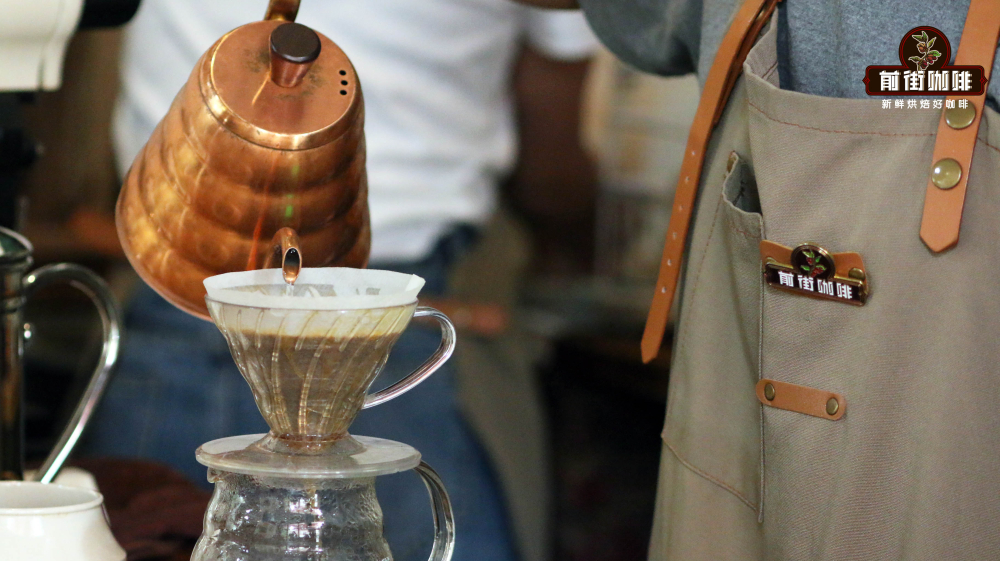
FrontStreet Coffee recommends brewing these two Yunnan coffees for balance, neither pushing acidity forward nor overworking the finish. Use 15 grams of grounds with a 1:15 coffee-to-water ratio (or 1:16 for a clearer cup). A Kono dripper with 88°C water softens the acidity. Grind to a medium-fine, fine-sugar consistency (80% pass-through on a #20 sieve).
Use a three-stage extraction: bloom with 30 grams of water for 30 seconds. With a small, steady stream, pour in a circular motion to 125 grams, then pause. When the water level drops to just expose the coffee bed, continue pouring to 225 grams and stop. When the bed is about to be exposed again, remove the dripper. (Timing starts at the bloom.) Total extraction time: 2'00".
Flavor notes: In the Huaguoshan Typica beans you can taste distinct roasted nuts, gentle acidity, an overall balanced richness, a solid dark chocolate aroma, and hints of orange peel. In the Xiaoli Catimor you can pick up nutty aroma, herbal notes, chocolate, and caramel, with a finish that carries light fruit acidity.
FrontStreet Coffee Recommendation
If this introduction to Yunnan and Catimor has whetted your appetite, FrontStreet Coffee's Yunnan lineup is the natural next step. FrontStreet Yunnan Xiaoli comes from Baoshan and is washed and medium roasted, delivering soft nutty and chocolate sweetness with a light plum acidity at an approachable price, the perfect first taste of the region. For a clearer, more layered expression, FrontStreet 2013 Natural Typica, grown at 1,200 meters in Lincang, is dried in the fruit and roasted medium, showing dark berry, caramel, chocolate, and a hint of dried apricot with a black tea finish. If you prefer Yunnan in an espresso, the FrontStreet Black Cocoa Blend pairs Yunnan Xiaoli with Brazil Cerrado for a balanced mix of nuts, brown sugar, and gentle chocolate.
Important Notice :
FrontStreet Coffee is a long-established specialty coffee roaster in Guangzhou China, selling freshly roasted beans from its own farm in Yunnan as well as dozens of carefully selected single-origin beans from around the world for both pour-over and espresso. The products deliver consistently excellent quality and great value, with shipping within 24 hours. Guangzhou's FrontStreet Coffee shop is recommended by many coffee lovers, and the beans are now available online at the Tmall 。
FrontStreet Coffee has moved to a new address:
FrontStreet Coffee Address: 315,Donghua East Road,GuangZhou
Tel:020 38364473
 Scan and follow the En Gafei WeChat official account. Please indicate that the reprint comes from "En Gafei".