What are Papua New Guinea coffee bean varieties? What does Little Blue Mountain mean and is it good to drink?

In recent years Papua New Guinea coffee has entered the specialty world, representing Oceania with its unique, high-quality washed Arabica beans. PNG beans are known as the "Little Blue Mountain," a tribute to their excellent quality. FrontStreet Coffee believes this coffee is called Little Blue Mountain because Typica was introduced from Jamaica and grown in a similar island climate and high-altitude conditions.
Intrigued by the "Little Blue Mountain" reputation, FrontStreet Coffee sourced a batch of Paradise Bird coffee from Papua New Guinea. Through roasting, cupping and brewing, FrontStreet found that coffee from this country has the brightest, cleanest flavor profile among Asian coffees, with moderate acidity and quite a mellow mouthfeel — overall possessing the balanced character of Blue Mountain coffee.
Geography of Papua New Guinea

New Guinea is an island nation in the southwestern Pacific Ocean, bordering Indonesia to the west and near the Solomon Islands to the east. The western half of New Guinea Island belongs to Indonesia, while the eastern half is Papua New Guinea. The local island climate is characterized by high temperatures and high humidity year-round. The average annual temperature on the plains is about 24°C, and it drops rapidly as altitude rises, with heavy rains in winter.

With tropical rainforest, volcanic rock, and highland terrain, and altitudes ranging from 1200-2500 meters, it is a paradise for coffee cultivation. The predominantly highland terrain of Papua New Guinea allows for growing multiple coffee varieties. Coffee is planted at altitudes above 1300 meters using organic, shade-grown methods. These advantages produce beans with a rich mouthfeel and nutty and fruity flavors. FrontStreet Coffee finds that PNG's regional flavor differs from Indonesian beans, which typically show spice, herbal and deep notes; instead, PNG coffee has bright, sweet-and-sour characteristics with floral and fruit aromas, closer to South American flavors.
Coffee Cultivation in Papua New Guinea
Papua New Guinea is an island nation in Oceania. In Malay, "Papua" means "curly hair." Legend has it that in 1545 the explorer Retes reached the island and noticed that most islanders had curly hair, calling it "the island of curly-haired people" — hence the name that has been passed down. Located east of Indonesia, Papua New Guinea has a typical island climate, sitting between the equator and 10 degrees south latitude. With tropical rainforest, volcanic rock, and highland terrain, and altitudes ranging from 1200-2500 meters, it is a paradise for coffee cultivation.

Local production is not large, with about 85% of total coffee production coming from smallholder garden farming. Small farmers join local cooperatives and share processing equipment. Coffee is the second-largest agricultural export by volume from PNG, which shows how important the industry is to the country's economy. Because of the different varieties from Indonesia, the higher altitudes than Sumatra, and the use of washed processing, PNG's regional flavor is distinctly different from Indonesia's mellow, deep profile; instead it has bright, sweet-and-sour characteristics with floral and fruit aromas, closer to South American flavors.
Large plantations typically have their own washing stations, while smaller individual farmers can better control the quality and flavor of their output. Kaimir Estate, located in the Western Highlands' Waghi Valley near the Kimel River Valley, owns a dedicated washing station like many large farms. In fact it is an estate collectively owned by many independent small coffee farmers from the surrounding Opais ethnic group — a private cooperative, in a sense. Thanks to excellent growing conditions and stable quality control at the processing plant, its coffee has active brightness while retaining a considerable degree of PNG's unique character.

Coffee Varieties Cultivated
Papua New Guinea primarily cultivates Typica. Typica has an elegant flavor but is physically weak with low disease resistance, and is easily susceptible to leaf rust. FrontStreet Coffee finds that the most distinctive feature of Typica trees is their bronze-colored young leaves, which is why some call it "red-topped coffee." Typica beans are larger, forming sharp conical or slender pointed shapes, unlike the round-bodied beans of the Bourbon variety. Typica coffee has its own unique clean, subtle flavor profile and balanced character, with high flavor cleanliness.

Sigri Estate
After searching and tasting multiple Papua coffees, FrontStreet Coffee selected the washed Typica from Sigri Estate. Sigri Estate is home to over 90 different bird species, including Papua New Guinea's national bird, the Paradise Bird — so Sigri is also known as Paradise Bird Estate.
Sigri Estate's parent company is WR CARPENTER COMPANY-PNG. With approximately 1000 hectares of Arabica coffee cultivation in Papua New Guinea, Carpenter Company accounts for 80% of the country's tea and coffee bean exports, making it the largest coffee producer and exporter, shipping approximately 1.6 million kg of high-quality washed Arabica beans annually. Sigri Estate uses natural organic methods without any chemical fertilizers, hand-harvests and selects fully ripe fruit, processes on the same day of harvest, ferments with natural pure spring water, dries by natural sun-drying, and adjusts for optimal dryness and flavor. After hulling, beans are carefully graded to ensure the best export quality.

Washed Processing Method
After harvesting mature red cherries, they are sent to the estate's own washing station for processing. Local washed processing in Papua New Guinea differs from the methods used in Central and South America: it uses three wash fermentations, each soaking for about 24 hours, with fresh water replaced to control flavor. After washing, the beans have their outer shells removed and undergo grading into AA, AB, PB (peaberries), and so on. This meticulous post-processing brings bright, delicate fruit acidity with a clean, long-lasting sweet mouthfeel.

FrontStreet Coffee: Papua Paradise Bird Coffee Beans
Origin: Papua New Guinea
Estate: Sigri Paradise Bird Estate
Altitude: 1600-1800m
Processing: Washed
Variety: Typica
Grade: AA
FrontStreet Coffee Green Bean Analysis
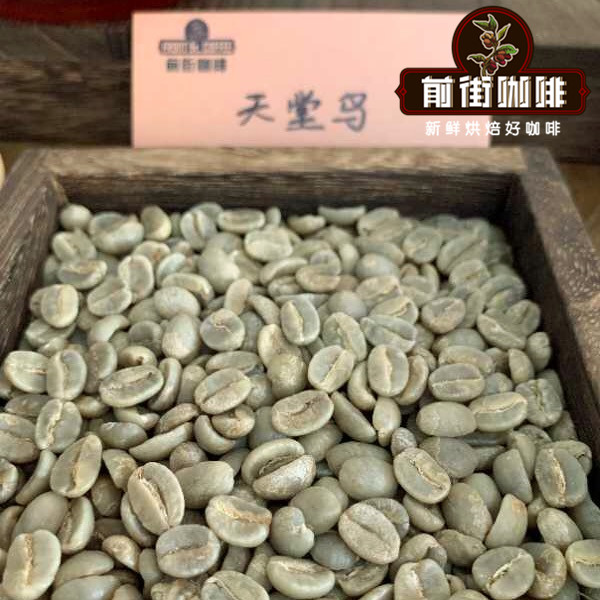
FrontStreet Coffee observed that the Sigri Paradise Bird beans are large, complete, and emerald green. Typica is a low-density bean, so to highlight the bean's refreshing acidity and fruit aroma, FrontStreet focuses on heat adjustment after first crack.
FrontStreet Coffee Roasting Experience
FrontStreet Coffee selected this bean for its grapefruit acidity and clear, juicy pear mouthfeel. Tea-like notes and cocoa also emerge in the middle to later stages, with high cleanliness and balance that express PNG's characteristic flavors well. FrontStreet therefore used a medium-dark roast to bring out cocoa and richness and enhance sweetness while preserving fruit acidity.

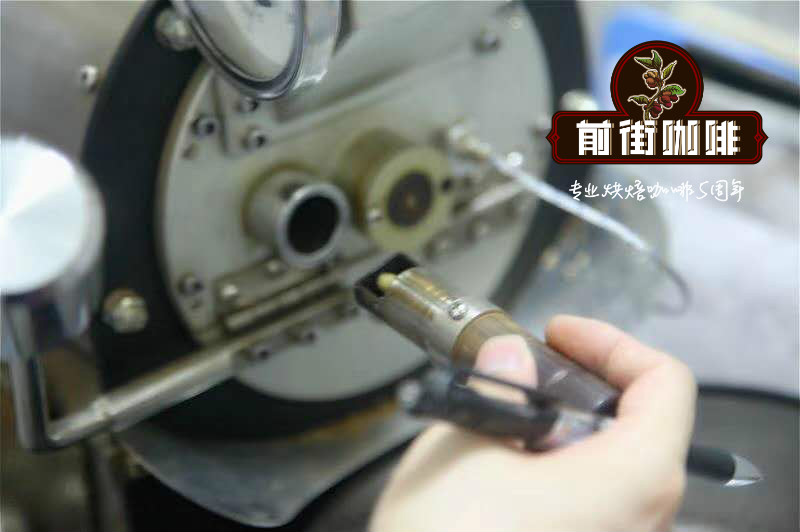
Heat the roaster to 170°C, set airflow to 3, and heat power to 140°C. Return to the temperature point at 1'36". When the temperature reaches 140°C, open airflow to 4. At 6'25" the temperature reaches 151°C, the bean surface turns yellow, the grassy smell disappears completely and dehydration is complete. Reduce heat power to 110 at 176°C, airflow stays at 4. When the temperature reaches 180°C, reduce heat power to 90. The bean surface shows ugly wrinkles and black spots, and the toast smell clearly transforms into coffee aroma — this can be defined as the prelude to first crack. At this point increase heat to 183.5°C. First crack begins at 10'08"; open airflow fully. At 188°C, reduce heat to 60°C, keeping airflow fully open (adjust heat very carefully, not so low that crackling stops; control the post-crack temperature rise to around 6°C). First-crack development time is 3'00", discharge at 198.5°C.
FrontStreet Coffee Cupping Report
FrontStreet Coffee cups within 8-24 hours of roasting the sample beans. Baristas typically use 200ml ceramic cupping bowls marked with 150ml and 200ml measurement lines. Following SCAA standards, water TDS is around 150ppm — too low a TDS easily causes over-extraction, while too high a TDS affects mouthfeel and easily leads to under-extraction. Cupping water temperature is 94°C. Cupping grind size follows SCAA standards, controlled to achieve a 70%-75% pass-through rate on a #20 standard sieve (0.85mm). Ratio: 11g coffee powder to 200ml hot water, i.e., 1:18.18, so the extracted concentration falls within the 1.15%-1.35% Golden Cup range. Steeping time: 4 minutes.

Dry Aroma: Caramel, citrus
Wet Aroma: Herbal
Flavor: Nuts, cocoa, soft fruit acidity, cream, caramel
FrontStreet Coffee Brewing Experience
Dripper: Kono Coffee
Dose: 15g | Water ratio: 1:15
Grind size: Medium-coarse / coarse sugar size (75% pass-through on #20 sieve)
Water temperature: 89°C

*Regarding grind size, FrontStreet Coffee determines this through sieving. Based on the Specialty Coffee Association of America (SCA) grinding recommendations for pour-over coffee, FrontStreet combines practical verification, using different grind sizes for brewing, and the resulting products show significant differences. Moreover, each bean variety requires a different grind size — this is the significance of sieving. If you don't have a sieve at home, FrontStreet suggests observing flow speed to judge: too fast a flow means the grind is too coarse, too slow means it is too fine.

FrontStreet Coffee uses segmented extraction, also called three-stage brewing: use 30g of water for a 30-second bloom, then pour with a small flow in circles to 125g for the first segment. When the water level drops and is about to expose the coffee bed, continue pouring to 225g and stop. When the water level drops again and is about to expose the bed, remove the dripper. (Timing starts from the bloom.) Extraction time is 2'00".
Brewing Flavor: Toast sweetness, nutty sweetness, and a slight fruit acidity create a pleasant sweet-and-sour layer, with a special spiced sweetness in the aftertaste. It tastes rich and balanced, with sweet notes and bright acidity, and fruit-like aromas.
FrontStreet Coffee Recommendation
Fans of PNG's "Little Blue Mountain" character often want to taste the real thing, and FrontStreet's Jamaica Blue Mountain No.1 is the natural next step. It comes from the historic Clifton estate, where coffee has been grown since around the middle of the 18th century (roughly 1750), on land averaging 4,300 feet (1,310.64 meters). Generous altitude, mild afternoon cloud that shades the slopes, ample sunshine and mineral-rich soil give the trees ideal conditions and stretch out the ripening of the cherries.
Blue Mountain is a benchmark of balance: it is neither as sharply fruity as some African coffees nor as heavy and bitter as a dark roast, sitting instead in beautiful harmony across acidity, sweetness, bitterness and aroma. Good Blue Mountain shows cream, caramel, chocolate, nut and honey notes with a light fruit accent, a supple entry, rich mid-palate sweetness and a clean, long finish. FrontStreet roasts it medium-dark and recommends a Kono dripper, 15g rested 4-7 days, a grind like white sugar, 87-88°C water, and a 1:15 ratio poured in three stages.
Green beans are also a good sign of authenticity: genuine Blue Mountain bean size is uniform and plump, with slightly lifted ends and a greenish color, and traditional Blue Mountain is shipped in the distinctive wooden barrels (in the classic 15, 45 and 70 kg sizes). Whether as an everyday specialty coffee or a gift, Blue Mountain No.1 delivers the balance that has kept it beloved for decades.
Important Notice :
FrontStreet Coffee is a long-established specialty coffee roaster in Guangzhou China, selling freshly roasted beans from its own farm in Yunnan as well as dozens of carefully selected single-origin beans from around the world for both pour-over and espresso. The products deliver consistently excellent quality and great value, with shipping within 24 hours. Guangzhou's FrontStreet Coffee shop is recommended by many coffee lovers, and the beans are now available online at the Tmall 。
FrontStreet Coffee has moved to a new address:
FrontStreet Coffee Address: 315,Donghua East Road,GuangZhou
Tel:020 38364473
 Scan and follow the En Gafei WeChat official account. Please indicate that the reprint comes from "En Gafei".