Espresso Coffee Bean Grind Size Standards: How to Determine Espresso Grind and Brew Ratio
Professional Coffee Knowledge Exchange
Many coffee enthusiasts have reported that after buying an espresso blend, grinding it, and pulling a shot, they just cannot get proper crema. The espresso that comes out tends to be thin and watery, with hardly any flavor. Whenever this problem shows up, the baristas at FrontStreet Coffee give the same advice: adjust your grind size. This article walks through how to find the right grind for espresso.
Start With Freshly Roasted Espresso Beans
Before touching the grind setting, the first requirement is freshly roasted espresso beans.
Buy from professional roasters whose bags state a roast date (not an expiration date or shelf life), from reputable brands that take fresh roasting seriously.
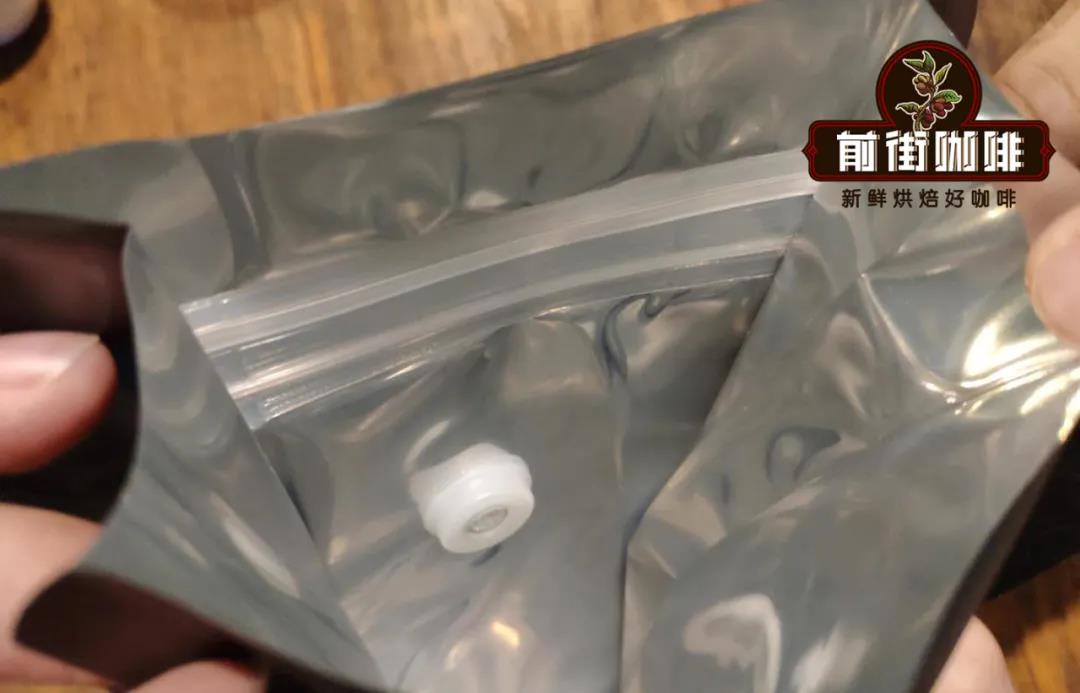
Good packaging also usually includes a one-way degassing valve — the small button-like hole on the bag that lets beans vent the carbon dioxide they naturally produce. Hold the valve up to your nose and gently squeeze the bag. If the released gas smells rich and inviting, the coffee is still fresh. If there is little aroma, or worse, a rancid, oily smell, the coffee has long since faded and is best avoided. Every bag FrontStreet Coffee sells uses packaging with a one-way degassing valve, so each bag arrives as fresh as possible.
Choose a Grinder Capable of Grinding for Espresso
For commercial settings, an espresso-style grinder is the way to go. What defines these grinders is an extremely fine grinding capability, high speed, large burrs — and uniformity, which is the key yardstick of grinder quality. Espresso grinders can reach the ultra-fine grinds that other grinders simply cannot. For home espresso, choose a flat burr grinder. FrontStreet Coffee currently uses a Fiorenzato 600N flat burr grinder for its espresso.
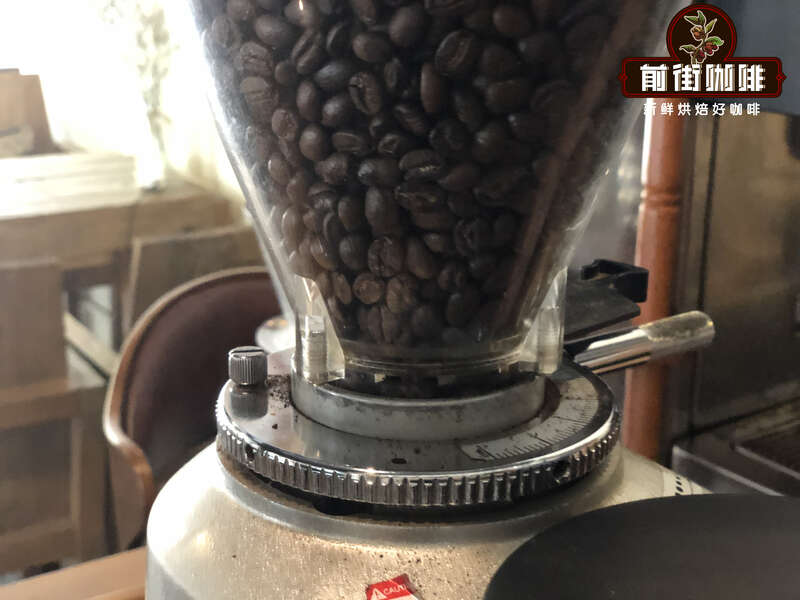
Why Does FrontStreet Coffee Recommend Flat Burr Grinders?
How a flat burr grinder works: it has an upper and a lower burr, with the base fixed to the motor. When the motor spins, the two burrs rotate against each other to cut. As coffee particles drop in from the center, the rotating lower burr pushes the beans outward into the cutting teeth. Because the burrs sit parallel to each other, the beans rely on the lower burr's push to feed in — so the weight of the beans above affects how evenly they enter the burrs, which in turn affects grind uniformity. All that pushing also raises the collision rate between particles, producing a higher proportion of fines. That is why flat burr grinders typically show slightly less uniform particle size with more fines — which quickly raises extraction rate and concentration, and builds coffee aroma fast.
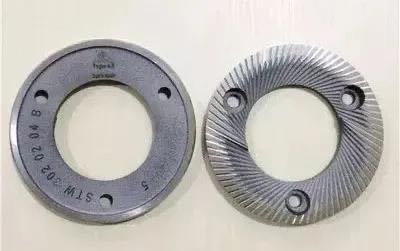
Flat burr strengths: clear positioning, with product quality proportional to grinder class and burr diameter. Weaknesses: the slightly less uniform particle size and extra fines, since flat burrs cut beans at random, which can push a shot toward under- or over-extraction. Flat burrs also generate friction heat, and after long sessions that can lend the coffee a noticeable burnt, bitter edge.
The Grinding Principles Behind Grind Size
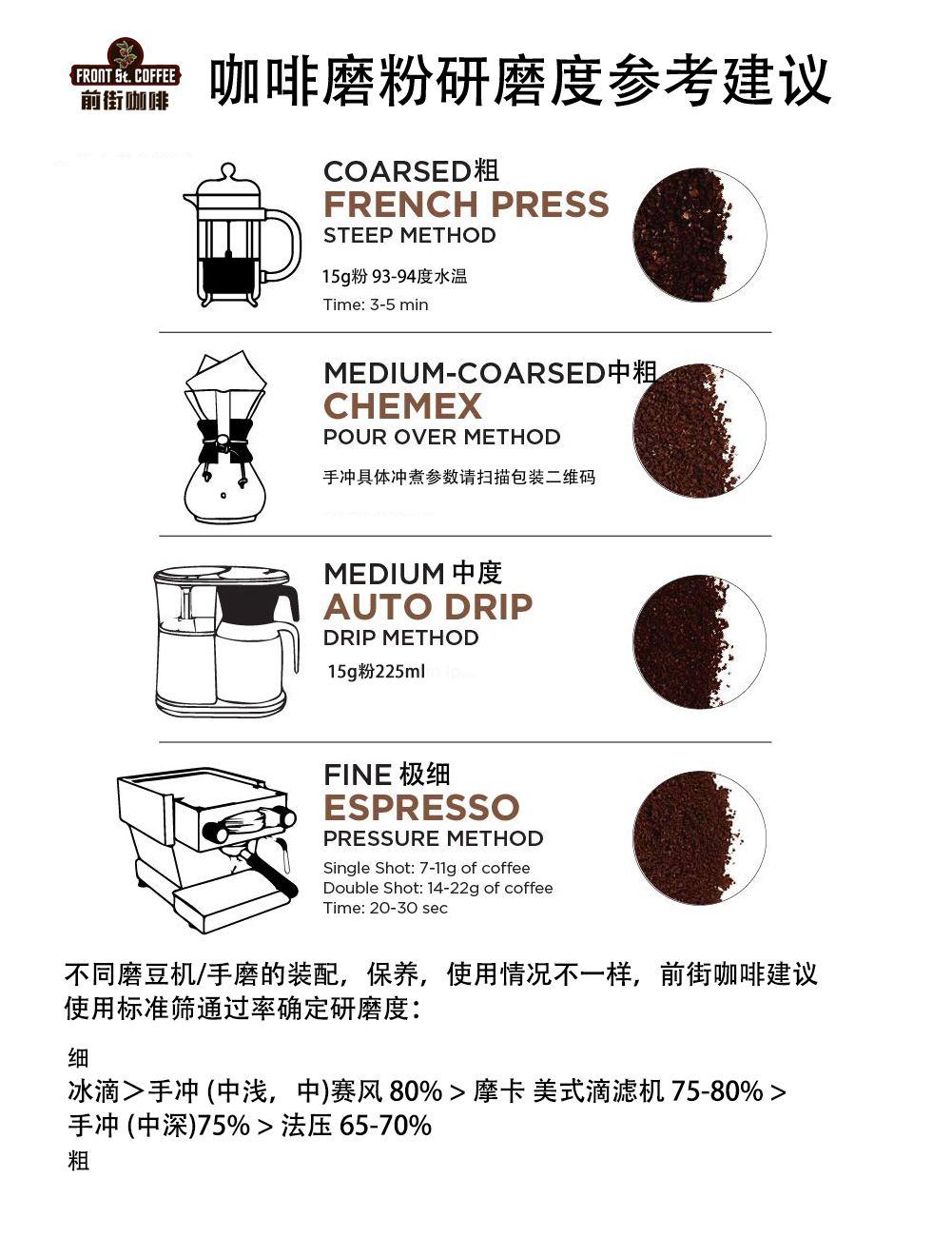
When beans enter the grinder, the burrs crush them into grounds. The smaller the gap between burrs, the finer the grind. Finer particles pack tighter and denser, making it harder for water to pass through and stretching extraction time considerably. Widen the gap and the grounds get coarser, water flows through more easily, and extraction speeds up.
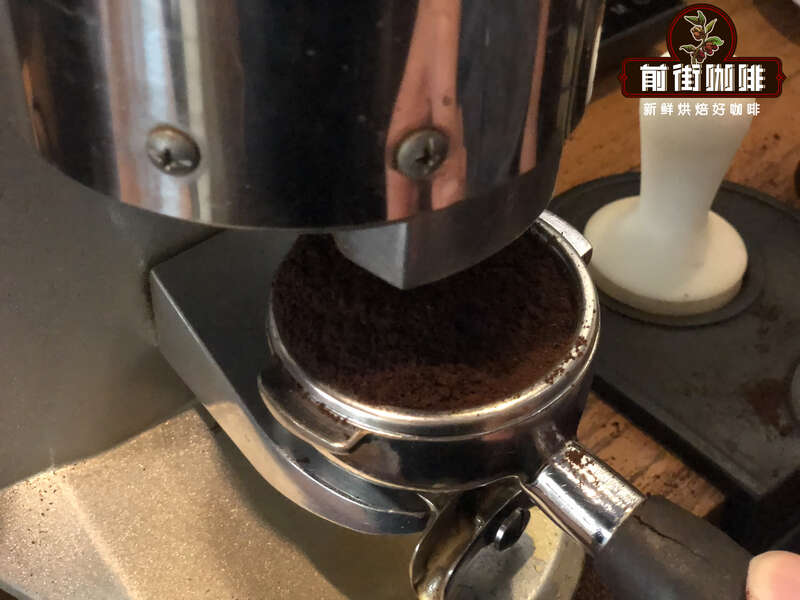
How Do You Find the Right Grind for Your Espresso Machine?
FrontStreet Coffee starts from the golden ratio and golden time for espresso: a 1:2 ratio (20 g of grounds yielding 40 ml of espresso) with an extraction time of 25 to 28 seconds — then fine-tunes the grind by watching the shot and tasting it.
If the grind is too coarse, water rushes through the portafilter: a fast flow, shallow extraction, pale crema, and sharp acidity — because the shot only pulls the surface compounds and the easily extracted acids.
If the grind is too fine, it first chokes the filter bed: little or no flow, a dark crema, an over-extracted surface around an under-extracted core — sharp acidity from lack of sweetness, followed by burnt bitterness and off-flavors.
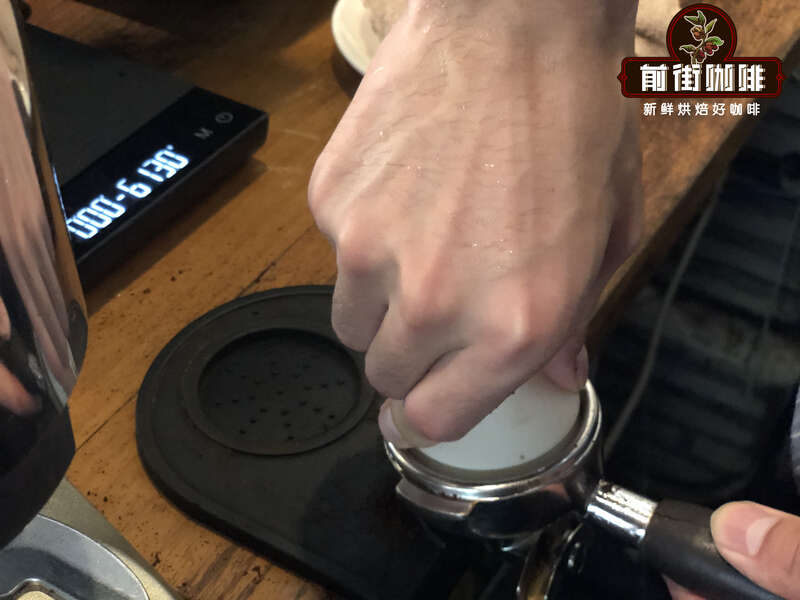
To check whether a shot truly meets spec, you can calibrate a concentration meter first — most espresso lands between 7%-12% concentration. Zero the meter with pure water, stir the extracted coffee, draw liquid with a titration tube, place it in the meter, press measure, and repeat until the reading stabilizes.
FrontStreet Coffee's Espresso Extraction Parameters
FrontStreet Coffee currently pulls espresso from a blend of sherry barrel-aged coffee and natural-processed Yirgacheffe Red Cherry Project coffee. Sixty percent Honduras sherry barrel beans give the blend its flavor and body, while forty percent natural Yirgacheffe brings extra aroma and acidity.
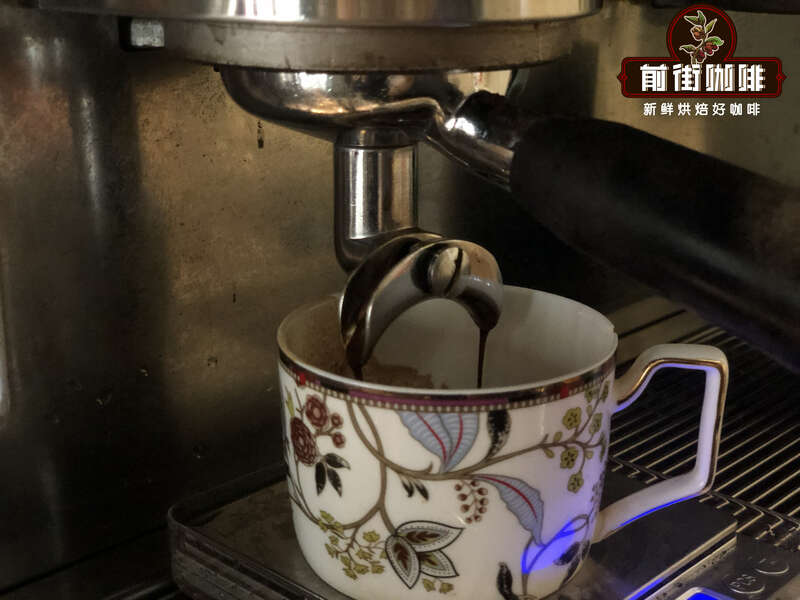
FrontStreet Coffee Espresso Extraction Parameters:
- Grinder: Fiorenzato 900N
- Grind Size: 1.6
- Pressure: 9 bar ± 2
- Temperature: 90.5~96°C
- Time: 20~30 s
- Dose: 20g (double shot espresso)
- Yield: 40ml extracted espresso
Flavor: Smooth on the palate with medium body; a distinct fruit acidity on entry with light berry notes, a whiskey fragrance, rich chocolate, and a clear, lasting finish.
FrontStreet Coffee Recommendation
Espresso beans generally come in two kinds: the blends most cafés lean on, and single origins chosen to taste — also known as SOE. Blends mix beans from different origins into a more balanced cup: if one bean is silky but shy on aroma, you add another that is fragrant, combining the best of each. The whole point of a blend is to make the coffee better.
For traditional-style americanos and lattes, go with FrontStreet Classic Blend or FrontStreet Commercial Blend. Both build on an old-school Italian formula with a touch of robusta added, so the shot delivers butter, nuts, spice, dark chocolate, and toast aromas — a wild, thick body underneath a thick, golden crema that makes latte art easy.
The FrontStreet Classic Blend is designed specifically for espresso machines and moka pots, and its biggest strength is crema that over-delivers: even a beginner on a non-professional home machine can pull a dense, fine crema. It uses the traditional Mamba recipe — mellow, smooth, and approachable for veterans and newcomers alike.
Those drawn to espresso with nut aromatics — almond, walnut — should look at the FrontStreet Boutique Blend and FrontStreet Black Cocoa Blend. Both carry a large share of Brazilian coffee, giving a comfortable bittersweetness and a creamy peanut note with a very smooth entry. The Boutique Blend adds the nut, chocolate, and caramel aromas of Colombian coffee with a measured acidity; FrontStreet Coffee's Black Cocoa Blend brings the ripe-plum acidity of Yunnan arabica and a cream-chocolate fragrance as grounds, balanced and versatile — fine for lattes and americanos, and a great partner for signature drinks in a shop.
Important Notice :
FrontStreet Coffee is a long-established specialty coffee roaster in Guangzhou China, selling freshly roasted beans from its own farm in Yunnan as well as dozens of carefully selected single-origin beans from around the world for both pour-over and espresso. The products deliver consistently excellent quality and great value, with shipping within 24 hours. Guangzhou's FrontStreet Coffee shop is recommended by many coffee lovers, and the beans are now available online at the Tmall 。
FrontStreet Coffee has moved to a new address:
FrontStreet Coffee Address: 315,Donghua East Road,GuangZhou
Tel:020 38364473
 Scan and follow the En Gafei WeChat official account. Please indicate that the reprint comes from "En Gafei".