Brazil Cerrado Coffee Pour-Over Method Taste Flavor Characteristics Brazil Cerrado Coffee Bean Roasting Records
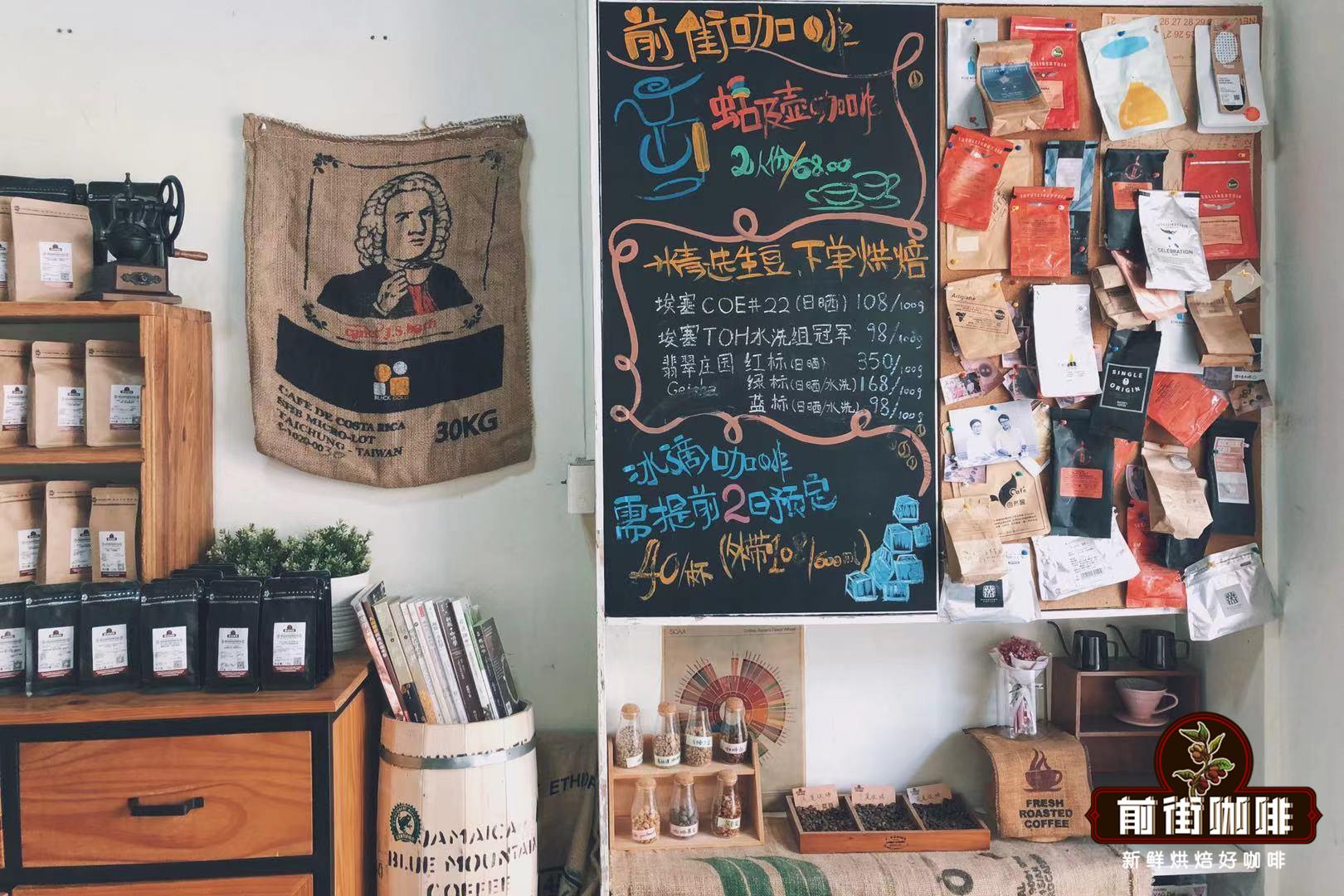
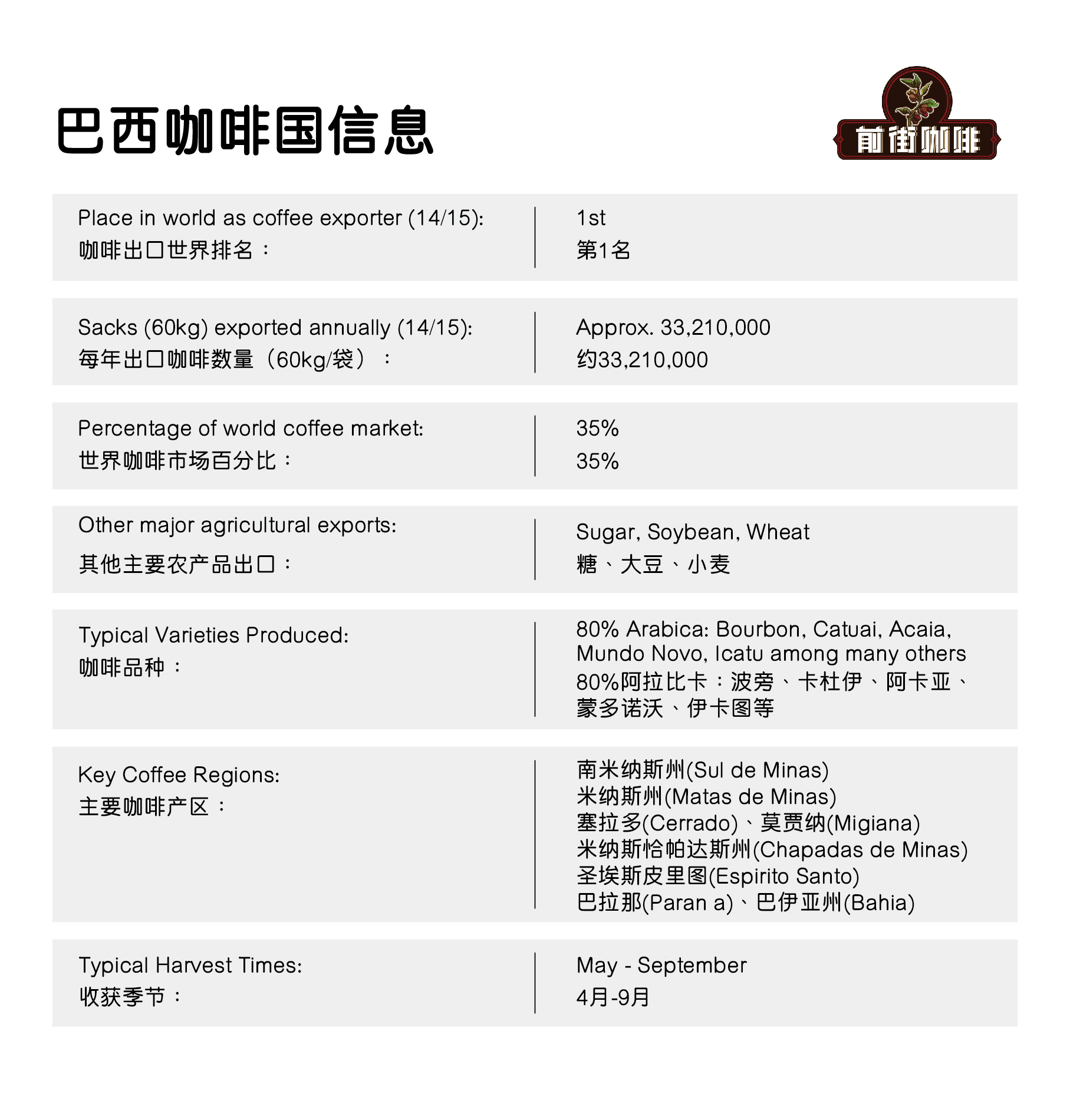
Brazil ranks first in global coffee production, and any shift in the country's output ripples through world coffee prices. As the planet's largest coffee-producing nation, Brazil deserves attention above all for the Cerrado beans of central-western Minas. FrontStreet Coffee's daily-bean series includes a Brazilian Red Bourbon with distinct chocolate and nutty flavors, moderate body, and smoothness — an excellent pick for anyone who dislikes acidic coffee.
Customers who come to FrontStreet Coffee tend to fall into two camps: those who love bright, acidic cups and those who prefer full-bodied ones — and FrontStreet has representative beans for both. For body-lovers and coffee newcomers alike, FrontStreet recommends this Brazilian Cerrado Red Bourbon: its flavor profile is so classically recognizable that even an occasional coffee drinker will know exactly what they're tasting.

Brazil: The Coffee Kingdom
Brazil occupies eastern South America along the western Atlantic, bordering every country on the continent except Ecuador and Chile. Most of its territory lies between the equator and the Tropic of Capricorn, giving it the world's most extensive tropical range: one-third tropical rainforest climate, two-thirds tropical savanna. Those superb tropical conditions are ideal for growing economic crops like coffee.
Brazil has fully leveraged its tropical geography, prioritizing coffee production and sales so thoroughly that its output, export volume, and per capita consumption have led the world for decades — earning it the title "Kingdom of Coffee."

Brazilian Coffee Flavor: Smooth and Sweet
Compared with other Central and South American origins, Brazil's growing regions sit at significantly lower altitudes, on flat terrain, without microclimates, and with coffee trees grown in full sun. The result is the celebrated "soft bean" character: low acidity, nutty notes, chocolate sweetness, balanced acidity and bitterness, good body, and often a touch of wood and earth — a world apart from the vivid florals and citrus of African beans.
Five Flavor Classifications of Brazilian Coffee Based on Aroma
Brazilian coffee prizes the body and sweetness of soft beans, presenting an overall mild, smooth profile — hence five grades to distinguish them: Strictly Soft, Soft, Softish, Hardish, and Rioy.
Regional Classification of the Five Grades
Strictly Soft: South Minas, Cerrado, Mogiana, and Planalto da Bahia.
Soft: Bahia, southeastern mountainous Minas, Paraná, central-western São Paulo, and the mountains of Espírito Santo.
Softish: Eastern and northeastern Minas.
Hardish: Low-altitude areas of Paraná and Espírito Santo.
Rioy: The flatlands of Espírito Santo and lower-altitude southeastern Minas.
Brazilian coffee may seem monotonous at a glance, but recent years have produced numerous specialty lots, with South Minas, Cerrado, Mogiana, and Planalto da Bahia showing the most promise!
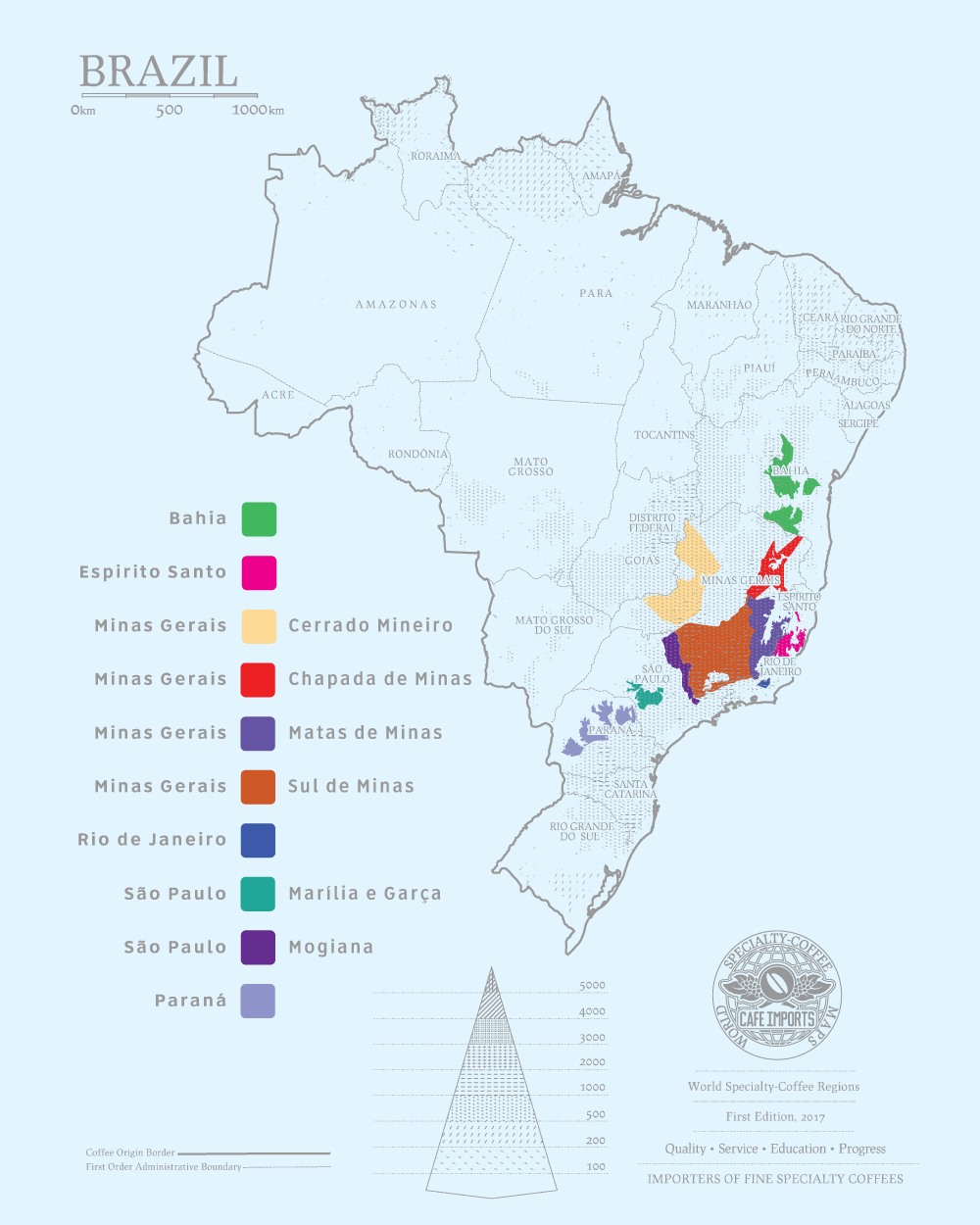
Brazilian Coffee Bean Growing Regions
São Paulo State (Mogiana, Centro-Oeste)
Paraná State (Norte Pioneiro do Paraná)
Bahia State (Planalto da Bahia, Cerrado da Bahia, Atlântico Baiano)
Espírito Santo State (Montanhas do Espírito Santo, Conilon Capixaba)
Minas Gerais State (Sul de Minas, Cerrado Mineiro, Chapada de Minas, Matas de Minas)
Rondônia State (Rondônia)
Rio de Janeiro State (Rio de Janeiro)
São Paulo State
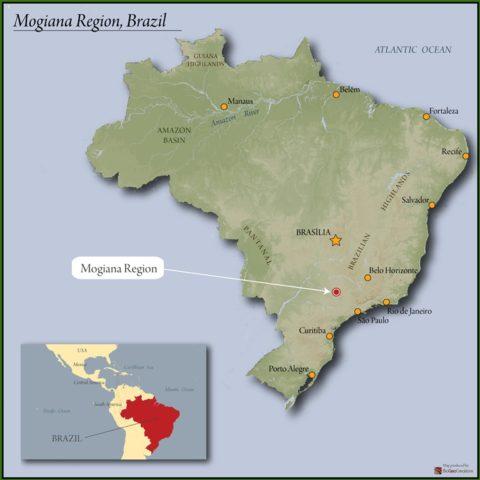
Mogiana
Mogiana sits very close to southern Minas, its coffee grown among shrubs, grassland, and other vegetation. Many farming families work here — some running traditional large estates, others small modern operations. The marriage of modern technology and mountain coffee culture has produced some of Brazil's finest beans.
Centro-Oeste (Garça, Marília and Piraju)
Coffee here is typically grown on large estates combined with traditional production lines. Output appears to be falling, but the focus has shifted toward higher-quality green beans.
Paraná State
Norte Pioneiro do Paraná
This state was once Brazil's largest producing region and retains its own production technology. After watching per-tree yields decline in their coffee forests, Paraná growers devised a new "closed planting system": denser planting per hectare that better withstands cold winds while keeping yields more consistent.
Bahia State
Atlântico Baiano
Mainly Robusta, grown on large farms.
Planalto da Bahia
Located in central Bahia, producing hand-picked Arabica, primarily washed processed.
Cerrado da Bahia
Located in western Bahia and widely considered Brazil's newest coffee region, with modern irrigation and harvesting technology deployed extensively.

Espírito Santo State
Montanhas do Espírito Santo and Conilon Capixaba
The state divides into two zones. The north grows Robusta on estates large and small; the south produces classic mountain-grown coffee in generally smaller volumes. Both washed and natural processing are used here.
Minas Gerais State
Sul de Minas (South Minas)
A smallholder region producing roughly 8-10 million bags of mountain-grown Brazilian coffee. Suitable altitude, undulating terrain, and a coffee-friendly climate — rain concentrated in the fruiting months, dry weather through harvest.

Cerrado Mineiro
Across Brazil's vast 27,000 square kilometers of coffee cultivation, the most famous growing region is unquestionably the Cerrado in Minas Gerais. Where other Brazilian regions compete on quantity, Cerrado beans are renowned for quality.
Cerrado as a whole is an enormous savanna covering 22% of Brazil's land area, its southern plateau rich in native plants and animals; the Portuguese word means "closed place." The savanna stretches from Mato Grosso in the southwest through central-western Minas into western Bahia. But when FrontStreet Coffee says "Cerrado coffee region," we mean only the coffee-growing zone above 1,000 meters in central-western Minas — the essence of the savanna, with distinct wet and dry seasons and a relatively cool plateau climate that lets coffee cherries mature with unusual uniformity.
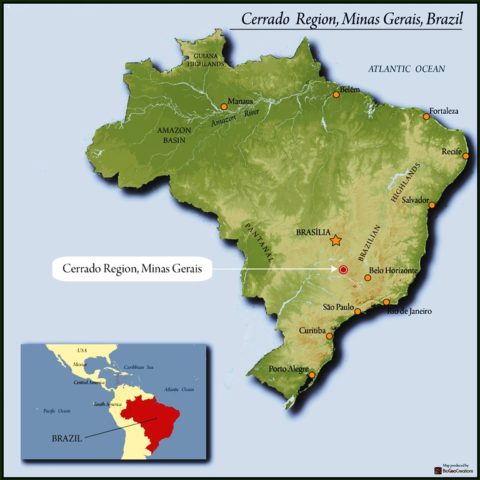
The Cerrado growing region sits at roughly 1,000 meters with an average annual temperature around 21°C. Most importantly, the soil is extremely fertile and mineral-rich, feeding the beans amply. High altitude plus fertile soil is the essential formula for specialty beans that are sweet, full-bodied, and clean.
Cerrado is one of Brazil's renowned premium regions, with comparatively refined processing. Unlike naturally processed Santos coffee, Cerrado beans typically use washed or semi-washed methods. Premium Cerrado carries nut aromas with a mouthfeel like Santos but more refined and clean: moderate aroma, a smooth, soft entry with a slightly sweet finish, charming sweetness, and special flavors of tropical fruit and almond. The entry shows tropical fruits and nutty almond aromatics; the aftertaste carries genmaicha tea notes; and as the cup cools, new layers of almond sweetness, milky creaminess, and tea fragrance unfold.

FrontStreet Coffee — Brazilian Cerrado Red Bourbon
Country: Brazil
Region: Cerrado
Altitude: 1000 meters
Variety: Red Bourbon
Processing: Semi-natural
Flavor: Roasted nuts, chocolate, cream, peanuts, caramel
Roasting Recommendations
Brazilian beans are all about body, and FrontStreet Coffee roasts medium to spotlight exactly that.
Machine: Yangjia 800N, green beans 550g
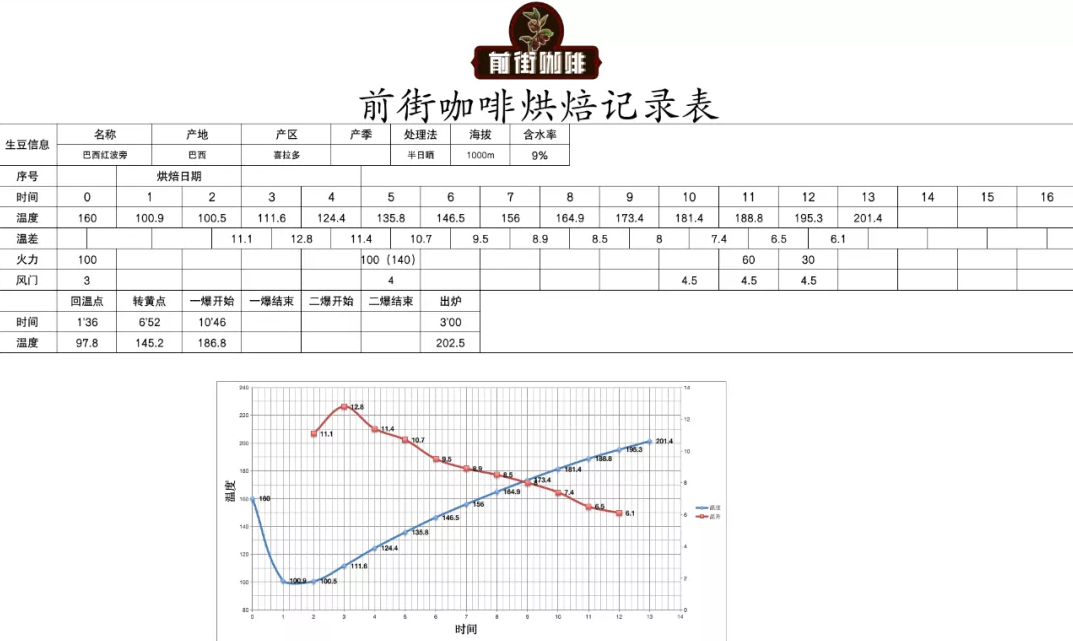
Entry temperature: 160°C
Yellowing point: 6'52", 145.2°C
First crack: 10'46", 186.8°C
Development after first crack: 3'00", discharged at 202.5°C
How Does FrontStreet Coffee Brew Cerrado Coffee Beans?
Brewing Parameters
Dripper: Kono dripper
Water temperature: 88°C
Coffee dose: 15g
Coffee-to-water ratio: 1:15
Grind size: Medium-fine grind (70-75% pass-through rate on China standard #20 sieve)
For darker-roasted beans built on body, FrontStreet Coffee reaches for the Kono dripper. The Kono's signature is its immersion character, which pulls more compounds into the cup and thickens the mouthfeel; because its few ribs sit only at the bottom, the filter paper seals tightly against the walls, restricting airflow, slowing the drawdown, and extending water-to-coffee contact.

The 88°C water temperature is deliberately on the low side — it keeps the brew from pulling out the undesirable flavors that grow as roasts get darker.
FrontStreet brews in segments: 30g of water to bloom for 30 seconds, then small circular pours to 125g; when the level drops enough to expose the bed, continue to 225g (timing from the start of bloom), for a total extraction time of 2 minutes.
Cerrado Coffee Flavor Description
The entry shows obvious sweetness with light lemon aromatics, moving through rich nut flavors into distinct dark chocolate, finishing rounded and smooth.

Brazilian Coffee Processing Methods
The four most common methods are natural, pulped natural, semi-washed, and washed — with natural the most popular. Since Brazil's two flagship regions, Cerrado Mineiro and Mogiana Paulista, both harvest during the dry season, natural processing dominates there.
Natural Processing
Brazilian natural differs significantly from the washed methods common elsewhere in Central America and Colombia. Because "unwashed" couldn't capture the technique's essence, Brazilians borrowed the term "natural" from Ethiopian coffee — with an important caveat: Brazilian "natural" describes a harvesting approach rather than the traditional Ethiopian process, because Brazilians let the coffee soak up sun on the branch and reach full maturity before picking.

Freshly harvested cherries are laid on patios to dry, and the dried fruits are called "Boia" — "ball" in English. Since harvest happens without sorting, many cherries are already overripe by drying time and turn raisin-like. More modern plantations screen before drying, floating all the fruit in water tanks: unripe cherries, being lighter, float, and siphon equipment removes them. Less-equipped plantations can't remove unripe cherries completely — which is why many Brazilian naturals contain underripe beans.

Traditionally, naturals carry leather, tobacco, and woody flavors, but Brazilian natural brings sweetness and balanced fruit aromas instead. Dr. Flávio Borem of the Federal University of Lavras (UFLA) has studied green coffee natural processing in depth; by his theory, naturals demand strict control of the beans' metabolic rate during drying to maximize sweetness, flavor complexity, and body. Only tight control of external temperature and drying speed preserves the integrity of the coffee's cellular structure — cell walls are fragile during drying, and once that structure breaks down, quality is beyond saving.
Pulped Natural Processing
Pulped natural processing arrived in Brazil 25 years ago via the well-known equipment manufacturer Pinhalense, and it is Brazil's second most prevalent method — called "Cereja Descascado" locally ("descascado" meaning peeled, "cereja" meaning fruit). In Central America the same method goes by "honey processing." It requires a pulper, which strips skin and pulp from the beans; the mucilage is then washed down to the ideal degree before drying. The method's signature is that the beans never ferment, and since some mucilage clings to the surface, drying must be quick to prevent spoilage or mold. Once dried, the beans rest in wooden boxes called "Tulhas" so flavor and aroma stabilize. Coffees processed this way show strikingly prominent sweetness and unique character.

Semi-Washed Processing
Semi-washed is now somewhat outdated in Brazil and easily confused with pulped natural, yet it has its own merits: exceptional body and high sweetness. It demands enormous skill from the grower — one misstep and the coffee is undrinkable. Like pulped natural, it starts with a pulper, but semi-washed removes as much skin, pulp, and mucilage as possible from the bean surface. In Central America, washing machines follow pulping directly, hence the name "mechanical washing." The resulting beans are very clean and, with no fermentation needed, can go straight to drying. Semi-washed coffee dries quickly under constant temperatures, so its flavor is purer, with less mustiness than slower-dried coffees, and full of fruit.

Washed Processing
Finally, washed processing. Although many Brazilian growers have recently taken a keen interest in it, market demand at home and abroad remains low: washed Brazilian coffee has a poor international reputation, and Brazil's washing technology started late and isn't yet mature. The method closely resembles semi-washed, except that washed coffee uses fermentation to remove the mucilage. The reward is clean flavors and pleasant acidity.

Conclusion
Those are Brazil's four most common processing methods. Once processing is done, only the parchment remains on the beans, and the coffee undergoes final screening to meet specialty standards. Parchment coffee goes to centralized drying plants for final sorting, bagging, and export preparation. Workers first grade the beans by density using vibration screening — density being one of the key measures of coffee quality — then clean them again and send them to the lab for color grading, where colorimeters use lasers to detect surface defects and stains. Brazilian green sorting is highly mechanized overall: machines not only eliminate avoidable errors but also ease the labor shortages caused by high wage levels.
FrontStreet Coffee Recommendation
If you just want a first taste of what Brazil does best, FrontStreet Coffee's pulped natural Cerrado is the classic daily bean: from Brazil's most celebrated quality region, a Red Bourbon — the variety common across South America — that at a medium roast opens with rich notes of creamy peanut, toasted bread, caramel, and hazelnut. The cup is round and smooth, with no acidity and only a whisper of bitterness, and it brews beautifully not only as pour-over but in a moka pot, as an espresso SOE, in a siphon, or in a French press.
FrontStreet's other Brazilian single origin, Queen Estate, comes from Mogiana near southern Minas, where fertile red volcanic soil feeds the cherries and builds a full, aromatic cup; the region pairs traditional farm operations with modern, standardized management, which has lifted quality considerably. Queen Estate grows the rare Yellow Bourbon, a natural mutation of Red Bourbon with an even cleaner fruit character, and through hand brews, moka pots, or home espresso machines it reveals a sugarcane sweetness you won't find elsewhere, layered over fruit and chocolate.
Brazilian coffee also anchors FrontStreet's espresso blends, prized for low acidity, balance, and approachable pricing. The crema-rich Classic Blend, the nutty Premium Blend, the balanced Black Cocoa Blend recommended by many baristas, and the shop-oriented Commercial Blend all include Brazilian components — supplying chocolate and cream aromatics, gentle sweet-sour-bitter structure, and a steady tonality that makes espresso extraction more forgiving and consistent.
Important Notice :
FrontStreet Coffee is a long-established specialty coffee roaster in Guangzhou China, selling freshly roasted beans from its own farm in Yunnan as well as dozens of carefully selected single-origin beans from around the world for both pour-over and espresso. The products deliver consistently excellent quality and great value, with shipping within 24 hours. Guangzhou's FrontStreet Coffee shop is recommended by many coffee lovers, and the beans are now available online at the Tmall 。
FrontStreet Coffee has moved to a new address:
FrontStreet Coffee Address: 315,Donghua East Road,GuangZhou
Tel:020 38364473
 Scan and follow the En Gafei WeChat official account. Please indicate that the reprint comes from "En Gafei".