How to Brew Golden Mandheling Coffee Beans - Indonesian Mandheling Pour-Over Coffee Tutorial and Flavor Profile
For professional barista communication, follow FrontStreet Coffee.
Mandheling is a world-renowned specialty coffee that has won over countless palates with its low acidity and rich, mellow profile. It is a region FrontStreet Coffee has explored for many years. Mandheling is, in truth, a beautiful misunderstanding—FrontStreet has told that backstory many times, and many people now know it. The flavor could be described as classic with a wonderful mouthfeel, predominantly heavy in tone. On entry you feel the weight of the body with a vibrant, lively energy; low in acidity and free of astringency, with body and bitterness blending seamlessly. Little wonder that before Blue Mountain was discovered, Mandheling was considered the most full-bodied coffee in the world. Tasting it, the smoothness on the tongue is unmistakable, a faint herbal aroma drifts beneath, and the sweetness in the finish is intoxicating—the source of FrontStreet Coffee's lasting obsession with Mandheling.
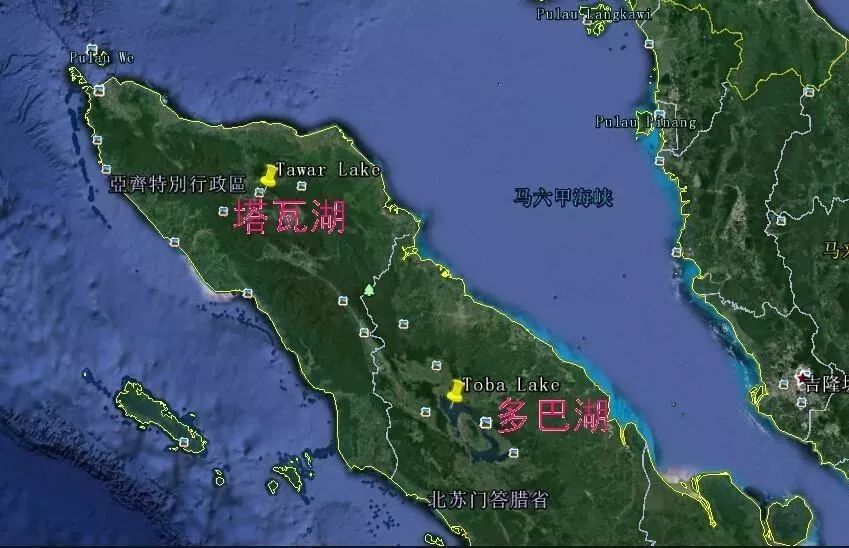
The Indonesian Sumatra Production Region
Indonesia sits in southeastern Asia, and its coffee history dates to 1696, when Dutch plantation owners went looking for broader coffee-growing territory and, after extensive exploration, settled on the island of Java. Thirty years on, Indonesia had built a solid footing in the coffee market. That today's Indonesian coffee representative is Mandheling surprises no one, though: much of the Java coffee originally shipped to Europe actually came from the Sumatra region, and Mandheling comes from Sumatra. Sumatra can rightly be considered one of Indonesia's most important coffee regions.
Mandheling is also known as "Sumatra Coffee." The hometown of premium Mandheling—the Lake Toba region—lies at the northern end of Sumatra. Lake Toba sits in central North Sumatra Province, where Dutch colonists moved "Java coffee" north in 1888. Both the Lintong area in southern Sumatra and the Lake Toba area may be called Mandheling, but Lintong is in fact the true Mandheling production region. Mandheling is produced in the mountains surrounding Lake Toba, which lies north of Medan, the capital of Sumatra—a high-altitude freshwater lake averaging about 900 meters above sea level. What is commonly called Mandheling refers to Typica or its variants grown in the mountains around Lake Toba.
Lake Tawar
Lake Tawar lies in the Gayo Mountains of northern Aceh Province, Sumatra, at the northern end of the island. Most coffee from North Sumatra is Gayo, predominantly of the Ateng variety; coffee from the northern end around Lake Tawar may be called Aceh coffee or Lake Tawar coffee. Its area is less than one-tenth of Lake Toba's, yet in recent years its coffee quality and production have overtaken Toba's.
The Name Mandheling
Mandheling originally referred to an Indonesian tribe. After Japanese soldiers stationed in colonial Indonesia returned home, they could not forget the delicious local coffee and asked trading contacts to have locals gather premium beans—including this one. The Japanese loved the beans, but since commercial sources could not easily be disclosed, the locals casually offered "Mandheling," and through this misunderstanding the name stuck to the coffee. That local was the owner of Indonesia's PWN company (Pwani Coffee Company). PWN was the first to export gold Mandheling to Japan, and only Mandheling produced by this company is authentic gold Mandheling. FrontStreet Coffee has used PWN gold Mandheling for many years. PWN also switched from 60kg bags to 30kg bags, and the production region changed from Lintong to the GAYO Mountains.
Processing Method
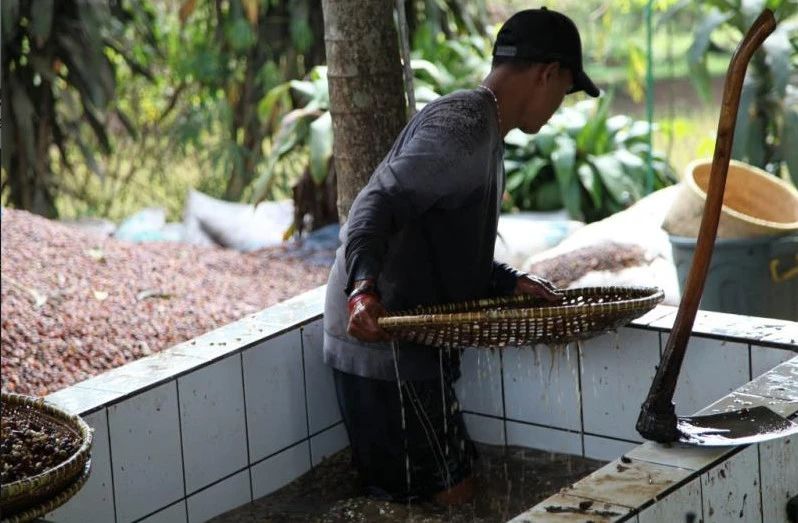
-Special Processing Method: Wet Hulling- Most Mandheling uses the unique Sumatran processing method—wet hulling. With local weather that is often rainy and typhoon-prone, the stable sun needed for drying is impossible, and the local economy long could not afford the costlier washed method—so the very local wet-hulling technique was born. Indonesian coffee is no longer the impoverished scene it once was, and many estates and companies today could afford washed processing. So why has wet hulling not been abandoned? FrontStreet believes wet hulling is precisely what made Mandheling famous worldwide: mention Mandheling and wet hulling comes to mind—the two have become inseparable.
Wet hulling unfolds in two stages. The first: a wooden peeler removes skin and pulp, followed by 3 hours of fermentation, then drying down to 30-50% moisture—half-dry, half-wet. The second: the mucilage and parchment layer are removed, and drying continues. The full drying process takes 2-4 days, bringing moisture down to 12-13%.
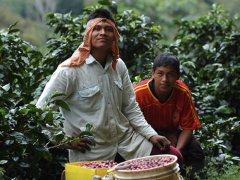
Gold Mandheling is produced in the Lintong region of northern Sumatra, Indonesia. Harvesting is limited to hand-picking fully ripe single cherries to safeguard the initial bean selection. The cherries are processed by the SEMI-WASHED method and naturally sun-dried; after hulling they undergo another drying refinement, two rounds of green bean cleaning, and four rounds of hand-picking! It is, quite literally, a strictly selected premium Mandheling.

FrontStreet Coffee Gold Mandheling Roasting Analysis
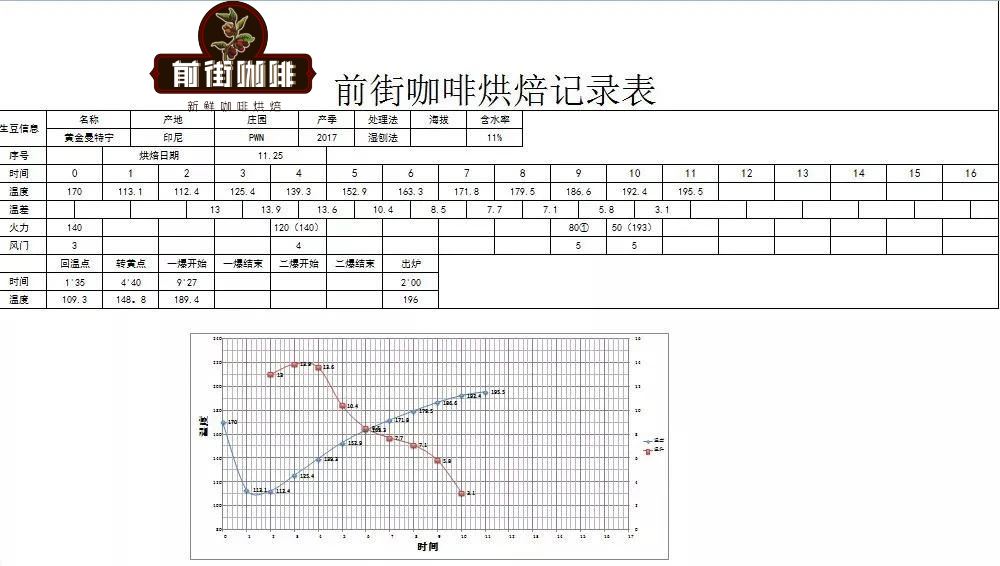
Gold Mandheling is a higher-moisture green bean, deviating further from the norm than sun-dried beans, so special care is needed during drying. For high-moisture beans, close the air damper immediately after charging, steam for 30 seconds, then open it to 3 until the beans turn light green or white; then open the damper to 4, and after first crack open it to 5 (maximum).
FrontStreet recommends keeping good records before roasting—moisture content and density of the beans, origin, processing method, and the roasting room's temperature and humidity—and planning the roast curve in advance. During the roast, log the chemical and physical changes; it will help you understand the final result and refine the curve.
Preheat the roaster to 200°C with the damper at 3; after 1 minute, adjust the heat to 160°C, damper unchanged. Roast to 5'40", when the temperature reaches 148°C, the bean surface yellows, the grassy smell vanishes, and drying is complete—adjust heat to 140°C and damper to 4. At 9'40, ugly wrinkles and dark patterns appear on the bean surface and the toast aroma clearly turns to coffee aroma: the prelude to first crack. Listen carefully from here. At 9'54" first crack begins; reduce heat to 60°C and open the damper fully (ease the heat down carefully—do not drop it so far that the cracks fall silent), and discharge at 204.5°C.
FrontStreet Coffee Gold Mandheling Cupping Report
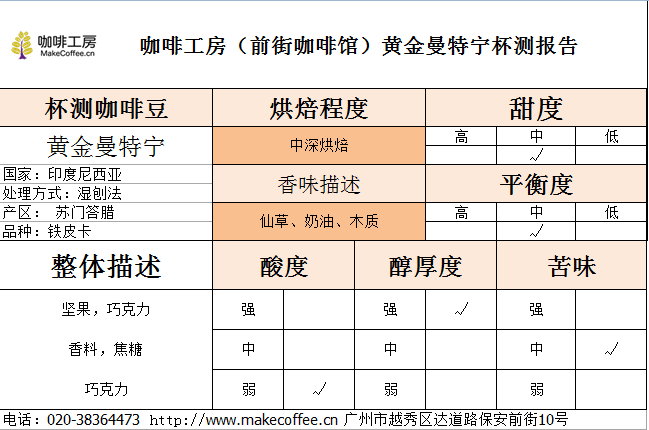
Gold Mandheling tastes cleaner than Lintong Mandheling. Mandheling's original herbal, earthy, and woody notes are nearly gone, while caramel sweetness is stronger and the fruit acidity brighter and more elegant. Lintong Mandheling is generally best roasted past second crack to reduce off-flavors, but Gold Mandheling shows good clarity and sweetness whether discharged before or after second crack—leaving far broader room for roasting interpretation.
How to Brew Indonesian Mandheling Coffee?
FrontStreet suggests brewing with freshly roasted beans to maximize the coffee's rich flavors. Beans shipped by FrontStreet are roasted within 5 days of dispatch, because freshness affects flavor enormously. FrontStreet's philosophy is "freshly roasted good coffee," ensuring every order arrives at its freshest. The resting period is about 4-7 days, so beans reach customers right at their flavor peak.
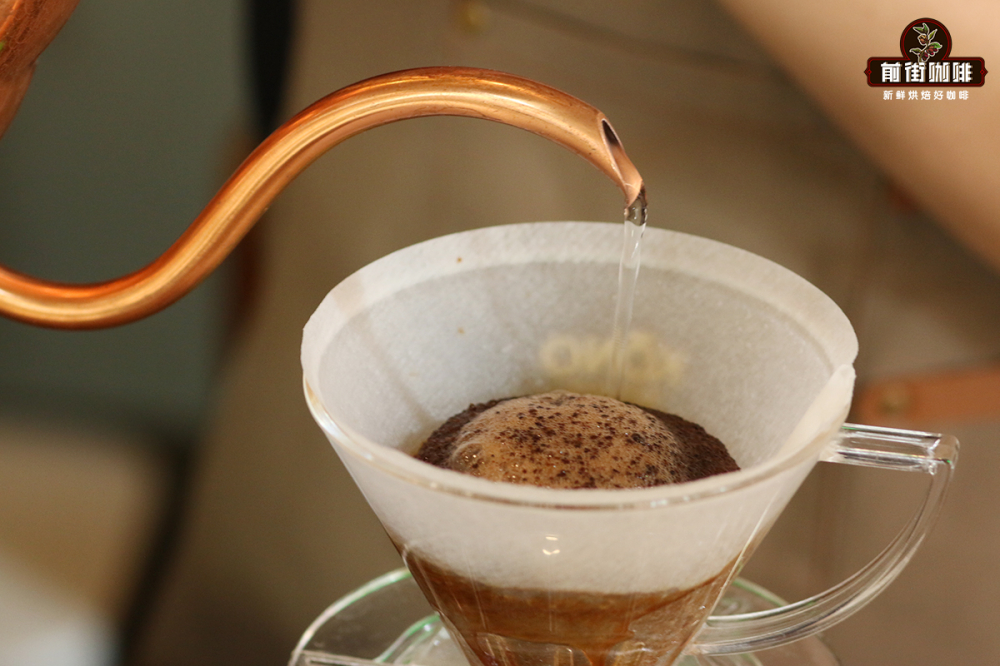
FrontStreet typically brews its daily Mandheling with a KONO dripper, which draws out a rounder, fuller body and more direct flavor expression. The KONO's exhaust, however, is relatively poor: its ribs run straight and cover only one-quarter of the dripper's depth; everywhere above that, the paper fits tightly against the wall, forming a sealed state.
So once the beans have finished resting, I choose the KONO: its only exhaust zone is that quarter-depth rib area. When the water level rises past the ribs, pressure builds with the weight of the water. Because the outlet is relatively small, contact time between coffee particles and water stretches out, extracting soluble substances more effectively—generally achieving the high body customers expect.
To express Mandheling's spice, herbal flavors, and full body, FrontStreet roasts it medium-dark. Medium-dark beans have a higher dehydration rate and so weigh less; during brewing the grounds do not sink fully, and when water first hits, it is absorbed immediately. Vigorous degassing forms bubbles around the grounds, creating channels—the fresher the beans, the longer the channels persist and the faster the water level drops. I generally use a coarse water flow, circling slowly, with a single-pour method.
Taking FrontStreet Coffee's Sumatra Gold Mandheling as an Example
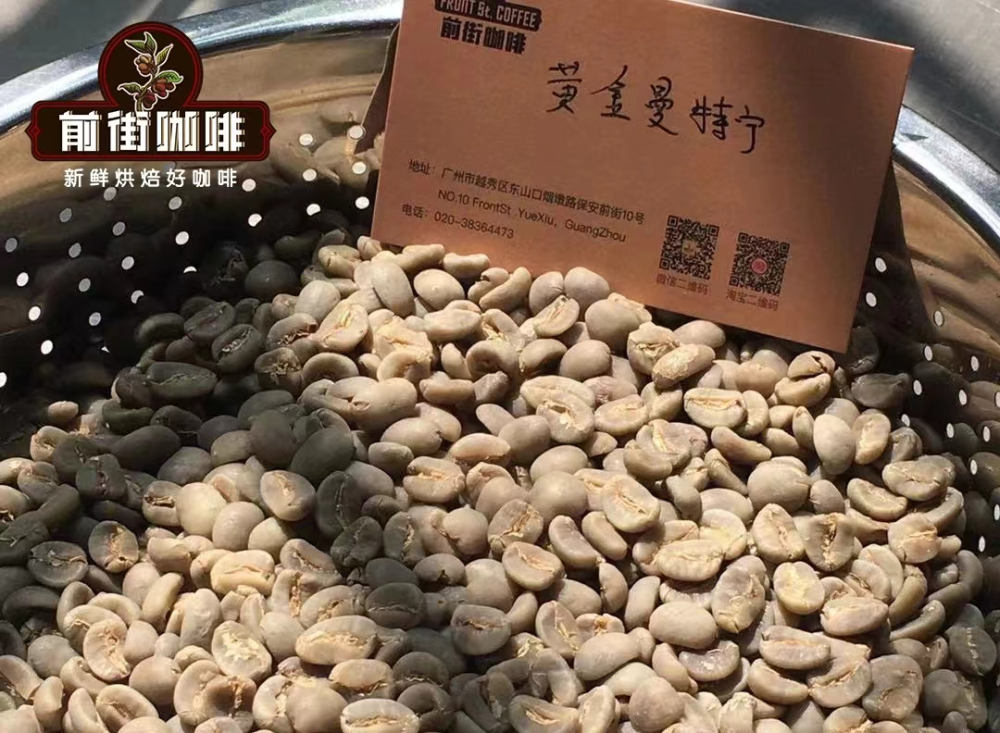
Origin: Aceh Gayo Mountain, Indonesia
Altitude: 1100-1600m
Variety: Ateng
Processing Method: Wet Hulling
Grade: G1, 3 hand-picked selections

FrontStreet Coffee Brewing Mandheling Coffee
1. Dripper: KONO
2. Water Temperature: 88°C
3. Grind Size: Medium-coarse grind, 70% pass-through rate with #20 sieve
5. Bloom Time: 30 seconds
6. Coffee-to-Water Ratio: 1:15
Technique: First pour 30g of water for a 30s bloom, then pour in circles directly to 125g and stop. Wait until the liquid level drops to 1/2, then pour at the center straight up to 225g. Extraction time is about 2:00.
[Gold Mandheling Brewing Flavor]: Nuts, spices, herbal plants, licorice, chocolate, caramel—clean and smooth flavors
For more specialty coffee knowledge, FrontStreet Coffee is always glad to share.
FrontStreet Coffee Recommendation
Coffee may have originated in Ethiopia, but by the late seventeenth century the Dutch had transplanted seedlings to Indonesia's Java island, where coffee thrived in the mild climate and fertile soil and spread to Sumatra; the word JAVA itself became a byword for coffee. Prosperity did not last: in the early twentieth century coffee leaf rust swept Java, devastating its trees, and Indonesia's coffee industry moved north to Sumatra, which today is the country's largest source of both Arabica and Robusta—over 60% of output. The high-elevation Aceh and North Sumatra provinces grow mostly Arabica, which people habitually call Mandheling coffee beans, produced in Aceh's special region in the northwest and North Sumatra Province to its southeast.
The Aceh region centers on the Gayo Mountains near Lake Tawar, surrounded by thousands of hectares of vegetation; as this emerging Mandheling region has risen, coffee lovers have discovered Aceh Mandheling's delicate aroma and bright body. The traditional Mandheling region, by contrast, lies around Lake Toba in North Sumatra's Lintong area, where diverse plant varieties, suitable altitude, the special wet-hulled process, and local microbial fermentation create the mysterious, classic Mandheling profile: rich aroma, generous body, intense flavor. Because Sumatra's rainy season overlaps with cherry harvest, sun-drying is impractical, so growers developed wet hulling: they strip skin and pulp first and rinse briefly; once the fruit is half-dry, machines remove the parchment, exposing the green beans directly to the air to speed drying—a process that has defined Mandheling's unique flavor since the 1970s.
Among all Mandhelings, gold Mandheling best satisfies perfectionist coffee lovers. FrontStreet's Golden Mandheling comes from Indonesia's PWN company, produced to exacting standards: only beans above 18 mesh are selected, and every 300g green sample must contain fewer than 3 defective beans to meet the top G1 grade. On top of that, three rounds of hand sorting remove every flaw, raising the cup's cleanliness and sweetness intensity. These standards also mean limited production—one reason FrontStreet PWN Golden Mandheling naturally stands at the top of the Mandheling family. Its fame is great, but it is supplied mainly to the Japanese and American markets, so the genuine article is scarce; in FrontStreet's product listings you can see the PWN certificates and gold Mandheling bags bearing the PWN marks—the difference between FrontStreet's beans and the rest. If you want the full wet-hulled experience of heavy body with distinctive earthy, herbal tones, choose FrontStreet Lintong Mandheling: fragrant and rich, sweetly bitter, intense on entry, with clove and woody aromatics; the medium-dark roast keeps acidity low with spice and mint notes and a powerful, lasting, full sweetness.
Brewing: FrontStreet's Mandheling is usually deep-roasted to soften acidity and spotlight the mellow richness; both the Lintong daily bean and PWN Golden Mandheling are roasted medium-dark for black chocolate and caramel while keeping Mandheling's wild herbal character. For pour-over, use 87-88°C water, 15g of coffee at a 1:15 ratio, a coarse-granulated-sugar grind, and three pours: 30ml to bloom and degas the grounds; 100ml to lift the golden crema and raise the bed; then a gentle 95ml poured at the center to heighten sweetness—yielding a thick, mellow body with caramel sweetness and chocolate and nut flavors. For espresso, FrontStreet's best-selling Classic Blend adds medium-dark Mandheling to Brazil's creamy nut base, bringing out butter, roasted chestnut, and caramel, layering in sandalwood, herbal, and spice notes plus a touch of Robusta for crema—effortless for latte art or a layered Dirty.
Important Notice :
FrontStreet Coffee is a long-established specialty coffee roaster in Guangzhou China, selling freshly roasted beans from its own farm in Yunnan as well as dozens of carefully selected single-origin beans from around the world for both pour-over and espresso. The products deliver consistently excellent quality and great value, with shipping within 24 hours. Guangzhou's FrontStreet Coffee shop is recommended by many coffee lovers, and the beans are now available online at the Tmall 。
FrontStreet Coffee has moved to a new address:
FrontStreet Coffee Address: 315,Donghua East Road,GuangZhou
Tel:020 38364473
 Scan and follow the En Gafei WeChat official account. Please indicate that the reprint comes from "En Gafei".