Indonesia PWN Golden Mandheling Coffee Origin Characteristics Flavor How to Brew? Is Mandheling Coffee American Style?

As a unique specialty coffee from Indonesia, FrontStreet Coffee's Golden Mandheling features rich herbal and dark-chocolate aromas, a thick, smooth mouthfeel, and a nutty sweet aftertaste that reminds you of sweetness. FrontStreet Coffee believes anyone who has tried this bean knows how distinctive it is.
Sumatra FrontStreet Golden Mandheling Coffee
Just as mentioning FrontStreet Coffee's Blue Mountain coffee immediately brings Jamaica to mind, discussing FrontStreet Golden Mandheling means we must mention PWN Company. PWN's full name is Pawani Coffee Company.

This is a very famous raw-bean trading company in Indonesia, founded by a Chinese-Indonesian family from Quanzhou, Fujian. Located in the important port city of Medan in Sumatra, it has handled export business since 1957, including rubber, cassia seeds, cloves, patchouli oil, and of course Sumatra coffee beans exported to Japan.
In coffee, Pawani mainly purchases Mandheling, acquiring almost all the best producing areas in Indonesia, so most beans from PWN are unique specialty coffees. FrontStreet Golden Mandheling is a product from this company. After purchasing the raw beans, they undergo multiple rounds of manual selection to choose full, flawless beans. Only these fine beans, having passed layer upon layer of selection like contestants in a talent show, can be classified as FrontStreet Golden Mandheling. FrontStreet Coffee believes the quality of FrontStreet Indonesia Golden Mandheling can definitely be considered superior Mandheling.
Unique Flavor
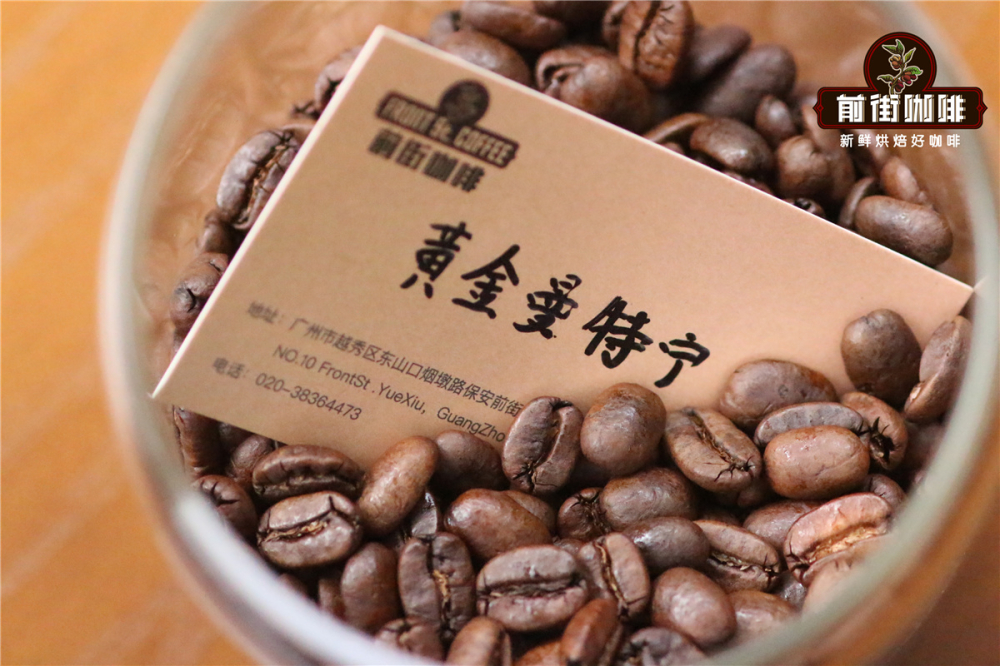
Coffee grown in Sumatra's environment and soil shows woody tones and a thick mouthfeel, with reserved flavors and a lively yet moderate acidity, plus unique flavors like herbal medicine, cedar, cocoa, and fermented fruits. Among these, FrontStreet Mandheling is the most classic bean among the Arabica varieties that account for only 25% of coffee produced in Indonesia. It has a wonderful classic taste, a heavy flavor with body and rich, lively dynamics, yet is neither astringent nor acidic, letting the body and bitterness come through fully.
When tasting FrontStreet Mandheling, you can feel the smoothness on your tongue, with light herbal plant aromas, cocoa sweetness, and fruit-like fragrances, and a deep aftertaste. Fans typically drink it as a single origin, but FrontStreet Mandheling is also an indispensable variety for blending. In other words, it suits both single-origin pour-over and espresso.

Origin Introduction
Sumatra is the largest island in Indonesia, located on the equator with a tropical rainforest climate. With high temperatures, humidity, and abundant rainfall, small farmers typically plant in original mountains and wilderness. Water resources are quite precious, so the local area developed the unique wet-hulling drying method (Giling Basah, Wet hulling). This processing method adds flavors to Sumatra coffee that differ from other regions. Among coffee beans produced in Indonesia, 25% are Arabica, while the remaining 75% are Robusta. Only the refined Arabica from northern Sumatra is marketed as Lintong and Mandheling.

Cultivation History of the Origin
The beginning of Indonesian coffee dates to the late 17th century, when the Dutch occupied Java Island, making it the headquarters of the Dutch East India Company in the East. The Dutch introduced two batches of Typica seedlings from Java for breeding. Before the 1870s, coffee-growing areas were established in Sumatra, Bali, Sulawesi, and Timor, soon expanding from Java throughout Indonesia. This prosperity did not last, however. In 1869, a sudden coffee leaf rust disease swept through the entire Asian coffee region, including Indonesia, causing large areas of Typica trees to wither and die.
To save the destroyed plantations, the Indonesian government introduced more disease-resistant Robusta varieties from Africa and elsewhere. Robusta remains Indonesia's main variety to this day. To ensure survival rates and increase production, Indonesia continuously introduced various disease-resistant varieties from other countries. Among these, Tim Tim, Bor Bor, and the Catimor series Ateng, which are hybrids of Robusta and Arabica, have good disease resistance and vigorous yields and have adapted to Sumatra's terroir.

Ateng and Tim Tim gradually replaced the original Typica varieties to become the main varieties in Sumatra and other regions. Among these, the well-known specialty representative is Mandheling. Mandheling is mainly produced around the two major lakes within Aceh Province and North Sumatra Province: Lake Toba and Lake Tawar.
Lake Toba is the world's largest volcanic lake and also Indonesia's largest highland freshwater lake. The average annual temperature here is around 22°C, in a tropical rainforest climate. The rainy, humid environment, combined with mountain altitudes of around 1,400 meters, produces various spices, timber, palm oil, and other agricultural products, including coffee. Under the misty, rainy weather, most fruit trees grow on high-altitude slopes, with several types of ferns covering their surfaces, together providing good sun protection for the coffee, so growers do not need shade cultivation.
In the Gayo Mountains of central Aceh Province, Sumatra, there is a very unique microclimate near the famous volcanic Lake Tawar. From September to April each year is the coffee cherry ripening season, when you can see many farmers busy picking in the mountains. Traditional Lintong Mandheling is grown by the Mandailing and Batak ethnic groups, while the "rising star" Lake Tawar Mandheling is grown by the Gayo people.

Here the lake water is clear and the natural environment excellent, and coffee trees are planted on mountains 1,200-1,800 meters high. Shrouded in mist year-round with large temperature differences between day and night, the volcanic soil is rich in minerals and nutrients, with fallen fruit serving as fertilizer. Farmers widely use organic methods, and combined with a long cultivation history, the coffee produced here has higher quality and yield. Many raw-bean merchants value this area, including the very famous local Pawani Coffee Company (Pwani Coffee Company, PWN).
Processing Method - Wet Hulling
Because the weather is predominantly rainy with constant typhoons, it is impossible to achieve the good weather that sun-drying requires, and the local economy is not strong enough to use the more expensive washed method. For these reasons, the locally characteristic wet-hulling method was developed. Wet hulling means that in the normal washed process, the beans with parchment are sun-dried for 2-3 days until the moisture content reaches 20-24%, then the parchment is removed.
The extremely fast processing speed of wet hulling also results in a higher defect rate in Mandheling, but FrontStreet Golden Mandheling effectively avoids this drawback. Its specifications are 19 screen or above, with fewer than 3 defective beans in a 300g raw-bean sample, belonging to the highest G1 grade, with a dark green color and a uniform flat bean shape.

FrontStreet Roasting Parameters
FrontStreet Coffee drops the beans just before second crack, preserving a bit of soft acidity. The taste has high sweetness, rich fragrance, and thickness. Flavors: toasted bread, pine, caramel, cocoa, with a slight earthy herbal taste.
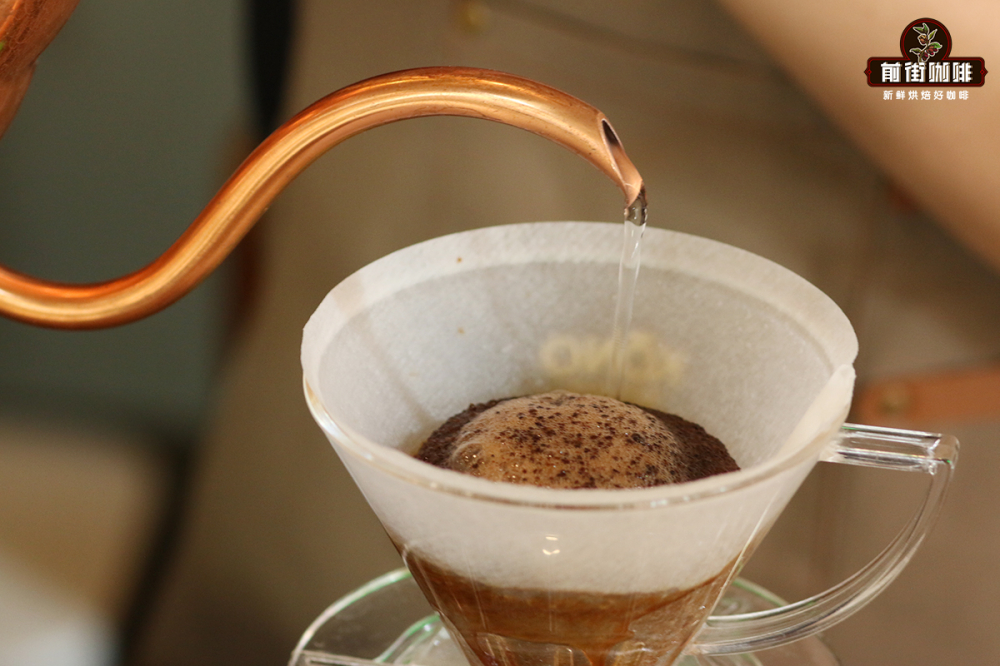
Medium-dark roasted beans generally have a higher dehydration rate, so they weigh less. When brewing, the powder does not completely sink to the bottom; as soon as water is poured, it is immediately absorbed. Because of vigorous degassing, bubbles form around the powder and create channels. These channels last longer with fresher beans, causing the water level to drop quickly. I generally use a coarse water flow and circle slowly.
FrontStreet Brewing Method
FrontStreet Coffee suggests using freshly roasted beans to maximize the rich flavors. The beans FrontStreet Coffee ships are all roasted within 5 days, because the company deeply understands how much freshness affects flavor. Its roasting philosophy is "freshly roasted good coffee," ensuring every customer receives the freshest coffee when the order arrives. The resting period is about 4-7 days, so when customers receive it, it is at peak flavor and ready to brew.
Filter: Kono dripper
Water temperature: 86°C
Dose: 15 grams
Ratio: 1:15
Grind size: medium-fine (70% pass-through rate with a #20 sieve)
Reason for choosing the Kono dripper: it has few ribs, located at the bottom, and the filter paper fits tightly against the dripper, which restricts airflow to increase contact time between water and grounds, allowing full extraction and enhancing the thick mouthfeel. This suits medium-dark roasted beans like FrontStreet Golden Mandheling.

Segmented Extraction
Use 30g of water for a 30-second bloom. With a small water flow, pour in circles to 125g, then pause. When the water level drops and is about to expose the coffee bed, continue pouring to 225g and stop. When the water level drops again and is about to expose the bed, remove the dripper, with timing starting from the bloom. Extraction time is 2'00".
Overall, only a medium-dark roasted FrontStreet Golden Mandheling can express its caramel, pine, quality herbal notes, and slight spicy aromas, bringing a solid mouthfeel. The 2020 new-crop FrontStreet Golden Mandheling was severely affected by the pandemic, making shipping resources from Indonesia to China extremely tight. As a result, the FrontStreet Golden Mandheling originally scheduled to arrive in October was delayed by a month. FrontStreet Coffee evaluated the beans immediately upon receiving them.

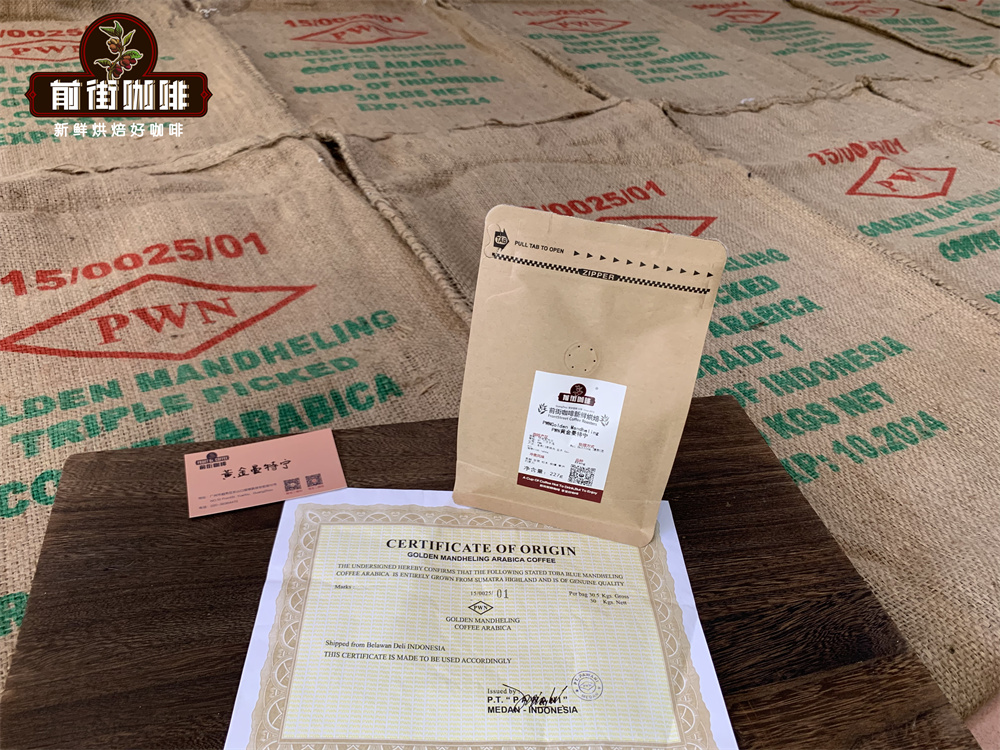
In flavor it differs from previous Mandheling. Compared with other Mandheling, FrontStreet Golden Mandheling has a stronger aftertaste and sugarcane aroma. Although everyone knows that only PWN's Mandheling can be called true FrontStreet Golden Mandheling, in reality PWN's annual production is not large. A significant portion of large-sized selected Golden Mandheling therefore is not from PWN. If you are unsure, ask the seller to provide the certificate PWN includes with its beans.
FrontStreet Coffee Recommendation
For the classic Sumatra cup, FrontStreet Coffee recommends its Golden Mandheling from PWN, a wet-hulled bean of 19 screen or above with fewer than 3 defects per 300g sample and a rich toasted-bread, pine, caramel, and cocoa profile. Brew it with a Kono dripper at 86°C using 15 grams and a 1:15 ratio to bring out its thick body and sugarcane-sweet finish.
Important Notice :
FrontStreet Coffee is a long-established specialty coffee roaster in Guangzhou China, selling freshly roasted beans from its own farm in Yunnan as well as dozens of carefully selected single-origin beans from around the world for both pour-over and espresso. The products deliver consistently excellent quality and great value, with shipping within 24 hours. Guangzhou's FrontStreet Coffee shop is recommended by many coffee lovers, and the beans are now available online at the Tmall 。
FrontStreet Coffee has moved to a new address:
FrontStreet Coffee Address: 315,Donghua East Road,GuangZhou
Tel:020 38364473
 Scan and follow the En Gafei WeChat official account. Please indicate that the reprint comes from "En Gafei".