Gold Mandheling Coffee Beans Pour-Over Tutorial: Grind Size, Ratios, and Flavor Profile Guide
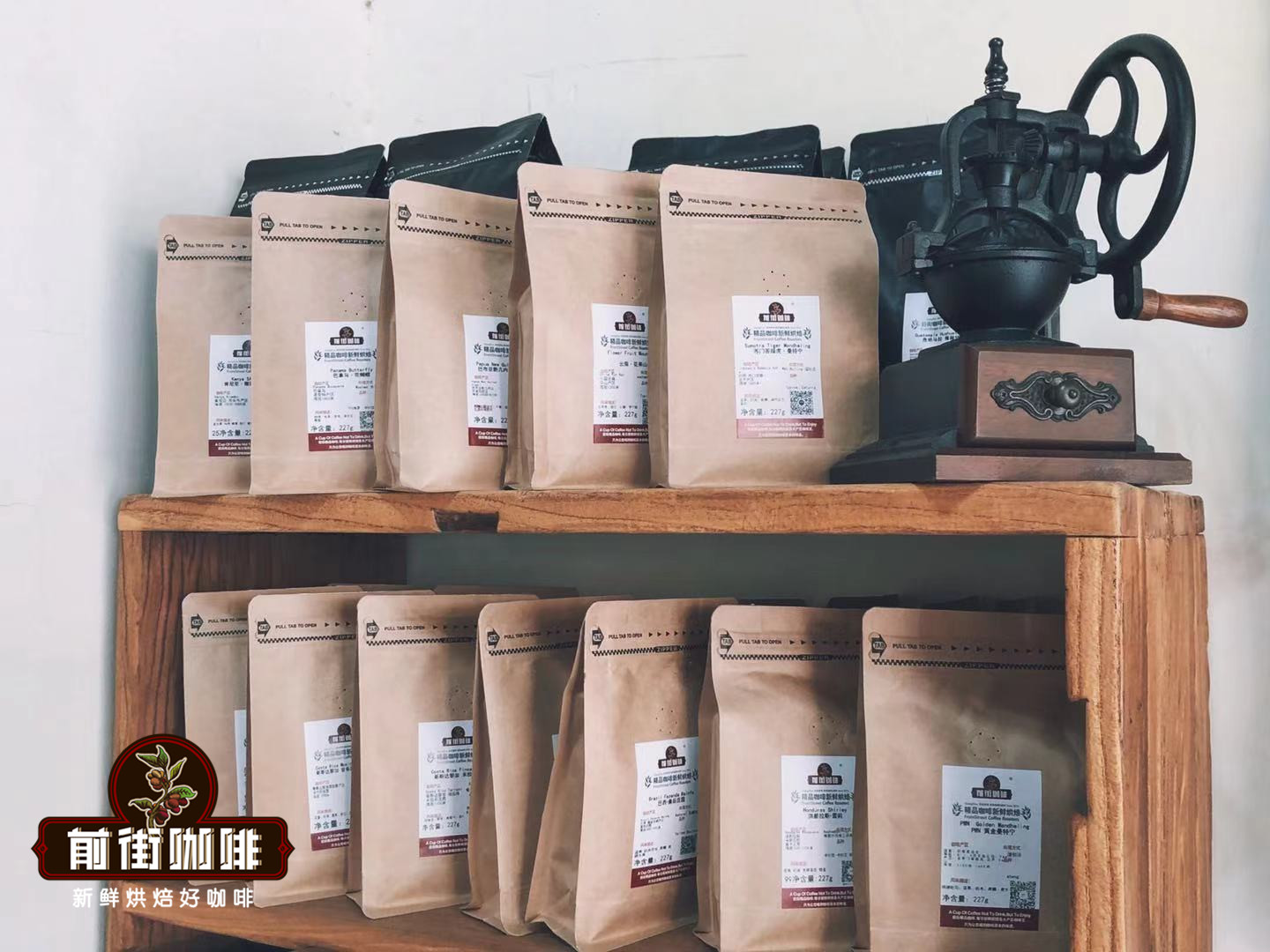
With the specialty coffee market booming, more and more coffee lovers are figuring out how to brew pour-over coffee at home. But pour-over isn't something you can master from a recipe alone—it takes sustained practice to develop the feel and technique that produce a genuinely delicious cup. In this article, FrontStreet Coffee walks you through home pour-over brewing from the ground up. We think our Indonesian Mandheling coffee beans are an ideal practice bean for beginners, so let's start with FrontStreet Coffee's Indonesian Golden Mandheling.
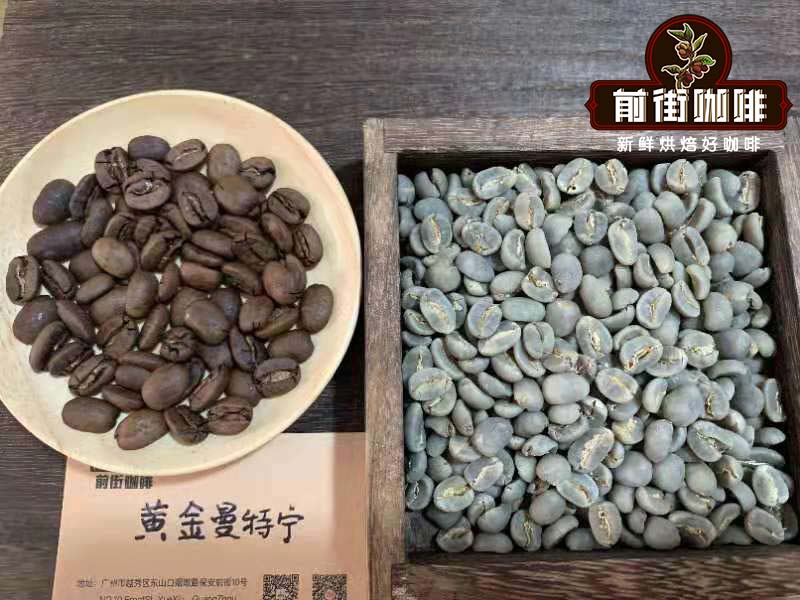
FrontStreet Coffee: FrontStreet PWN Golden Mandheling Coffee Beans
Country: Indonesia
Region: Aceh, Gayo Mountain, Sumatra
Altitude: 1100-1600m
Variety: Ateng
Processing: Wet-Hulled
Flavor: Toast, nuts, pine, caramel, herbal
Where Indonesian Mandheling Coffee Comes From
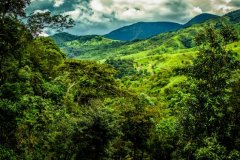
Previous FrontStreet Coffee articles have often noted the three factors that determine a coffee's flavor: growing region, variety, and processing method. Let's look at our Mandheling through those three lenses. Mandheling is grown primarily on Sumatra, Indonesia's largest island, which sits near the equator with a classic tropical rainforest climate. The heat, humidity, and abundant rainfall make it well suited to growing high-quality Arabica coffee.

That said, limited altitude across much of Indonesia restricts the land available for quality Arabica, which develops its best flavors only at higher elevations. As a result, only 25% of Indonesia's coffee is Arabica; the remaining 75% is Robusta, which tolerates lower altitudes. Sumatra happens to contain the highest-elevation growing areas in the country.
In addition, the finest traditional Arabica from northern Sumatra is sold under the name Lintong Mandheling—specifically, coffee grown in a small area southwest of Lake Toba, in the Lintong administrative region.

Sumatra Coffee Bean Origins
Mandheling coffee beans are also known as "Sumatra coffee." Most production in northern Sumatra comes from the Gayo region, where Ateng is the dominant variety. Coffee from around Lake Tawar in the north may be labeled Aceh coffee or Lake Tawar coffee, while beans from the Lintong and Lake Toba areas in the south are properly called Mandheling—Lintong is the true home of the name. The best traditional Mandheling lots come from four areas: Sidikalang, Bergendar, Siborong-borong, and Telok Sanggul.
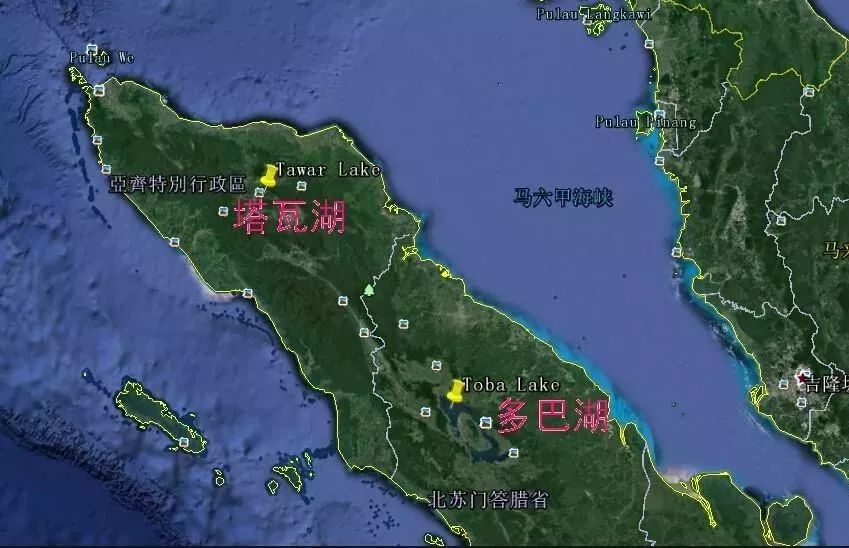
Lake Toba: Located in central North Sumatra Province. In 1888, Dutch colonists moved "Java Mandheling" north into the Lake Toba region, and the modern Mandheling story began there.
Lake Tawar: Located in central Aceh Special Region, at the northern tip of Sumatra. Its surface area is less than one-tenth of Lake Toba's, yet in recent years its coffee has overtaken Lake Toba's in both quality and production.
Gayo Mountains: Located in the Aceh region of northern Sumatra. Most of the coffee farmers in Gayo are locals, and the name comes from the indigenous Gayo people of Aceh. The area offers ideal growing conditions, a long coffee tradition, and distinctive flavors. Farmers here cultivate largely without chemical fertilizers, so Gayo coffee is often marketed as green/organic coffee.

How Indonesian Mandheling Is Processed
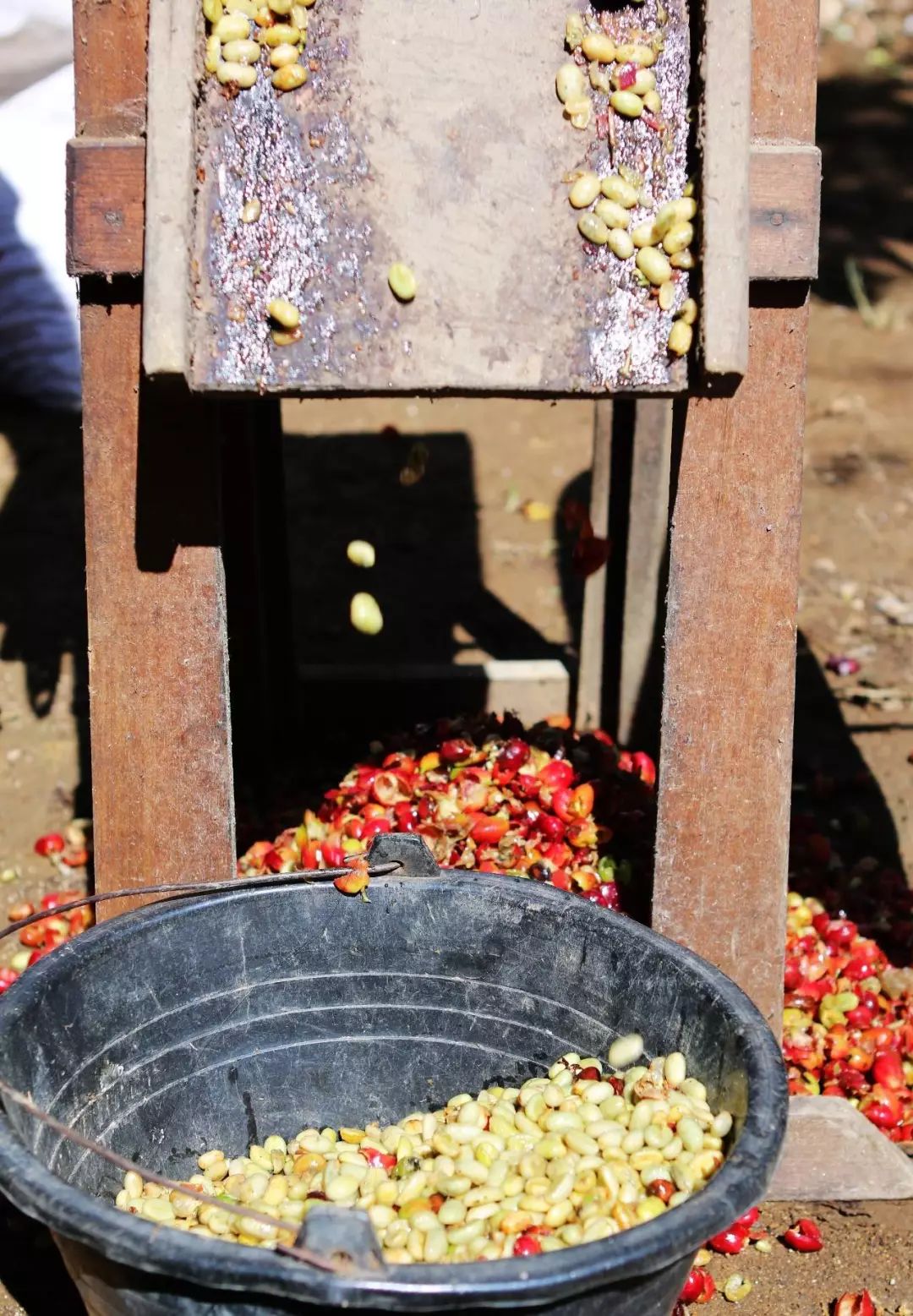
You can't talk about Indonesian coffee without mentioning the processing method that made Mandheling famous worldwide: wet-hulled processing (giling basah). Interestingly, this method wasn't a deliberate choice by local producers—the weather simply didn't allow anything else—yet it is exactly what gives Mandheling its signature earthy, herbal, spicy character.

Because the beans are hulled while still semi-dry and soft, removing the mucilage and parchment easily bruises them, splitting them along the center crease into what the trade calls "goat hoof" beans. FrontStreet Coffee considers this a defining trait of Mandheling, not a defect.
Why Indonesia Developed Wet-Hulled Processing
As FrontStreet Coffee understands it, wet hulling arose out of necessity: Indonesia's weather is dominated by rain and tropical storms, so the long, dry stretches needed for proper sun-drying are rarely available. Washing, meanwhile, demands more time, water, and labor than ordinary smallholder farmers could afford. The result was this uniquely local semi-washed method.
Of course, Indonesian coffee is no longer the impoverished industry it once was. Many estates and exporters could now wash their coffee, yet they haven't abandoned wet hulling. FrontStreet Coffee believes the method was the key factor in putting Mandheling on the world stage—mention Mandheling and people think of wet hulling. The two have become inseparable.
The wet-hulled process can be broken into two stages:
Stage one: Remove skin and pulp with a depulper, ferment for 3 hours, then dry until moisture content falls to 30-50% (semi-dry, semi-wet).
Stage two: Machine-hull off the mucilage and parchment to expose the green beans, then continue drying for 2-4 days until moisture reaches 12-13%.
What Exactly Is "Golden Mandheling"?
To understand "Golden Mandheling," you have to start with PWN—an abbreviation that often appears alongside the Mandheling name. It stands for the Pwani Coffee Company.
PWN is one of Indonesia's most respected coffee exporters, dealing almost exclusively in Mandheling. It buys from virtually all of Indonesia's best growing regions, so most PWN lots are exceptional specialty coffees. Golden Mandheling is the company's flagship: after purchasing green beans, PWN runs them through multiple rounds of hand sorting to keep only the fullest, defect-free beans. Only coffee that survives this layer-upon-layer audition earns the Golden Mandheling name.
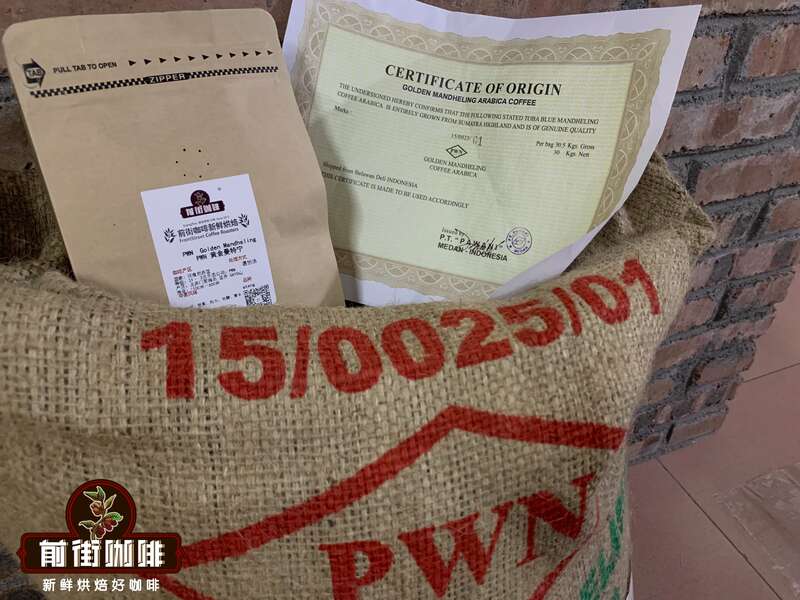
It matters, then, that PWN has trademarked "Golden Mandheling": only Golden Mandheling produced by PWN is the genuine article. Many beans on the market carry the Golden Mandheling label without coming from PWN, and those should more accurately be sold as Specialty Mandheling.
So how do you brew FrontStreet Golden Mandheling to get the best from it? Here is what FrontStreet Coffee recommends.
What Equipment Do You Need for Pour-Over Coffee?
Pour-over requires its own kit. FrontStreet Coffee runs through the essentials one by one.
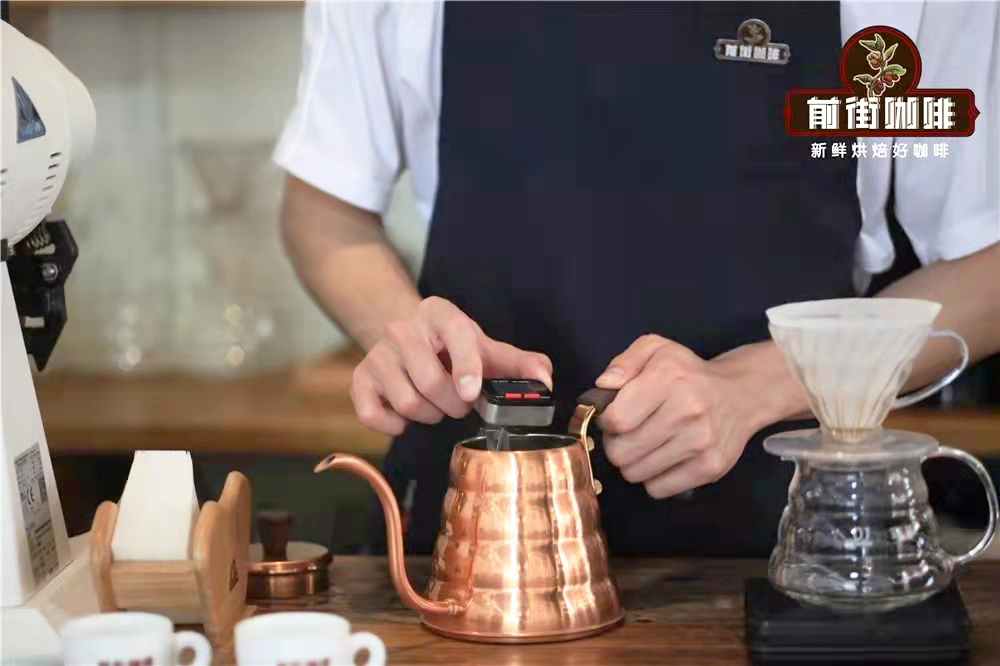
1. Pour-over kettle: Kettles come in many sizes and materials—choose to taste. The feature that most affects your brew is the spout size, since it governs flow rate. Beginners should start with a narrow-spout kettle, which is easier to control. Note, too, that each kettle is suited to particular heat sources (induction or gas), so check before buying.
2. Dripper: Drippers also vary in size and material, in three main shapes: flat-bottom (fan/wave) and conical, plus wave. The size of the outlet controls flow speed and therefore flavor. Flat-bottom fan drippers have small holes and slow flow, giving a fuller body; conical drippers have large holes and fast flow, giving a lighter body; wave drippers use a flat bottom with special wave filters for the most even extraction. A special case is the metal mesh dripper, which needs no paper, preserves more coffee oils for a richer cup, but lets some fine particles through.

3. Filter paper: Filter paper comes bleached (white) or unbleached (light brown). Its job is to hold back the grounds with densely packed fibers while letting the extracted coffee through. Buy the shape that matches your dripper.

4. Grinder: Good pour-over starts with a good grinder. The market offers three types:
1) Ghost tooth burr grinders
2) Flat burr grinders
3) Conical burr grinders
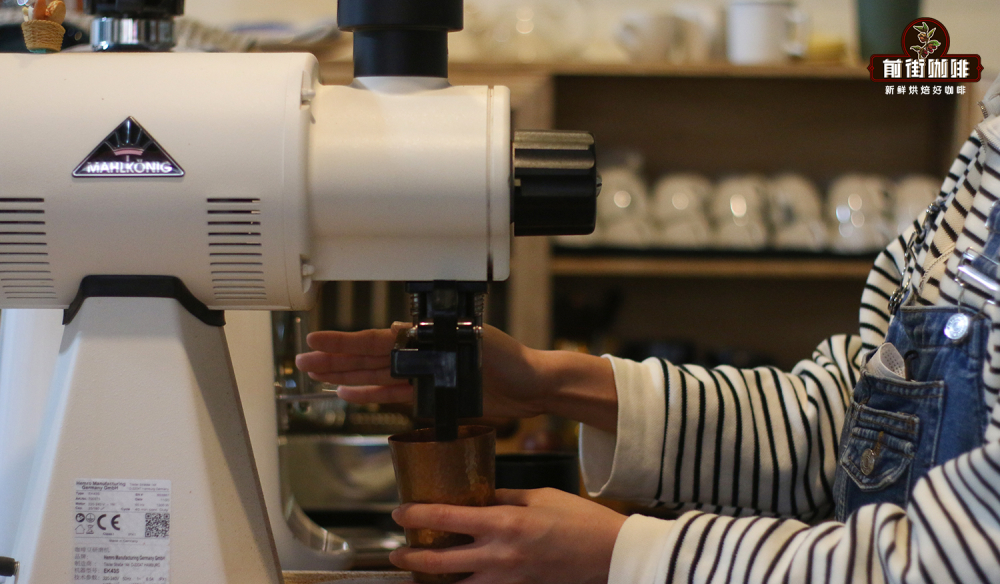
5. Thermometer: For measuring brew water temperature. Common options include Tiamo, Hero, and Cafede Kona thermometers.

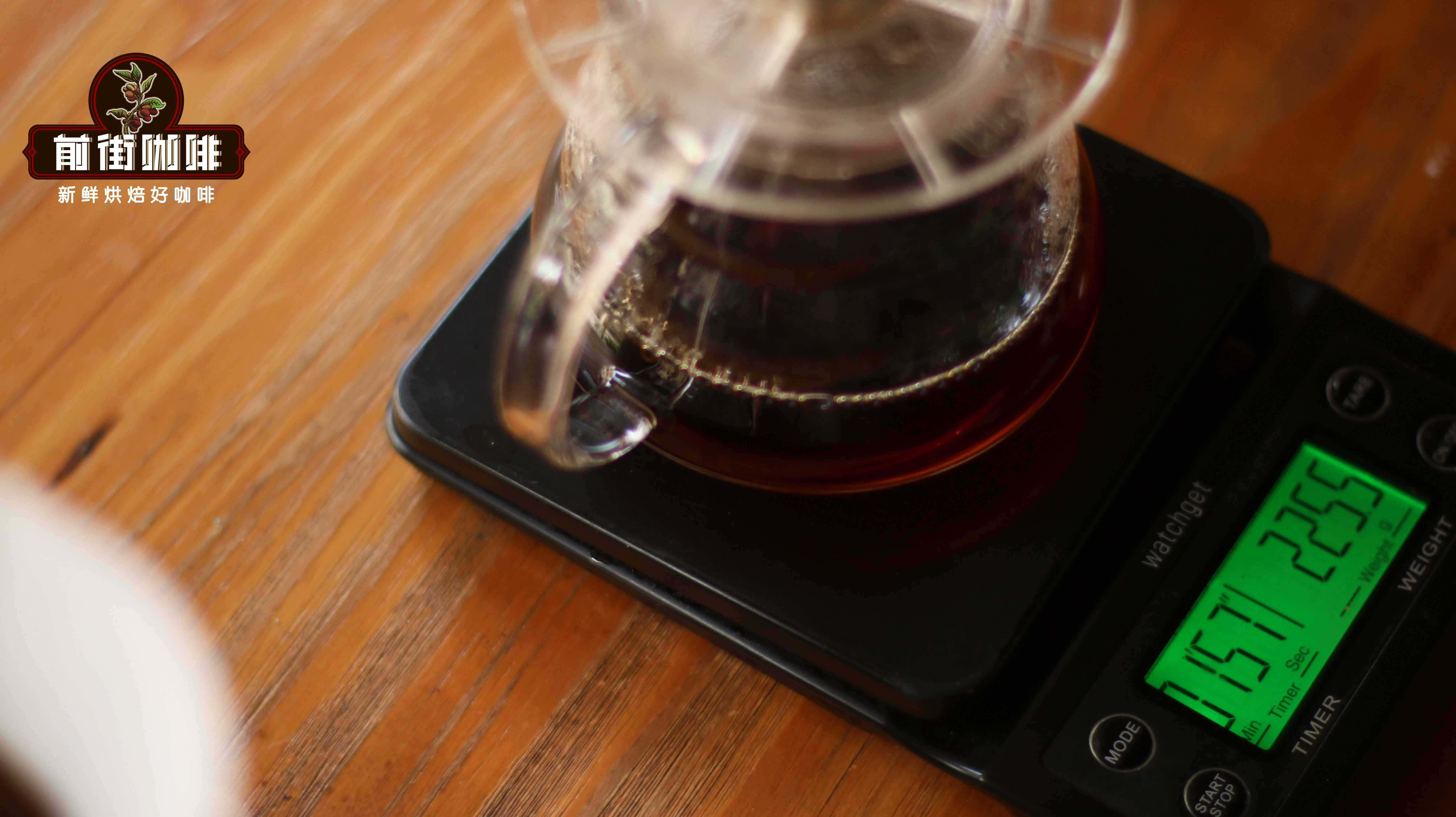
6. Scale: A scale with a timer lets you control the coffee-to-water ratio precisely, removing a major source of inconsistency and widening your margin for error. Prices range from tens of yuan to several hundred yuan. Options include Xiaomi, Hero smart scales, and Timemore scales.
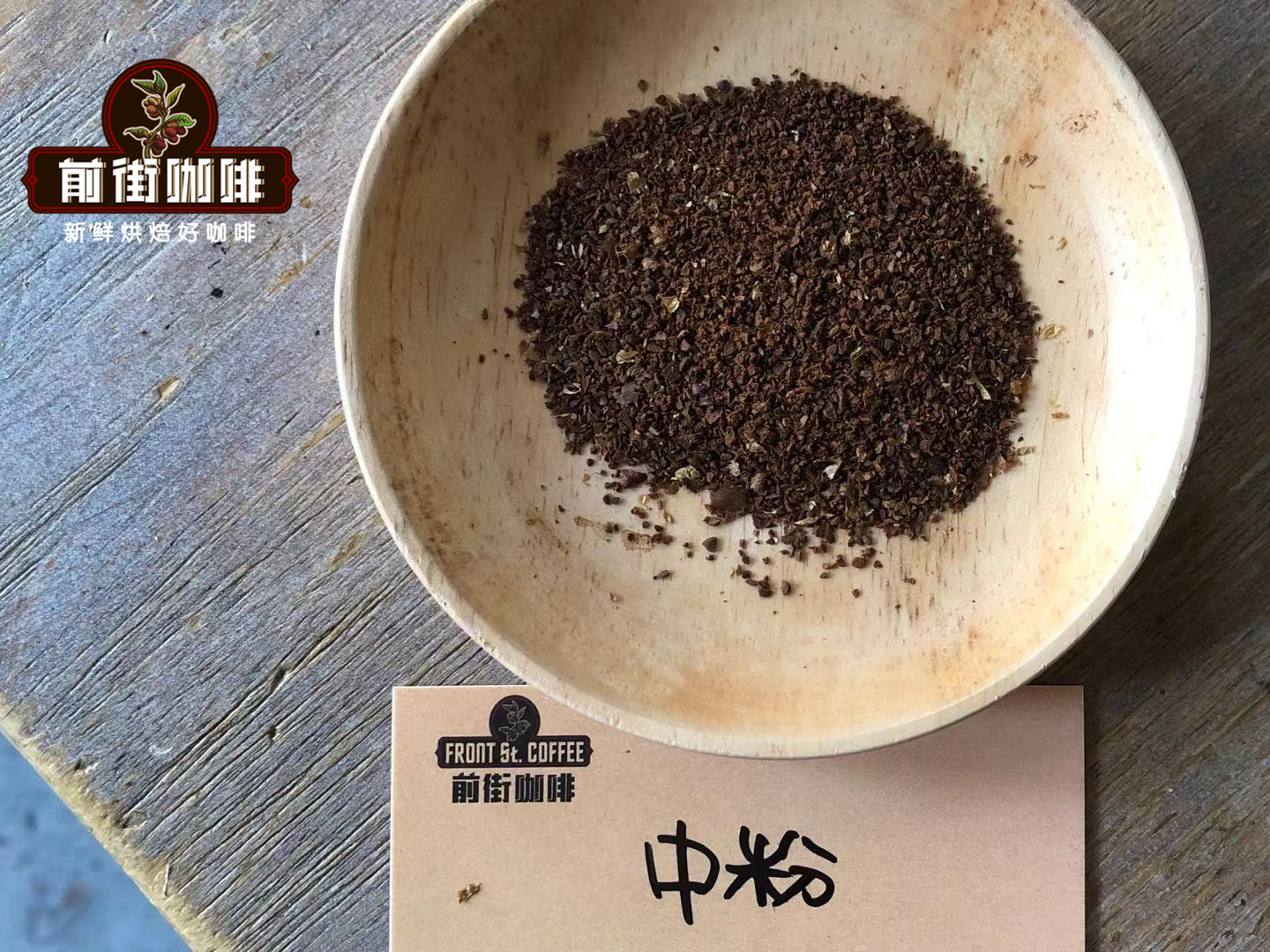
7. Sieve: Used mainly to check grind size. Every coffee has its own ideal grind for pour-over. After extensive testing, FrontStreet Coffee settled on a grind with an 80% pass rate through the Chinese standard No. 20 sieve as its baseline for pour-over coffee.

How Do You Actually Brew Pour-Over Coffee?
1. Water Temperature
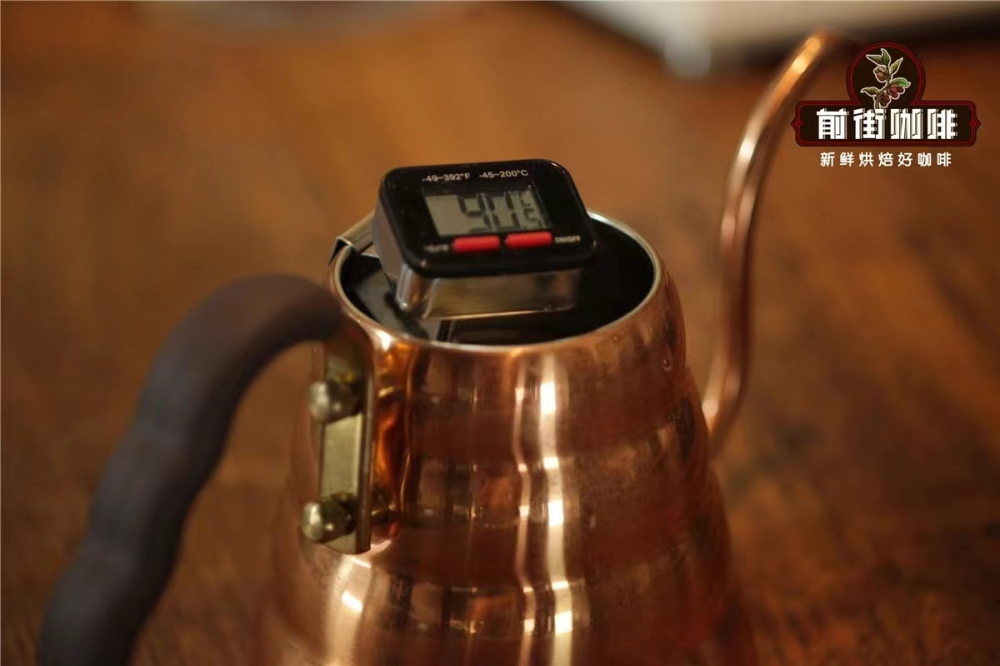
Hotter water extracts more aggressively, pushing the cup toward bitterness and intensity; cooler water extracts less, leaving the coffee brighter, softer, and lighter. Set your temperature by roast level: 90-91°C for light-to-medium roasts, 86-88°C for medium-dark and darker roasts. FrontStreet Coffee works within these ranges. Once, when a customer questioned these temperatures, we brewed our own Golden Mandheling—a dark roast—with 90°C water, and the result was bitter enough to give espresso a run for its money.
2. Grind Size
Grind size determines how long water and coffee stay in contact. The finer the grind, the more the water extracts in the same amount of time—but too fine and the brew tips into over-extraction. The coarser the grind, the less is extracted—too coarse and the cup falls flat with under-extraction. FrontStreet Coffee recommends a grind passing 80% through the No. 20 sieve as the pour-over baseline, a setting we arrived at through repeated cupping. Remember that each coffee has its own ideal grind, so if a pour-over tastes off, the grind is the first thing to check.
3. Coffee-to-Water Ratio
The ratio of grounds to water governs strength. Common options run from 1:10 to 1:16, such as 1:13 or 1:15. FrontStreet Coffee recommends 1:15, which strikes a comfortable balance of strength and flavor. Tastes differ, though, so feel free to adjust the ratio toward whatever strength and flavor profile you prefer.

Next, FrontStreet Coffee shares the exact parameters we use for our PWN Golden Mandheling.
FrontStreet Coffee PWN Golden Mandheling Brewing Recommendations
Dripper: KONO
Coffee Dose: 15 grams
Coffee-to-Water Ratio: 1:15
Water Temperature: 86-87°C
Grind Size: 70% pass-through rate on the No. 20 sieve
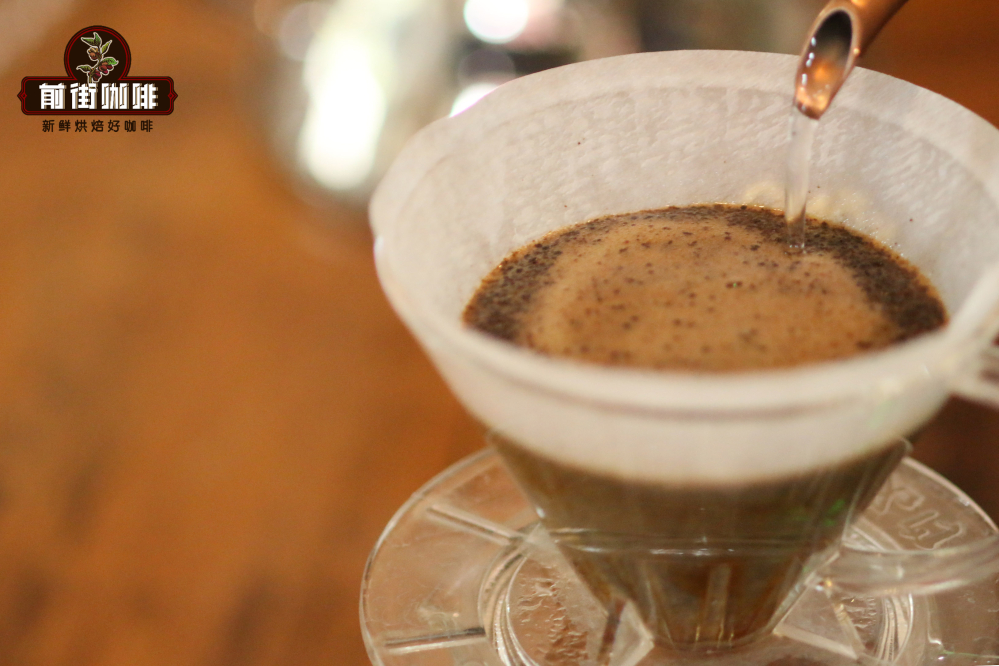
Brewing technique: Segmented (multi-pour) extraction.
First pour: Bloom with 30g of water and wait 30 seconds.
Second pour: Pour in small circles up to 125g, then pause. When the water level drops and the coffee bed is about to be exposed:
Third pour: Pour up to 225g and stop. Once the water level drops and the bed is about to break the surface, remove the dripper. (Timer starts at the bloom.) Total extraction time: 2'00".

FrontStreet PWN Golden Mandheling in the cup: Multi-layered, full-bodied yet clean, highly balanced, with rich nut and caramel aromas over chocolate notes and a long, lingering finish.
FrontStreet Coffee Recommendation
If this tutorial has you craving a classic Sumatran cup, FrontStreet Coffee's own PWN Golden Mandheling is the bean we'd point you to first. Sourced from Indonesia's Pwani Coffee Company, it starts from beans of 18 mesh or larger and must show fewer than 3 defective beans per 300g sample to meet the top G1 grade, followed by three rounds of hand sorting. The result is a remarkably clean, sweet Mandheling: after medium-dark roasting it delivers black chocolate and caramel sweetness layered over Mandheling's wild herbal character, with a thick, syrupy body and very low acidity—a perfect pick for anyone who dislikes sour coffee.
For the brew above we suggest 87-88°C water, a 15g dose at a 1:15 ratio, a coarse-sugar grind, and a three-pour method: bloom with 30ml, pour 100ml to lift the bed and draw out the golden crema, then finish with a gentle 95ml center pour to maximize sweetness—expect a heavy, velvety mouthfeel with caramel, chocolate, and nut flavors. If you'd rather pull espresso, FrontStreet Coffee's classic house blend—Brazil's creamy nuttiness reinforced with medium-dark Mandheling, a touch of Robusta for crema, and notes of butter, roasted chestnut, and caramel—pairs beautifully with milk for lattes, latte art, and layered Dirty drinks.
Important Notice :
FrontStreet Coffee is a long-established specialty coffee roaster in Guangzhou China, selling freshly roasted beans from its own farm in Yunnan as well as dozens of carefully selected single-origin beans from around the world for both pour-over and espresso. The products deliver consistently excellent quality and great value, with shipping within 24 hours. Guangzhou's FrontStreet Coffee shop is recommended by many coffee lovers, and the beans are now available online at the Tmall 。
FrontStreet Coffee has moved to a new address:
FrontStreet Coffee Address: 315,Donghua East Road,GuangZhou
Tel:020 38364473
 Scan and follow the En Gafei WeChat official account. Please indicate that the reprint comes from "En Gafei".