Rwanda Coffee Bean Development History: Industry Origin Story and Characteristics

Do you know Rwanda? It is a landlocked country in Africa, and coffee farming is one of the pillars of its economy. So what does the country's coffee taste like? FrontStreet Coffee shares what it has learned about Rwandan coffee.
Rwanda's Coffee Development
Rwanda has grown coffee since the colonial era. Coffee was the main crop, yet the quality of what Rwanda produced was unremarkable, its standing in the coffee world was low, and few people paid it much attention. FrontStreet Coffee notes that Brazil, another country with a colonial past, once favored quantity over quality too, and carried a reputation for poor coffee for a time.
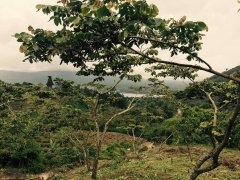
The varieties grown in Rwanda are mostly Bourbon. Rwanda is a country of mountains and plateaus, and most coffee trees are planted on hillsides between 1700 and 2000 meters above sea level, which earned it the nickname "Land of a Thousand Hills."
Rwanda's National Agricultural Export Development Board (NAEB) has said the country's coffee strategy is "to position Rwanda as a specialty coffee-producing country." The aim is for the coffee industry to drive national development and prosperity and to grow exports, and rising Rwandan coffee prices are a sign that the strategy is working. The government's focus is now on improving production and processing.
Rwanda's current prosperity owes much to strong government initiatives and to support from foreign non-governmental organizations and private groups. In 1994 the country suffered a genocide that cut its population drastically and brought the coffee industry to a standstill.
Stability returned slowly from 1995. In 2000, with funding from the United States Agency for International Development (USAID), the PEARL and SPREAD programs were set up to support Rwanda's agricultural reconstruction, raise the quality of Rwandan coffee and help farmers earn more.
FrontStreet Coffee has watched Rwandan coffee develop quickly and its quality become consistent. Recently FrontStreet Coffee has bought several batches of beans from different producing regions in Rwanda and found flavors that set them apart from other African coffees.
Rwanda's Coffee Producing Regions
Rwanda's land area is only four times that of Guangzhou. With such a small area and similar growing altitudes, beans from different regions do not differ dramatically in flavor.
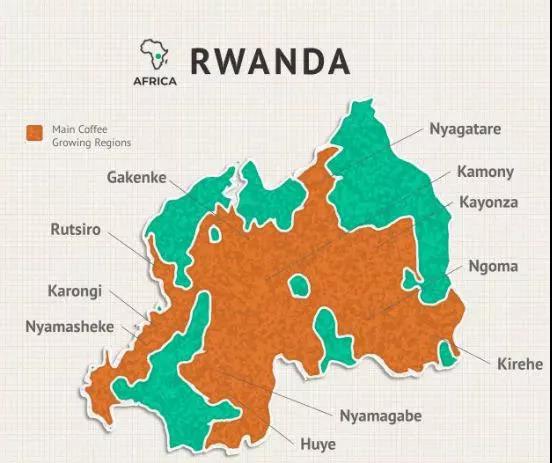
Rwanda's Arabica producing regions lie mainly in the south and the west. The Huye mountains and the Nyamagabe region in the south sit at higher altitudes and give beans with floral and citrus flavors, while the Nyamasheke region on the shores of Lake Kivu in the west produces high-quality coffee with rich aroma and juicy texture.
Though the regional differences are small, they are still there if you taste carefully. People often ask FrontStreet Coffee how to tell them apart, as though flavor were something mysterious. In fact, FrontStreet Coffee has been through extensive flavor-recognition training to distinguish the coffees of different regions, and it takes time, effort and persistence.
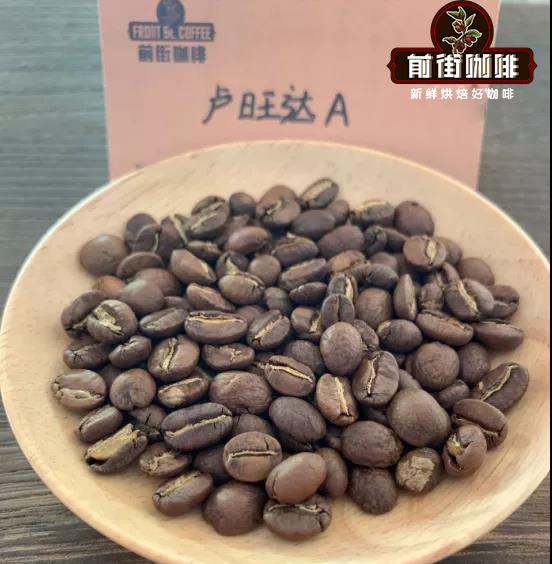
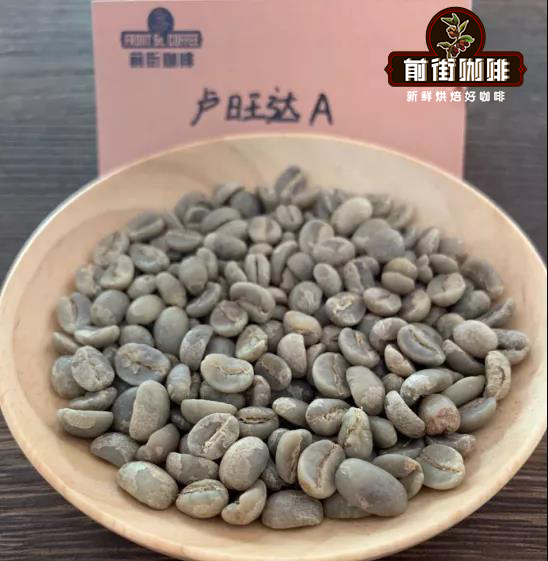
FrontStreet Coffee Rwanda Gishwati
Region: Nyamasheke area
Altitude: 1500m
Variety: Bourbon
Processing Method: Washed process
Rwandan Bourbon Coffee Beans
More than 90% of Rwanda's coffee varieties are Bourbon introduced in the early years, along with mixed varieties from the Bourbon family that carry resistance to natural disasters. Bourbon was first popular across Latin America, but its poor disease resistance means fewer countries grow it today. The Latin American Bourbon beans FrontStreet Coffee currently sources include Brazilian Red Bourbon, Brazilian Yellow Bourbon and Colombian Pink Bourbon. Rwandan Bourbon still holds its own against them, which is one reason FrontStreet Coffee sources from Rwanda.
How Rwanda Processes Its Coffee
In 2000, just out of internal political turmoil, Rwanda received USAID funding for two major coffee development programs, PEARL and SPREAD, aimed at supporting the country's reconstruction. Under these programs Rwanda built 46 coffee washing stations in succession, and strong bean exports drove significant economic growth.
As a result, Rwandan coffee is now processed mainly by the washed method. Ripe cherries are hand-picked, skinned and pulped, fermented in water for 12-18 hours, thoroughly cleaned of mucilage, and finally dried to below 14% moisture content.
FrontStreet Coffee believes that making washed processing the norm early in Rwanda's development was a choice that clearly highlights the coffee's flavor. Washing is the process that best reveals a coffee's essential character, and when FrontStreet Coffee recommends a producing region it also recommends washed beans first, so customers can understand that region's flavor profile clearly.
FrontStreet Coffee Roasting Recommendations
Rwandan coffee has bright acidity, so FrontStreet Coffee recommends a medium-light roast to bring it forward.
Bean-in Temperature: 175°C
Yellowing Point: 5'55", 152.1°C
First Crack: 9'20", 183°C
Post-First Crack Development: 2'00", discharged at 194.4°C
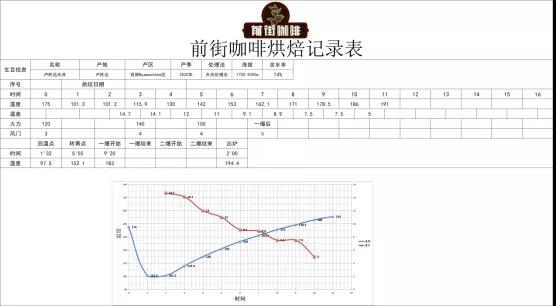
When FrontStreet Coffee cupped this washed Rwandan bean, the dry aroma showed obvious florals and berries, and the wet aroma honey sweetness and nuts. The cup as a whole is bright and acidic, with citrus, berries and nuts, and a caramel sweetness in the aftertaste.
FrontStreet Coffee Brewing Recommendations
Coffee Grounds: 15g
Coffee-to-Water Ratio: 1:15
Water Temperature: 90°C
Grind Size: Fine grind (80% pass-through rate on a No. 20 standard sieve)

FrontStreet Coffee uses a segmented pour. Bloom with 30g of water for 30 seconds. Pour in a small circular motion up to 125g, then split the extraction. When the water level drops to the point of exposing the coffee bed, pour on to 225g and stop. When the level drops again to just expose the bed, remove the dripper. Timing starts from the bloom, and the total extraction takes 2'00".
Flavor Description
Floral and berry aromatics, with clear citrus, berry and plum on the palate. Nuts arrive mid-palate, and the aftertaste carries caramel sweetness.
FrontStreet Coffee Recommendation
Rwanda's coffee identity rests on the Bourbon family, and that same lineage is behind some of FrontStreet's most approachable everyday beans. FrontStreet Brazil Cerrado Red Bourbon is a classic Brazilian single-origin and an easy introduction to the country: a South American red Bourbon given a medium roast, it shows creamy peanut, toast, caramel and hazelnut, with a rounded body, no real acidity and just a trace of bitterness, and it works as well in a moka pot, espresso SOE, siphon or French press as it does as pour-over.
For a cleaner fruit expression, FrontStreet Brazil Queen Estate is a rare Yellow Bourbon from Mogiana, near South Minas, where fertile red volcanic soil lets the cherries take up abundant nutrients and develop full aroma. A genetic mutation of Red Bourbon, it cups with a sugarcane sweetness other regions rarely deliver, alongside fruit and chocolate. Brazil's low acidity, balance and affordable price also make it the backbone of FrontStreet's espresso blends, where it contributes chocolate and cream aromas, a soft sweet-sour-bitter balance and stable extraction.
Important Notice :
FrontStreet Coffee is a long-established specialty coffee roaster in Guangzhou China, selling freshly roasted beans from its own farm in Yunnan as well as dozens of carefully selected single-origin beans from around the world for both pour-over and espresso. The products deliver consistently excellent quality and great value, with shipping within 24 hours. Guangzhou's FrontStreet Coffee shop is recommended by many coffee lovers, and the beans are now available online at the Tmall 。
FrontStreet Coffee has moved to a new address:
FrontStreet Coffee Address: 315,Donghua East Road,GuangZhou
Tel:020 38364473
 Scan and follow the En Gafei WeChat official account. Please indicate that the reprint comes from "En Gafei".