Honduras Highland Coffee Prices Premium Small Farmer Selected Batches Coffee Beans
Small-Batch, High-Quality Micro-Lot Coffee
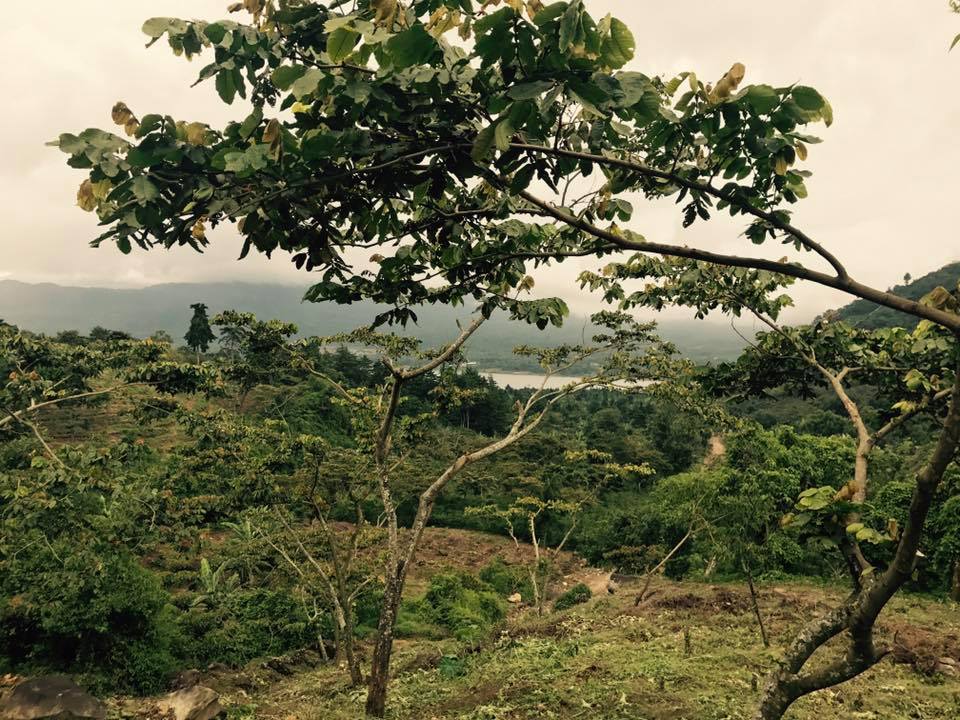
Honduras has a long history of coffee growing, yet for more than a decade the country was seen as little more than a commercial blending base with no character of its own, flooding the market with large volumes at low prices. In truth, Honduras has everything fine coffee needs: a wealth of microclimates, elevation, fertile soil, abundant rainfall, sharply defined wet and dry seasons, and farmers who work hard at their craft.
The problem lay elsewhere. For years, careless drying practices and logistical bottlenecks dragged quality down. More recently, as the Honduran government woke up to the value of the specialty market, it began investing in renewal, modernizing the country's coffee industry and pushing for higher quality as a way to lift farmers' incomes. Honduran growers, sharpened by the international Cup of Excellence platform, have responded by raising their own standards, gradually overturning the assumptions buyers around the world once held about Honduran coffee. Today Honduras is the largest coffee-producing country in Central America.
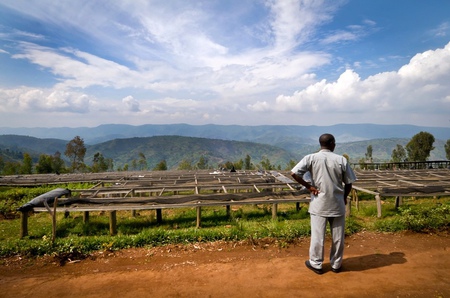
One of the main reasons Honduran coffee used to taste dull and forgettable was its drying. Because rainfall in the mountains is heavy and unpredictable, green beans often could not be dried properly at the final stage of processing. Most mills therefore fell back on mechanical rapid drying, which hurts shelf life and strips away flavor. This particular lot was processed using the washed method. Once the washed fermentation was complete, the beans were soaked in clean water for 12-18 hours, a step that removes mucilage more thoroughly and gives the cup greater clarity.
FrontStreet Coffee's Recommended Roasting Method for Honduras Coffee
Honduran coffee is a hard bean with moderate moisture content, and the beans are fairly uniform in size. We have established a general working range: to draw out the full flavor of Honduran coffee, hard beans need to be roasted to a medium level or darker. With that range fixed, we designed medium, medium-dark, and second-crack profiles.
FrontStreet Coffee recommends logging your data before you roast: bean moisture content, density, origin, processing method, and the temperature and humidity of the roasting room. Plan your roasting curve in advance. Track the relevant chemical and physical changes as the roast progresses; doing so helps you understand the final result and refine your curve.
Roasting Equipment: Yangjia 800N, 550g green beans loaded
Roasting Curve:
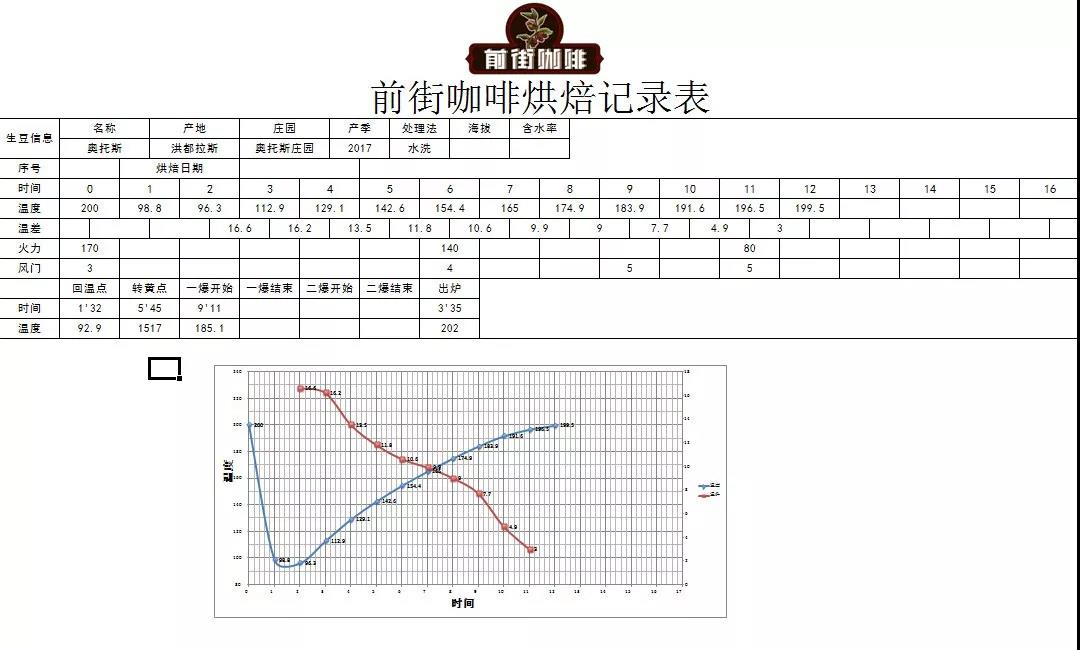
Preheat the roaster to 200°C and set the damper to 3. After one minute, adjust the heat to 170°C, leaving the damper unchanged. Roast until 5'45", at 151.7°C, when the bean surface turns yellow and the grassy aroma has disappeared completely, a sign that dehydration is done. Adjust the heat to 140°C and move the damper to 4.
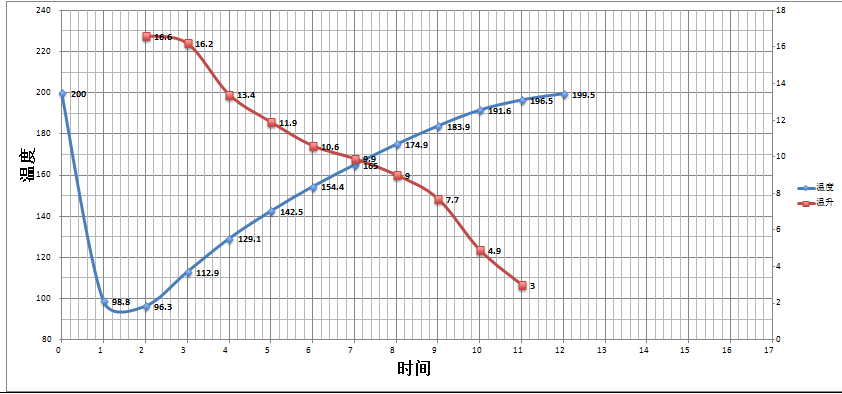
At 9'00", fine wrinkles and dark spots appear on the bean surface, and the toasted-bread aroma shifts clearly into coffee aroma. This marks the prelude to first crack. Listen closely for the sound of the crack. First crack begins at 8'23"; reduce the heat to 80°C, open the damper fully (take care when adjusting the heat, and do not cut it so far that the crack stalls), and discharge at 202°C.
The sweetness is excellent, with a caramel note that really stands out. The full body, built on a rich texture and an intense oily mouthfeel, is deeply appealing.
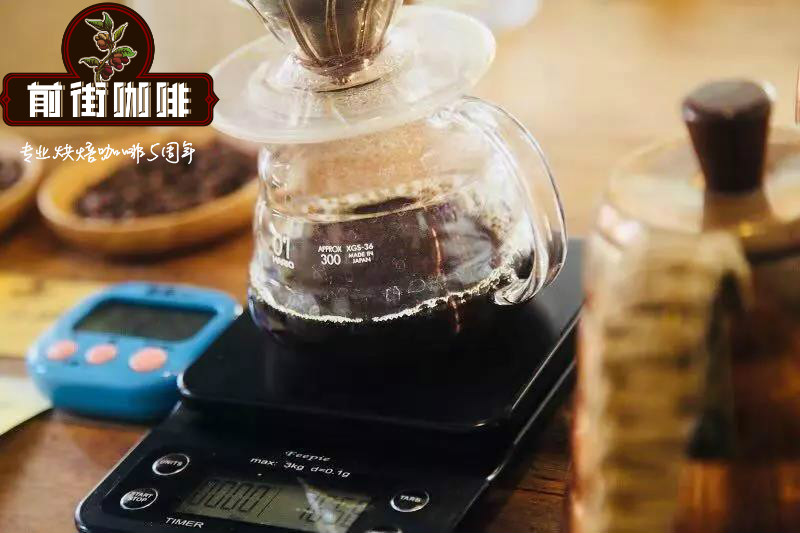
Flavor Profile: Cream, roasted nuts, milk chocolate
36 Aroma Notes: Malt, honey, caramel, walnut, woody notes
FrontStreet Coffee Recommendation
Because this Honduran lot is defined by its washed processing, the clearest way to appreciate clean, mucilage-free coffee is to taste other washed origins alongside it. FrontStreet's Yirgacheffe Gedingding Cooperative coffee is a fine place to start: grown in the Yirgacheffe area of Ethiopia and processed with the traditional washed method, it shows jasmine florals and bright citrus acidity, and after a medium-light roast it takes on green tea and honey notes. It works beautifully as a pour-over, a cold brew, or an espresso.
For a more vivid, fruit-forward expression of the same technique, FrontStreet's Kenya Little Tomato is a well-known benchmark, since Kenyan producers excel at double washing. The extra round of washing, soaking, and rinsing pushes the juice-like quality to the limit, delivering cherry tomato, dark plum, snow pear, and black plum aromas over yellow-sugar sweetness, with a sweet-tart, mouthwatering body that has made it a favorite among seasoned drinkers.
If balance matters more to you than acidity, FrontStreet's Jamaica Blue Mountain No. 1 is a classic washed coffee. Removing the skin, pulp, and mucilage before drying shortens the drying time and yields translucent beans with a low defect rate, which is why Blue Mountain shows hazelnut, cream, chocolate, and caramel with a perfectly even structure in which no single note dominates or falls away.
Important Notice :
FrontStreet Coffee is a long-established specialty coffee roaster in Guangzhou China, selling freshly roasted beans from its own farm in Yunnan as well as dozens of carefully selected single-origin beans from around the world for both pour-over and espresso. The products deliver consistently excellent quality and great value, with shipping within 24 hours. Guangzhou's FrontStreet Coffee shop is recommended by many coffee lovers, and the beans are now available online at the Tmall 。
FrontStreet Coffee has moved to a new address:
FrontStreet Coffee Address: 315,Donghua East Road,GuangZhou
Tel:020 38364473
 Scan and follow the En Gafei WeChat official account. Please indicate that the reprint comes from "En Gafei".