Starbucks Guatemala Antigua La Minita Estate Flora Coffee Bean Flavor Characteristics and Origin Story
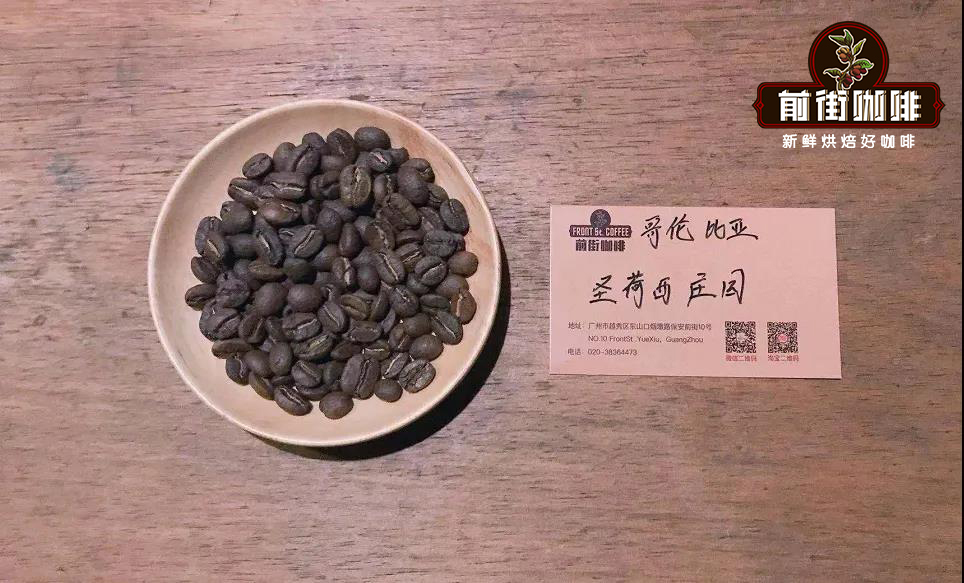
FrontStreet Coffee's Guatemala coffee is characterized by its inherent smoky sensation, and the FrontStreet Coffee Guatemala La Flor coffee beans from La Minita Estate, discussed here, bring double surprises to the palate. Beyond the slight smoky sensation, these FrontStreet Coffee La Flor beans also deliver delicate white floral aromas, creating a sensation as surprising as finding a flower blooming in a volcanic landscape.

FrontStreet Coffee Guatemala La Flor
Region: Antigua region
Estate: La Minita family
Altitude: 1200-1600m
Varieties: Bourbon, Caturra
Processing: Washed
Grade: SHB
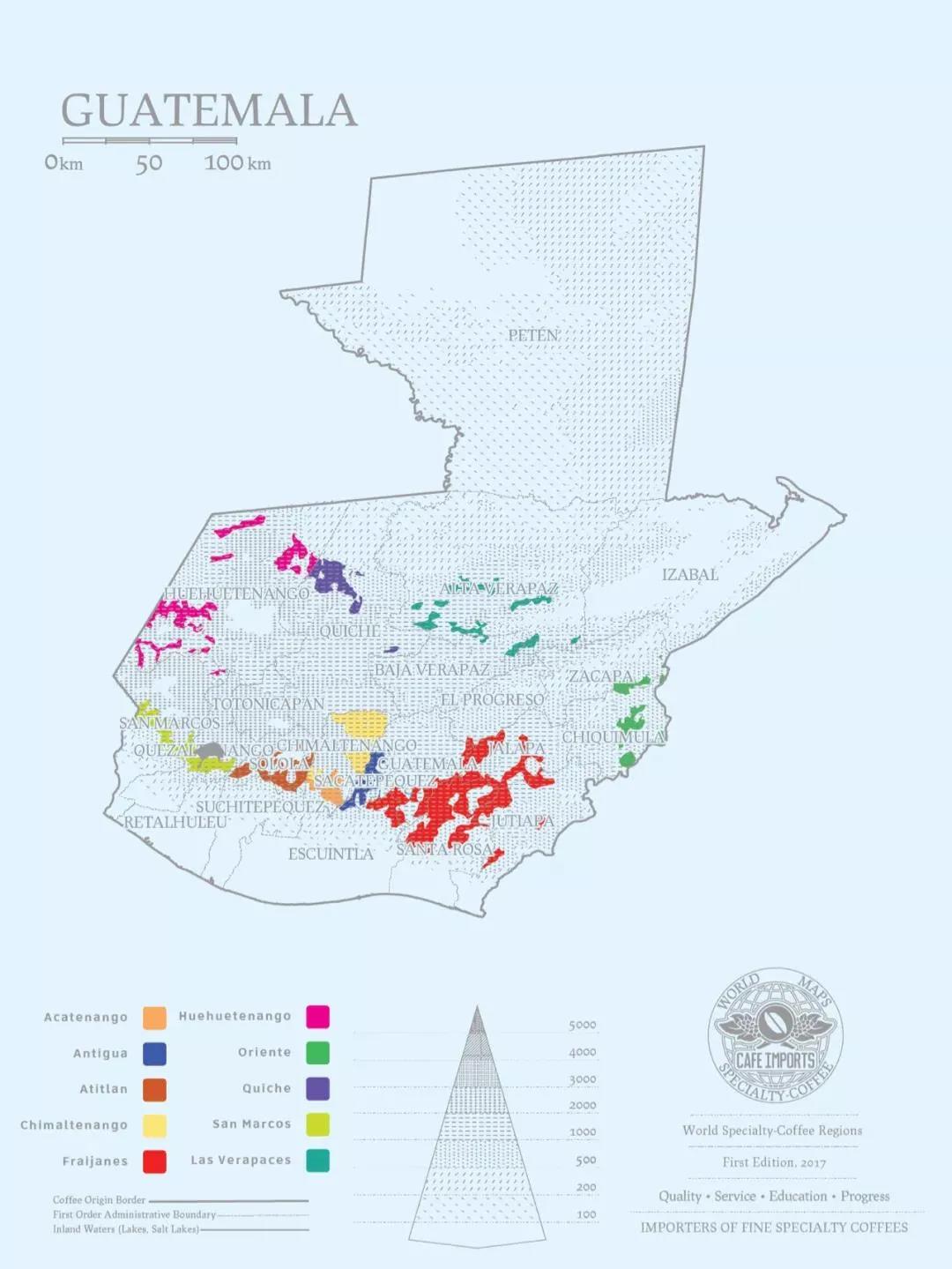
Antigua Region
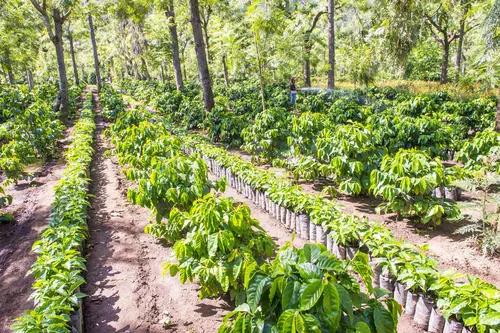
The Antigua region lies in the central highlands of Guatemala and is a famous ancient city in Central America. Built in the Panchoy Valley at an altitude of 1500 meters, it is surrounded by mountain ranges and multiple volcanoes, positioned near the peaks of Agua and Fuego. The chain of volcanoes not only gives Antigua beautiful scenery but also enriches the surrounding land with mineral-rich volcanic ash from each eruption, creating fertile growing conditions for plants and coffee trees. The region has a subtropical monsoon climate with abundant rainfall and fertile volcanic ash soil, producing coffee with bright acidity and fruity aromas, making Antigua a renowned coffee-producing region in Guatemala.
La Minita Family
La Minita is a multinational estate with its flagship property in Tarrazú, Costa Rica. The La Minita family established its own coffee brand in Guatemala, "La Flor del Cafe," meaning "Coffee Flower," which is shortened to "La Flor."
The La Minita family has earned an excellent reputation for green bean processing and quality control, providing the industry's highest standards of cultivation and processing technique. They dispatch specialists directly to Guatemala to take part in quality control management. La Minita La Flor is a star product from their portfolio, processed by the renowned local Pastores Mill in Guatemala. Under La Minita's strict supervision, every procedure, from green bean procurement to washing and sun-drying, follows La Minita's rigorous control standards. They oversee the entire process, from cultivation to packaging of La Flor coffee. These meticulous procedures are all designed to ensure that the beans provided by Pastores Mill are of the highest quality.
Coffee Varieties
The batch of FrontStreet Coffee Guatemala La Flor beans consists of the Bourbon and Caturra varieties. Bourbon is a natural mutation of Typica, ranking alongside Typica as an ancient, high-quality variety. Its beans are slightly smaller and more rounded than Typica's. Caturra is a natural mutation of Bourbon, featuring a fresh lemon-citrus acidity, though it is slightly less sweet than Typica and Bourbon.

Processing Method
The batch of FrontStreet Coffee La Flor beans is washed processed. First, the harvested coffee cherries are poured into large water tanks, where underdeveloped, inferior beans float to the surface while mature, full fruits sink to the bottom. The defective beans floating on the surface are then removed.
Next, a pulping machine removes the outer skin and pulp of the fruit, at which point the beans still have a layer of slippery mucilage attached.

The mucilage-coated beans are then placed in fermentation tanks for 16-36 hours, during which microorganisms break down the mucilage. After fermentation is complete, large amounts of clean water are used to wash away any remaining mucilage residue.
Finally, the cleaned beans are sun-dried until their moisture content drops to 10-14%. A huller then removes the parchment, completing the process.
FrontStreet Coffee Roasting Analysis
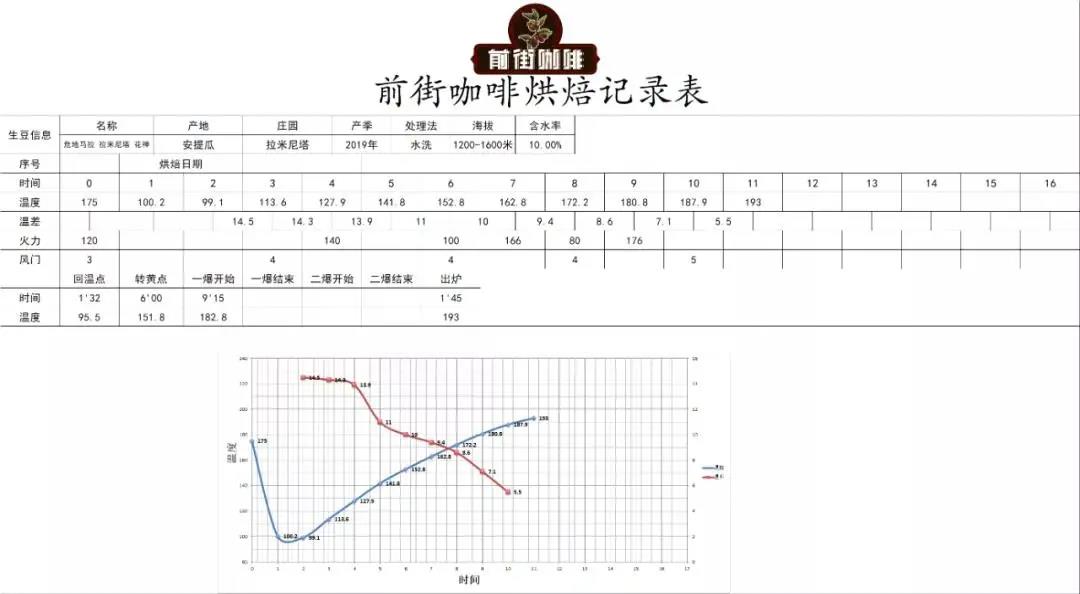
With Bourbon and Caturra in the lot, FrontStreet Coffee's roaster decided to use a medium-light roast for this FrontStreet Coffee La Flor coffee bean.

The roaster is preheated to 200°C and loaded with beans, with the damper set to 3. After 30 seconds, the heat is reduced to 160°C while the damper stays unchanged. The temperature recovery point is at 1'36". Maintaining heat, at 4'50" the bean surface turns yellow and the grassy aromas disappear completely, entering the dehydration phase. The heat is reduced to 140°C and the damper adjusted to 4.
At 4'50" dehydration is complete and the heat is reduced to 140°C. At 8'32" the bean surface shows ugly wrinkles and black markings, and the toasted bread aroma clearly transitions to coffee aroma; this can be defined as the prelude to first crack. At this point, listen carefully for the sound of first crack. At 8'37" first crack begins; reduce the heat to 80°C and open the damper fully to 5 (the heat reduction must be careful, not so low that the crackling stops). After first crack, develop for 1'50", then discharge at 195.3°C.
FrontStreet Coffee Brewing Guide
Dose: 15g
Ratio: 1:15
Water Temperature: 90°C
Grind: Medium-fine (77% retention on China standard #20 sieve)
Dripper: Hario V60
FrontStreet Coffee's segmented extraction method: first, use 30g of water to thoroughly wet the coffee grounds into a "hamburger" shape for a 30-second bloom (if you do not see the "hamburger" shape, check whether the beans lack freshness or the grind is too coarse).

Then begin the second segment. At 54 seconds on the timer, pour water to reach 125g, then stop and wait for the water level to drop to two-thirds of the coffee bed before starting the third segment (this segment aims to extract the sweet and sour flavor compounds from the grounds). The third segment, at 1'40" on the timer, pours water to reach 225g, with a total extraction time of 2'10" (this segment aims to extract the rich, mellow flavor compounds). After extraction is complete, gently swirl to make sure the coffee liquid is fully mixed and uniform before tasting.
Brewing Flavor Notes
When hot, the first sip reveals a bright lemon-like acidity. As it gradually cools, a juice-like mouthfeel emerges with subtle white floral aromas that appear and disappear, followed by cocoa and a slight smoky sensation that add layers. Finally, a caramel-like aftertaste brings the cup to a perfect conclusion.
FrontStreet Coffee Recommendation
If you enjoy the clean, bright character of washed coffee, FrontStreet's washed lineup is worth exploring. The FrontStreet Yirgacheffe Gedingding Cooperative coffee comes from the Gedingding village in the Worka area, processed with the most traditional washing method and described as Yirgacheffe's "last pure land." It shows jasmine florals and a bright citrus acidity, and after medium-light roasting it develops green tea and honey notes, suiting pour-over, cold brew, and espresso alike.
For a fruitier, juicier cup, the FrontStreet Kenya Little Tomato is a washed Kenyan coffee whose double-washing pushes the fruit character to the extreme, with cherry tomato, smoked plum, snow pear, black plum, and brown sugar aromas and a sweet, juicy acidity.
And for a classic, balanced washed coffee, the FrontStreet Jamaica Blue Mountain No.1 delivers pure hazelnut, cream, chocolate, and caramel notes. Because the island climate shortens the drying time, the beans stay translucent with a low defect rate, and the cup is balanced with no single flavor dominating or missing.
Important Notice :
FrontStreet Coffee is a long-established specialty coffee roaster in Guangzhou China, selling freshly roasted beans from its own farm in Yunnan as well as dozens of carefully selected single-origin beans from around the world for both pour-over and espresso. The products deliver consistently excellent quality and great value, with shipping within 24 hours. Guangzhou's FrontStreet Coffee shop is recommended by many coffee lovers, and the beans are now available online at the Tmall 。
FrontStreet Coffee has moved to a new address:
FrontStreet Coffee Address: 315,Donghua East Road,GuangZhou
Tel:020 38364473
 Scan and follow the En Gafei WeChat official account. Please indicate that the reprint comes from "En Gafei".