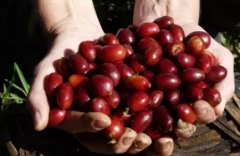
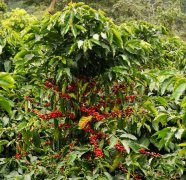
Differences Between Natural and Washed Yirgacheffe: Cupping Profile, Roasting Curve, and Flavor Distinctions

Coffee has been woven into Ethiopia's social fabric and cultural economy for hundreds of years. It sits at the core of Ethiopian culture and provides a living for most of the population, and the country is recognized worldwide as the birthplace of coffee — a fact the specialty coffee market holds in high esteem. Ethiopian coffee appears on cafe menus everywhere, and FrontStreet Coffee is no exception. Why is it so celebrated? The differences between Ethiopia's growing regions are enormous, but whatever the region, Ethiopian Arabica is irresistible to many. Here, FrontStreet Coffee takes you into coffee's birthplace.
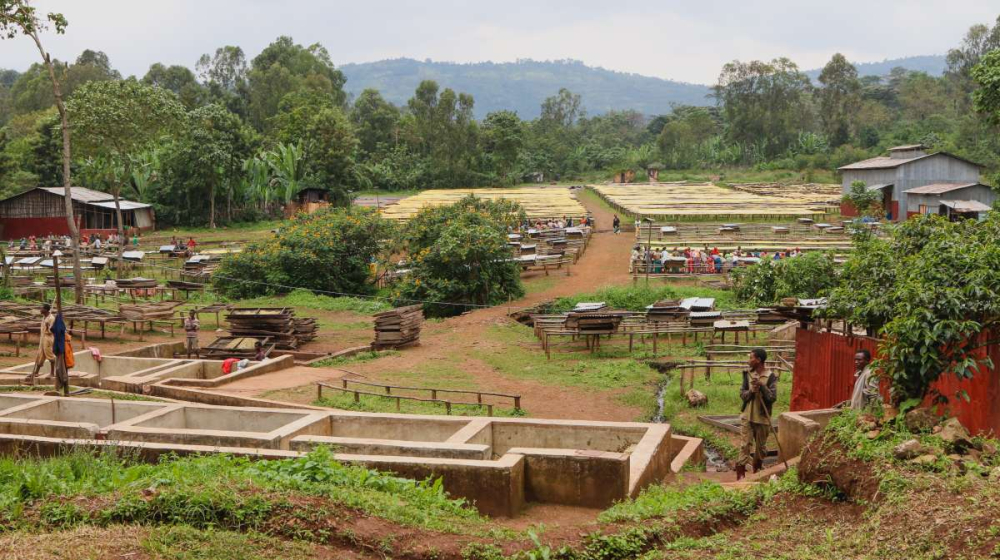
Ethiopia: The Birthplace of Coffee
Ethiopia sits in East Africa, and in the forests of the southern Kaffa region alone there are as many as five thousand native coffee varieties. As Africa's largest coffee producer, Ethiopia exports only about 60% of its beans; the rest goes to various ceremonies. At weddings, for instance, people mix coffee beans with coffee pulp, blend coffee with honey, and prepare herbs for medicinal purposes to ward off bad luck. Coffee is inseparable from daily life here.
Ethiopian Coffee Culture
For Ethiopians, coffee is both belief and culture. The most important ritual of all is the coffee ceremony — the full arc of roasting the beans, pounding the grounds, brewing, and drinking — known simply as the Coffee Ceremony.
FrontStreet Coffee finds it a little like the Japanese tea ceremony, with a spiritual dimension. The ceremony is also a way of reaching a conclusion — it can accompany a marriage proposal or settle a family dispute. It's lengthy, averaging about 1.5 hours. It begins with roasting the beans; a properly dressed woman then places the roasted beans in a pot, lets everyone smell their aroma, and slowly brews the coffee.
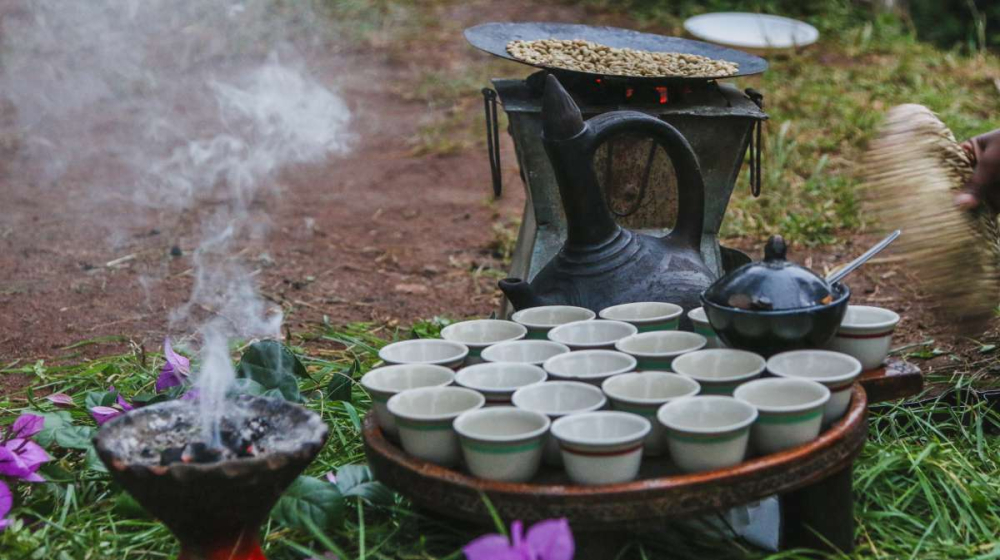
The first cup is called Abol — the most important, and the most bitter. When resolving a conflict, one party must bravely drink this cup and state their views. The second cup, Tona, is brewed by adding water again and still tastes strong; if a party accepts the other's position, they finish it. If someone refuses, there's no third cup. The third cup is called Baraka — the moment when matters are resolved and everyone is satisfied. It symbolizes joy, and the younger generation is often invited to share it.
Rich households and poor farming families alike hold coffee ceremonies. Someone once joked that the fact Ethiopia's more than 80 ethnic groups live in harmony must be thanks to coffee — a joke, but given how seriously they take coffee, not without reason.
Two common Ethiopian phrases say it all. "Buna dabo naw" literally means "coffee is our bread," underlining coffee's role as a source of daily sustenance. "Buna Tetu," an Amharic phrase meaning "drink coffee," covers not just the act but the social occasion — much like "meeting for coffee" in English.
Ethiopian Coffee Cultivation
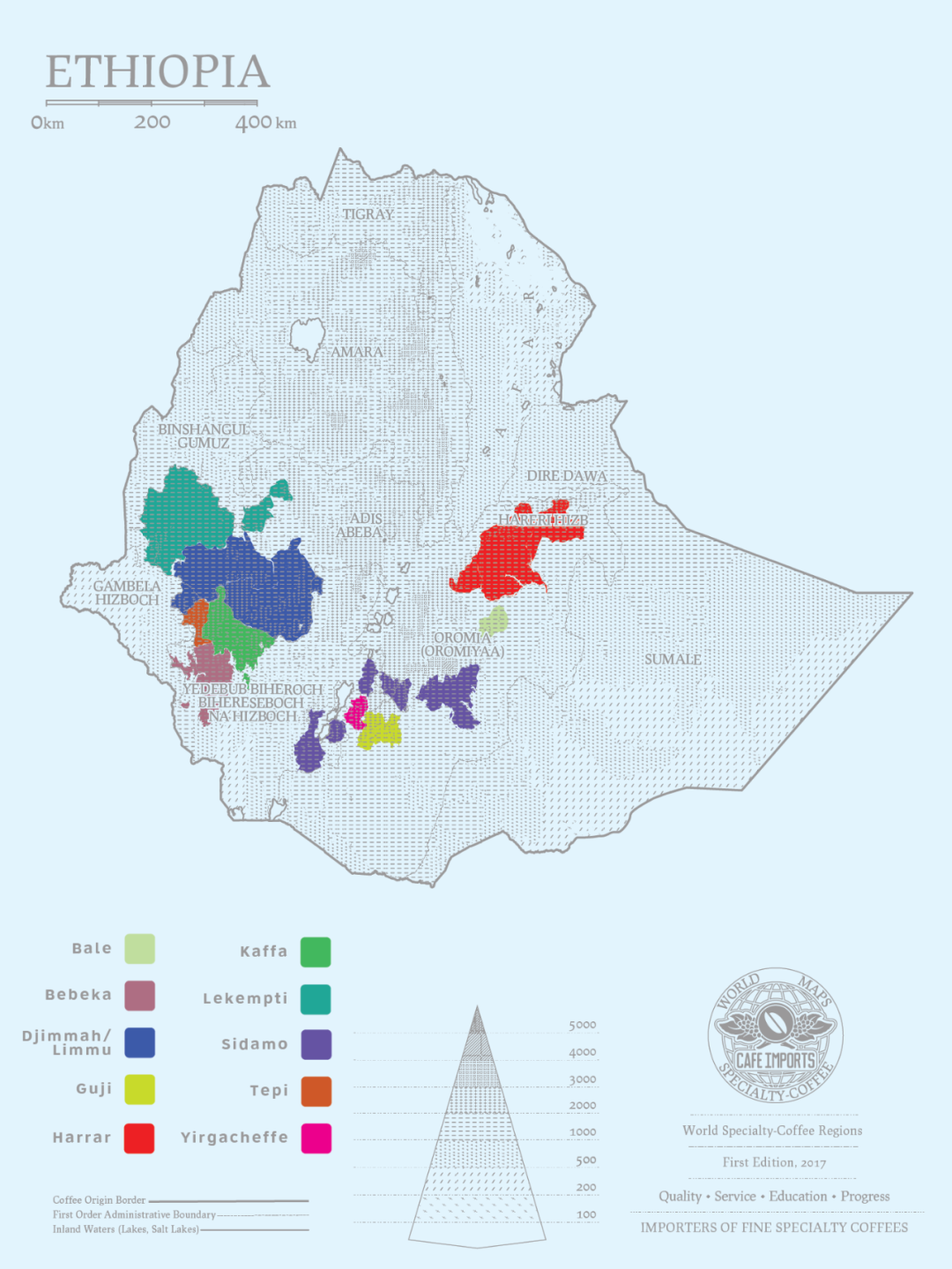
Ethiopia's administrative regions were redrawn around 1995, and the biggest impact on coffee geography was that the old Sidamo province was split: a small portion became the new Sidama region while most of it was folded into Oromia; Yirgacheffe, once part of Sidamo province, now belongs to the new Gedeo zone. As a result, coffee names on the market mix old and new regional naming. We'll use the new divisions to map Ethiopia's coffee landscape.

Ethiopian coffee cultivation is concentrated in the west and south, with smallholder families accounting for 90% of it. Nearly 1.2 million smallholder families depend on coffee for their livelihood. Each household farms less than 4 hectares, at an average altitude between 1000-2300 meters, with a planting density of 1000-1800 trees per hectare and yields of nearly 600 kg per hectare.
1. Yirgacheffe (Premium Region): Altitude 1,800-2,000 meters (Garden coffee system)
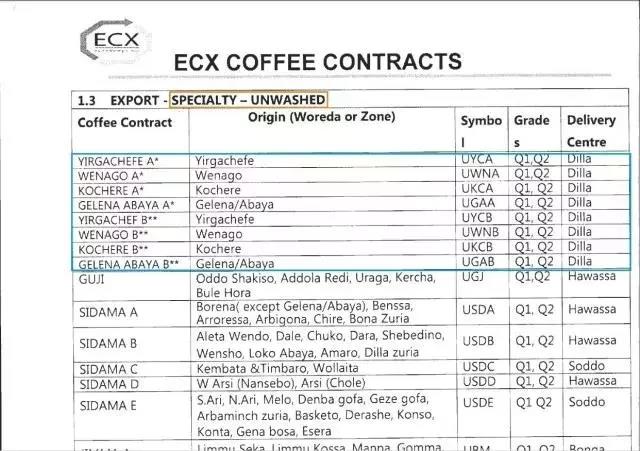
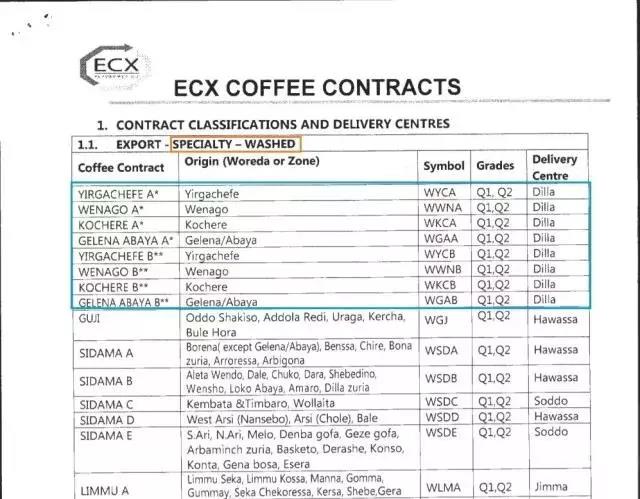
Yirgacheffe sits under the Sidamo umbrella but was carved out as its own name thanks to its unique flavor. Besides the town of Yirgacheffe, it includes three surrounding sub-regions: Wenago, Kochere, and Gelena/Abaya. In the new Yirgacheffe grading system, Yirgacheffe A, Wenago A, Kochere A, and Gelena/Abaya A therefore fetch higher prices than their B-grade counterparts.
So what is "Yirgacheffe flavor"? Rich jasmine florals, lemon fragrance, peach and almond sweetness, and a tea aroma. FrontStreet Coffee thinks "a hundred flowers blooming" captures it best.
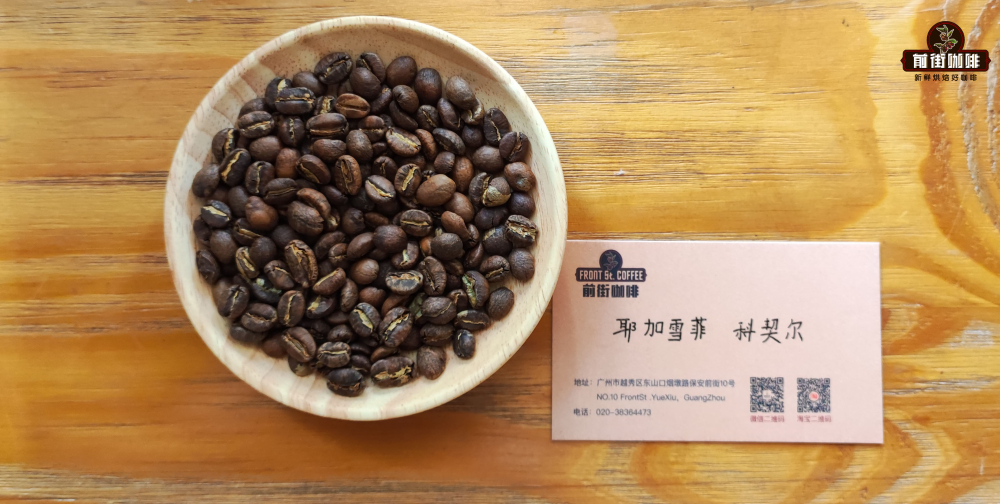
Traditionally, Yirgacheffe used the most ancient processing method — natural. But in 1972, Ethiopia introduced Central American washed processing technology to raise quality, making Yirgacheffe's jasmine and citrus character clearer and brighter. In FrontStreet Coffee's view, the fundamental difference between the two methods is that washed coffee presents the bean's most basic flavors, reflecting the region's character most directly, while natural processing layers sweet aromatics and fermentation notes on top of that base.
With washed processing, Yirgacheffe became a world specialty coffee icon almost overnight. After the 1970s the region focused mainly on washed coffee, becoming Ethiopia's most popular source of washed beans. In the 21st century, though, natural processing technology improved dramatically, producing a string of stunning naturals. Credit goes to the Yirgacheffe coffee trader Baghsh, who — nostalgic for traditional natural flavors and unwilling to see them replaced by washed processing — refined his natural methods, enhanced flavors, cut defect rates, and launched three now-legendary Yirgacheffe naturals: Idido Misty Valley, Beloya, and Aricha.
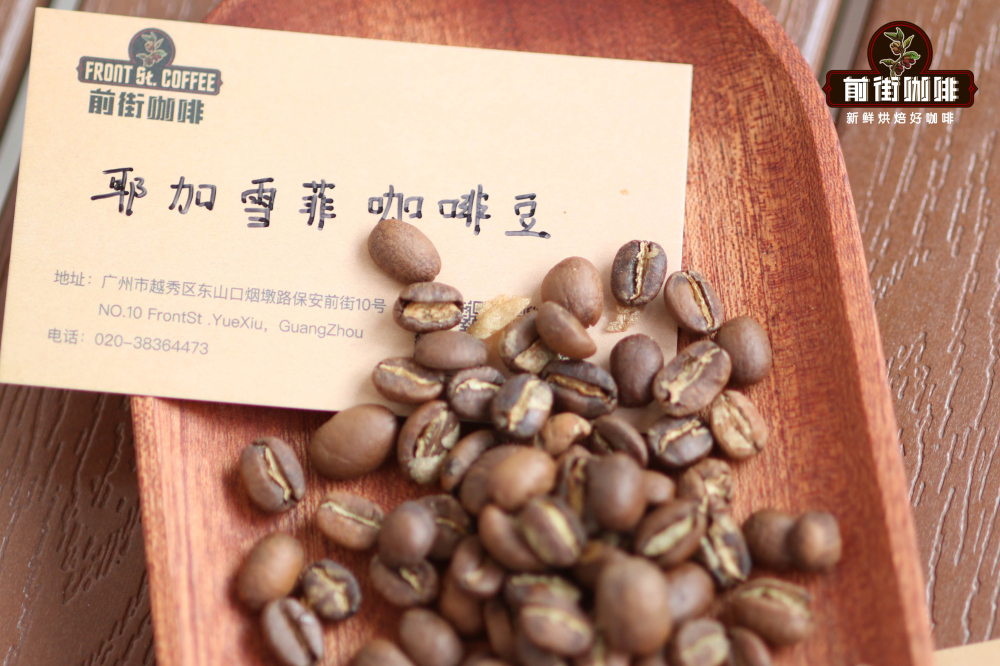
Beyond washed and natural, other methods like honey and anaerobic processing exist too. FrontStreet Coffee once cupped a honey-processed Yirgacheffe: it added complexity while keeping the region's base flavors, with a lighter mouthfeel than a natural but more body than a washed.
Ethiopian Processing Methods
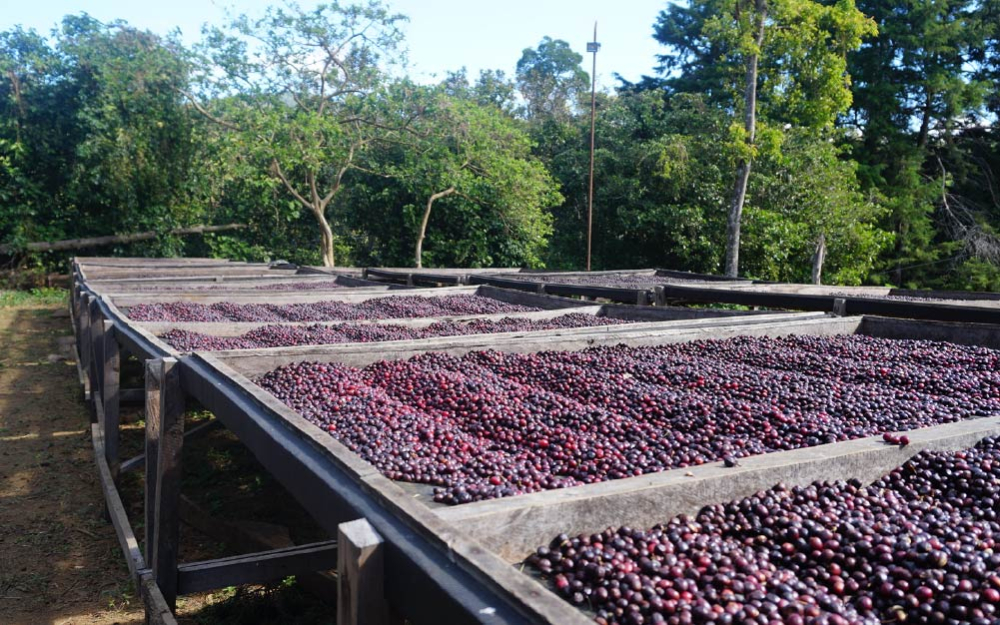
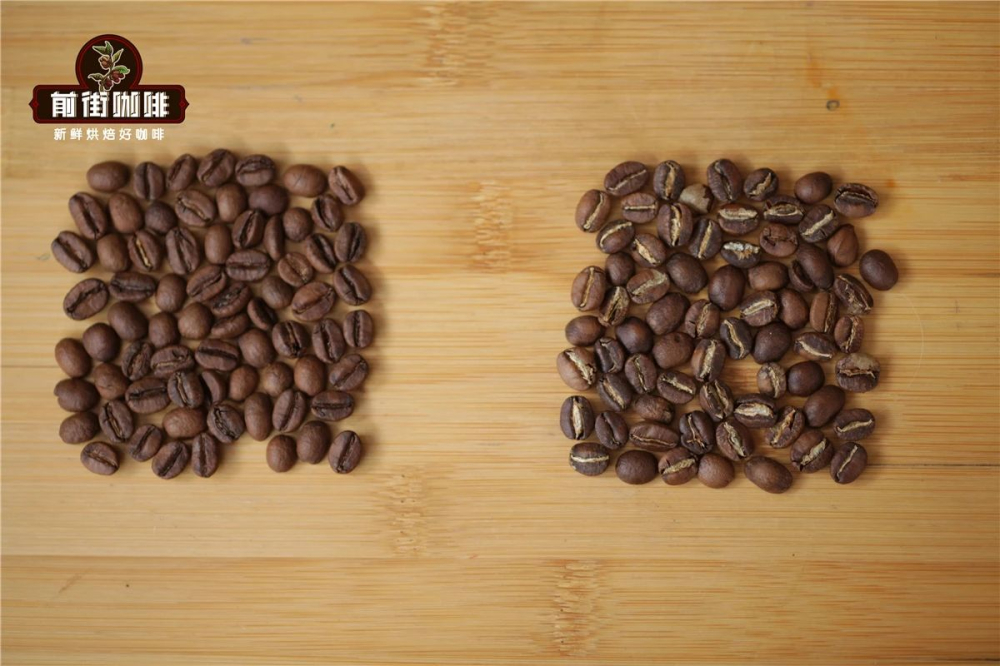
Ethiopian processing is dominated by natural and washed, with washed taking the larger share. The core difference is the role of the coffee pulp. Washed processing selects ripe cherries, removes skin and pulp for washed fermentation, then dries the beans to 12% moisture. Natural processing skips fermentation and dries the whole ripe cherry directly to 12% moisture, then removes the dried skin and pulp.
If you're trying Ethiopian coffee for the first time, FrontStreet Coffee suggests starting with a washed lot — it shows the most original character of Ethiopian coffee: clear acidity and elegant floral-fruit aromatics. A natural builds extra aroma intensity and sweetness on top of that foundation.
Ethiopian Coffee Grading
ECX (Ethiopian Commodity Exchange) defines grades by defect rate: G1 and G2. G1 means no more than 3 defective beans per 300 g of green coffee; G2 means 4-12 defects per 300 g.
On top of that, a flavor-based grading uses SCA cupping to evaluate G1 and G2 beans: lots scoring 85 points or above are rated Q1, and those scoring 80-84.75 points are rated Q2.
Yirgacheffe Roasting Recommendations
Yirgacheffe's signature is delicate acidity with rich floral and fruit aromatics, and FrontStreet Coffee believes light roasting showcases these best. Whether natural or washed, a light roast maximizes what makes Yirgacheffe special. Medium and dark roasted Yirgacheffes do exist, trading some acidity for body — a matter of taste, but light roast remains the mainstream.
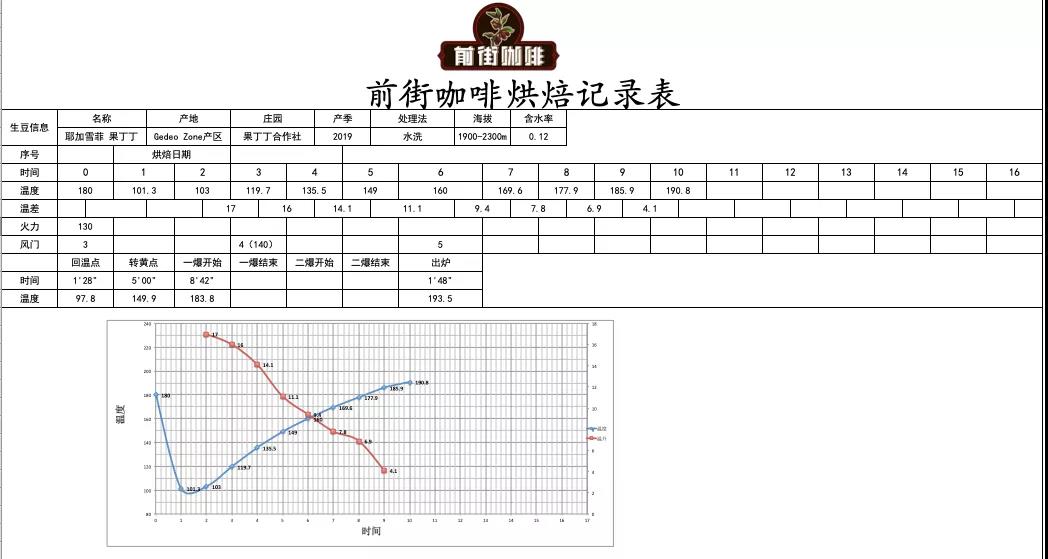
FrontStreet Coffee Washed Yirgacheffe Roast Profile

FrontStreet Coffee Natural Yirgacheffe Roast Profile
Yirgacheffe Brewing Recommendations
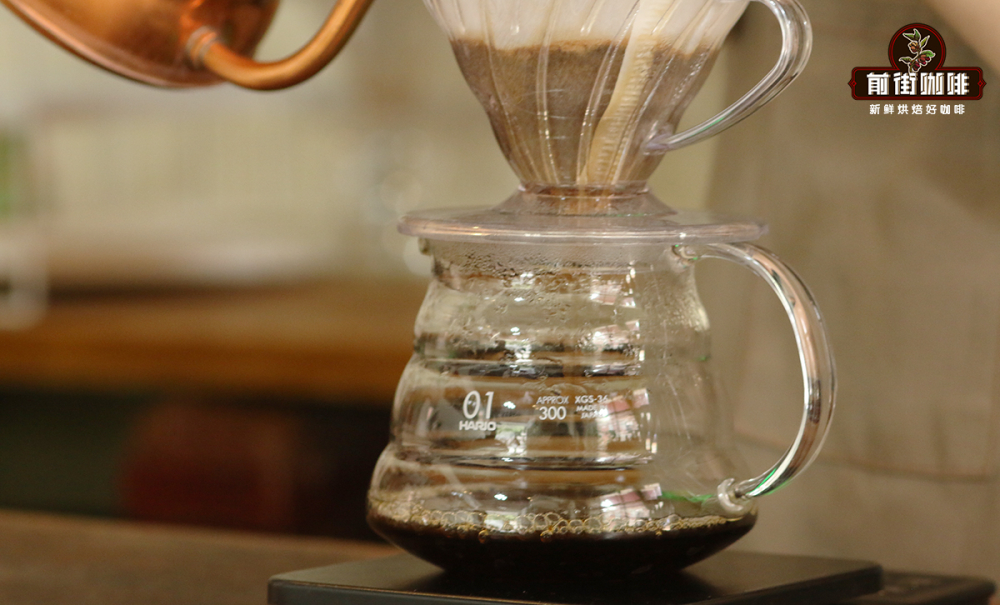
FrontStreet Coffee suggests a V60 dripper for light-roasted beans: water around 90°C, a 1:15 ratio, a 15 g dose, and a medium-fine grind (80% passing a #20 standard sieve). The technique is staged pouring. Bloom with twice the coffee's weight in water — 30 g — for 30 seconds. Pour in small circles to 125 g, then pause. When the water level drops and is about to expose the bed, pour to 225 g and stop. Total extraction time: 2 minutes.
Flavor Descriptions
Natural Yirgacheffe: a light fermented, winey aroma, a rich mouthfeel, with citrus fragrance, honey sweetness, and cocoa, and a long aftertaste.
Washed Yirgacheffe: brighter, livelier acidity — lemon and citrus — with a refreshing mouthfeel and black tea notes in the finish.

Either way, both natural and washed Yirgacheffe share a fruity acidity and juicy character reminiscent of lemons and oranges.
FrontStreet Coffee Recommendation
To taste both sides of Yirgacheffe, FrontStreet Coffee's washed Yirgacheffe daily-driver is the classic starting point — white jasmine, bright citrus and lemon acidity, and a delicate tea body at an easy price — while the natural-process Red Cherry, made from fully ripe cherries sun-dried for three to five weeks on raised beds, adds a tropical fruit lift: berry-like juiciness, honey sweetness, and cream. Brew both as a side-by-side and you'll taste exactly what processing does to one region's beans.
Important Notice :
FrontStreet Coffee is a long-established specialty coffee roaster in Guangzhou China, selling freshly roasted beans from its own farm in Yunnan as well as dozens of carefully selected single-origin beans from around the world for both pour-over and espresso. The products deliver consistently excellent quality and great value, with shipping within 24 hours. Guangzhou's FrontStreet Coffee shop is recommended by many coffee lovers, and the beans are now available online at the Tmall 。
FrontStreet Coffee has moved to a new address:
FrontStreet Coffee Address: 315,Donghua East Road,GuangZhou
Tel:020 38364473
 Scan and follow the En Gafei WeChat official account. Please indicate that the reprint comes from "En Gafei".