Green Bean Archive: Green Bean Pricing, Washed and Natural Process Yirgacheffe Green Beans, Specialty Coffee Beans
ETHIOPIA, YIRGACHEFFE, Cherry Red
FrontStreet Coffee Yirgacheffe Cherry Red G1
01 | Introduction to the Growing Region
Unique Geographical Environment
Yirgacheffe is a small town in Ethiopia, situated at 1,700-2,100 meters above sea level - one of the highest coffee-growing regions in the world and a byword for Ethiopian specialty coffee. Lakes Turkana, Abaya, and Chamo bring abundant moisture to the area, while the Rift Valley - the Misty Valley in particular - is shrouded in year-round mist, with spring-like seasons, gentle breezes, and cool, humid air. Thousands of coffee tree varieties thrive and multiply here, nurturing the unique terroir of FrontStreet Coffee's Yirgacheffe, where floral and fruit aromas intertwine in endlessly shifting ways.
The Historical Origins of Yirgacheffe
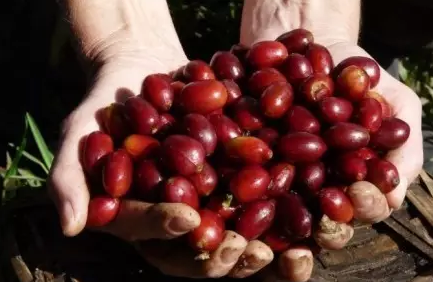
Yirgacheffe's coffee trees were first cultivated by European monks (not unlike Belgian monks growing grain to brew beer) and later taken over by farmers or cooperatives. The trees spread naturally through forests, fields, and backyards. During harvest season, the Ethiopian Coffee Trading Company would come to town to buy the beans farmers had collected, ultimately auctioning them for export under the "Yirgacheffe" name.
Operation Cherry Red
Many coffee lovers know the name "Operation Cherry Red," but few can describe what the project actually is.
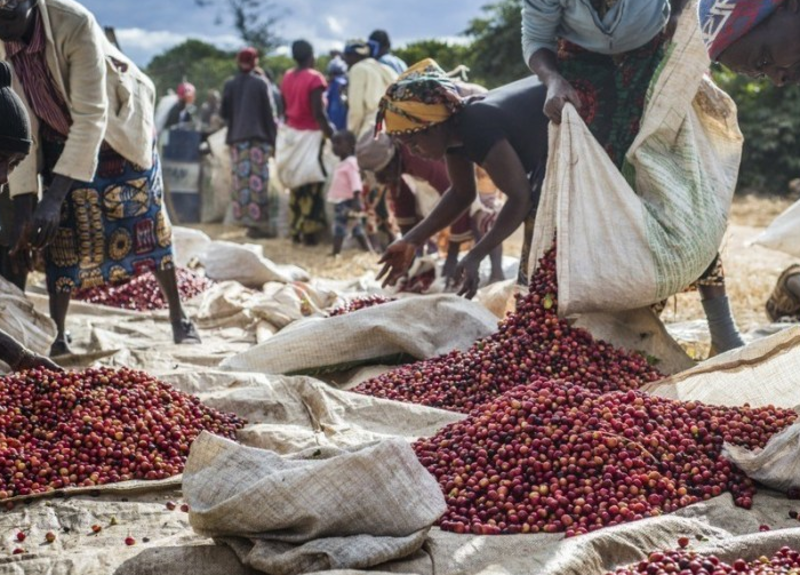
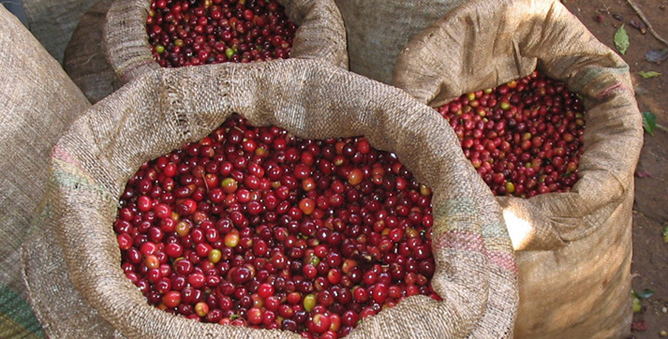
To help Ethiopian coffee farmers earn better incomes and raise local living standards, the Dutch trading company Trabocca launched the "Operation Cherry Red Project" with local farmers in 2007. Its sole aim was to incentivize farmers to improve bean quality. At the start of each harvest season, Trabocca designates microclimate-zone harvesting plans: cherries are hand-picked at 100% maturity, with production per lot ranging from roughly 1,500-3,000 kilograms.
In 2008, the project invested $5,000 in new natural drying racks; in 2009, another $8,000 went to drying racks and shade nets. In 2010 a $9,000 generator was purchased, and in 2011 a further $10,000 improved local coffee-transport roads, making shipping faster and more efficient. Trabocca also provided interest-free loans for new cherry depulpers and bean sorters. To streamline supplier procurement, $14,000 was invested in 2012 to build a high-quality cupping laboratory in Addis Ababa.
Trabocca provides loan support, new hardware, and technical assistance in production and processing to help farmers improve. It promises generous purchase prices as long as the actual output meets cupping standards in both the Addis Ababa and Amsterdam labs - and the passing standard Trabocca sets is 88 points.
After processing, Operation Cherry Red beans are immediately packed in plastic inner bags (GrainPro or vacuum bags) and transported to Djibouti to await shipping. Through real-time monitoring, safe transportation, and timely, appropriate processing, the program pursues perfect quality. Roasters buy top-grade beans through it, Ethiopian coffee quality rises and commands better prices, and Trabocca returns the profits to farmers - a continuous loop of improvement.
02 | Processing Method
This FrontStreet Coffee natural-processed Yirgacheffe has slightly larger beans, with slightly lower density and moisture content. Every coffee from this processing station counts as premium specialty coffee, outperforming other coffees regardless of processing method - these beans can be considered the finest Yirgacheffe has to offer.
After screening the cherries, the station lays the whole fruit - pulp and skin intact - on elevated racks to dry naturally. It is precisely this labor-intensive rack-drying method, which keeps the cherries off the ground, that prevents earthy off-flavors during drying and creates exceptionally clean fruit flavors. After more than two weeks of natural drying, the dark-brown cherries are professionally stored to develop their full flavor. Only before shipment does the station hull the beans - the sweetness is easy to imagine.
03 | Green Bean Analysis
The Yirgacheffe Grading System
By processing method, Yirgacheffe green coffee falls into two main categories:
Category A: Washed, graded under SCAA standards as Grade 1 and Grade 2, where the smaller number is the higher grade. FrontStreet Coffee's G1 washed Yirgacheffe has a distinctive style, with citrus and floral notes woven into the cup - a flavor no one resists.
Category B: Natural-processed, graded as Grade 1, 3, 4, or 5. The highest grade, FrontStreet Coffee's G1 natural Yirgacheffe, bursts with fruit aroma; opening a bag of it freshly roasted can overturn everything you thought you knew about coffee - only those who have tasted the top-grade natural Yirgacheffe will believe that coffee is, at heart, a fruit.
Difference One
Two Different Processing Methods:
Harvested cherries must go into processing immediately or they begin to ferment and spoil. There are two methods - "natural" and "washed" - and they create distinctly different flavor profiles.
Natural beans show complete, mellow flavors, gentle aromas, and more body; washed beans offer good clarity, high aroma, and lively acidity.
Natural Sun-Drying (dried in the fruit):
Cherries go straight to sun-drying after harvest without any pulping - the oldest processing method in existence. Drying typically lasts about 4 weeks and must be rigorously managed so the coffee loses none of its flavor. Natural drying demands an extremely dry local climate; in some regions, mechanical dryers assist the process (their hot air accelerates drying and helps control the degree).
Fully Washed:
Washing and fermentation remove skin, pulp, and mucilage. Farms using the washed method must build washing pools with a supply of continuous fresh water. During processing, fermented beans are agitated back and forth in the pool, the friction between beans and the force of flowing water scrubbing them until smooth and clean.
After washing, the beans are still inside their parchment at 50% moisture and must be dried down to 12% - otherwise they will keep fermenting and turn moldy.
Sun-drying takes longer - 1-3 weeks - but the flavor is excellent and highly sought after.
Difference Two
Bean Appearance:
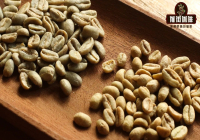
Green beans: washed beans are generally greenish-blue, while natural beans are yellowish-green.
Roasted beans: washed Yirgacheffe carries more silver skin, natural Yirgacheffe less.
Difference Three: Taste
Dry Aroma:
Cupping protocol: 8 g of coffee brewed with 150 ml of 94°C water, steeping 3-4 minutes until a crust forms.
FrontStreet Coffee natural Yirgacheffe: light fermented wine aroma, spicy fragrance.
FrontStreet Coffee washed Yirgacheffe: jasmine florals, lemon or lime acidity.
Taste:
FrontStreet Coffee natural Yirgacheffe: naturally complex, with a light fermented wine note, slightly more pronounced bitterness, a much richer mouthfeel, honey sweetness, cocoa with hints of spice - full body and a persistent aftertaste.
FrontStreet Coffee washed Yirgacheffe: brighter acidity like lemon, a cleaner mouthfeel, more prominent citrus aromas, and a black-tea sensation in the finish.
Similarities: Both share a fruit acidity reminiscent of lemons and other citrus.
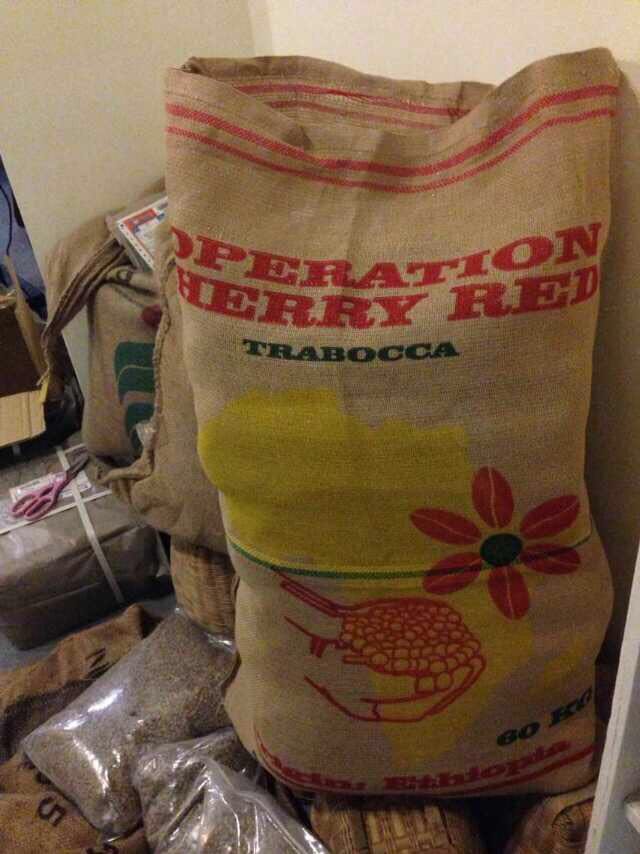
The beans are exported in standard jute bags printed with the Trabocca brand.
The FrontStreet Coffee Yirgacheffe variety is a local heirloom, small-bean type - relatively round and very small, mostly 14-15 screen size.
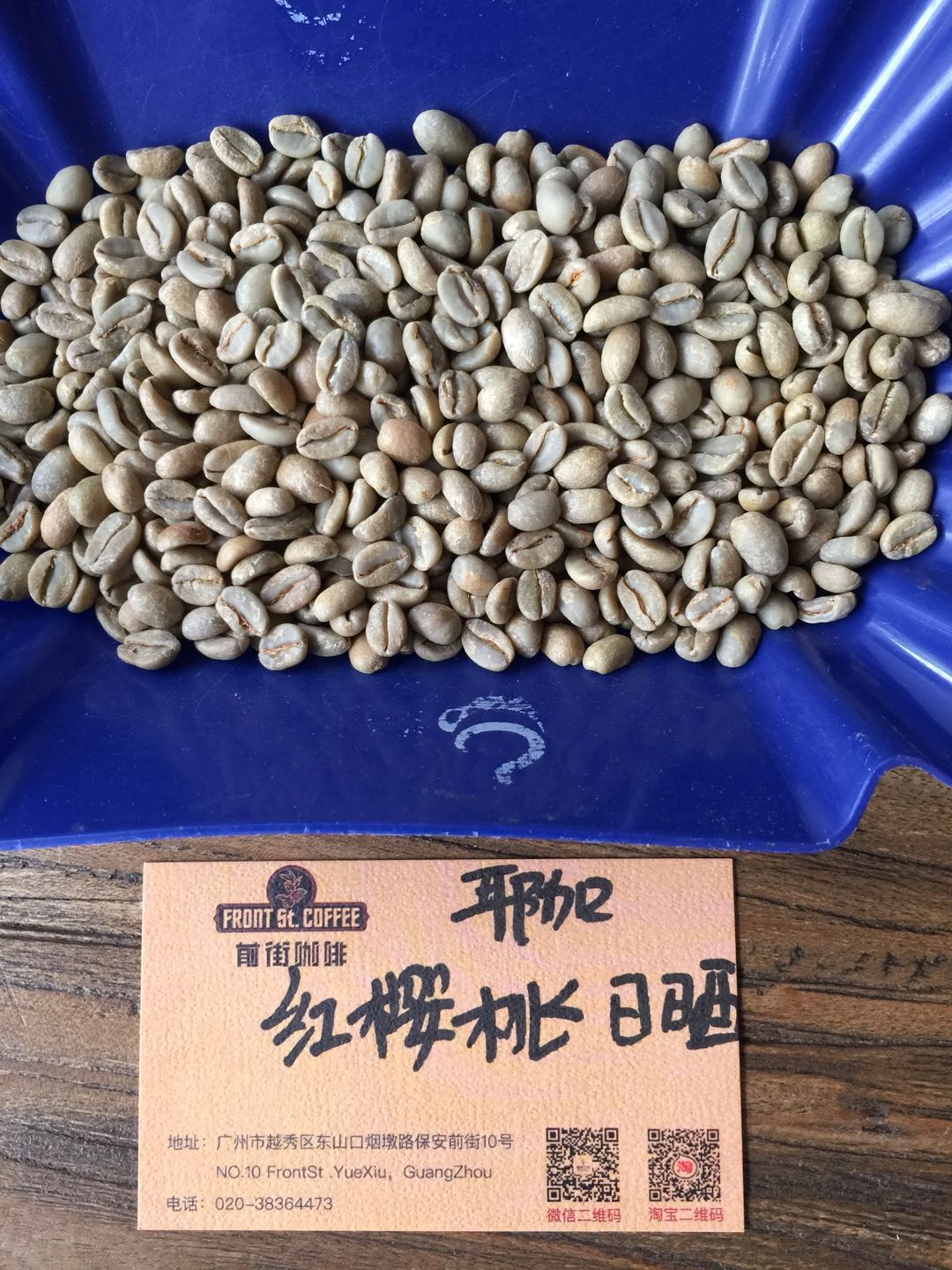
The Cherry Red Grade 1 green beans are yellow-green - typical of natural coffee - uniform and full, with few defects.
04 | Roasting Analysis
Beans with flavors this splendid are not suited to medium-dark roasting. This coffee is meant to be roasted lightly and slowly, to express its rounded sweetness and rich floral and fruit aromas.
With relatively small beans and low moisture, this coffee absorbs more heat during roasting, and its Maillard reaction runs relatively fast.
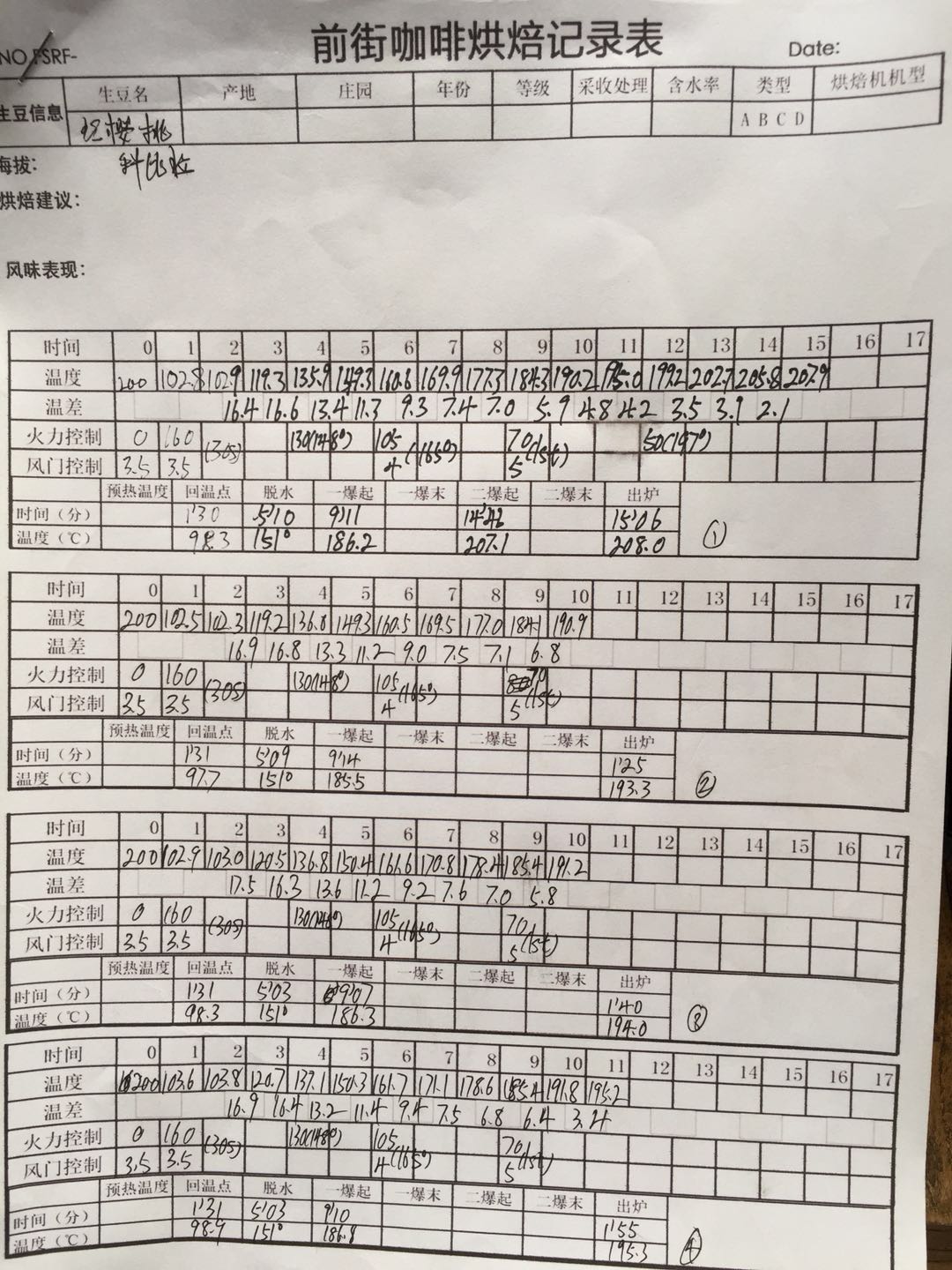
In the first roast, I charged at a higher temperature, holding 160 heat until the beans dehydrated and turned yellow, to ensure enough energy carried into first crack and drove development directly toward the drop, setting the development curve.
In the second, third, and fourth roasts, with the same 200°C charge temperature and the same heat, I gradually reduced the heat during the roast as needed.
This roast is a quick-roasted light roast:
Cupping notes:
Roast one: strawberry, raspberry, vanilla, honeydew, juicy.
Roast curve 2: strawberry, raspberry, vanilla, honey, fruit juice.
Roast two: mango, black plum, citrus juice.
Roast curve 3: mango, black plum, blueberry, citrus juice.
Roast three: citrus juice, cream.
Roast curve 3: citrus juice, cream.
Roasting machine: Yangjia 600 g semi-direct-heat.
In quick-roast mode: charge the drum at 200°C with the damper at 3.5; after 1 minute reduce the heat to 160°C, damper unchanged; make one more heat adjustment at 148°C, dropping to 130°C. Roast to 5'03" at 151°C, when the bean surface turns yellow, the grassy aroma disappears completely, and drying is complete; reduce the heat to 105°C and open the damper to 4.
At the 8th minute, ugly wrinkles and black spots appear on the bean surface and the toast aroma clearly turns into coffee aroma - the prelude to first crack, so listen carefully. At 9'07" first crack begins; reduce the heat to 70°C and open the damper fully (adjust the heat very carefully - not so much that cracking stops), and drop the beans at 194°C.
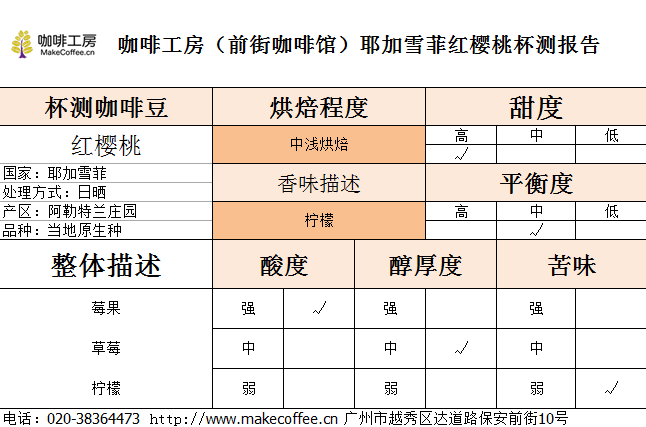
FrontStreet Coffee Yirgacheffe's dry aroma is rich with fruit - heavy dried-fruit notes plus strawberry, mango, and apricot jam.
The wet aroma is like sweet syrup, like thick apricot pulp wrapped in rustic honey or chocolate. The entry is gentle, the body medium, the acidity understated but lively and bright - like fruit black tea.
04 | Brewing Analysis
FrontStreet Coffee Yirgacheffe Flavor
Brewing Methods
Pour-over and siphon are the optimal methods. Grinding releases an overwhelming natural fruit aroma with obvious sweetness.
Gentle and elegant, sweet and charming: FrontStreet Coffee Yirgacheffe emits remarkably complex aromas and an outstanding mouthfeel that is hard to put into words.
First Brew: V60 dripper, 15 g coffee, water temperature 90°C, grind setting 4, coffee-to-water ratio close to 1:15.
31 g of water for the bloom, bloom time 29 s.
Then pour to 99 ml, pause, and slowly pour to 230 ml - in short: 31-99-100.
Taste: obvious strawberry fruit acidity, an astringent finish, some off-flavors.
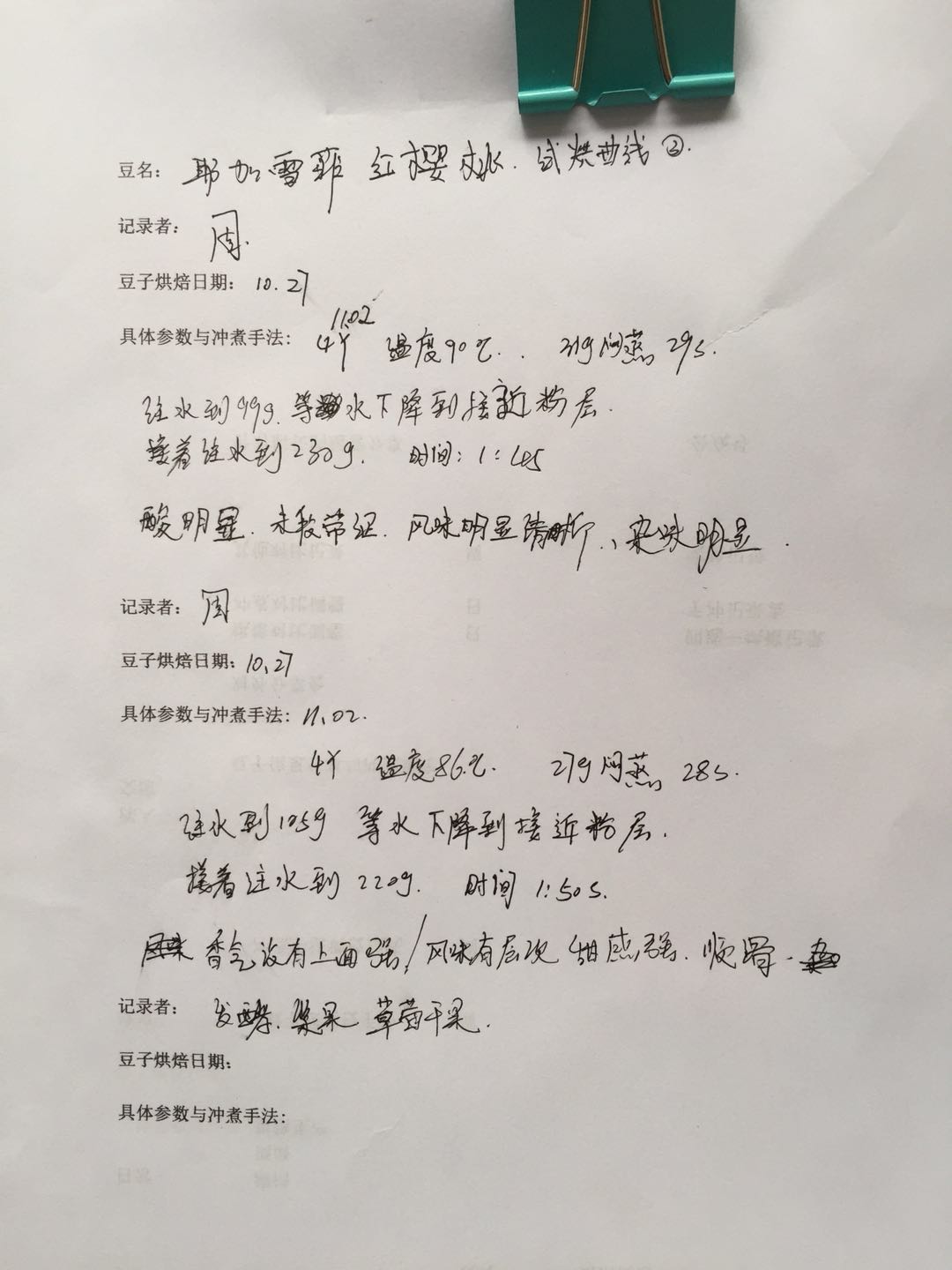
Adjusting grind from setting 4 to 3.5 (finer) and lowering the water temperature:
Second Brew (Corrected): V60 dripper, 15 g coffee, water temperature 86°C, grind setting 3.5, coffee-to-water ratio close to 1:15.
27 g of water for the bloom, bloom time 28 s.
Then 27-105-88, total time 1:50 (timed from the start of blooming).
Taste: smooth, far richer flavor, layered, with enhanced fermented-berry sweetness.
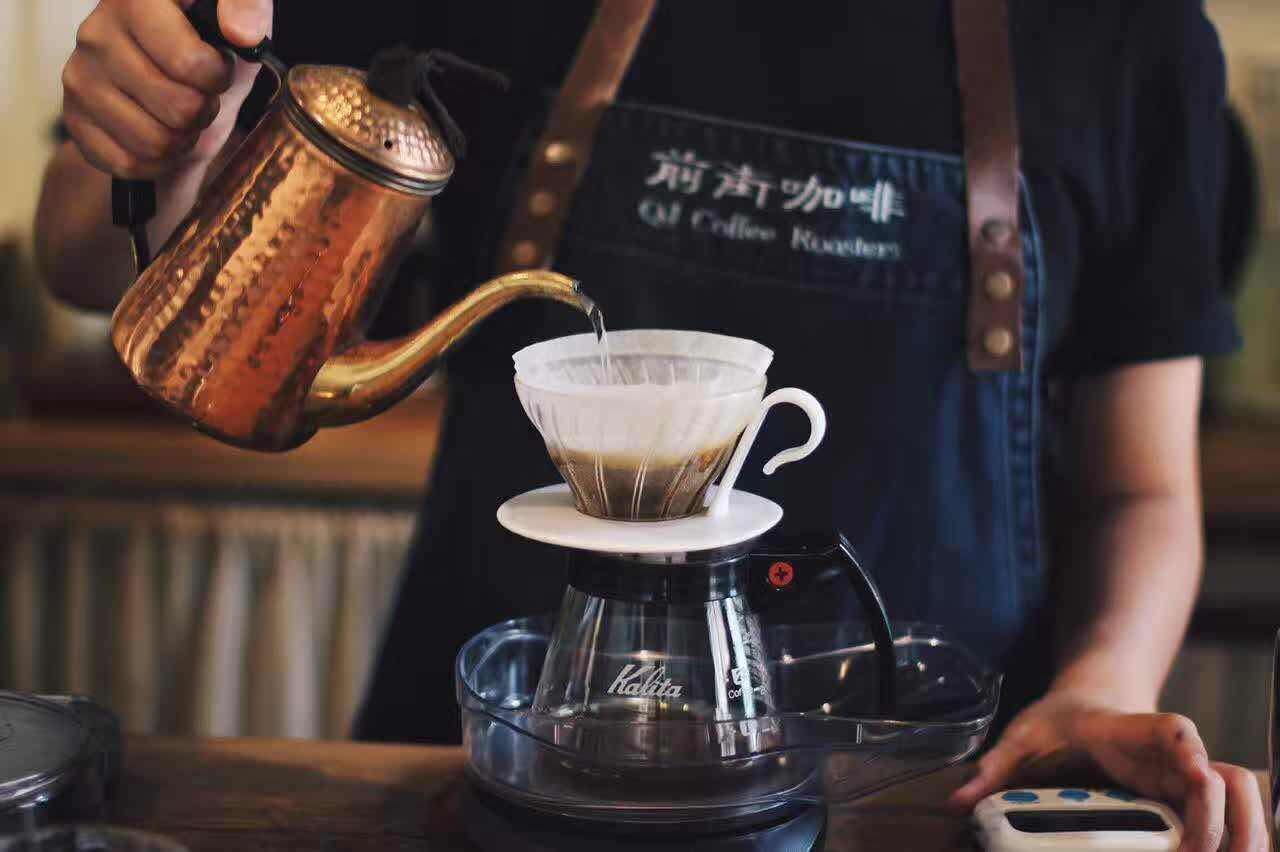
The wet aroma of fermented berries and fruit wine almost defies belief - this is FrontStreet Coffee Yirgacheffe. Personally I am not fond of that wet aroma, but from the silky entry to the delicate body, the ripe fruit's sweet-tart flavors are genuinely astonishing. The sweetness surpasses any Yirgacheffe I had tasted before, and the aftertaste is excellent too - it fully earns its "fruit bomb" nickname, with sweetness still lingering half an hour after the last sip.
FrontStreet Coffee Recommendation
If this Cherry Red natural inspires you, FrontStreet Coffee's Yirgacheffe range has a washed counterpart worth trying: the entry-level washed Yirgacheffe is known for white jasmine florals, bright citrus and lemon acidity, and a tea-like finish, while the Idido Cooperative lot from the Worka area - traditionally washed and fully traceable - adds fresh, clean berry character without any old-fashioned bitterness. Both make ideal first steps into Ethiopian specialty coffee at friendly prices.
To brew them, use a V60 with 15 g of coffee ground to fine-sugar texture (80% passing a #20 sieve), water at 90-91°C, and a 1:15 ratio: bloom with 30 g of water for 30 seconds, pour to about 125 g within a minute, then finish at 225 g by around 1:35, with drawdown completing between 2:00 and 2:10. Prefer the natural side? The FrontStreet Red Cherry lot - fully ripe cherries dried in fruit on raised beds for three to five weeks and turned every 2-3 hours at the start - delivers citrus acidity, berry-juice vibrance, honeyed sweetness, and a creamy smoothness very much in the Cherry Red spirit.
Important Notice :
FrontStreet Coffee is a long-established specialty coffee roaster in Guangzhou China, selling freshly roasted beans from its own farm in Yunnan as well as dozens of carefully selected single-origin beans from around the world for both pour-over and espresso. The products deliver consistently excellent quality and great value, with shipping within 24 hours. Guangzhou's FrontStreet Coffee shop is recommended by many coffee lovers, and the beans are now available online at the Tmall 。
FrontStreet Coffee has moved to a new address:
FrontStreet Coffee Address: 315,Donghua East Road,GuangZhou
Tel:020 38364473
 Scan and follow the En Gafei WeChat official account. Please indicate that the reprint comes from "En Gafei".