Is Panama Geisha's Chinese Name 'Guixia' the Same Coffee as 'Yiji'?
Geisha may be the most celebrated coffee since Blue Mountain, and in many shops it is the pricey treasure on the shelf. Beyond the familiar name "Geisha," the market sometimes calls it "Geiko" as well. What is the difference? And how did Geisha come by its fame? In this article, FrontStreet Coffee answers all of it for you.
Is "Geisha" the same as "Geiko"?
In 1931, Geisha was first collected from the wild forests of Kaffa in southern Ethiopia, during a hunt for new disease-resistant varieties, and named after the nearby Geisha Mountain. It was later sent to research institutes in Kenya, Uganda, and Tanzania for trial planting. In 1953, the variety reached CATIE, the Tropical Agricultural Research and Higher Education Center in Costa Rica, where it was recorded as T2722. Although a few local farms grew it, Geisha's brittle branches and low yield kept it from winning farmers over, and it was never widely planted.
From the 1960s on, CATIE handed T2722 Geisha to Panamanian coffee farmers, and the variety finally set foot on Panamanian soil. In the 1990s, the Peterson family, owners of Hacienda La Esmeralda, turned their attention to coffee production and bought a new high-altitude farm, Jaramillo. Many trees on the farm were hit by leaf rust, but Daniel Peterson noticed that the Geisha trees were barely damaged. So they decided to move the Geisha, previously mixed in among other varieties, to more of the farm while pushing its planting altitude higher.
In 2003, the Peterson family finally recognized Geisha's potential. When they cupped it for the first time, it showed a rich white-floral aroma, an exceptionally clean cup, and berry, citrus, and bergamot-like notes, forming the archetypal Panamanian Geisha profile. When everyone wondered how Hacienda La Esmeralda had grown such delicious coffee, the owner Price revealed that the variety was Geisha, which we call "Guixia" in Chinese. In Taiwan the variety is known as "Yiji" (Geiko), because the English name Geisha happens to match the English word for a Japanese geisha.
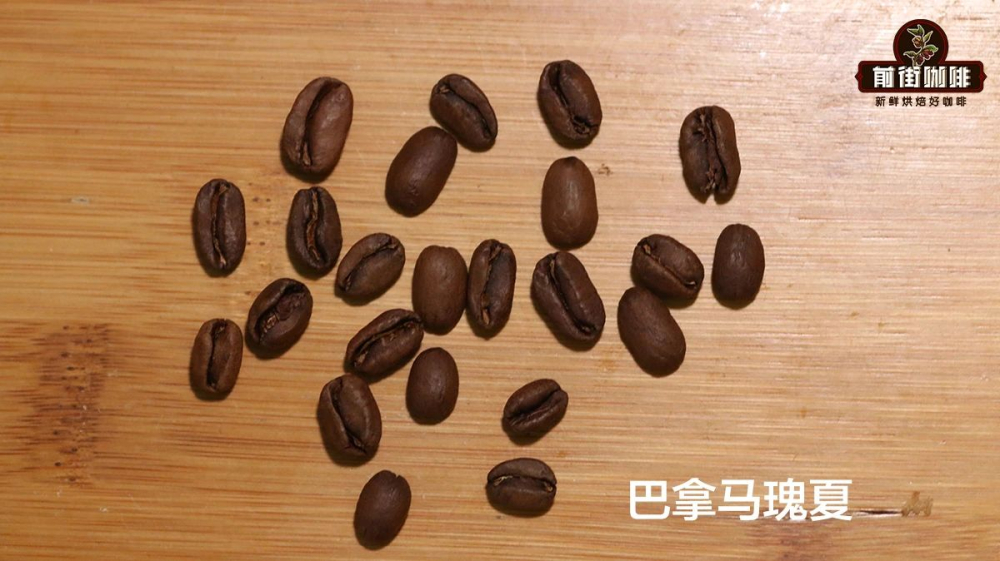
What are the characteristics of Geisha variety coffee?
Geisha seedlings were first found and collected in the wild forests of southwestern Ethiopia. The collection was meant to uncover new disease-resistant varieties, and the plant was named after the nearby Geisha Mountain. In 1953, it was brought to Costa Rica and recorded as T2722. Through the 1950s and 1960s it was trial-planted on many farms across Central and South America, but its low yield and fragile, weak growth kept it from being widely cultivated. Only in 2003 was it rediscovered by the Peterson family of Hacienda La Esmeralda, going on to win the 2004 Best of Panama competition and launching the Panamanian Geisha era.
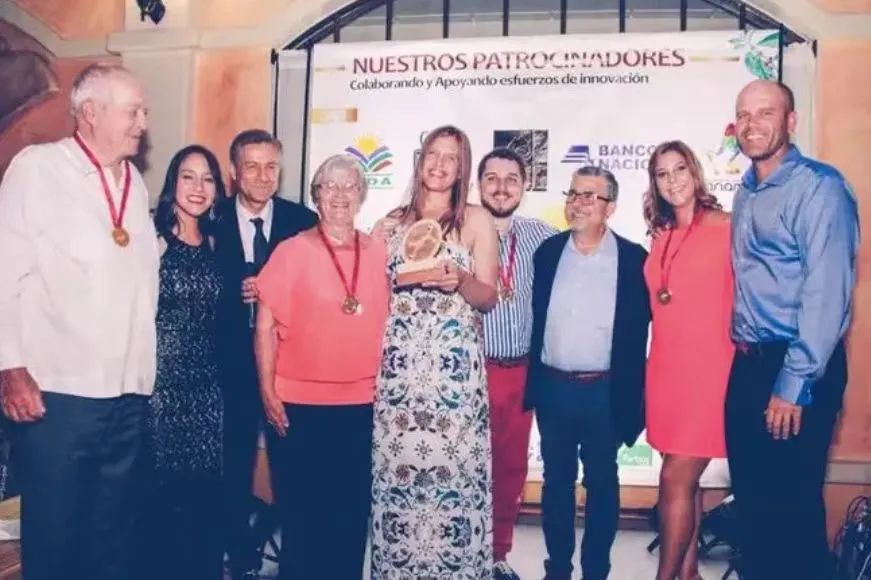
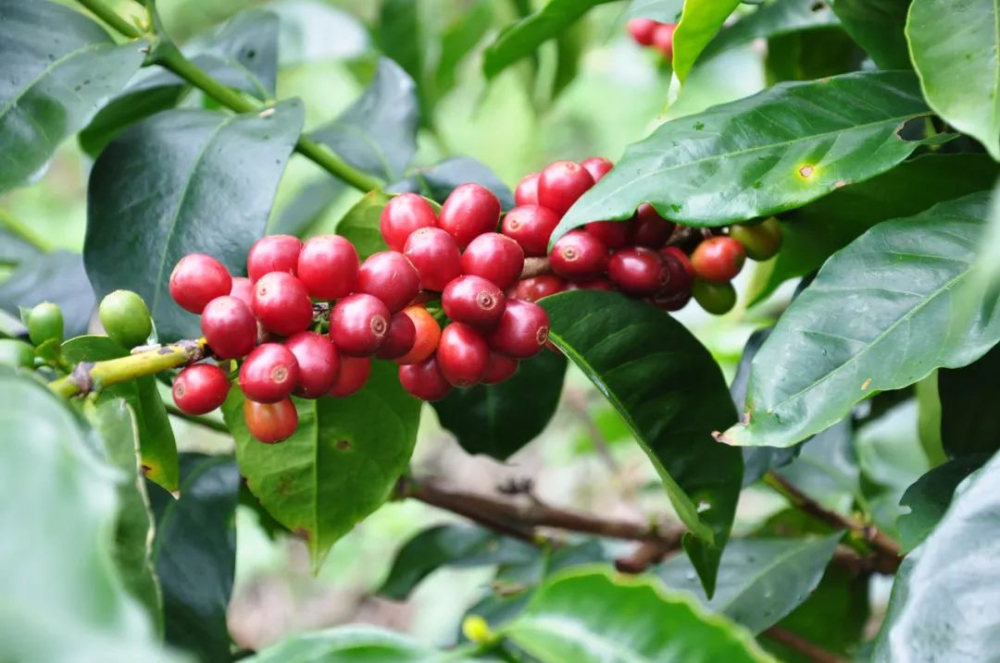
Geisha is finicky about where it grows, needing high altitude, fertile soil, cloud cover or shade plants, and no direct sun. The owner of Hacienda La Esmeralda has said the farm needs plenty of shade trees to shield the delicate Geisha from direct sunlight, and traditional pruning must be used during the first years of planting, or the plants easily die. Geisha planted at higher altitudes ripens more slowly, which yields more complex and distinctive flavors.
Unlike other varieties, Geisha trees have a very thin leaf system, so their photosynthesis is inefficient. The root system is fragile too, taking up water and nutrients slowly, so yields are very low. Add the high-altitude growing environment and the fruit ripens late as well. A single Geisha tree yields only half as much as a Caturra tree, one of the reasons Geisha is so precious.
Why is Panamanian Geisha the most famous?
Coffee is an agricultural product, and its flavor is shaped not only by variety but by terroir, post-harvest processing, roasting, and brewing, each of which leaves its mark on the cup. That means even if you planted the very same Geisha variety as Hacienda La Esmeralda, you might not get the same orange-blossom and honey character. If you are tasting Geisha for the first time, FrontStreet Coffee suggests starting with the Panamanian region where Geisha made its name. Panamanian estates have more experience with the variety, and their Geisha flavors are the most representative.
Panama's coffee regions are concentrated in the western highlands of the Boquete valley and the Volcan area around Baru Volcano, and Hacienda La Esmeralda, along with the better-known Elida Estate, Jenkinson Estate, and Hartmann Estate, all sit in this area.
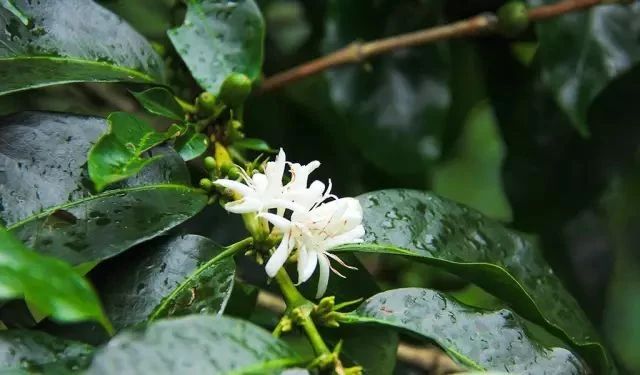
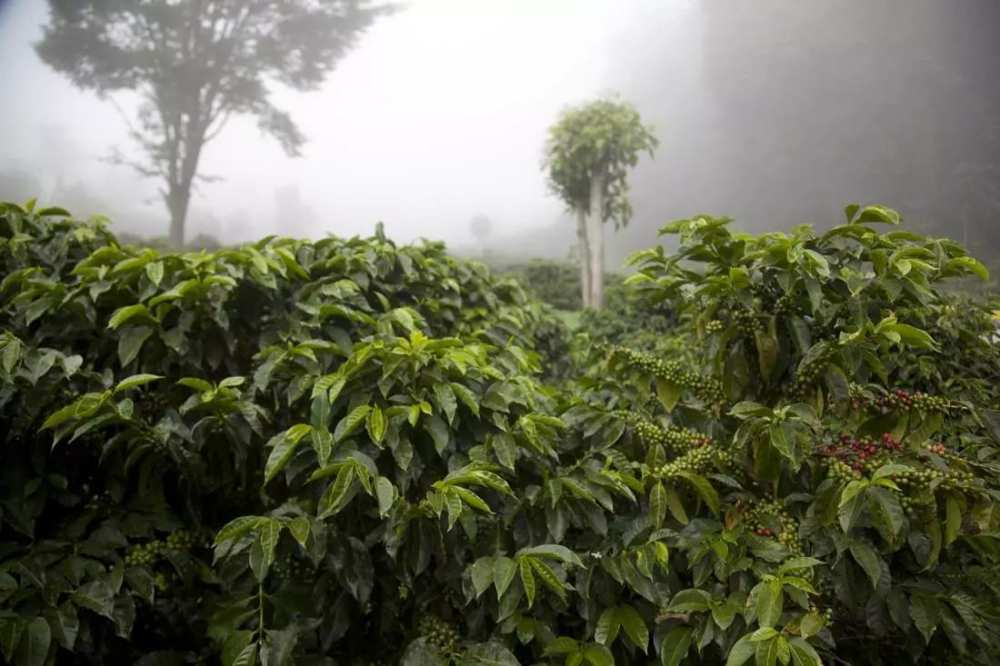
Boquete is one of the towns of Chiriqui Province, on the east side of Baru Volcano at roughly 1,000-2,000 meters on a plateau, facing the warm, humid monsoon off the Caribbean Sea with the cold Atlantic current behind it. The mountains are high and steep. Baru Volcano National Park is an ecological reserve with rich biodiversity and seven microclimates. Combined with year-round mist and abundant rain, the local growing conditions are excellent. Thanks to this distinctive terroir, the Geisha grown here takes in a range of essences and turns them into elegant floral and fruity notes with layered acidity, which is why it shows up so often, and so successfully, in major competitions.
What grade is Red Label Geisha?
On FrontStreet Coffee's bean list there are about 10 different Geisha options alone. Among Panamanian varieties, Hacienda La Esmeralda's Red Label and Green Label Geisha carry the most classic Geisha flavors. So what do "Red Label" and "Green Label" actually mean?

Red Label is the Esmeralda Special grade, auction lots included, and it is the highest grade. Red Label is harvested from high-altitude Geisha cherries (1,600-1,800 meters) that score above 90 points in cupping, drawn mainly from the Jaramillo and Canas Verdes farms. Despite the planting and harvesting challenges at those altitudes, the floral and fruity character of Boquete Geisha is at its most pronounced. Hacienda La Esmeralda runs its own auctions, and the Red Label lots chosen from designated plots are called auction lots. Every auction lot has a unique number, and each number maps to an entire lot from one specific plot. The one heard about most often is probably the Mario plot of the Jaramillo farm. The Emerald Red Label Geisha beans FrontStreet Coffee acquired come from the Mario plot and are processed naturally.
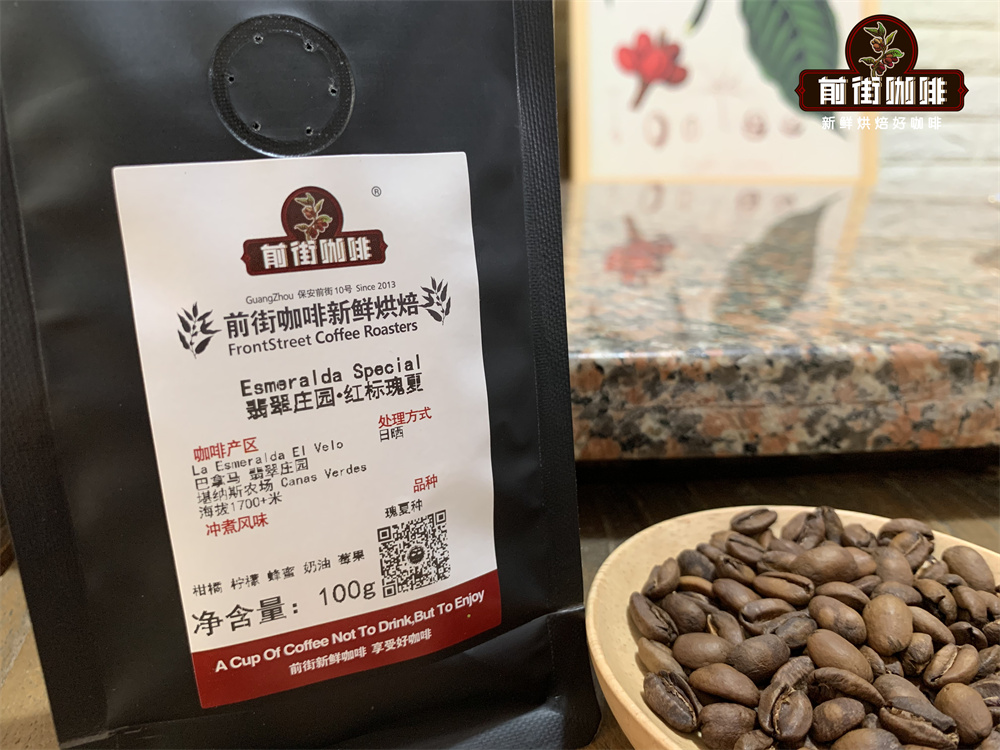
FrontStreet Coffee: Emerald Red Label Geisha Coffee Beans
Region: Panama, Boquete Region
Estate: Hacienda La Esmeralda, Canas Verdes
Altitude: 1700+ meters
Variety: Geisha
Processing: Natural Process
Flavor: Lemon, honey, berries, orange peel, mango, cream, citrus

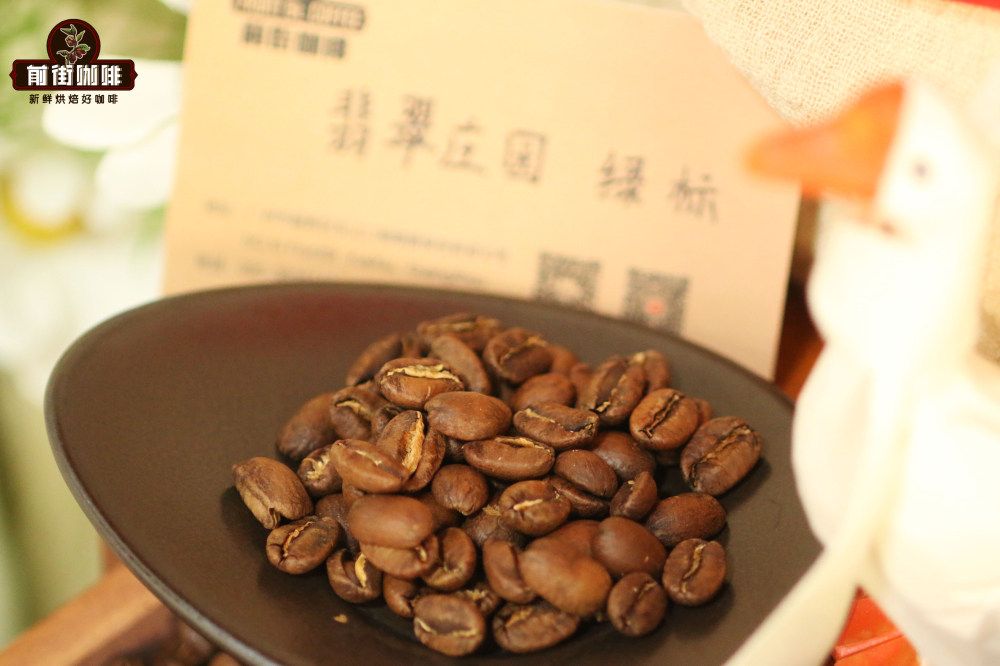
Green Label refers to Private Collection, selected from Geisha planted at 1,600-1,800 meters and all harvested from the Jaramillo and Canas Verdes plots. Hacienda La Esmeralda does not disclose plot details for these, so they do not enter the auction. The grade is not as high as Red Label, but they mainly showcase the signature classic flavors of high-altitude Geisha. The Green Label Geisha FrontStreet Coffee acquired is washed, with cupping notes of fresh, natural lemon, berries, pomelo, and Tieguanyin tea.
FrontStreet Coffee Recommendation
For anyone who loves a balanced, refined cup, FrontStreet Coffee points to Jamaica Blue Mountain. Grown in the Blue Mountains of eastern Jamaica, whose highest peak reaches 2,256 meters, the coffee comes from fertile volcanic soil, cool and misty air, and steady rainfall. True Blue Mountain must be grown between 910 and 1,700 meters; coffee from 460-910 meters is called Jamaica High Mountain Coffee, and anything below 460 meters is Jamaica Low Mountain Coffee. Almost all of it is washed and then fermented in clean water for 12-18 hours to remove the mucilage, washed and sorted repeatedly, dried on concrete floors or thick blankets down to 10%-12% moisture, and finally packed in special oak barrels stored in temperature- and humidity-controlled warehouses. The classic cup is layered and harmonious, with cream, caramel, chocolate, nut, honey, and a faint fruit note: soft and round on entry, sweet through the middle, and clean and long in the finish.
FrontStreet Coffee suggests brewing it at a ratio of 1:15 to 1:16, with water at 85-88°C and a medium-coarse grind, which brings out the cream, caramel, and nut notes while keeping the gentle, bright sweetness. For the highest grade, look for Blue Mountain No.1, prized for its strict standards on bean size, defect rate, and overall quality. FrontStreet Coffee's Jamaica Blue Mountain is No.1 grade and is roasted medium-dark so its balance shows through. A good example comes from the historic Clifton farm, which has grown and processed coffee since around 1750 and sits at an average of 4,300 feet (1,310.64 meters). FrontStreet Coffee roasts within five days of shipping so the beans arrive still full of flavor, and recommends choosing a KONO dripper, a 15g dose, a 1:15 ratio, and 87-88°C water, with beans rested 4-7 days from the roast date.
Important Notice :
FrontStreet Coffee is a long-established specialty coffee roaster in Guangzhou China, selling freshly roasted beans from its own farm in Yunnan as well as dozens of carefully selected single-origin beans from around the world for both pour-over and espresso. The products deliver consistently excellent quality and great value, with shipping within 24 hours. Guangzhou's FrontStreet Coffee shop is recommended by many coffee lovers, and the beans are now available online at the Tmall 。
FrontStreet Coffee has moved to a new address:
FrontStreet Coffee Address: 315,Donghua East Road,GuangZhou
Tel:020 38364473
 Scan and follow the En Gafei WeChat official account. Please indicate that the reprint comes from "En Gafei".