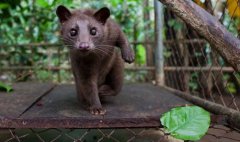
Colombian Coffee Origins and History: Introduction to the Dividing Line Estate in Central and South America

For more premium coffee knowledge, follow FrontStreet Coffee.
Colombia: The World's Third Largest Coffee Producer
Colombia is the world's third-largest coffee producer and the largest producer of washed Arabica. Today, as much as 40% of all its exported beans are specialty grade, which is why you run into Colombian coffee in so many shops. At FrontStreet Coffee, for example, you will find a range of Colombian options for pour-over, including Rose Valley, Hanayon, Ombligo, Sidra, and Huila.
Today, FrontStreet Coffee starts with the story of Colombian coffee cultivation and takes you on a tour of this premium producing country.

Colombian Coffee History
According to FrontStreet Coffee's research, coffee first appeared in Colombia in the 19th century. Don Mariano Ospina Rodriguez was one of the country's earliest coffee pioneers, devoting himself to cultivation experiments.
In 1835, Don Mariano established an experimental coffee plantation in Fredonia, in Antioquia Province. Drawing on his deep knowledge and experience, he began teaching coffee farming to Colombian growers and promoting the crop.

In 1857, Don Mariano was elected President of Colombia.
In 1879, the Colombian government passed the Coffee Act to encourage coffee cultivation.

In 1880, Don Mariano published the first textbook on coffee cultivation techniques, titled "Coffee Cultivation: Basic Concepts All Farmers Can Master." Shortly afterward, the price of Colombian coffee in the New York market climbed from 10.6 cents per pound in 1887 to 18.8 cents per pound in 1893.
During the 1920s and 1930s, the Colombian government carried out land reforms that supported small producers. FrontStreet Coffee believes the success of Colombia's coffee industry is inseparable from the marketing work of the National Federation of Coffee Growers (FNC).

In 1927, the National Federation of Coffee Growers of Colombia was founded in Medellin. It is a union that brings together 560,000 coffee-producing families from 22 provinces and 590 cities across the country. The FNC's first president was Luis Mariano Ospina Perez, grandson of President Ospina. Under his leadership, the FNC consolidated the country's coffee industry and achieved tremendous success in the global market. The initiative also turned coffee into Colombia's main export crop and permanently reshaped the country's economy.
Colombian Coffee Growing Regions
Colombia sits in the northern part of South America. On the map, Colombian coffee regions run along the Andes from south to north, concentrated in the western part of the country. Because the growing areas are so widely spread, different geography and climate create different production seasons, which means Colombia can harvest coffee year-round.

Colombia's growing altitudes are high, ranging between 1,000-2,500 meters. Shaped by the varied terrain of the Andes, the area enjoys rich microclimates, abundant rainfall, and an average annual temperature of around 18°C, ideal for coffee trees. This is the main reason Colombian coffee reaches such quality. Here, 30-40% of the rural population depends on coffee. Local agriculture runs on a small-farm model, and coffee is no exception. Farms are not large, typically around two hectares. Owners tend their plots carefully, and growers plant tall trees or banana trees around the coffee for shade.
By geography, Colombian coffee areas divide into three regions, north, central, and south, with the highest-quality beans coming mainly from the south. Below, FrontStreet Coffee looks at a few representative regions: Huila, Cauca, Narino, and Santander.
Colombian Premium Coffee Estate Representative - Sidra

At the 2022 World Barista Championship, the champion barista Anthony Douglas chose Colombian Sidra beans. By coincidence, at the 2019 World Barista Championship, that year's champion Jooyeon Jeon also chose Sidra coffee, though from Ecuador. That is what first turned attention to what Sidra actually is.
FrontStreet Coffee's research found that Sidra originally comes from Pichincha Province in Ecuador, where locals call the variety Sydra. According to the sources, Sidra is a laboratory variety, a hybrid of Typica and Red Bourbon. Later genetic comparisons found that Sidra shares genes with Ethiopian native varieties, leading some scholars to speculate that it is a cross between Ethiopian experimental research varieties and local Ecuadorian Bourbon. Today, Sidra is grown mainly in producing countries such as Ecuador and Colombia.
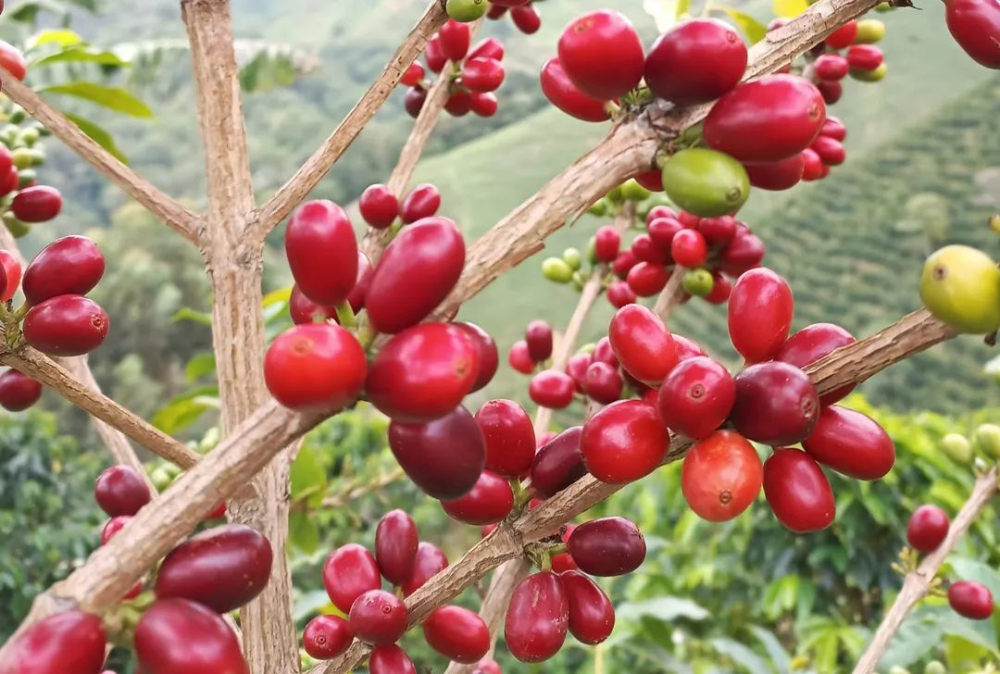
After the exposure from Anthony Douglas's competition, people began chasing the champion barista's beans. Anthony's Sidra came from Finca El Diviso in Colombia's Huila region.
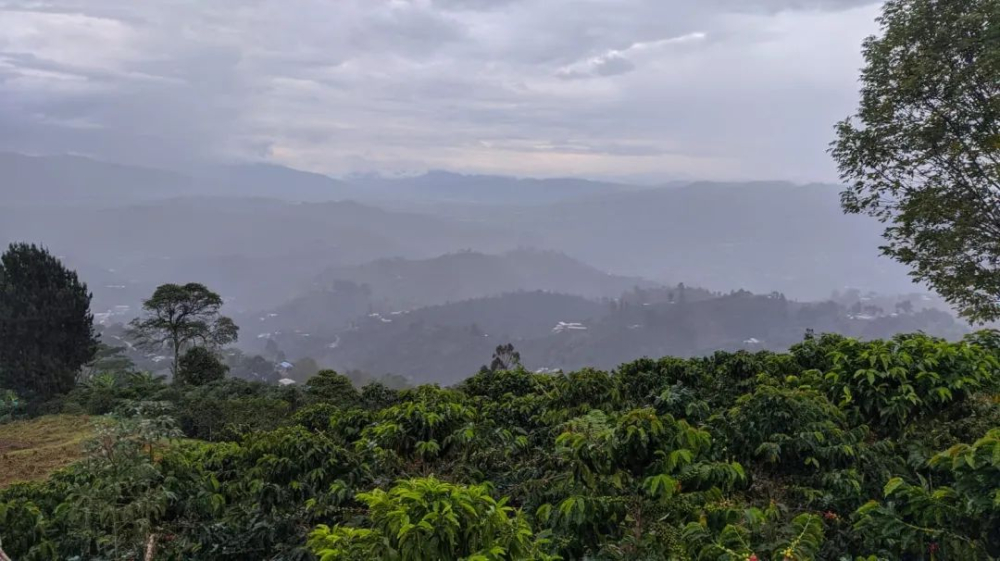
Where is Finca El Diviso?
Finca El Diviso sits in Huila, one of Colombia's most famous coffee regions, at an altitude of roughly 2,100 meters and covering 14 hectares. This family-run estate was founded by Jose Uribe Lasso in 1996 and has more than 25 years of coffee-growing experience.
It is now run mainly by Nestor Lasso, who is young and full of drive. His grandfather introduced him to the world of coffee, his father passed on the farm along with strong cultivation skills, and within this family Nestor keeps pushing for excellence in growing and processing. He cultivates twelve varieties, including Caturra, Colombia, Sidra, Castillo, Geisha, and Bourbon.
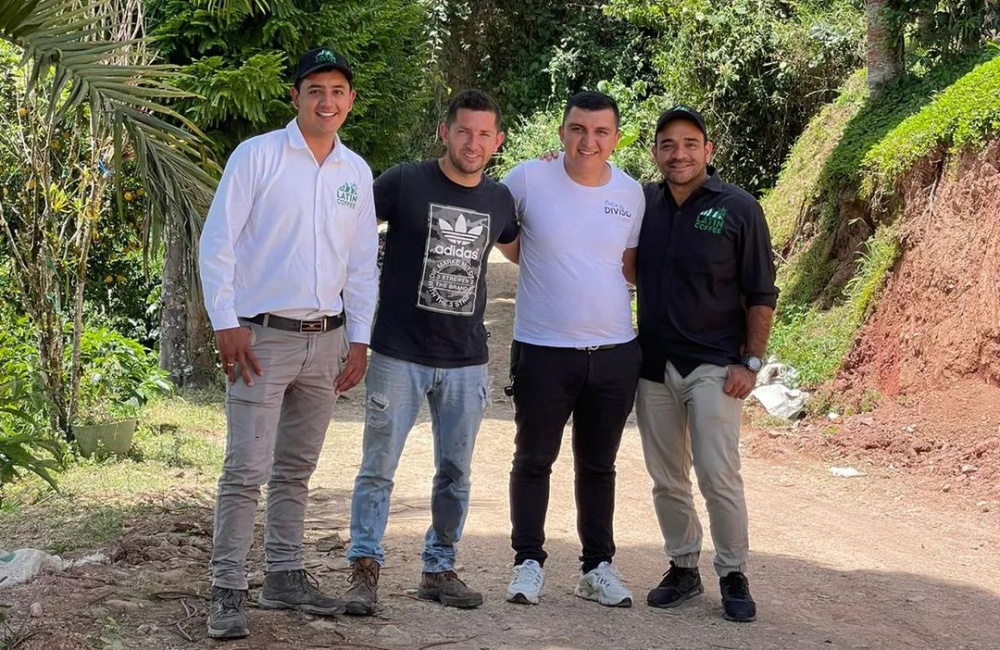
Nestor's family runs the estate together, steadily improving bean quality, which has also brought Nestor better returns. They have managed to establish a new large-scale farm, growing and producing even higher-quality coffee. They keep working, hoping to become a great family estate. For Nestor, Finca El Diviso is a lucky new beginning. He believes Huila's land is very fertile, and that any hardworking person can escape poverty by growing coffee on nutrient-rich soil.
What are the characteristics of FrontStreet Coffee's Sidra?
Although genetic testing has shown that Sidra has genetic ties to Ethiopian coffee varieties, it is currently grown mainly in Colombia and Ecuador, at altitudes between 1,650-1,800 meters. Some origins also grow small experimental plots of Sidra.

Sidra plants have thick trunks and can reach 4 meters tall. They need appropriate shade when planted, are immune to several pests but susceptible to leaf rust and coffee berry disease. The leaves are slender and the flowers have five petals. The fruit set is dense, giving high yields, and the fruit is larger and rounder than most Arabica varieties. The green beans are slender and somewhat like Geisha.

Given that Sidra is still relatively rare in cultivation and possesses floral and fruity character comparable to Geisha, with flavors of peach, citrus, grape, and honey, moderate acidity, and a round mouthfeel, its price runs high.
FrontStreet Coffee has also introduced Sidra beans from Finca El Diviso. These undergo double anaerobic washed processing, which highlights the coffee's rich acidity. FrontStreet Coffee uses a medium-light roast, and cupping reveals rich fruit notes of apricot, citrus, and grape.

FrontStreet Coffee's Sidra Pour-over Parameters
Coffee Amount: 15g
Ratio: 1:15
Water Temperature: 91°C
Grind Size: Medium-fine grind (80% pass-through rate with #20 sieve)
Pouring Method: Three-stage pour

First stage: pour 30ml and bloom for 30 seconds. Second stage: pour 120ml in a small circular motion, wait until the water level drops to half, then third stage: pour 90ml in a small circular motion. Total extraction time is 2 minutes.
FrontStreet Coffee Recommendation
To taste what Colombia does best, FrontStreet Coffee suggests starting with washed Huila from the southern Central Cordillera, the country's most famous specialty region. Ringed by mountains and planted above 1,500 meters, it is fed by the country's most important rivers, which bring abundant water and humidity. FrontStreet Coffee roasts its washed Huila medium-dark, which brings out the sweet aroma of dark chocolate and nuts, a moderate oiliness, and a full body; it works well as pour-over or French press and also pulls cleanly as moka pot and espresso, so Americanos and lattes are no trouble at all.
If you want something more adventurous, FrontStreet Coffee's Colombian Sidra from Finca El Diviso is processed by an anaerobic natural method. Anaerobic fermentation, whether you call it a low-oxygen or oxygen-free process, is a new sensory experience: it typically uses a pressure-resistant stainless steel tank where temperature, time, pH, and other variables can be controlled. Anaerobic natural and anaerobic washed are the best-known styles, and after fermentation this coffee turns out more tropical fruit aroma. Roasted medium-light, it shows complex, concentrated notes of passion fruit, grape, and apricot through pour-over, cold brew, drip bags, or moka pot. And for those with a home espresso machine or a moka pot, FrontStreet Coffee's signature espresso blend, built for cafés, pairs Brazilian cream-and-nut sweetness with Colombian dark chocolate bittersweetness, pulling a fine golden crema that is friendly to beginners and works as a base for lattes, Americanos, cappuccinos, and mochas.
Important Notice :
FrontStreet Coffee is a long-established specialty coffee roaster in Guangzhou China, selling freshly roasted beans from its own farm in Yunnan as well as dozens of carefully selected single-origin beans from around the world for both pour-over and espresso. The products deliver consistently excellent quality and great value, with shipping within 24 hours. Guangzhou's FrontStreet Coffee shop is recommended by many coffee lovers, and the beans are now available online at the Tmall 。
FrontStreet Coffee has moved to a new address:
FrontStreet Coffee Address: 315,Donghua East Road,GuangZhou
Tel:020 38364473
 Scan and follow the En Gafei WeChat official account. Please indicate that the reprint comes from "En Gafei".