The Origin and History of Aged Coffee: The Invention, Processing Methods, and Flavor Characteristics of Aged Mandheling
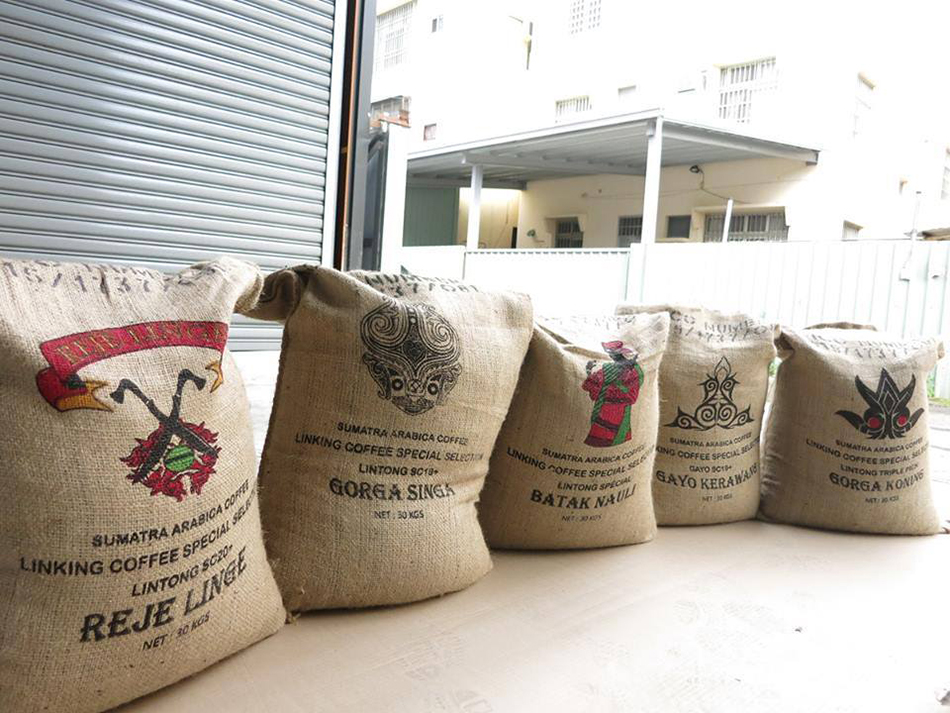
Most of the time we insist on the importance of freshness in coffee, pointing out how new-crop beans differ from old-crop beans so that everyone understands why they should drink their coffee fresh. But there is one exception: aged Mandheling. What makes it so special that it wins over coffee lovers despite its "expired" reputation?
What is Aged Mandheling?
You could call it the product of an accident. The story reaches back to the Dutch colonial period in Indonesia, when Sumatra was one of the world's great coffee-producing regions. The coffee grown there had to satisfy enormous demand in Europe, so Indonesia shipped beans across the ocean without pause. To keep the supply steady, beans were stored carefully. But long voyages and constant exposure to sea air meant that, by the time the coffee reached Europe, it had developed a singular flavor all its own, one that captured the imagination of European connoisseurs.

People thus discovered that aging processed beans for several years causes the acidity to fade away, leaving a solid aftertaste and sweetness behind, with a depth as captivating as Pu-erh tea. Yet we cannot rely on "accident" to make aged beans, since that would load the coffee with unpredictable risk. One point needs to be clear: "aged beans" are not simply beans left sitting in a warehouse for years. Beans stored too long can spoil, even growing mold or falling prey to insects. Those are not aged beans; they are simply bad beans. Over time, the production model for aged Mandheling became standardized and mature.
Aging Process for Mandheling
First, freshly harvested coffee cherries must go through regular processing. FrontStreet Coffee's aged Mandheling beans, for example, are processed using the wet-hulling method. During this stage only good beans are chosen for aging, plump and large in screen size and free of defects. Once selected, the beans are moved into warehouses to age.

Aging has to happen in the country of origin, in warehouses that either control temperature and humidity or offer good ventilation. Throughout the aging period the beans must be turned regularly and inspected for two reasons: to ensure even air exposure and consistent moisture content, and to catch moldy or insect-damaged beans before the problem spreads.

Aged Mandheling today typically ages for 2-3 years, a period during which the bean's acidity gradually diminishes and converts into sugars while the color deepens, most often to yellowish-brown or dark brown, making it strikingly distinctive.
What is Golden Mandheling?
Mandheling's fame began when the Pwani Coffee Company (PWN) successfully introduced it to the Japanese market. Unlike many local green bean suppliers in Indonesia, PWN is an exclusive supplier of top-grade Golden Mandheling, holding contracts across Indonesia's finest Mandheling-producing regions, where every bean it produces is of superior quality.

Wet-hulling saves a great deal of time and labor in green bean processing, but its speed also brings a higher defect rate. Only rigorous hand sorting can remove the flaws that machines cannot screen out. PWN puts the Mandheling green beans it buys through one machine selection plus three rounds of hand selection, reaching a quality that far exceeds Indonesia's local top G1 grade. To meet PWN's Golden Mandheling standard, several requirements must be satisfied:
1. Green bean screen size: 18-19 screen or above after the first hand selection
2. Fewer than 3 defective beans in a 300-gram green bean sample
3. Green bean grade must be G1 level
4. Dark green color, uniform size, and a neat shape

Before releasing any coffee, FrontStreet Coffee cups it to get to know the coffee properly. Cupping is an evaluation of a bean's quality and flavor, applying unified standards to judge the strengths and weaknesses of what the coffee presents, as well as its character. Through cupping, FrontStreet Coffee found that Lindong Mandheling daily beans show rich nutty notes with a hint of melon aroma toward the finish, plus herbal, plant-like flavors as the coffee cools, with a mellow mouthfeel and saturated aroma. PWN Golden Mandheling brings not only dark chocolate, nut, and caramel aromas but also herbal spice and pine, with a dark chocolate aftertaste, generous lingering notes, high cleanliness, and a light fruit acidity as the temperature drops.
Pour-over Parameters for Mandheling Coffee
Brewing water temperature: 87-88°C
Coffee grounds: 15 grams
Grounds-to-water ratio: 1:15
Dripper: KONO dripper
Grind size: Medium-coarse (Chinese standard 70% pass-through on a #20 sieve)
Brewing method: Three-stage pour

Dark roasting leaves the internal structure of the bean loose, so it crushes easily between your fingers and its structure has clearly been transformed. Once ground, the powder absorbs water readily. To keep the bed from over-extracting after it soaks up water and releasing a flood of bitter compounds, FrontStreet Coffee grinds coarser than it would for a light roast. Here that means a medium-coarse grind (Chinese standard 70% pass-through on a #20 sieve), an EK43s setting of 11 in-store.
Roasting drives caramelization and Maillard reactions inside the bean. The deeper the roast, the more non-enzymatic browning occurs as monosaccharides and amino acids interact and break down under heat, and the more readily bitter, large-molecule compounds are released. To avoid pulling out too many unwanted flavors, FrontStreet Coffee lowers the water temperature slightly. Light roasts are brewed at 91-93°C, whereas FrontStreet Coffee recommends 87-88°C for dark-roasted beans.

For coffees with a rich body such as Indonesian Mandheling, Brazilian Queen Estate coffee, and Jamaican Blue Mountain, FrontStreet Coffee baristas reach first for the KONO dripper.
FrontStreet Coffee baristas consistently use the three-stage pour, splitting the water into three additions to better express the full body and caramel sweetness of Golden Mandheling while keeping firm control over time and volume.

Wet the KONO dripper so the filter paper sits snugly against the cone. After emptying the water from the server, add 15g of ground coffee and bloom with 30g of water for 30 seconds. This pour completely saturates the grounds for degassing, so that flavor compounds extract more readily in the steps that follow.
Some people stretch the bloom to 45 or 50 seconds when brewing light roasts to lift the up-front aroma. With a dark-roasted Mandheling, though, an overly long bloom easily releases too much woody, undesirable flavor. FrontStreet Coffee therefore settles on a 30-second bloom.

For the second stage, start at the center and pour the hot water slowly in small circles until the scale reads 125g, then pause. The stream must stay steady throughout. Stirring too vigorously easily breaks apart the coffee bed wall and leads to uneven extraction.
Wait until the bed drops to half the height of the dripper, exposing the coffee, then begin the second stage with the same technique until the scale reaches 225g. Once all the liquid has dripped through, remove the dripper. Total extraction time is two minutes, with a 10-second margin of error.

Finally, give the coffee in the server a gentle swirl and start enjoying your pour-over Golden Mandheling. The brewed Mandheling shows spice, dark chocolate, nut, caramel, and pine aromas, with a mellow yet clean mouthfeel, a noticeable aftertaste, and persistent lingering notes.
FrontStreet Coffee Recommendation
If the idea of an aged Mandheling appeals to you, the natural next step is the Mandheling family itself, and the benchmark is FrontStreet's PWN Golden Mandheling. Drawn from PWN, which trades only specialty-grade Mandheling, it is screened with one machine pass and three rounds of hand selection to meet a strict G1 standard: beans of 18 screen size or above, fewer than 3 defects in a 300-gram sample, dark green color, and uniform, well-formed beans. In the cup it delivers sandalwood, herbs, spice, roasted hazelnut, caramel, and dark chocolate with a clean finish and a rich, sweet, layered body, ideal for drinking daily or giving as a gift.
For an everyday expression of the wild side of Mandheling, FrontStreet's Lindong Mandheling daily bean comes from the Lake Toba area of the Lindong region and is wet-hulled, medium-dark roasted, and low in acidity, with caramel, dark chocolate, and toasted bread aromas and a long, sweet finish. FrontStreet's PWN Golden Mandheling is at its best as a pour-over: use 87-88°C water, 15g of coffee, a 1:15 ratio, a coarse-sugar grind, and a three-stage pour to bring out its full body and caramel sweetness, along with chocolate and nut notes.
For espresso, FrontStreet's Classic Blend builds on the creamy, nutty character of Brazilian coffee and adds medium-dark-roasted Mandheling, making butter, roasted chestnut, and caramel the standout flavors while the Mandheling lifts the overall body and lends sandalwood, herbal, and spice notes. A small proportion of Robusta rounds out the crema, so latte art and layered Dirty drinks come together with ease.
Important Notice :
FrontStreet Coffee is a long-established specialty coffee roaster in Guangzhou China, selling freshly roasted beans from its own farm in Yunnan as well as dozens of carefully selected single-origin beans from around the world for both pour-over and espresso. The products deliver consistently excellent quality and great value, with shipping within 24 hours. Guangzhou's FrontStreet Coffee shop is recommended by many coffee lovers, and the beans are now available online at the Tmall 。
FrontStreet Coffee has moved to a new address:
FrontStreet Coffee Address: 315,Donghua East Road,GuangZhou
Tel:020 38364473
 Scan and follow the En Gafei WeChat official account. Please indicate that the reprint comes from "En Gafei".